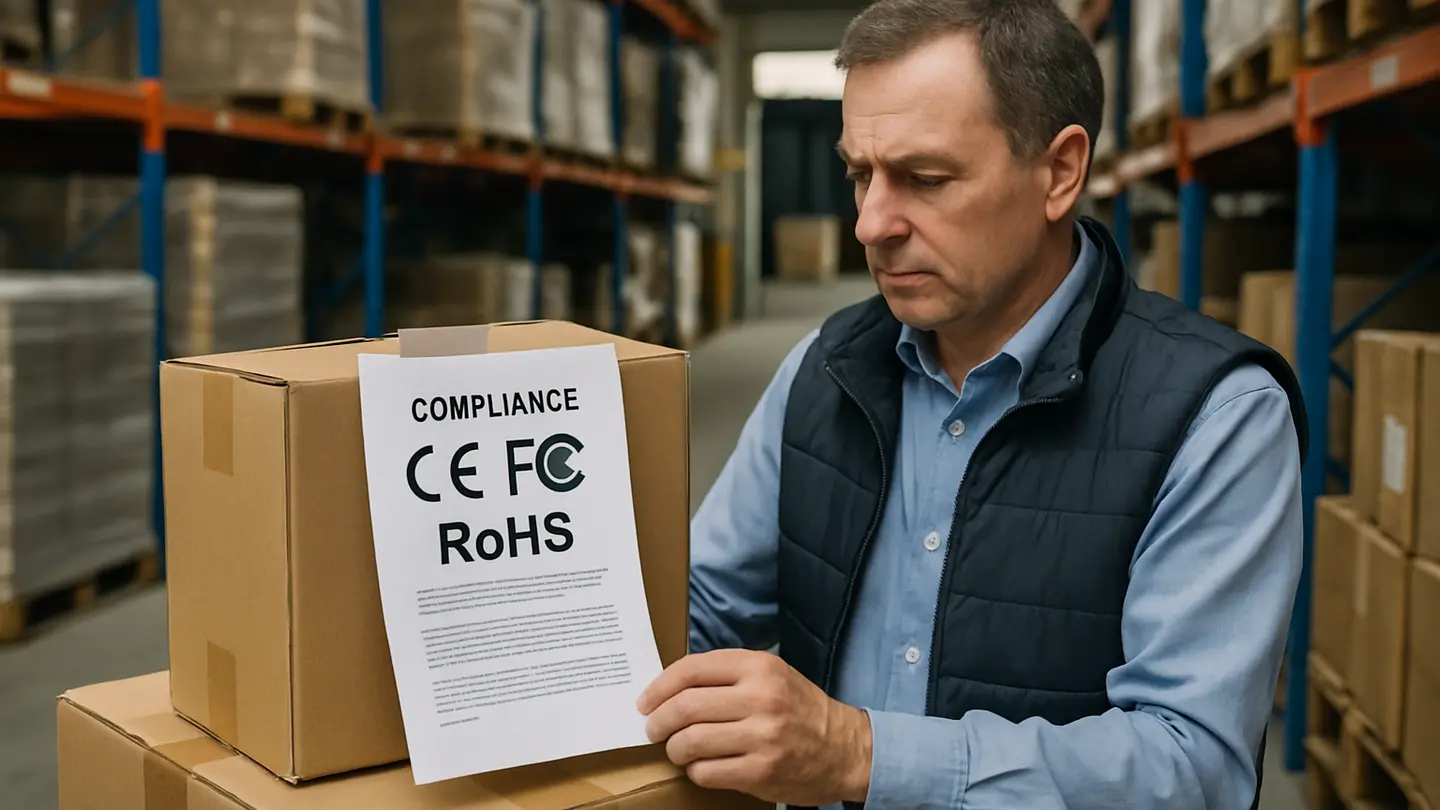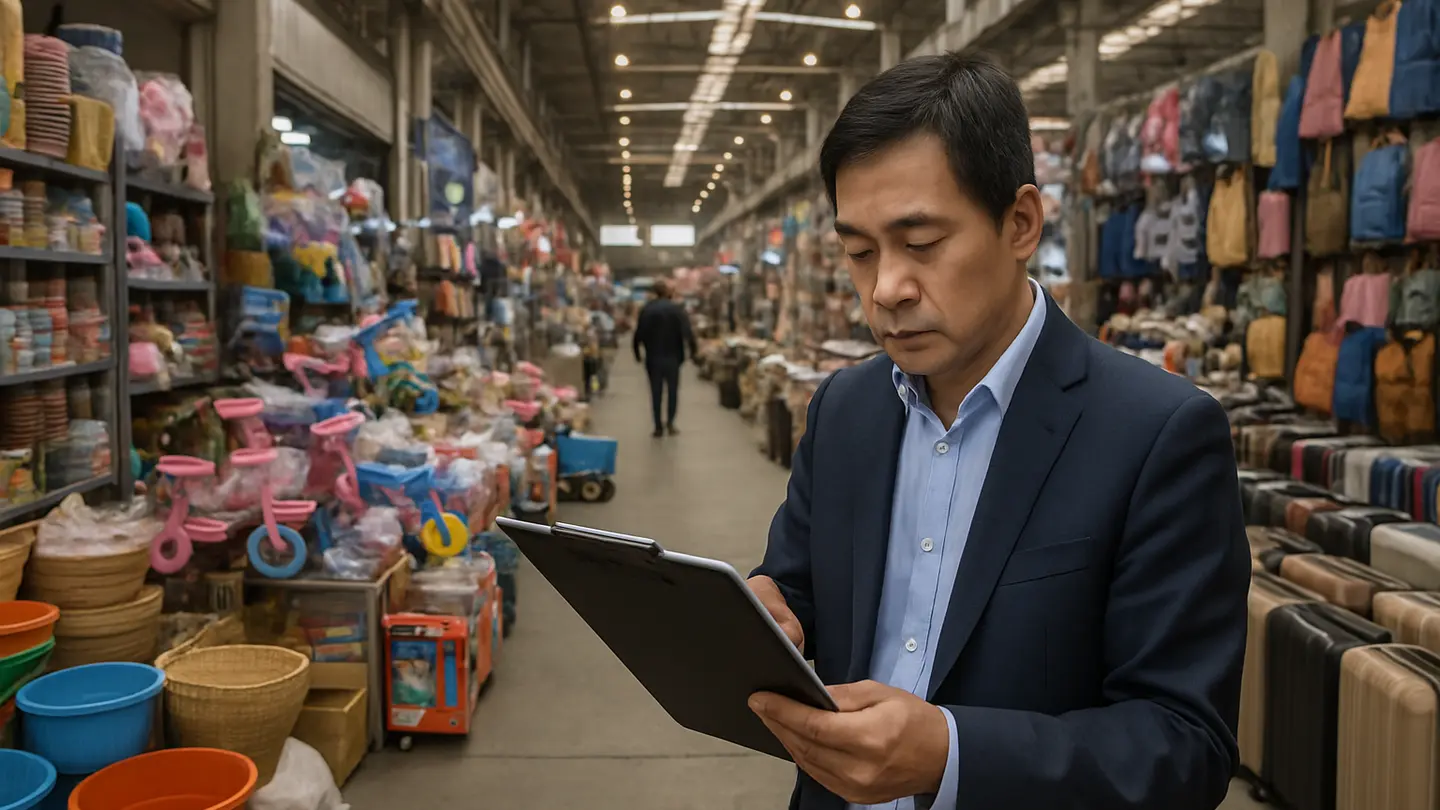
Two Alibaba Group Marketplaces, Two Different Buyer Markets
The 1688 vs Alibaba decision is not simply about finding the lowest product price. Both marketplaces belong to Alibaba Group, but they serve different buyer markets and support different purchasing workflows.
1688 is primarily built for China’s domestic wholesale market. Its sellers commonly quote in RMB, expect domestic delivery within China, and may communicate mainly in Chinese. Many listings are designed for local wholesalers, retailers, installers, or factories purchasing components and replenishment stock.
Alibaba.com, often called Alibaba in international sourcing discussions, is designed for cross-border B2B trade. Suppliers on Alibaba are generally more accustomed to export inquiries, English communication, overseas payment methods, international shipping terms, and commercial documents.
Some suppliers appear on both platforms. However, the same company may provide different prices, minimum order quantities, packaging options, and service levels on each marketplace. A domestic listing may offer a lower product price but exclude export cartons, English documentation, customized labeling, inspection support, or shipment coordination.
Importers should also identify whether they are dealing with a factory, trading company, reseller, or domestic wholesaler. For shower products, this distinction matters. A shower enclosure factory may control glass processing, aluminum profiles, hardware, and packaging, while a reseller may only offer standard models from several sources. Neither model is automatically better, but buyers need to understand who controls quality, lead time, and technical changes.
Why 1688 Prices Can Appear Much Lower
1688 prices can look significantly lower than Alibaba quotations because they are usually intended for domestic Chinese transactions. The listed price may reflect a product collected from the supplier’s warehouse and delivered to a Chinese address, rather than a complete export-ready order.
For example, a listing for a shower set, sliding shower enclosure, floor drain, or bathroom accessory may exclude:
- Export-grade packaging
- International payment fees
- Domestic collection or warehouse delivery
- Product inspection
- Consolidation with other suppliers
- Export customs handling
- International freight
- Import duties, taxes, and destination charges
A domestic price may also be based on a specific order quantity, a basic material option, or an uncustomized product. A shower door listing, for instance, may not include upgraded glass thickness, particular hardware finishes, custom dimensions, logo application, reinforced cartons, or installation accessories.
The relevant comparison is therefore not the visible unit price. It is the total landed cost: the cost of receiving goods in a usable condition at the intended destination.
A lower 1688 unit price can still produce savings for an experienced importer buying standardized goods at meaningful volume. However, those savings can narrow or disappear if the buyer must pay an agent to arrange payment, communicate specifications, collect goods, inspect production, consolidate multiple orders, and manage export shipping.
Language, Payment, and Export Handling: The Main Practical Differences
Language and operational access are among the most important differences between the two platforms.
Alibaba is generally easier for overseas buyers because many suppliers are prepared to handle inquiries in English and discuss export requirements. This does not mean every response will be technically precise, but the platform is structured around international trade conversations.
1688 is more commonly Chinese-language and domestic-facing. Machine translation can help with initial searching, but it should not be treated as sufficient for technical communication. Translation errors can affect measurements, materials, finishes, packaging instructions, and customization requirements.
For shower and bathroom products, buyers should obtain written confirmation of details such as:
- Product dimensions and tolerances
- Glass type, thickness, and finish
- Frame or hardware material
- Surface treatment and color
- Included fittings and installation accessories
- Water sealing components
- Packaging method and carton markings
- Quantity per carton or pallet
- Inspection requirements
- Sample approval requirements
- Production lead time
- Conditions for releasing goods to the forwarder
For example, “stainless steel hardware” may not be detailed enough for a buyer comparing shower hinges or handles. The grade, finish, dimensions, corrosion expectations, and matching parts should be confirmed in writing where relevant to the order.
Payment is another practical barrier. 1688 often relies on domestic Chinese payment methods and delivery arrangements. Overseas buyers may need a local sourcing partner, purchasing agent, or Chinese business entity to place orders and pay suppliers. The goods are then typically delivered to a warehouse or consolidation point in China.
Alibaba is designed to support international transactions, although available payment methods, trade terms, and order protections depend on the particular supplier and transaction arrangement. Buyers should review order terms carefully and document specifications before making payment.
Neither a translation tool nor a platform protection feature replaces supplier verification. Buyers should still validate the supplier’s business role, production capability, sample quality, responsiveness, and ability to meet the agreed product specification.
Minimum Order Quantities and Trial Orders
MOQ expectations vary widely on both marketplaces.
1688 sellers may accept small domestic orders, especially for standard stock items, replacement parts, accessories, or fast-moving bathroom products. This can be useful when buyers want to test a design, purchase spare parts, or source a small quantity of standard shower hardware.
However, a small 1688 order may lose its apparent price advantage once handling, domestic freight, agent fees, and international shipping are added. Shipping one carton internationally can be disproportionately expensive compared with shipping a consolidated or higher-volume order.
Alibaba suppliers may set higher minimum order quantities for export orders, particularly when the buyer requests customized packaging, branded cartons, special finishes, non-standard dimensions, or dedicated production. Some suppliers may agree to smaller trial orders, but the unit price may be higher because the factory cannot spread setup, material purchasing, packaging, and handling costs across a larger run.
For a trial order, buyers should confirm whether the supplier is providing:
- A production sample from existing stock
- A customized pre-production sample
- A small batch made under final production conditions
These are not equivalent. A stock sample can demonstrate general product quality, but it may not confirm the final color, hardware, packaging, or dimensions for a customized shower enclosure order.
Marketplace ratings, transaction indicators, and verification badges can help create an initial supplier shortlist. They should not replace due diligence. A supplier with strong domestic sales may still lack export packaging experience, and an export-focused supplier may still need careful specification control.
How to Compare 1688 and Alibaba Quotes Fairly
A fair quote comparison starts with one product specification and one service scope. Do not compare a domestic 1688 listing price with an Alibaba export quotation unless both quotes cover the same product, quantity, packaging, and destination.
Use a comparison sheet that includes the following items:
| Cost or requirement | Questions to confirm |
|---|---|
| Product price | Is the material, finish, size, and included accessory set identical? |
| Quantity and MOQ | Is the quoted quantity the same for both suppliers? |
| Domestic freight | What does it cost to move goods to a Chinese warehouse or port? |
| Payment fees | Are there charges for domestic payment, currency conversion, or agent handling? |
| Inspection | Who checks quantity, appearance, dimensions, packaging, and functionality? |
| Consolidation | Are goods from several suppliers being combined into one shipment? |
| Export handling | Who prepares export-related documents and arranges release to the freight forwarder? |
| International freight | Is the quote based on the same shipping method and destination? |
| Packaging | Does it include export cartons, pallets, corner protection, or extra protection for glass? |
| Destination costs | Have duties, taxes, brokerage, and local delivery been considered where applicable? |
For shower products, packaging deserves special attention. Glass panels, ceramic accessories, long aluminum profiles, and plated hardware can be damaged if export packaging is inadequate. A lower product price is not a saving if breakage, missing fittings, or weak cartons create costly claims or replacement shipments.
Importers should ask each supplier to quote against the same written purchase specification. This reduces the risk of comparing a basic domestic product with an export-ready product that includes better packaging, documentation, or quality-control support.
The lowest unit price does not always deliver the lowest landed cost or the lowest operational risk.
When Should Importers Use 1688 or Alibaba?
There is no universal winner in the 1688 vs Alibaba comparison. The suitable platform depends on the importer’s sourcing capability, product type, order volume, and access to support in China.
Alibaba is often a practical starting point for first-time or less experienced importers. Its suppliers are generally more familiar with export inquiries, international communication, and overseas transaction requirements. This can reduce the number of operational steps the buyer must manage independently.
Alibaba may be particularly suitable when the buyer needs:
- Export-oriented communication
- Customized products or packaging
- International transaction support
- Commercial documentation
- Suppliers accustomed to overseas quality expectations
- Easier coordination with freight forwarders and inspection providers
1688 can be a useful sourcing channel when the buyer has reliable local support for communication, payment, quality control, consolidation, and export coordination. It may be especially relevant for standard products, components, replacement items, or domestic-market designs that are not widely promoted to overseas buyers.
1688 may suit buyers who have:
- A trusted China-based sourcing agent or purchasing team
- A warehouse or consolidation partner in China
- Clear product specifications
- Established quality-control procedures
- Experience managing domestic supplier communication
- Sufficient volume to absorb handling and shipping costs
High-volume and experienced buyers may compare both platforms for each sourcing project. They may find a suitable export supplier through Alibaba while also using 1688 to identify domestic manufacturers, accessories, packaging sources, or alternative component suppliers.
The best route can change according to product complexity. A standard shower hose or drain accessory may be easier to source domestically through 1688. A customized shower enclosure program with specific glass, hardware finishes, packaging, and destination-market requirements may be more manageable through an export-focused Alibaba supplier.
FAQ
Q1: What happens to my order during Chinese New Year?
Chinese New Year can interrupt factory production, supplier communication, domestic trucking, warehouse operations, and international shipping schedules. Many factories close for the holiday period, and production may not return to normal immediately after reopening because of labor shortages and order backlogs.
Before making payment, confirm production completion dates, inspection dates, and shipment dates in writing. If the order is time-sensitive, ask whether materials have already been secured and whether the supplier expects any holiday-related delay. Build extra time into the purchasing schedule rather than relying only on the official holiday dates.
Q2: Can I get samples from a 1688 seller before committing?
Many 1688 sellers can provide samples before a larger purchase. Sample pricing may be based on retail-level prices, and customized samples may involve setup charges, tooling-related costs, or additional processing fees.
The main challenge for overseas buyers is logistics. The seller may only ship to a domestic Chinese address, so the sample may need to be sent to an agent, warehouse, or freight forwarder before being forwarded internationally.
If changes are made after sample approval—such as a different glass finish, hardware color, logo, carton design, or product dimension—request confirmation that the updated version still meets requirements. In some cases, a new sample approval cycle is necessary.
Q3: Are some products only available on 1688 and never on Alibaba?
Yes. Some domestic-focused suppliers, niche product categories, and locally popular designs may appear only on 1688. A factory selling mainly to Chinese wholesalers may not maintain an Alibaba export listing, especially if it does not regularly handle overseas documentation or international communication.
This can create sourcing opportunities, but overseas buyers may need local support to purchase, consolidate, inspect, and export goods. Availability on 1688 does not automatically mean the supplier can provide export-ready packaging, documents, or consistent communication in English.
Q4: Does 1688 show supplier ratings I can actually trust?
1688 supplier profiles may show transaction activity, buyer feedback, sales-related indicators, and other platform information. These signals can help buyers build an initial shortlist and identify sellers with active domestic business.
However, ratings do not confirm manufacturing capability, material consistency, product durability, export readiness, or compliance with the buyer’s exact specification. A supplier may perform well in domestic transactions while lacking experience with international packaging, documentation, or quality expectations.
Buyers should validate suppliers beyond profile information. Practical checks can include reviewing samples, confirming business role, requesting detailed specifications, arranging inspection where appropriate, and evaluating how accurately the supplier responds to technical questions.
Final Verdict: Choose the Platform That Matches Your Sourcing Capability
Alibaba is generally the more convenient option for importers who need export-oriented communication, international transaction support, and suppliers familiar with overseas purchasing requirements. It can reduce complexity, particularly for early-stage importers or buyers managing customized products.
1688 may offer attractive domestic pricing and access to suppliers or products that do not appear on Alibaba. But it also shifts more responsibility to the buyer. Payment access, supplier communication, domestic collection, inspection, consolidation, and export coordination may all require local support.
The right choice is therefore not determined by the listed price alone. Importers should compare equivalent quotes, calculate total landed cost, verify suppliers, approve samples, and document all critical product and release requirements.
A domestic marketplace listing can be a useful sourcing lead, but it is not automatically a complete export solution.
About the Author
The author is a B2B sourcing editor focused on supplier evaluation, import planning, product specification control, and practical purchasing risks in cross-border trade. Their work emphasizes comparing suppliers and marketplaces based on total cost, operational capability, quality requirements, and documentation rather than headline prices alone.