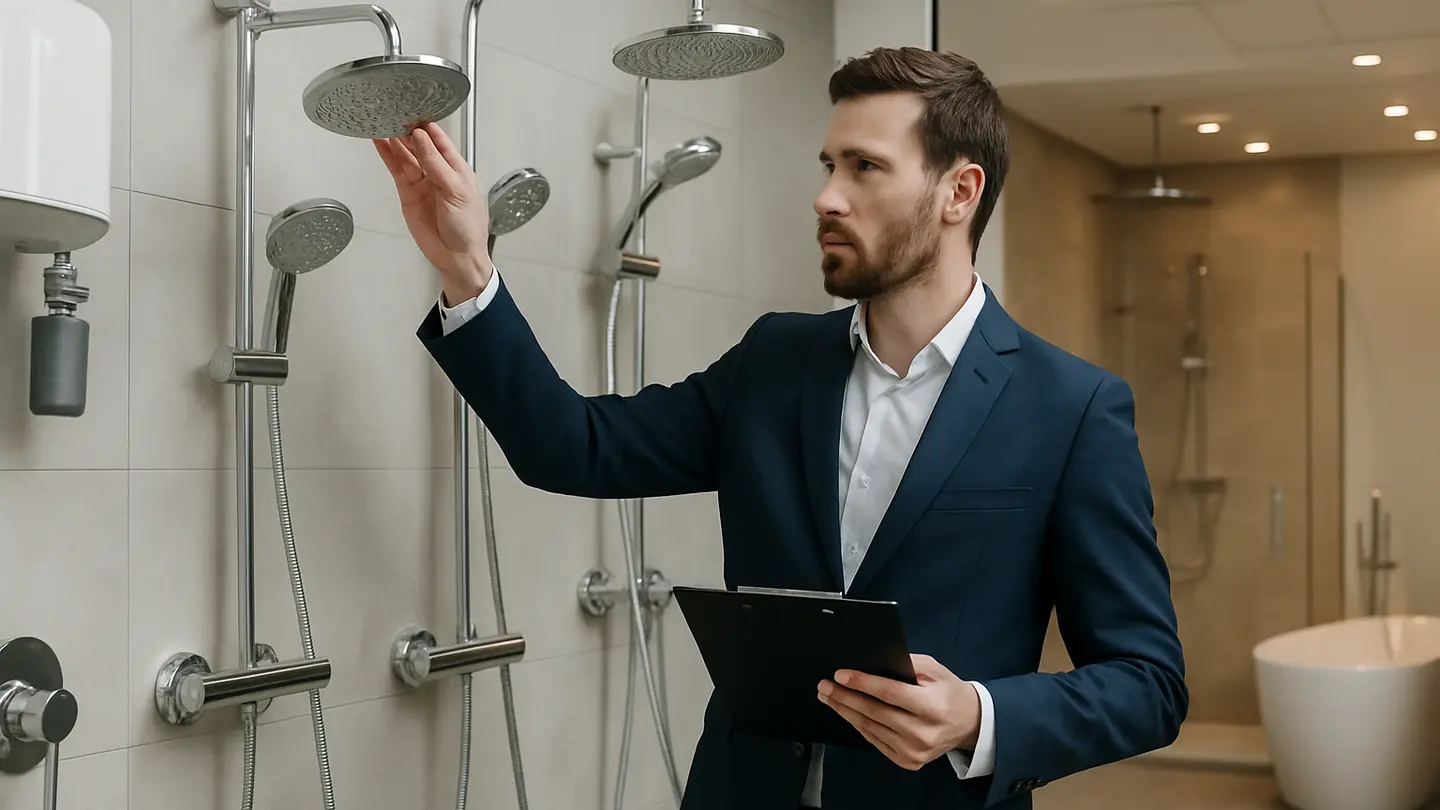
For buyers assessing 2026 shower product market trends, the main shift is clear: showers are no longer treated as basic plumbing fixtures alone. They are becoming experience-oriented systems that combine comfort, water efficiency, design coordination, easier maintenance, wellness positioning, and accessibility.
This matters for importers, retailers, distributors, hospitality buyers, and project purchasers because the category is fragmenting. A low-cost handheld showerhead can still be a high-volume item, but the same buyer may also need filtered models for e-commerce, matte black rainfall systems for renovation showrooms, thermostatic sets for hotels, and accessible handheld combinations for senior housing or family bathrooms.
The sourcing challenge in 2026 will not be finding shower products in general. It will be building a product range that matches channel needs, regional compliance expectations, installation habits, finish preferences, and after-sales service requirements without overcomplicating inventory.
Key Shower Product Trends Defining 2026
The shower is becoming a central feature in bathroom design. In many renovation and new-build projects, buyers are giving more attention to shower size, layout, finish coordination, spray options, and long-term usability. This is especially visible in mid-range and premium bathrooms, but the same influence is moving into mass-market products through affordable upgrades such as multi-function handhelds, air-injection showerheads, filtered models, and adjustable brackets.
For B2B buyers, the trend is not only about product appearance. It affects packaging, spare parts, testing requirements, assortment planning, installation instructions, and replacement cycles. Products that are easy to explain, easy to install, and easy to maintain will have an advantage across retail, online, wholesale, and project channels.
Bigger Shower Spaces and Spa-Style Systems
Larger shower areas are supporting demand for more complete shower systems. When the shower zone expands, buyers have room to specify rainfall heads, handheld sprays, benches, recessed shelves, body sprays, and concealed controls. This creates opportunities beyond standalone showerheads.
Key product formats likely to benefit include:
| Product type | Typical buyer appeal | Sourcing considerations |
|---|---|---|
| Rainfall showerheads | Premium look, wide coverage, spa-style feel | Check flow rate, spray uniformity, arm strength, and finish consistency |
| Dual shower systems | Combines fixed overhead spray with handheld flexibility | Confirm diverter quality, hose length, bracket durability, and installation clarity |
| Shower columns | Easier upgrade path than fully concealed systems | Evaluate wall mounting, cartridge quality, packaging size, and spare parts |
| Concealed multi-outlet systems | Clean design for premium projects | Requires stronger technical documentation and installer support |
| Body spray and waterfall features | Wellness and luxury positioning | Best suited to markets where plumbing capacity and project budgets support them |
For B2B buyers, coordinated shower systems can deliver more value than individual showerheads because they raise average order value and reduce design mismatch. A full system can include the overhead shower, handheld unit, hose, rail, mixer, diverter, trim, and accessories in one coordinated package. This is useful for bathroom retailers, hotel projects, apartment developers, and renovation distributors that want predictable component compatibility.
Spa-style features should be selected carefully. Steam, aromatherapy, lighting, body sprays, seating-compatible layouts, and waterfall effects can support premium positioning, but they also increase complexity. Buyers should check whether the target market has installers familiar with these systems, whether spare parts are available, and whether the product documentation is strong enough for project use.
Water Savings Without Disappointing Spray Performance
Water efficiency remains a major purchasing factor, but buyers cannot treat low flow as the only selling point. End users still expect satisfying coverage, stable pressure, and a spray pattern that feels complete. A showerhead that saves water but feels weak can create returns, poor reviews, and complaints from hotel guests or project residents.
In markets influenced by WaterSense-style expectations or similar efficiency programs, efficient showerheads must balance reduced flow with acceptable performance. Buyers should look beyond the headline flow rate and review how the product maintains spray quality.
Useful design features include:
- Air injection, which mixes air into the water stream to create a fuller spray sensation.
- Optimized nozzle geometry, which improves spray distribution and reduces uneven patterns.
- Pressure-supporting internal structures, which help maintain performance under varying supply conditions.
- Pause controls, especially on handheld models, allowing temporary water reduction during use.
- Easy-clean nozzles, which reduce mineral buildup and help maintain spray quality over time.
Optional flow restrictors are also important for international sourcing. A supplier that can provide different restrictor options allows buyers to adapt the same core model for multiple regions with different flow requirements. However, buyers should confirm whether changing restrictors affects certification, warranty terms, or product labeling.
Wellness-Oriented and Filtered Shower Products
Bathroom purchasing is increasingly connected with wellness, relaxation, and personal care. This does not mean every shower product needs advanced technology. It means buyers should understand how consumers now evaluate showers: not only by function, but also by comfort, skin-care positioning, sensory experience, and daily routine.
Spa-style products may include steam functions, mood lighting, built-in seating compatibility, aromatherapy modules, or multiple spray zones. These products are more relevant for premium residential projects, boutique hospitality, showrooms, and design-led renovation channels.
Filtered showerheads are another important segment. They are especially suitable for:
- E-commerce and direct-to-consumer channels.
- Beauty and personal-care retail positioning.
- Hospitality upgrades where easy retrofit matters.
- Rental and renovation markets where users want improvement without major plumbing work.
For sourcing, the filter cartridge is as important as the showerhead body. Replaceable cartridges can create recurring sales, but only if replacement intervals, packaging, compatibility, and logistics are well planned. Buyers should avoid vague or exaggerated health claims. More responsible positioning focuses on sediment reduction, odor improvement where supported, skin-care routine alignment, and easy installation.
Before ordering filtered products at scale, buyers should request clear cartridge specifications, test documentation where available, replacement cartridge SKUs, shelf-life information, and instructions that end users can understand without technical support.
Accessible Shower Design for Multiple Users
Shower products increasingly need to serve users of different ages, heights, and mobility levels. Accessibility is not limited to hospitals or senior-care facilities. It is relevant to family bathrooms, hotels, apartment renovations, multi-generational homes, and public accommodation projects.
Handheld showerheads are central to this trend because they support seated washing, child bathing, pet washing, cleaning, and flexible use by people with different mobility needs. Adjustable-height holders, sliding bars, and longer hoses make the product usable for a wider range of users.
Other accessibility-oriented features include:
- Simple lever or push-button controls.
- Clear hot/cold markings and easy-to-read selectors.
- Thermostatic valves that help maintain stable temperature.
- Anti-scald functions for safer shared use.
- Low-threshold or walk-in shower layouts.
- Pause controls for seated or assisted bathing.
- Non-slip-compatible system planning, especially for project buyers.
For B2B purchasers, accessibility should be framed as usability and risk reduction, not only as a niche compliance requirement. Hotels, senior housing operators, property managers, and renovation distributors can benefit from products that reduce confusion, improve safety, and simplify maintenance.
2026 Market Forecast and Practical Sourcing Priorities
The 2026 shower product market is likely to favor suppliers that can support multiple product tiers rather than only one price level. A strong sourcing program may include economical handheld showerheads for volume retail, filtered models for online and wellness-driven channels, and complete rainfall or thermostatic systems for premium projects.
For buyers, the practical question is how to balance variety with operational control. Too few SKUs may miss channel opportunities. Too many SKUs can create inventory pressure, inconsistent finishes, and spare-parts complications.
A workable 2026 assortment may include:
- Entry-level handheld showerheads with simple spray modes.
- Mid-range multi-function handhelds and fixed showerheads.
- Water-saving models with verified spray performance.
- Filtered showerheads with replaceable cartridges.
- Dual shower systems for renovation channels.
- Rainfall sets and shower columns for premium retail and projects.
- Accessible handheld combinations with adjustable holders and longer hoses.
The best mix will depend on market positioning, but the common requirement is supplier reliability. Buyers should evaluate not only the product sample, but also the supplier’s ability to maintain finish consistency, repeat quality, packaging accuracy, documentation, and spare-parts availability over time.
Market Signals B2B Buyers Should Track
Several market signals should guide 2026 sourcing decisions.
First, larger shower spaces create demand for rainfall systems, dual showerheads, shower columns, and multi-outlet systems. Renovation projects that enlarge the shower area often create an opportunity for higher-value replacement products.
Second, wet-room and walk-in shower layouts support handheld sprays and flexible mounting options. In these spaces, users often need a handheld unit for rinsing surfaces, cleaning glass, and bathing more flexibly.
Third, water-efficiency rules and utility-cost concerns will continue to support efficient nozzles, restrictors, air-injection systems, and pause functions. Buyers should track local flow-rate requirements and labeling expectations before finalizing packaging.
Fourth, accessibility upgrades are becoming more commercially relevant. Adjustable holders, longer hoses, simple controls, anti-scald features, and handheld designs can help products serve a wider user base.
Finally, online reviews are becoming a strong product filter. Common negative review topics in shower products include weak pressure, leaking connections, poor finish durability, difficult installation, unclear instructions, and unavailable replacement cartridges. Sourcing teams should treat these as design and supplier-selection issues, not only as customer-service problems.
Why Multi-Function Shower Products Should Stay Strong
Multi-function showerheads are likely to remain strong because they provide personalization without requiring a major system upgrade. Users can switch between spray experiences depending on preference, cleaning needs, or water pressure conditions.
Common spray modes include:
- Rainfall or full coverage.
- Massage spray.
- Mist or fine spray.
- Concentrated jet.
- Mixed spray combinations.
For B2B buyers, multi-function products can simplify inventory planning. Instead of stocking many single-function models, a buyer can offer a smaller number of multi-function SKUs that appeal to broader user preferences. This is useful for retail shelves, e-commerce listings, and distributor catalogs.
However, more functions do not automatically mean better product value. Controls must remain simple, especially for hotels, family bathrooms, rental housing, and shared-use environments. Buyers should test whether users can switch modes easily with wet hands, whether the selector feels durable, and whether the product returns to the desired mode consistently.
A good multi-function showerhead should be easy to understand in packaging images, product listings, and installation guides. If the product requires too much explanation, it may struggle in self-service retail or online channels.
More Variety in Finishes, Shapes, and Visual Styles
Chrome will remain important in 2026 because it is familiar, widely accepted, easy to coordinate, and often cost-effective. It remains a practical core finish for mass retail, replacement sales, hospitality, and many project specifications.
At the same time, contemporary markets are showing more interest in matte black, brushed nickel, gunmetal, gold, and mixed finishes. These finishes help retailers and project buyers differentiate collections and match modern bathroom hardware.
Shape is also becoming more varied. Round rainfall heads remain popular because they feel familiar and coordinate with many bathroom styles. Angular, square, slim, and ultra-flat profiles can support differentiation in design-led markets. For shower columns and concealed systems, clean lines and reduced visual clutter are often preferred in premium projects.
For large-project buyers, finish consistency is critical. It is not enough for the showerhead to look correct. The visible components should match or coordinate across the showerhead, shower arm, hose, bracket, rail, mixer, diverter, trim plate, and accessories. Buyers should request complete finish samples, not only one component, and should confirm whether different parts are produced or coated in separate batches.
Finish durability should also be tested against the expected use environment. Hotels, coastal markets, hard-water regions, and high-cleaning-frequency properties may require stronger surface performance and clearer maintenance guidance.
Faster Customization for Channels, Projects, and Price Tiers
Retailers and importers increasingly need shower products tailored to specific channels and price levels. A product that works for a DIY retail aisle may not suit a hotel project. A premium online listing may require different packaging, images, instructions, and accessory bundles than a wholesale replacement product.
Hotel and project buyers often prioritize:
- Durable cartridges and diverters.
- Easy-to-clean nozzles.
- Standardized replacement parts.
- Consistent finish supply over multiple project phases.
- Clear installation documentation.
- Packaging that reduces damage during bulk handling.
Online sellers may prioritize:
- Distinctive appearance.
- Clear consumer-facing benefits.
- Compact packaging.
- Low-risk trial quantities.
- Replacement filter or accessory bundles.
- Strong installation images and after-sales documents.
Importers and distributors should evaluate supplier capabilities before committing to a full range. Important capabilities include OEM and ODM support, finish options, packaging customization, testing support, spare-parts planning, installation manuals, barcode and labeling accuracy, and after-sales documentation.
For 2026, faster customization does not mean constantly changing products without control. It means building a stable product platform that can be adjusted for different channels. The same core showerhead or shower system may be offered with different finishes, restrictors, hose lengths, brackets, packaging, or accessory sets. This approach can reduce development risk while allowing buyers to serve multiple market segments.
FAQ
What will be the biggest shower product trend in 2026?
Larger and more personalized shower spaces are expected to be a leading trend. Demand should support rainfall heads, handheld combinations, adjustable shower systems, spa-style features, and layouts that work with seating or low-threshold shower areas.
Will water-saving showerheads continue to grow?
Yes. Water-saving showerheads should remain important because of efficiency regulations, utility-cost concerns, and buyer demand for lower water use. Successful models must reduce flow without creating weak pressure, uneven spray, or poor user satisfaction.
Are filtered showerheads a long-term trend?
Filtered showerheads align with wellness and skincare-oriented purchasing, especially in e-commerce, beauty, hospitality, and retrofit channels. Replaceable cartridges can create repeat-purchase opportunities, but long-term success depends on verified performance, easy maintenance, and responsible product claims.
Which finishes should you include in a 2026 collection?
Chrome should remain a core finish for many shower collections because it is familiar and easy to coordinate. Matte black, brushed nickel, gunmetal, and gold can support contemporary markets. Buyers should align finish selection with price point, sales channel, and regional design preferences.