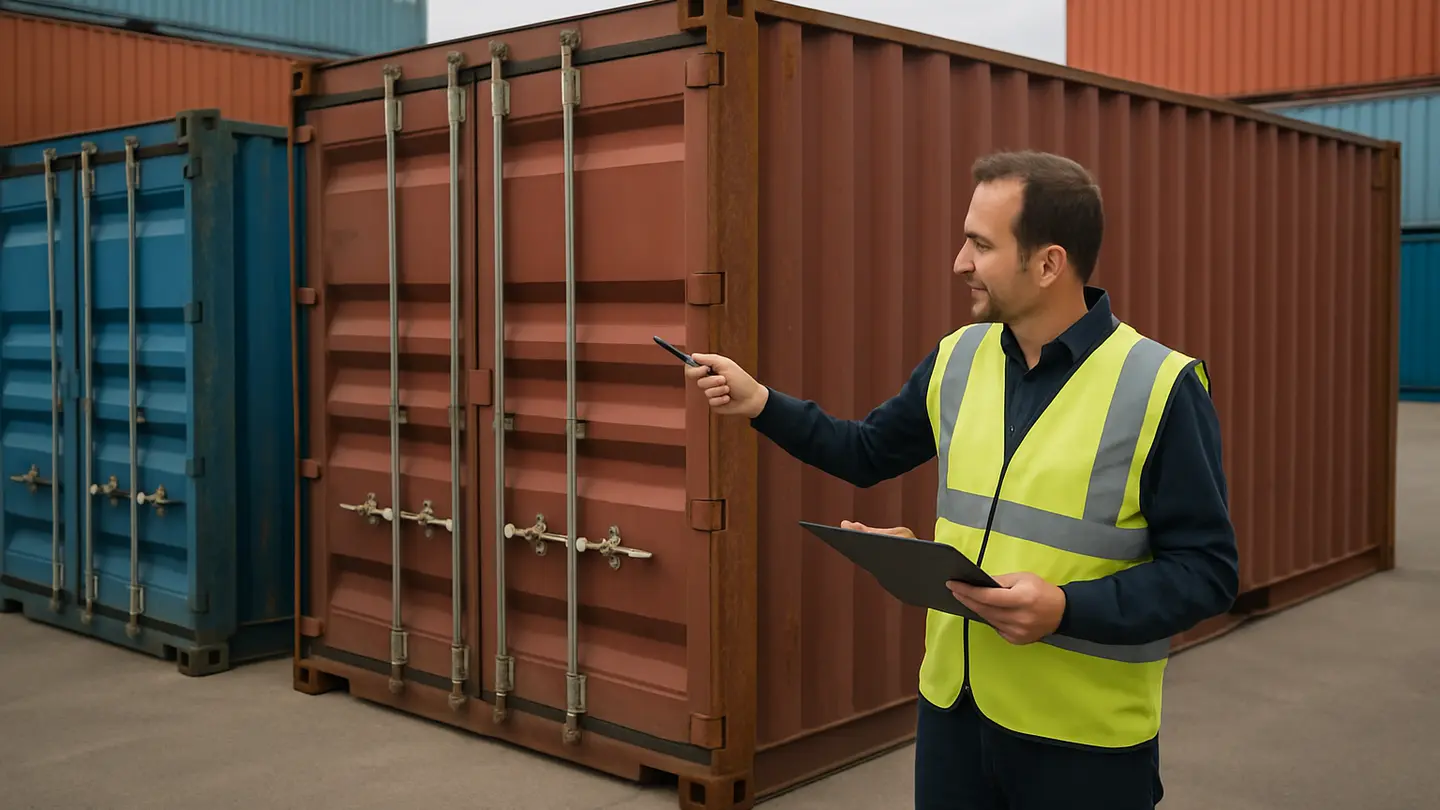
For importers comparing a 20ft vs 40ft container, the decision is not just about length. A 40ft container offers roughly twice the internal volume of a 20ft container, but it does not usually carry twice the cargo weight.
Dense goods such as tiles, hardware, stone, machinery parts, sanitary ceramics, and metal components may hit weight limits early. Light bulky goods such as furniture, plastic products, textiles, packaging, and assembled retail items usually run out of space first.
The best container choice depends on realistic loading capacity, packaging dimensions, pallet plans, cargo weight, handling method, and freight cost per shipped unit—not only published CBM.
What 20ft, 40ft, and High Cube Containers Actually Hold
Standard dry containers share a similar internal width, usually a little over 2.3 meters. The main differences are length and height. A 40ft container gives more floor length than a 20ft container, while a 40ft high cube adds extra height compared with a standard 40ft.
Typical figures vary by carrier, container age, and equipment type, but these planning ranges are useful:
| Container type | Typical internal volume | Practical loading range | Typical use case |
|---|---|---|---|
| 20ft standard dry container | About 33 CBM | Often around 25–30 CBM | Dense or heavy cargo |
| 40ft standard dry container | About 67 CBM | Often around 55–60 CBM | Light to medium-density cargo |
| 40ft high cube container | About 76 CBM | Often around 60–68 CBM | Light, stackable, bulky cargo |
A 20ft container is often selected for heavy goods because it can carry substantial weight in a smaller cube. Hardware, tiles, machinery parts, metal fittings, tools, stone products, and some ceramic goods may reach weight limits before needing the extra length of a 40ft container.
A 40ft standard container is common for volume-oriented shipments such as furniture, retail displays, household goods, shower enclosures in protective cartons, plastic accessories, and similar products.
A 40ft high cube keeps roughly the same floor footprint as a 40ft standard container but adds internal height. That extra height is valuable when cartons or pallets can be stacked safely. It is less useful when goods are heavy, fragile, irregular, or cannot be stacked.
In short, the 20ft vs 40ft container decision starts with three questions: how much floor area is needed, how high can the cargo be stacked, and how quickly will the shipment reach its weight limit?
Why Practical Loading Space Is Lower Than Published CBM
Published container capacity is based on internal dimensions. It assumes the entire container can be filled without gaps, pallets, securing materials, clearance, or irregular shapes. Real shipments rarely work that way.
Usable volume is lower because space is lost to:
- Gaps between cartons
- Carton sizes that do not match container width or length efficiently
- Pallet height and footprint
- Dunnage, corner protection, air bags, straps, and bracing
- Door clearance and fragile-item spacing
- Uneven cargo shapes
- Mixed SKU loading
- Load stability requirements
- Weight distribution limits
This is why a container with 33 CBM of internal volume may not safely carry 33 CBM of sellable product. A 40ft high cube may have about 76 CBM of theoretical space, but many shipments cannot use all of it.
Palletized loading reduces cube utilization because pallets take space and create fixed loading patterns. However, pallets improve handling speed, reduce manual unloading, protect cartons from floor moisture, and simplify warehouse receiving.
Floor loading can increase carton count, but it may add labor at origin and destination. It can also increase carton damage if goods are not packed and secured properly. For fragile or high-value goods, extra cube utilization may not justify higher claims risk.
Carton design can also change the result. A carton that seems reasonable for retail packaging may create repeated dead space in a container. Adjusting carton dimensions by a few centimeters can sometimes improve utilization without changing the product.
For B2B buyers, packaging should be reviewed early. If carton dimensions are finalized only after production, the importer may discover too late that the shipment pays freight on unusable empty space.
When Payload Limits Matter More Than Remaining Space
Payload becomes the binding limit when cargo is dense. This is where many buyers misunderstand the 20ft vs 40ft container comparison.
A 40ft container has nearly double the volume of a 20ft container, but it does not provide double the payload. Depending on equipment and route, a 20ft dry container may have a payload in the high-20-ton range, while a 40ft container may be similar or only moderately higher. Exact allowable cargo weight depends on container tare weight, maximum gross weight, carrier rules, port handling limits, and inland transport regulations.
For dense products, a 40ft container may still be partly empty when the legal or operational weight limit is reached. Loading more cargo simply because space remains can cause overweight trucking, port rejection, additional charges, safety risks, or destination delays.
Destination road-weight restrictions may matter more than container specification sheets. A container may technically be rated for a high payload, but the truck delivering it inland may not be allowed to carry that weight on certain roads. Some countries and regions strictly enforce axle-weight limits or require special permits for heavy containers.
Importers should distinguish between:
- Net product weight: weight of the goods only
- Carton gross weight: goods plus retail packaging, inner boxes, cartons, and inserts
- Shipment gross weight: total weight of all packed cargo
- Container gross weight: cargo plus container tare weight
Purchase orders often focus on unit quantity, but freight planning depends on packed cargo weight. Packaging, pallets, and protective materials can turn a manageable order into a weight-limited shipment.
How to Estimate Pallets, Cartons, and Total CBM
Pallet count is a quick test of whether a container plan is realistic. A shipment may be “about 48 CBM,” but that alone does not prove it will fit. Pallet dimensions, carton overhang, pallet height, and stacking pattern all affect the loading result.
Common pallet footprints differ by market. European pallets, standard North American pallets, and custom export pallets do not occupy the same floor space. A container that fits one pallet pattern efficiently may waste space with another.
Double stacking can improve utilization, but only when:
- The container has enough internal height.
- The lower cartons or pallets can support the upper load.
- The load remains stable during ocean and inland transport.
- The cargo can be secured without crushing or shifting.
High cube containers can help with double stacking, but height alone is not enough. Carton compression strength, pallet quality, moisture risk, and handling equipment also matter.
For loose cartons, the basic CBM calculation is:
Carton length × carton width × carton height × number of cartons
All dimensions should use the same unit. For example, a carton measuring 0.60 m × 0.40 m × 0.35 m has a volume of 0.084 CBM. If the shipment has 800 cartons, the theoretical carton volume is 67.2 CBM.
That does not automatically mean it fits in a 40ft standard container. Buyers must compare calculated carton CBM with realistic loading capacity, not only theoretical container volume. Irregular, fragile, mixed-SKU, or palletized cargo may require more space.
Before booking, ask the supplier or forwarder for a loading plan when shipments approach capacity. A simple container loading diagram can reveal whether the shipment is space-limited, weight-limited, or affected by poor carton fit.
When a High Cube Container Is Worth the Upgrade
A high cube container adds volume mainly through extra height. For a 40ft high cube, the additional internal height is commonly about 30 cm compared with a standard 40ft container. That creates extra capacity only when the cargo can use it.
High cube containers are best for light, bulky, stackable goods such as plastic products, textiles, foam items, lightweight furniture components, large low-density retail goods, and cartons designed for stable vertical stacking.
The upgrade is less useful when cargo is weight-limited. If a shipment reaches allowable payload before filling a standard 40ft container, extra headroom will not reduce cost per unit.
High cube containers may also be unsuitable when:
- Cargo cannot be stacked due to fragility
- Cartons deform under compression
- Product shapes are irregular
- Loading equipment cannot handle the added stack height
- Destination warehouses have unloading constraints
- The route has limited high cube availability
The decision should be commercial, not automatic. Compare 40ft standard and 40ft high cube quotes on the same lane, on the same day, with the same cargo data. If the high cube allows more units per container and the freight premium is modest, it may lower landed cost. If not, the standard 40ft may be better.
How Container Size Changes Freight Cost per CBM
A 40ft container often costs less than two 20ft containers, even though it offers close to double the volume. Many freight and handling charges are assessed per container rather than per cubic meter.
For space-limited cargo, the 40ft option can reduce cost per CBM when well used. A 40ft high cube may improve the calculation further if the extra height translates into more saleable units shipped.
A proper cost review should include:
- Ocean freight
- Origin trucking
- Origin terminal and documentation charges
- Export customs-related charges
- Destination terminal charges
- Destination customs-related charges
- Delivery trucking
- Unloading or warehouse handling
- Demurrage, detention, or storage risk
Some charges may be similar for 20ft and 40ft containers. Others vary by size, weight, port, or inland route. Heavy 20ft containers can create more inland trucking complexity than expected if local road rules are strict.
Compare container options using same-day quotes for the same origin, destination, Incoterms, cargo description, weight, and loading method. Freight markets move quickly, so comparing a 20ft quote from one week with a 40ft quote from another can mislead the decision.
Two practical metrics matter most:
- Cost per CBM: useful for space-limited cargo
- Landed cost per unit: useful for final sourcing and pricing decisions
Cost per CBM shows container efficiency, but landed cost per unit shows business impact. If a 40ft high cube reduces the freight allocation per retail unit, it may justify a higher total freight bill.
Packing Data to Confirm Before Booking a Container
Container choice should be based on packing data, not only purchase order quantity. A purchase order may say 5,000 units, but the container decision depends on how those units are packed, stacked, weighed, and loaded.
Before booking, request the following from the factory or supplier:
- Carton length, width, and height
- Carton gross weight
- Units per carton
- Total carton count
- Total shipment CBM
- Total gross weight
- Pallet dimensions, if palletized
- Number of pallets
- Maximum stack height
- Whether cartons can be double stacked
- Any “do not stack” or fragile handling requirements
Also confirm whether the goods will be palletized or floor loaded. If the buyer assumes floor loading while the supplier prepares pallets, the shipment may exceed planned container space. If the buyer expects palletized delivery but the supplier floor loads, destination unloading may become slower and more expensive.
Carton markings and loading sequence should be agreed before shipment. Mixed-SKU containers need clear identification so the receiving warehouse can unload and sort efficiently. If certain goods must be unloaded first, loaded last, separated from heavier cargo, or kept away from moisture-prone areas, those instructions should be written before stuffing.
Photo evidence is useful. Buyers commonly request photos of empty container condition, loading progress, cargo securing, container seal, and final closed doors. For higher-value shipments, a loading inspection can help confirm quantity, packaging condition, and container sealing.
Multi-supplier shipments require additional planning. When cargo comes from several factories, a consolidation warehouse may need to receive, inspect, relabel, palletize, and load the goods. Container utilization then depends on both supplier packing lists and the warehouse’s final loading plan.
FAQ
Q1: What if I cannot fill a whole container?
If the shipment is too small for a full container, less-than-container-load shipping or another shared-container service may be practical. This allows cargo from multiple shippers to move in the same container.
Compare shared-container and full-container options when the shipment approaches roughly half of a 20ft load. At that point, the difference between LCL-related charges and FCL charges may narrow.
Shared-container shipments can involve extra handling, longer transit processes, consolidation fees, deconsolidation fees, and destination charges. They may still suit small orders, trial shipments, spare parts, or urgent replenishment.
Q2: Is two 20ft containers cheaper than one 40ft?
For general freight movement, one 40ft container is usually cheaper than two 20ft containers. A 40ft container provides close to double the volume without doubling many per-container costs.
Two 20ft containers may make sense for very heavy cargo that cannot be legally or safely loaded into one 40ft container. Splitting weight across two boxes can help manage payload and inland transport limits.
Separate final destinations are another reason to use two 20ft containers. If half the cargo is going to one warehouse and half to another, separate containers may reduce later handling, domestic transfer costs, and sorting complexity.
Q3: Who decides how the container is actually loaded?
The party stuffing the container controls the physical loading process. For a single-supplier shipment, this is usually the factory. For a multi-supplier shipment, it is usually a consolidation warehouse or logistics provider.
The buyer should not leave critical loading decisions to verbal assumptions. Written instructions should cover loading sequence, weight distribution, cargo separation, pallet position, fragile goods, moisture protection, securing method, and photo requirements.
If cargo is heavy, uneven, or fragile, the forwarder or warehouse should confirm that the loading plan is safe for road and ocean transport.
Q4: Can I mix pallets and loose cartons in one container?
Yes. Pallets and loose cartons can be combined in one container, and mixed loading is common. Some goods may need pallets for protection or warehouse handling, while other cartons may be floor loaded to improve space utilization.
The loading plan should specify where each cargo type goes. Heavy or stable palletized cargo may be placed on the floor, while lighter cartons may be loaded around or above only if safe.
Loose cartons should not be stacked on pallets without proper separation, support, or securing. Otherwise, they may shift, crush, or fall during transport.
Final Takeaways for Choosing the Right Container
The right container depends on both volume and weight. A 40ft container gives much more space than a 20ft container, but it does not provide double the payload. Dense cargo is often weight-limited; light bulky cargo is often space-limited.
Real carton and pallet data helps buyers avoid paying to ship empty space. Theoretical internal CBM is useful for comparison, but practical loading capacity determines whether the shipment works.
Before fixing quantities or bookings, collect packing dimensions, gross weights, carton counts, pallet details, and stacking limits. Then compare 20ft, 40ft standard, and 40ft high cube options using realistic loading assumptions and current lane-specific freight quotes.
Author Bio
The author is an independent B2B trade writer focused on international sourcing, supplier coordination, and practical logistics planning for importers and manufacturers.