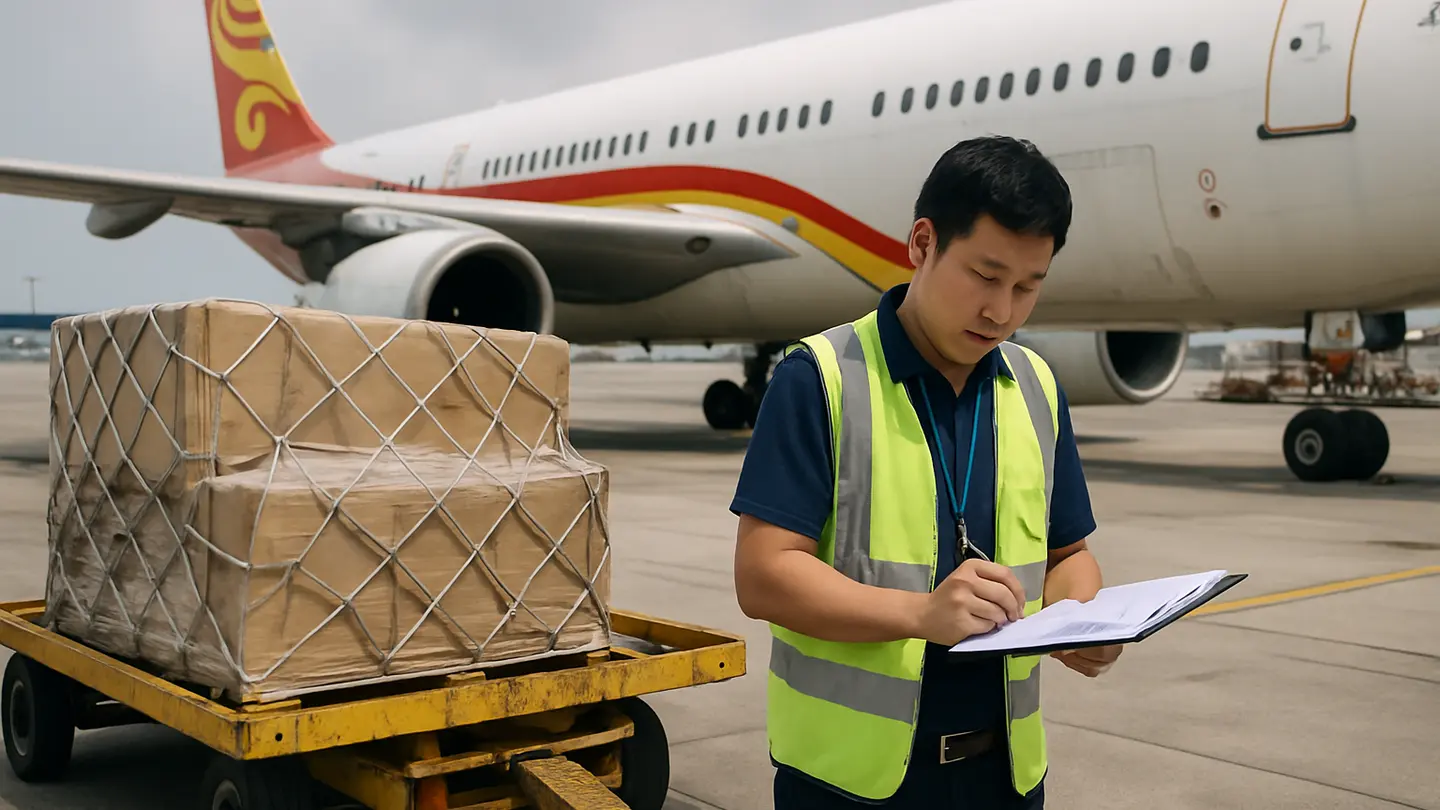
Air freight from China is often chosen when ocean freight is too slow and express courier is too expensive or unsuitable for the shipment size. It can be the right option for urgent replenishment, launches, spare parts, samples, or high-value goods where speed protects revenue.
The difficulty is that pricing is not based only on scale weight. Airlines and forwarders charge by chargeable weight, which is the greater of actual gross weight and volumetric weight. A shipment weighing 180 kg may be billed as 300 kg if the cartons take up enough aircraft space.
The final bill can also include origin pickup, export handling, terminal charges, fuel and security surcharges, customs brokerage, duties, taxes, destination handling, and final delivery. Packaging, consolidation, and shipment splitting can materially change whether air freight is economical.
Air Freight vs. Express Courier: Where the Complexity Begins
Express courier and air freight both move cargo by air, but they are not operationally the same.
Express courier services are usually designed for small parcels. One network typically manages pickup, export, flight movement, import clearance, and last-mile delivery. For samples, small replacement parts, documents, and low-volume e-commerce shipments, courier services can be simpler.
Air freight is more fragmented. A typical shipment may involve:
| Stage | Common party involved |
|---|---|
| Factory pickup | Local trucker or forwarder |
| Export handling | Origin warehouse or airport terminal |
| Air transport | Airline or air cargo carrier |
| Customs clearance | Customs broker |
| Destination handling | Airport terminal or destination agent |
| Final delivery | Local trucker or delivery provider |
Each handoff creates a coordination point. Cargo can miss a cutoff if the factory releases goods late. Documents may not match the physical shipment. The airline may confirm space but later adjust loading due to capacity or aircraft weight balance. The destination broker may need information before the flight lands.
For small shipments, these handoffs can make air freight less attractive than it first appears. A low airport-to-airport rate may look cheaper than express courier, but once pickup, handling, clearance, and delivery are added, the door-to-door cost and workload may be higher.
Before choosing air freight from China for a small shipment, compare:
- total door-to-door cost;
- expected transit time from factory to final address;
- customs clearance responsibility;
- documentation workload;
- risk of storage charges if clearance is delayed;
- delivery limits for remote addresses.
Air freight becomes more compelling when the shipment is too large or commercial for courier pricing, but still urgent enough to justify air transport.
How Airlines Calculate Chargeable Weight
Airlines charge for the space and weight cargo consumes on the aircraft. The billable figure is chargeable weight, which is the higher of:
- Actual gross weight — the real weight of the cartons, pallets, and packing materials.
- Volumetric weight — the space the shipment occupies, converted into kilograms.
A common air freight volumetric formula is:
Length × Width × Height in cm ÷ 6000 = volumetric weight in kg
For example, if one carton measures 80 cm × 60 cm × 50 cm:
80 × 60 × 50 = 240,000 cubic cm 240,000 ÷ 6000 = 40 kg volumetric weight
If the carton actually weighs 25 kg, it may be charged as 40 kg. If it weighs 48 kg, it may be charged as 48 kg.
This matters for light but bulky goods. Foam products, plastic housings, packaging materials, display stands, empty containers, and some bathroom accessories can occupy large aircraft volume without weighing much.
Some carriers, routes, and express services use different divisors, such as 5000 instead of 6000. A smaller divisor increases the volumetric weight, so buyers should not assume the same dimensions produce the same billed weight across all services.
Packaging decisions have a direct cost impact. Oversized cartons, excessive cushioning, empty space, and loosely packed parts can increase chargeable weight even when product weight is unchanged. Before booking, ask the supplier or forwarder to confirm:
- carton count;
- individual carton dimensions;
- gross weight per carton;
- pallet dimensions, if palletized;
- whether cartons can be repacked safely;
- whether mixed cartons can reduce empty space.
Reducing unnecessary volume is one of the most practical ways to lower air freight costs without negotiating the rate itself.
What an Air Freight Quote Really Includes
A per-kilogram air freight rate is only part of the quote. Buyers often receive a rate such as “USD X per kg,” but that figure may apply only to the airport-to-airport movement. It may not include collection from the factory, export paperwork, customs brokerage, duties, destination terminal handling, storage, or final delivery.
| Quote type | What it may cover | Main risk for buyers |
|---|---|---|
| Airport-to-airport | Air movement between origin and destination airports | Buyer must arrange pickup, clearance, and delivery separately |
| Door-to-airport | Factory pickup and export air movement | Buyer still manages destination clearance and collection |
| Airport-to-door | Air movement plus destination clearance and delivery | Origin export work may be excluded |
| Door-to-door | Pickup, export, air freight, import process, and delivery | Duties, taxes, inspections, and special charges may still be excluded |
Even door-to-door quotes can have exclusions. Common exclusions include:
- import duties and VAT/GST;
- customs examinations;
- storage or demurrage caused by clearance delays;
- remote area delivery fees;
- residential or limited-access delivery charges;
- repacking, relabeling, or palletizing;
- dangerous goods handling;
- airline security or screening surcharges;
- waiting time if cargo is not ready;
- charges caused by incorrect documents.
Request written inclusions and exclusions before booking. If the shipment is urgent, ask which charges are fixed and which are event-driven. A shipment held for inspection or missing consignee information can accumulate storage even if the original quote was accurate.
Rate breaks also influence cost. Air freight rates often become cheaper per kilogram above thresholds such as 45 kg, 100 kg, 300 kg, 500 kg, or 1,000 kg. A shipment rated at 98 kg may sometimes cost nearly the same as, or more than, one rated at 100 kg after the rate break is applied.
Why Current Rates Need a Live Quote
Air freight rates from China are volatile. They change with destination, airline capacity, fuel costs, cargo type, routing, holiday schedules, and seasonal demand. Peak retail periods, e-commerce surges, factory shutdowns, and disrupted ocean freight schedules can push more cargo into air.
Published rate ranges can help with budgeting, but they should not be treated as booking prices. A real quote is route-specific and time-sensitive. The same shipment may price differently depending on whether it departs from Shanghai, Guangzhou, Shenzhen, Xiamen, Qingdao, or another origin airport. Rates may also differ by airline service level, available space, and whether the cargo is dense, oversized, regulated, or easy to screen.
To get a usable live quote, prepare:
- pickup city and factory address;
- destination airport or final delivery address;
- total gross weight;
- carton count and dimensions;
- product description and HS code, if available;
- whether the cargo contains batteries, liquids, powders, magnets, or other regulated items;
- Incoterms agreed with the supplier;
- cargo-ready date;
- required delivery date;
- consignee/importer details;
- commercial invoice and packing list, if already available.
The more complete the inputs, the less likely the quote will change after booking.
Cargo That Must Be Declared Before Booking
Air cargo is subject to safety, dangerous goods, and security rules that differ from ocean freight. Some products that move routinely by sea may require additional checks, documents, packing, or airline approval before they can fly.
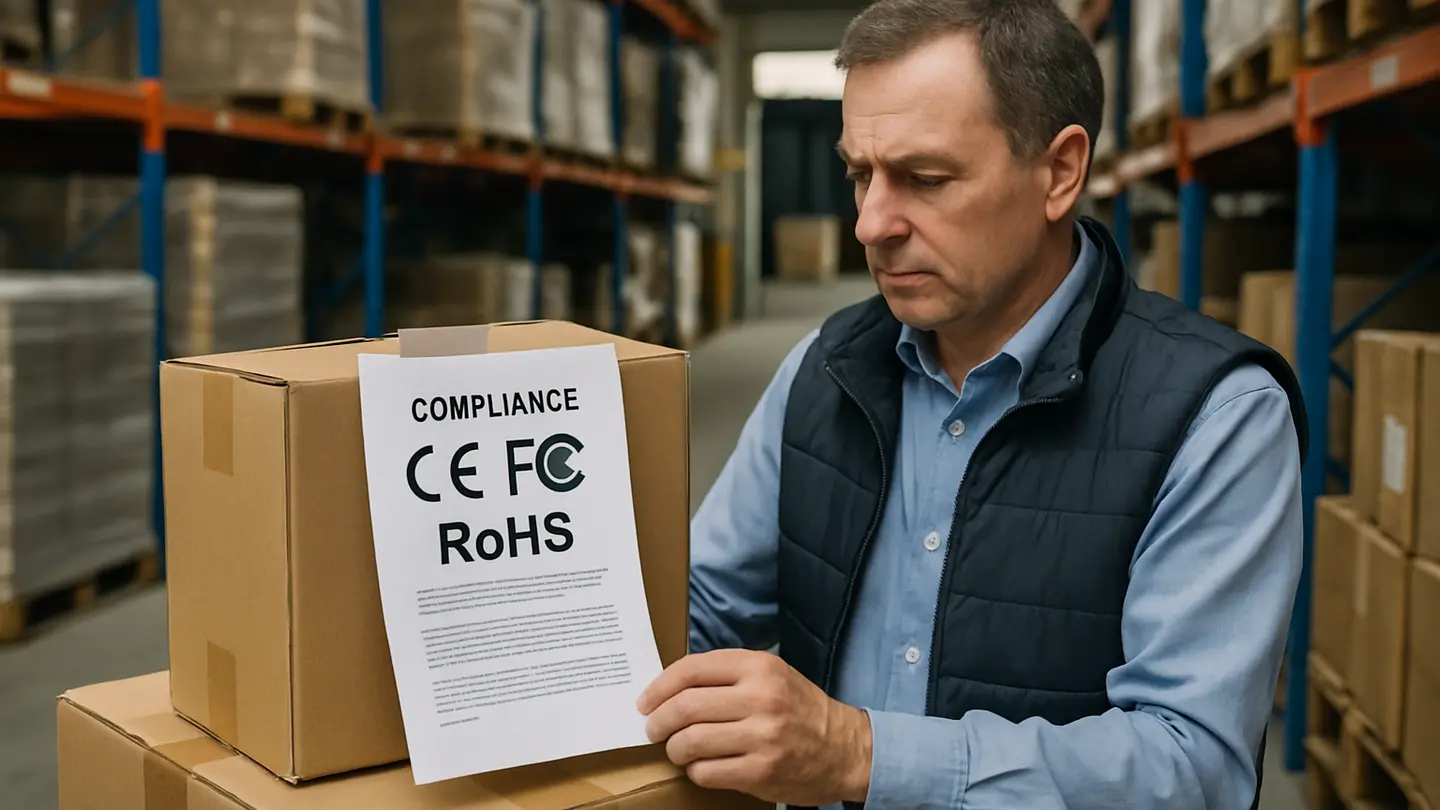
Declare unusual or regulated goods before booking space. Do not wait until cargo reaches the airport terminal. If the airline or screening facility rejects the goods, the shipment may miss the flight and incur handling or return charges.
Lithium batteries deserve special attention. Products with rechargeable batteries, spare batteries, battery packs, power banks, electronic controls, sensors, tools, and some bathroom or smart-home products may fall under battery transport rules. Requirements can include approved packing, correct labeling, documentation, and state-of-charge limits for certain battery types.
Other cargo categories that may need testing or special handling include:
- liquids, gels, and pastes;
- powders and chemical mixtures;
- aerosols or pressurized containers;
- magnets or magnetic assemblies;
- products with motors or electronic components;
- flammable materials;
- adhesives, coatings, or solvents;
- items with unclear composition.
Air cargo must also pass security screening before loading. Dense cartons, metal parts, mixed products, or poorly described goods may require extra inspection. Vague descriptions such as “accessories,” “parts,” or “samples” can create problems because airlines, customs, and screening agents need to understand what is being shipped.
Misdeclared cargo can be delayed, refused, fined, or returned. In serious cases, it can create legal and safety exposure.
Booking the Shipment and Managing the Airport Handoff
Air freight depends on accurate timing. A booking should be based on a realistic cargo-ready date, not the factory’s optimistic target. If goods are not packed, weighed, measured, inspected, and released on time, they may miss the truck cutoff or airport acceptance deadline.
The core documents usually include:
- commercial invoice;
- packing list;
- air waybill details;
- export declaration information;
- import customs information;
- product compliance documents, where applicable.
These documents must align. Inconsistencies between product descriptions, values, weights, carton counts, HS codes, consignee names, or addresses can delay export or import clearance. If the packing list says 30 cartons but the warehouse receives 32, the forwarder may need revised documents before tendering the shipment.
The air waybill is the transport document for air cargo. It identifies the shipper, consignee, routing, number of pieces, gross weight, and other shipment details. Errors can delay clearance or cargo release at destination.
A practical booking sequence is:
- Confirm the factory’s realistic cargo-ready date.
- Collect carton dimensions, gross weight, and product details.
- Request a quote with written inclusions and exclusions.
- Declare batteries, liquids, powders, magnets, or other regulated goods.
- Confirm pickup timing and airport cutoff.
- Review commercial invoice and packing list before cargo leaves the factory.
- Confirm the air booking status.
- Arrange destination customs clearance before flight arrival.
- Track arrival, clearance, and final delivery.
Destination clearance should not wait until the aircraft lands. The broker may need importer records, duty classification, tax ID details, permits, product compliance evidence, or payment instructions. If these are missing, the shipment can arrive quickly but sit at the destination airport.
Coordination among the factory, forwarder, broker, and consignee is the main operational challenge. Air freight is fast only when each party is ready before its step begins.
When Air Freight Can Be Worth the Premium
Air freight is expensive compared with ocean freight, but freight price alone does not always tell the full business story. The decision should be based on total commercial impact.
Faster transit can reduce working capital tied up in inventory. If goods spend fewer weeks in transit, a buyer may replenish closer to demand, reduce safety stock, or respond faster to sales trends. For high-margin or fast-moving products, availability may be worth the premium.
Air freight can be justified in situations such as:
- urgent product launches;
- seasonal sales windows;
- retail promotion deadlines;
- stockout prevention;
- replacement parts for installed products;
- warranty or service emergencies;
- production line stoppages;
- late supplier completion where ocean freight would miss the required date.
For example, if a buyer risks missing a retail delivery window, air freight may cost less than chargebacks, lost shelf space, or missed seasonal demand. If a key replacement part keeps a customer’s project moving, speed may protect the account relationship.
However, air freight is not automatically sensible for all urgent cargo. Dense, low-value goods often cannot justify the premium. Heavy hardware, low-margin commodities, and bulky packaging may produce a freight cost that overwhelms the product margin.
The value of speed depends on:
- product margin;
- demand certainty;
- inventory position;
- customer penalty risk;
- seasonality;
- availability of substitute stock;
- shipment density;
- likelihood of future repeat orders.
A common compromise is shipment splitting. The buyer sends a small urgent portion by air to cover immediate demand and ships the balance by sea.
FAQ
Q1: Can I combine cargo from several suppliers into one air shipment?
Yes. Cargo from several suppliers can often be consolidated into one air shipment. This may help the buyer reach a better rate bracket and reduce duplicate handling or documentation costs.
The goods must first move to a common warehouse or consolidation point in China. The forwarder then checks carton counts, dimensions, labels, documents, and export details before booking the combined shipment. Build in extra time for the slowest supplier, because one late delivery can delay the entire consolidation.
Q2: Who decides which flight my cargo actually takes?
The forwarder books air cargo space, and the airline confirms the booking. A confirmed booking is more reliable than a waitlisted booking, but it is still subject to capacity, aircraft weight balance, schedule changes, and cargo acceptance.
Buyers should verify booking status before planning around a specific flight. If the shipment is tied to a critical deadline, ask whether the cargo is confirmed, waitlisted, or moving under a flexible routing.
Q3: What happens if my cargo is bumped from a flight?
If cargo is bumped, it waits for the next available uplift. The delay may be a few hours on a frequent route, or several days if capacity is tight, the destination has limited service, or the shipment moves during peak season.
The forwarder should notify the buyer promptly if cargo is offloaded or rolled to a later flight. Buyers should then review customs clearance, delivery appointments, installation dates, or customer commitments.
Q4: Can I hold a booking while the factory finishes the last cartons?
Usually only for a limited time. Air freight space is tied to a specific flight and airport cutoff. If the cargo is not ready, the booking may expire or be released to other freight.
Tell the forwarder early if production is short, cartons are missing, or inspection is delayed. In some cases, a partial air shipment is better than missing several flights while waiting for the final cartons. The balance can follow by later air shipment or by ocean freight.
Conclusion: Control Packaging, Declarations, and Dates Early
Air freight from China works best when buyers manage key variables before booking. Packaging determines whether the shipment is charged by actual weight or volumetric weight. Tight packing and accurate carton dimensions can prevent unnecessary cost.
Declarations are equally important. Batteries, liquids, powders, aerosols, magnets, and other regulated goods should be identified before space is booked. Accurate product descriptions reduce the risk of terminal refusal, security delays, or airline rejection.
Timing must also be realistic. A booking based on an optimistic factory promise can fail if goods are not packed, inspected, and released on schedule. Production delays are one of the most common reasons a planned ocean shipment becomes an expensive emergency air shipment.
The best results come from early coordination: confirm dimensions, verify documents, disclose cargo characteristics, arrange customs clearance, and align the booking with a reliable cargo-ready date.
About the Author
The author writes independent B2B sourcing and logistics guides for buyers managing overseas procurement, supplier coordination, quality control, and international shipment planning. The focus is practical decision-making for importers comparing cost, risk, timing, and operational workload.