Choosing between Alibaba, Global Sources and Made-in-China is not just a platform preference. For buyers sourcing shower manufacturers, the right choice depends on product category, technical complexity, order value, verification depth and payment risk.
This guide compares Alibaba vs Global Sources vs Made-in-China from a practical procurement perspective: how to find suppliers, screen them and verify key details before paying a deposit.
Key Differences Between Alibaba, Global Sources and Made-in-China
Alibaba, Global Sources and Made-in-China all connect international buyers with Chinese suppliers, but they fit different sourcing needs. Alibaba is usually the broadest marketplace for consumer goods, private-label products and lower-MOQ discovery. Global Sources is often stronger for technical, export-oriented suppliers. Made-in-China is commonly associated with industrial goods, machinery, components and factory-grade sourcing.
For shower product sourcing, Alibaba may fit private-label handheld shower sets. Global Sources may suit electronic smart shower controls. Made-in-China may be useful for molds, brass components, stainless fittings, production equipment or industrial-grade bathroom hardware.
| Criteria | Alibaba | Global Sources | Made-in-China |
|---|---|---|---|
| Supplier discovery | Very broad discovery across many consumer categories | More curated access, especially for technical and export-oriented categories | Strong for industrial products, machinery, components and factory-grade sourcing |
| Shower sourcing fit | Shower heads, shower sets, bathroom accessories, private-label goods | Technical bathroom hardware, smart controls, electronic components, compliance-heavy products | Valves, fittings, molds, machinery, hardware components, industrial bathroom-related products |
| Verification signal | Badges and profiles help early screening, but require follow-up | Often viewed as more curated, but still requires independent verification | Profiles may include operational and audit details, but buyers must verify |
| Payment protection | Trade Assurance can help when order terms, specs and evidence are clear | Less built-in escrow; payment terms are often negotiated directly | Secured Trading can help in some cases, but protection is document-dependent |
| MOQ flexibility | Often better for pilots and smaller trial orders | Often more suitable for established B2B buyers and larger export orders | Often more suitable for industrial or higher-MOQ purchasing |
| Main buyer risk | Too many listings, brokers, duplicated products and weak documentation | Less integrated transaction protection and potentially higher MOQ expectations | Technical capability and payment verification still need confirmation |
This comparison is not a ranking. Each platform can be useful, but none removes the need to verify supplier identity, production capability, quality control and bank details before payment.
Product Category Fit Should Be Your First Risk Filter
The first question is not “Which platform is safest?” It is “Which platform is most suitable for this product?”
Alibaba is usually the broadest choice for OEM, ODM, private-label and consumer product discovery. If you are sourcing shower heads, hoses, slide bars, caddies, bathroom accessory sets or retail-ready shower kits, Alibaba can produce many options quickly. The advantage is speed and variety. The disadvantage is noise: similar listings may come from factories, trading companies, brand distributors or brokers using the same images.
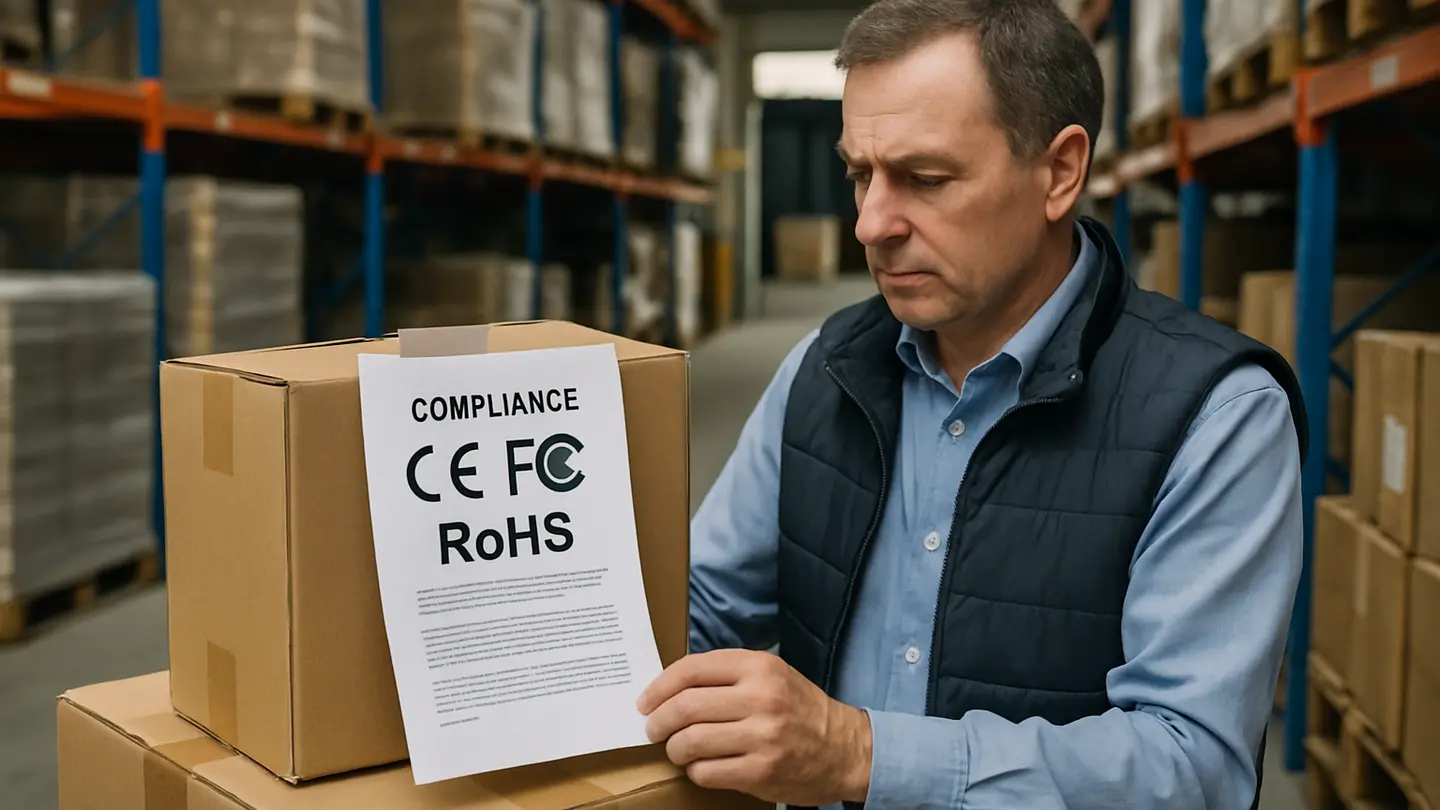
Global Sources tends to be more relevant when the shower-related product includes electronics or technical compliance requirements, such as digital shower controllers, touch panels, smart bathroom devices or sensor-based components.
Made-in-China is often better aligned with industrial and factory-grade sourcing, including brass valves, stainless fittings, molds, production equipment, glass-processing machinery and hardware components. If your need is closer to manufacturing inputs than retail consumer goods, Made-in-China may provide more relevant supplier profiles.
Search the same shower product across all three platforms. If the same photos, model numbers and specifications appear under multiple company names, investigate carefully.
Supplier Badges Are Not the Same as Factory Verification
Supplier badges are useful early screening signals, but they are not proof that a company can manufacture your shower products. A badge may show that a supplier submitted documents, passed a platform process or provided certain information. It does not prove the supplier owns machinery, controls production or has the quality systems needed for your order.
For shower manufacturer sourcing, request third-party audit reports where available. Check:
- Legal company name and registered address
- Factory address and workshop area
- Production equipment and machinery ownership
- Number of workers and QC staff
- Main product lines
- Production capacity claims
- Export experience
- Quality-control procedures
Marketing photos are weaker evidence than audited operational data. A clean showroom photo does not prove that the company controls die casting, plating, assembly, glass processing, leak testing or packaging.
The bank beneficiary name is especially important. Before sending a deposit, confirm that the beneficiary name on the proforma invoice matches the audited legal entity or a clearly explained, verifiable related entity. If the platform profile, business registration, audit report and bank account all show different names without a credible explanation, pause the transaction.
Global Sources may have fewer disguised trading companies in some technical categories, but that should not be treated as automatic factory verification.
Payment Protection Depends on Enforceable Order Documents
Escrow and platform protection are only as strong as the documents behind the order. Alibaba Trade Assurance is generally more integrated for buyer protection than Global Sources’ direct transaction protection. Made-in-China Secured Trading can also be useful in certain transactions. However, none of these tools can protect a buyer from vague specifications.
If you are sourcing shower products, avoid terms such as “high quality,” “premium finish” or “standard model” without measurable details. Instead, include:
- Material grade, such as brass, stainless steel or ABS where applicable
- Finish requirements, such as chrome plating, brushed nickel or matte black
- Coating thickness or testing standard if relevant
- Thread size, hose connection and fitting compatibility
- Flow-rate requirements
- Pressure testing requirements
- Cartridge, valve or diverter specifications
- Packaging, labeling and barcode requirements
- Approved golden sample reference
- Inspection standard and defect classification
Disputes are easier to support when you have a signed PO, confirmed specifications, inspection photos, defect records and a retained golden sample.
Fast Replies Do Not Prove Engineering Capability
Fast replies are helpful, but they do not prove engineering depth. Many RFQ responses are handled by sales staff who can quote quickly but cannot answer technical questions about materials, tolerances, tooling, plating, pressure resistance or compliance documents.
Alibaba can be fast because many suppliers respond quickly and compete for inquiries. That helps early market scanning, but it can become noisy for custom or technical shower products. Global Sources suppliers may be more likely in some technical categories to involve engineers in detailed RFQs, but buyers should still test this directly.
For shower manufacturers, ask questions that reveal real capability:
- What material is used for the body, handle, valve core and fittings?
- What pressure test is performed before shipment?
- What thread standard is used for the target market?
- Can the supplier provide plating or salt spray test information?
- Which components are made in-house and which are outsourced?
- Can they modify tooling, flow rate, packaging or finish?
- What certifications or compliance documents are available where applicable?
A live video call can help. Ask the supplier to show production lines, assembly areas, testing equipment, warehouses and QC stations. If they avoid the workshop or only show a sample room, verify further.
The Cheapest Quote May Not Deliver the Lowest Landed Cost
The lowest unit price is not always the lowest total cost. In shower sourcing, a low quote can hide material substitution, thin plating, weak packaging, poor leak testing, outsourced production or quality fade after the first order.
Landed cost includes more than the factory price. Professional buyers should consider:
- Supplier audit cost
- Sample cost and courier fees
- Mold or tooling fees
- Pre-production sample approval
- Product testing and compliance checks
- Pre-shipment inspection
- Rework or replacement costs
- Freight, duties and insurance
- Delays caused by defects or missed shipment dates
- Customer returns and after-sales claims
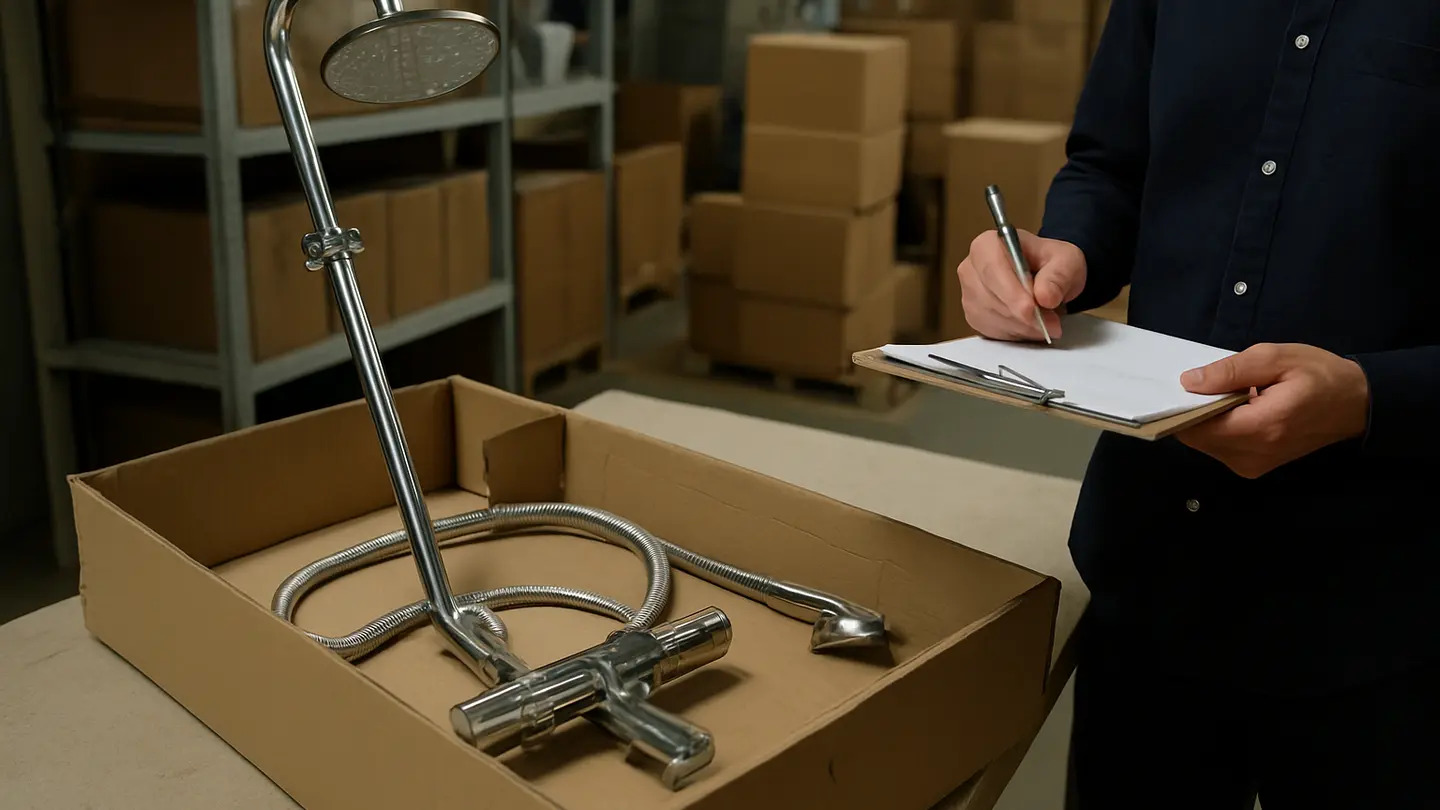
Skipping inspection can be expensive if shower products arrive with leaking valves, scratched finishes, mismatched accessories or weak packaging. Sourcing platforms reduce the time needed to find suppliers, but they do not remove the cost of qualifying a factory.
A 10-Step Off-Platform Verification Process Before Payment
After you shortlist shower manufacturers from Alibaba, Global Sources or Made-in-China, use a structured verification process before paying a deposit.
Confirm the legal entity. Request business registration documents and compare the legal name with the platform profile, quotation and invoice.
Verify the factory address. Check whether the listed factory address matches audit documents, video evidence and shipping documents.
Match the bank beneficiary. The bank account beneficiary should match the verified supplier entity or be clearly documented as a legitimate related entity.
Review third-party audit reports. Look for machinery, workshop area, headcount, QC staffing, production lines and main product categories.
Confirm manufacturing scope. Ask which processes are in-house and which are subcontracted, such as casting, machining, polishing, plating, assembly or packaging.
Request technical documentation. For shower products, this may include material specifications, test reports, pressure-test procedures, finish information and compliance documents where relevant.
Develop and approve a golden sample. The approved sample should become the physical reference for production quality, finish, dimensions and packaging.
Lock the specification sheet. Include drawings, photos, materials, tolerances, finish, packaging, labels, inspection standard and defect definitions in the PO.
Start with a pilot order. A smaller first order helps test communication, production control, packaging quality and shipment reliability.
Inspect before final payment. Use pre-shipment inspection and review the first shipment’s real performance before scaling volume.
This process applies regardless of platform. The goal is to move from “supplier found online” to “supplier verified for this specific shower product.”
Platform Pros and Cons for Serious B2B Buyers
For professional buyers, the choice between Alibaba, Global Sources and Made-in-China should be based on risk, category fit and procurement workflow. Each platform can support supplier discovery, but serious B2B sourcing requires more than collecting quotations.
Alibaba: Broad Supplier Discovery with More Vetting Work
Alibaba is usually the easiest starting point for broad supplier discovery. It is especially useful when sourcing consumer-oriented shower products such as handheld shower heads, shower sets, hoses, bathroom shelves, drains, accessories and private-label retail packs.
The main advantage is breadth. Buyers can compare many designs, finishes, packaging options and MOQ levels quickly. Alibaba may also be practical for pilot orders because many suppliers are willing to discuss smaller quantities than more industrial platforms.
Trade Assurance can help protect deposits and order performance when the transaction is documented properly. However, protection depends on clear specifications, signed order terms, inspection evidence and timely dispute documentation.
The main limitation is vetting workload. Alibaba has many suppliers, and buyers must separate direct manufacturers from trading companies, brokers and catalog resellers. Before placing a higher-value order, use live video verification, audit reports, sample approval and pre-shipment inspection.
Global Sources: Stronger Technical Access but Less Built-In Escrow
Global Sources is often a better fit for buyers sourcing technical products, electronics and export-oriented hardware. For shower-related procurement, it can be useful when products involve smart controls, sensors, electronic bathroom devices or compliance-heavy components.
A practical advantage is that suppliers in technical categories may be more familiar with Western documentation expectations. They may also be more prepared to discuss compliance, engineering requirements and export-market standards. Trade show interaction can further improve accountability because buyers can meet suppliers and compare samples beyond online messaging.
The limitation is payment protection. Global Sources does not offer the same level of integrated escrow workflow associated with Alibaba Trade Assurance. Buyers often need to negotiate payment terms directly, such as T/T or L/C where appropriate. That makes supplier checks, contract documents and inspection controls especially important.
Global Sources may be less suitable for very basic commodity sourcing where the buyer mainly needs a fast, wide list of low-MOQ consumer-goods suppliers.
Made-in-China: Industrial Sourcing Strength with Verification Still Required
Made-in-China is often strong for industrial equipment, machinery, components and factory-grade sourcing. In the shower supply chain, that may include brass valves, stainless steel parts, molds, fittings, machinery, glass-processing equipment and hardware components rather than only finished retail shower sets.
Supplier profiles may include operational details and downloadable audit information, which can help buyers assess factory capability. Made-in-China’s Secured Trading can be useful for certain orders, including situations where payment release is linked to agreed order conditions or inspection steps. Buyers should still read the terms carefully and avoid assuming that platform protection replaces proper documentation.
The main risk is technical verification. If a component requires tight tolerances, pressure performance, surface finish consistency or compatibility with market-specific fittings, independent engineering review may be necessary. Alibaba may still be better for lightweight consumer-goods discovery, while Made-in-China may be more useful for industrial procurement.
FAQ
1. Is Alibaba cheaper than Made-in-China?
Alibaba may appear cheaper in many searches because many suppliers and brokers compete with low visible quotes. For simple shower accessories or commodity items, you may see low prices quickly.
Made-in-China may produce better pricing for some industrial goods when direct factories respond, especially for components, machinery, molds or factory-grade materials. However, there is no universal rule. The real price depends on supplier identity, material grade, finish, production process, MOQ and packaging.
For shower products, compare itemized BOMs rather than headline unit prices. A cheaper shower head may use lighter materials, thinner plating, lower-grade cartridges or weaker packaging.
2. Is it safe to buy directly from Global Sources?
It can be safe if the supplier is properly verified and the transaction is controlled with clear documents, but Global Sources does not provide the same Alibaba-style integrated escrow workflow. Buyers may need to negotiate payment terms directly, such as T/T or L/C depending on order size and relationship.
Before paying, verify the legal entity, bank beneficiary, audit documents and production capability. Use a detailed PO, approved sample and inspection standard. For shower products, final balance payment should depend on satisfactory inspection evidence, especially for finish quality, leakage, packaging and quantity checks.
3. Can individuals buy from Made-in-China, or is it only for businesses?
Individuals may be able to contact suppliers on Made-in-China, but the platform is primarily designed for B2B purchasing. Many suppliers expect MOQs, formal quotations, business communication and freight arrangements that are not practical for one-off retail purchases.
Made-in-China is more oriented toward machinery, raw materials, components and factory-grade equipment. If an individual wants one shower head, a replacement hose or a small consumer bathroom item, a retail platform such as AliExpress may be more practical.
4. What is the main difference between Alibaba and Global Sources?
Alibaba is generally stronger for mass-market consumer goods discovery. It has a larger supplier pool and is useful for private-label products, low-to-medium MOQ sourcing and fast comparison of shower product options. The trade-off is that buyers must do more manual vetting to identify true manufacturers and avoid weak documentation.
Global Sources is generally stronger for export-ready technical products, especially electronics and compliance-heavy categories. Suppliers may be more familiar with documentation requirements for Western markets. For technical products, buyers should still request relevant documents, such as CE or FCC documentation where applicable, and confirm that the supplier can support the engineering and compliance needs of the target market.