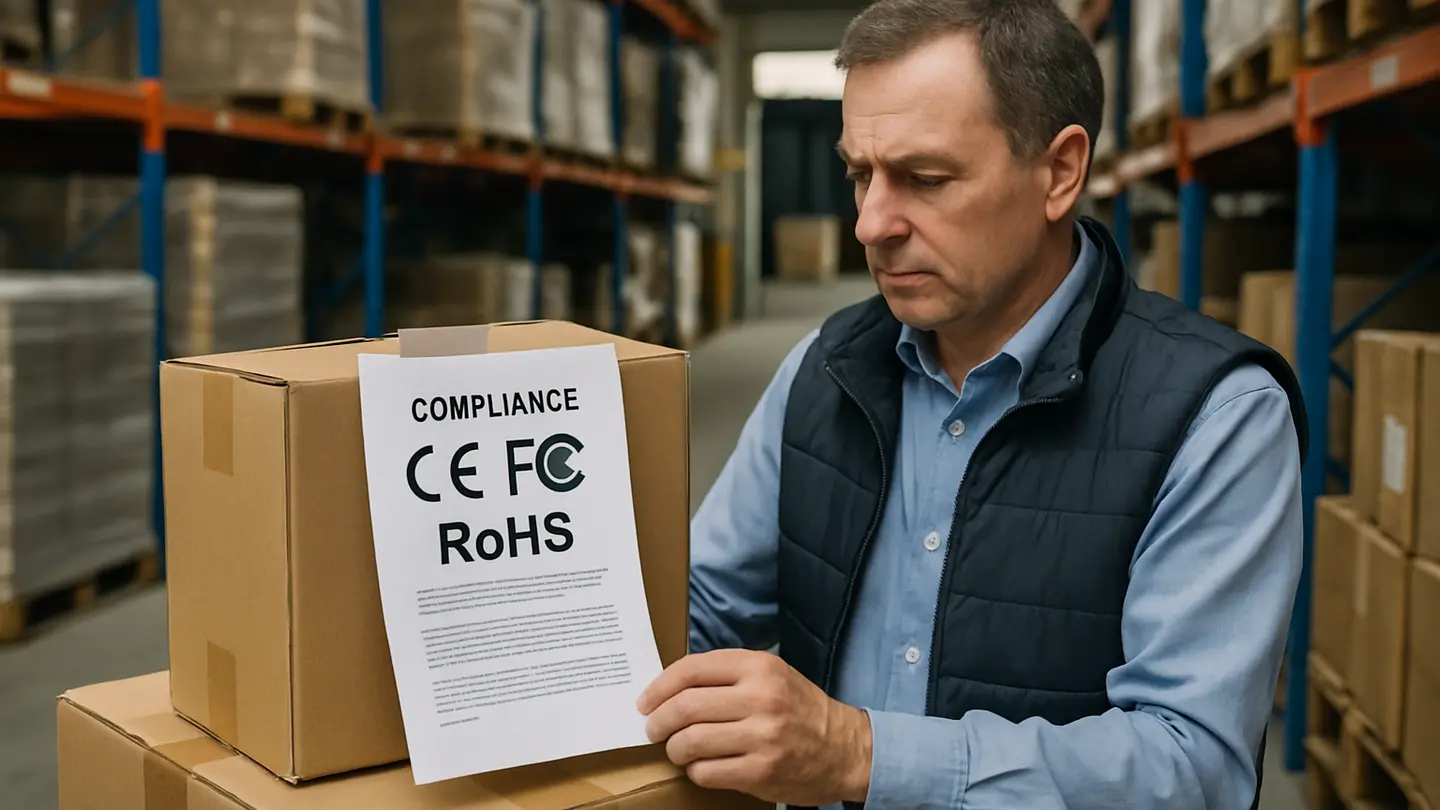
Alibaba is best approached as a B2B sourcing marketplace, not as a retail checkout page. A safe order depends less on a supplier’s listing and more on the controls established before money changes hands: supplier vetting, complete specifications, an approved sample, clearly documented shipping terms, protected payment records, and independent inspection.
For buyers asking how to order from Alibaba safely, the central principle is simple: every important agreement should be documented in the order, and no final payment should be released until the goods meet the agreed standard. Trade Assurance can provide a useful platform-based transaction record and dispute route, but it does not replace disciplined sourcing management.
Avoid requests to pay a personal bank account, transfer money outside the Alibaba order, or accept major specification changes through informal messages. Keep commercial terms, payment milestones, and approval records on the platform wherever possible. The final unpaid balance is one of the buyer’s strongest controls, so retain it until agreed quality checks are complete.
Step 1: Begin With Suppliers You Have Already Vetted
Do not begin with the lowest unit price shown in a product listing. Alibaba listings are useful for identifying potential suppliers, but they do not prove that a supplier can make your exact product consistently, meet your quality requirements, or communicate effectively during production.
Start with a shortlist of suppliers that have already been assessed for:
- Product capability and relevant production experience
- Communication speed, clarity, and willingness to answer technical questions
- Business identity and whether the company is a manufacturer or trading company
- Sample quality and consistency
- Production lead time and realistic capacity
- Export experience for your destination market
- Ability to provide the necessary product, packaging, and compliance documentation
A trading company is not automatically a poor choice. A capable trading company may offer broader sourcing support, coordinate several product categories, or handle export logistics well. However, buyers should know who controls production and who is responsible if technical problems arise. For customized shower products, fittings, valves, enclosures, or sanitaryware, direct access to the actual production team can be especially valuable.
Compare at least several qualified suppliers using the same evaluation criteria. A very low quote may reflect thinner materials, simpler finishes, omitted testing, lower-grade packaging, or assumptions that are not obvious from the listing. Ask suppliers to explain what is included rather than assuming their quote matches another supplier’s offer.
For technical or custom products, assess whether the supplier can correctly interpret drawings. Send a controlled specification package and observe the response. If a supplier overlooks a critical dimension, misunderstands a finish requirement, or gives vague answers about tolerances, that is a warning before production begins—not a problem to discover after shipment.
Step 2: Request a Detailed Quote and Approve a Sample
A meaningful quote requires a meaningful request. Send each shortlisted supplier the same specification package so that their prices, lead times, and terms can be compared fairly.
Your request for quotation should normally include:
- Product name, model, and intended application
- Drawings, dimensions, and tolerances
- Materials and required grades or thicknesses
- Finish, color, coating, and surface-quality requirements
- Components, accessories, and assembly requirements
- Required testing or performance standards
- Order quantity and expected repeat-order volumes, if relevant
- Packaging requirements, carton markings, labels, and palletization
- Target Incoterm and destination
- Sample lead time, mass-production lead time, and payment terms
For shower-related products, details that appear minor can materially affect quality and cost. For example, specify glass thickness and safety treatment, brass grade, plating standard, cartridge type, flow-rate requirements, thread standards, corrosion resistance, and carton protection. “Chrome shower set” or “matte black mixer” is not a complete specification.
When quotes arrive, compare more than the unit price. Check whether each supplier has quoted the same material, finish, packaging, tooling, testing, and shipping basis. If one quote is substantially cheaper, ask the supplier to identify every difference from the requested specification.
Before placing a bulk order, purchase and evaluate samples. The sample process should confirm not only visual appearance, but also function, construction, fit, finish, packaging, and documentation. Test the sample under conditions that resemble its intended use where practical.
Once accepted, label the sample as the approved production reference. Record the approval date, supplier, product version, and any agreed deviations. Keep photographs and measurements. For critical products, retain a sealed “golden sample” that can be referenced during inspection. The approved sample should be linked directly to the final Alibaba order rather than treated as an informal understanding.
Step 3: Confirm Incoterms, Shipping Responsibilities, and Landed Cost
A low product price does not necessarily mean a low total purchase cost. Buyers should evaluate landed cost: the combined cost of goods, packaging, freight, insurance where applicable, customs clearance, duties, taxes, port or terminal charges, local delivery, and any handling fees.
Before confirming an order, clarify:
| Item to confirm | Why it matters |
|---|---|
| Incoterm | Defines the division of transport, risk, and cost responsibilities. |
| Freight method | Air, courier, rail, sea LCL, and sea FCL have different cost and timing profiles. |
| Delivery location | A quote to port is not the same as delivery to your warehouse. |
| Carton and pallet details | Volume and weight affect freight charges and damage risk. |
| Customs responsibility | Establish who arranges export documents, customs clearance, duties, and taxes. |
| Local charges | Destination terminal, handling, demurrage, and delivery charges can be significant. |
| Importer-of-record status | The legal importing party must be correctly identified before shipment. |
Under EXW (Ex Works), the buyer generally takes responsibility from the supplier’s premises. This can create substantial work for an overseas buyer, including collection, export arrangements, freight booking, and document coordination. EXW may be workable when the buyer has an experienced freight forwarder, but it is not a simple default option.
Under FOB (Free On Board), the supplier generally manages export handling up to loading the goods on the vessel at the named port, while the buyer arranges the main freight and onward logistics. FOB can give buyers more control over shipping costs and carrier selection, but it requires capable freight management.
DDP (Delivered Duty Paid) can appear convenient because the quoted amount may include delivery and import-related costs. However, buyers should ask exactly what is included, how duties and taxes are handled, and who will act as the importer of record. Do not assume a DDP shipment is automatically compliant with local tax, product, or customs rules. The buyer remains responsible for understanding the legal implications in the destination market.
Obtain freight quotes based on actual carton dimensions, gross weight, and ready date. A product that is economical by sea container may be uneconomic when shipped in small LCL volumes or by air.
Step 4: Create a Protected Alibaba Trade Assurance Order
Once the supplier, sample, price, and logistics basis are agreed, create the order through Alibaba’s Trade Assurance process where available and appropriate. The objective is to establish a clear platform record of what the supplier must deliver and how payment will be released.
A common structure is a production deposit followed by a balance payment before shipment. The exact ratio depends on the product, supplier relationship, tooling requirements, and order value. What matters is that the buyer does not pay the full amount before production and inspection controls have been completed.
The Alibaba order should document, at minimum:
- Supplier and buyer legal details
- Product descriptions and quantities
- Unit prices, total order value, and currency
- Payment schedule and payment method
- Approved drawings, specification sheets, and sample references
- Materials, dimensions, tolerances, finishes, and performance requirements
- Packaging, barcode, label, and carton-marking requirements
- Production completion date and shipping deadline
- Agreed Incoterm, port, or delivery location
- Inspection requirements and acceptance criteria
- Defect handling, replacement, rework, or credit expectations
- A requirement for buyer approval before shipment
Attach important files rather than relying on broad descriptions in chat messages. “As discussed” is weak language if the discussion is not organized, attached, and unambiguous.
Include a written change-control rule: no material, drawing, component, finish, packaging, or sample change may be made without the buyer’s written approval. This is especially important where components may be substituted due to supply constraints. A supplier should not be allowed to replace a specified cartridge, glass thickness, coating process, or packaging insert without approval.
State clearly that shipment requires written buyer release following the agreed inspection process. This does not eliminate every risk, but it makes the buyer’s expectations visible and preserves leverage before goods are handed to the carrier.
Step 5: Release the Final Balance Only After Inspection
A pre-shipment inspection is one of the most practical safeguards in international sourcing. It should occur when the order is substantially complete and packed, but before the final balance is released and before the goods leave the supplier’s control.
The inspection may be performed by the buyer’s staff, a qualified third-party inspection company, or another appointed representative. The inspection scope should be based on the approved sample and written order requirements, not on a general impression of whether the goods “look acceptable.”
Typical checks include:
- Quantity completed and quantity packed
- Product dimensions, materials, and component conformity
- Functionality and assembly
- Finish quality, color consistency, and visible defects
- Leakage, pressure, flow, or operational testing where relevant
- Packaging strength and accessory completeness
- Carton labels, barcodes, manuals, and shipping marks
- Random sampling of packed cartons and product units
For shower fixtures and bathroom products, inspectors may check scratches, plating consistency, ceramic cartridge operation, thread compatibility, missing seals, leakage, glass defects, and whether protective packaging prevents transit damage. The correct inspection plan depends on the product category and risk level.
Require an inspection report with photographs, measurements, defect descriptions, and a clear pass, conditional pass, or fail conclusion. If defects are found, document the quantity affected and the specific requirement that was not met. The supplier can then rework, replace, sort, or repack goods before shipment.
The unpaid balance creates commercial leverage. Once the full balance is paid and goods are in transit, correcting a production problem becomes much harder. Inspection is not merely a quality exercise; it is a payment-release condition.
How an Alibaba Trade Assurance Claim Works in Practice
If a supplier fails to meet the documented order terms, raise the issue through the relevant Alibaba order rather than relying only on private emails, messaging apps, or phone calls. Platform-based dispute handling is strongest when the key facts are visible in the transaction record.
Useful evidence can include:
- The Alibaba order and attached specifications
- Approved drawings and approved sample records
- Written messages confirming requirements or changes
- Pre-shipment inspection reports
- Photographs and videos showing defects
- Packing lists, shipping documents, and delivery records
- Records of quantities received and products tested
- A clear comparison between what was agreed and what was delivered
For example, a complaint that “the finish is poor” is difficult to assess without defined acceptance criteria. A claim supported by a specified finish standard, approved sample photographs, inspection findings, and images of nonconforming units is much stronger.
Raise problems promptly and within the applicable platform deadlines. Delayed claims can become harder to support, particularly after goods have been installed, modified, mixed with other inventory, or resold. Preserve packaging, retain affected units where possible, and avoid making changes that could obscure the original condition.
Trade Assurance should be viewed as part of a broader risk-control system. It is more effective when the order is specific, payment stays on platform, and the buyer has gathered evidence before shipment.
FAQ
Q1: Is the Alibaba order enough, or do I need a separate contract?
For routine purchases, a well-documented Alibaba Trade Assurance order can serve as the central transaction record. It should include the complete specification, payment schedule, delivery terms, inspection conditions, and attachments.
For high-value, highly customized, or long-term supply arrangements, a separate signed purchase agreement may be sensible. It can address intellectual property, tooling ownership, confidentiality, warranty obligations, governing law, dispute remedies, and liabilities that may not fit neatly within a marketplace order. The separate agreement should match the Alibaba order rather than contradict it.
Q2: How small an order can I place, and can I negotiate the minimum?
Minimum order quantities vary by supplier, product type, material, finish, and level of customization. A supplier may accept a small order for a standard item but require a much larger quantity for custom colors, branded packaging, special tooling, or nonstandard components.
Ask whether the supplier can offer a reduced MOQ for a first order, sample run, or market test. Be clear that the MOQ must apply to the exact configured product you intend to buy—not simply the quantity shown on a generic listing.
Q3: The supplier’s English is limited, so how do I keep the order clear?
Use short, numbered written requirements rather than long verbal explanations. Each requirement should cover one point, such as material, dimension, finish, packaging, or test standard.
Support text with annotated drawings, photographs, color references, and examples of acceptable and unacceptable defects. For complex products, a bilingual specification sheet can reduce ambiguity. Ask the supplier to confirm each key point in writing and to identify any item they do not understand before production starts.
Q4: Can I place a Trade Assurance order for a fully custom product?
Custom-product eligibility can depend on the supplier and the order details. Where a Trade Assurance order is available, make the custom scope as measurable as possible. Attach drawings, tolerances, bills of materials where relevant, artwork files, packaging layouts, and approved-sample references.
Do not assume tooling, product development, or engineering work receives the same practical protection as finished goods. Define tooling ownership, revision approval, sample stages, and acceptance criteria separately before paying development charges.
Conclusion: Treat Alibaba Ordering as a Controlled Sourcing Process
Alibaba can be an effective channel for identifying and ordering from international suppliers, but safe purchasing depends on process discipline rather than supplier claims alone. Vet suppliers before ordering, use a complete specification package, approve samples, compare landed cost, document terms in the Alibaba order, and keep payment milestones under control.
The strongest protection comes from combining written requirements with an approved production reference and a pre-shipment inspection. Do not release the final balance simply because the supplier says the goods are ready. Release it when the documented inspection evidence shows that the goods meet the agreed standard.
Buyers remain responsible for defining product requirements, approving changes, understanding import and compliance obligations, and managing payment release. Treat each Alibaba order as a controlled sourcing project, and the risk of costly misunderstandings is substantially reduced.
About the Author
The Shower Manufacturer editorial team covers B2B shower and bathroom-product sourcing, supplier evaluation, quality control, product specifications, and international procurement considerations for professional buyers.