Amazon FBA Products From China: What Works Best?
Sourcing profitable Amazon FBA products from China requires more than identifying a product with visible demand. A product can sell well and still produce weak returns once international freight, Amazon fulfillment fees, storage, advertising, refunds, and inventory-removal costs are included.
For many sellers, the strongest starting point is a product that is small, simple, durable, and easy to understand. These characteristics can reduce several common FBA risks at the same time:
- Lower freight cost per unit compared with bulky products
- More manageable fulfillment and storage fees
- Less breakage during international transport and warehouse handling
- Fewer complicated components to inspect
- Lower likelihood of customer confusion or incorrect use
- Fewer compliance issues than regulated or electronic categories
This does not mean every compact household item is profitable. Competition may still be intense, and low-priced commodity products can be difficult to differentiate. However, products with straightforward use cases and predictable operating costs are often easier to evaluate than trend-driven gadgets or technically complex goods.
Before requesting quotations, assess the complete FBA economics: product cost, packaging, labeling, freight, customs-related charges where applicable, Amazon fees, advertising spend, return assumptions, and potential inventory-removal costs. Demand is important, but it is only one part of a sustainable sourcing decision.
Product Categories That Can Work Well for Amazon FBA
Several product categories can be suitable for FBA when the products are compact, non-fragile, and capable of being differentiated through design, packaging, or bundle composition.
Home-organization products are common examples. Drawer dividers, cabinet organizers, small storage accessories, hooks, reusable labels, and compact bathroom-organization items can have practical year-round demand. Their success depends on material quality, sizing accuracy, packaging efficiency, and whether the product solves a visible organization problem better than competing listings.
Travel-organization products may also offer bundle potential. Packing accessories, toiletry organizers, luggage tags, travel pouches, and cable-storage products can be combined into kits that improve convenience. A bundle can help sellers move away from direct price comparison, but it also creates more quality-control work. Every component must be checked for completeness, fit, and consistent appearance.
Other categories that may be worth screening include:
- Pet accessories that do not involve food, medication, or complex safety claims
- Desk and workspace organizers
- Cable-management and small electronics-storage accessories
- Craft and hobby accessories
- Non-electronic fitness accessories
- Small household utility products with clear functions
Non-electronic fitness accessories can be easier to manage than products with batteries, motors, or charging functions. Similarly, simple desk and cable products may avoid some of the documentation and testing concerns associated with electronics.
The product category alone does not determine suitability. A compact item can still become expensive if it requires oversized packaging, contains many parts, or arrives with inconsistent labeling. Before production begins, finalize the required packaging, barcode placement, warning labels where applicable, carton dimensions, case-pack quantity, and any prep instructions needed for FBA.
Evaluate FBA Products by Economics, Not Market Hype
High search volume, viral videos, and fast-moving trends can make a product appear attractive. However, hype does not necessarily translate into stable margins. Sellers should compare market demand with the product’s full operating burden.
A useful evaluation considers four main areas:
| Evaluation Area | Questions to Ask |
|---|---|
| Demand potential | Is there consistent customer interest beyond a short trend cycle? |
| Operating cost | Can the product absorb freight, FBA fees, advertising, and returns? |
| Compliance exposure | Does the item require safety documentation, testing, or special labeling? |
| Return risk | Is the product likely to be returned because of fit, performance, breakage, or unclear expectations? |
Rechargeable electronics are a useful example of why demand alone is not enough. They may attract strong buyer interest, but battery-related products can involve documentation, testing expectations, shipping restrictions, product failures, and more complicated customer-service issues. A low-cost electronic device can become expensive when defective units, negative reviews, or return rates increase.
By comparison, a simple household accessory may have less dramatic demand but more predictable margins. If it has no electronic components, no fragile parts, and a clear use case, the seller may face fewer quality disputes and fewer operational surprises.
The goal is not to avoid every complex product. Instead, sellers should assess candidates consistently. A product that appears less exciting but is easy to inspect, replenish, store, and explain may be a stronger FBA opportunity than a high-demand product with heavy compliance and return risk.
Why Size, Weight, and FBA Fees Matter More Than Unit Price
A low factory unit price can be misleading. In FBA, packaged dimensions and unit weight often have a greater effect on profitability than a small difference in supplier pricing.
Size and weight influence several cost areas:
- International freight and local delivery costs
- Amazon fulfillment fees
- Storage fees
- Carton count and warehouse handling requirements
- The number of units that fit into an inbound shipment
- The financial impact of unsold or slow-moving inventory
A product that costs slightly more to manufacture but ships in a compact package may outperform a cheaper product with inefficient dimensions. This is especially important when market competition pushes selling prices down. Compact goods often retain margin more easily because their fulfillment and storage costs are less exposed to dimensional increases.
Fee calculations should use final packaged measurements, not early estimates based on the bare product. Packaging inserts, protective materials, bundled components, and retail cartons can all change the size tier or shipping weight. Sellers should request accurate dimensions and weights from the factory after final packaging is approved.
Year-round demand is another important consideration. Seasonal products can be profitable, but they create more inventory-planning risk. If stock remains in FBA after demand slows, storage charges and liquidation decisions may reduce overall profit. Products with steady, practical demand can support more predictable replenishment planning.
Amazon inbound shipments also depend on correct preparation. Product labels, outer carton labels, carton dimensions, case-pack rules, and packaging requirements should be confirmed before mass production. Correcting these details at the factory is usually easier and less expensive than relabeling or repacking inventory after it reaches a freight forwarder or Amazon warehouse.
Manage Return Rates and Amazon Account Risks Before Sourcing
Returns can weaken FBA margins quickly. The visible cost is the customer refund, but the total impact can include fulfillment charges, processing, damaged inventory, disposal fees, removal orders, and reduced ability to resell returned units.
Products with unclear sizing, fragile construction, misleading images, difficult assembly, or inconsistent performance may be more vulnerable to returns. Review the common complaints in a category before selecting a product. Repeated negative feedback often reveals problems that a supplier quotation will not show, such as poor fit, weak materials, missing parts, confusing instructions, or packaging damage.
Simple and durable products may be less likely to generate avoidable complaints, particularly when the listing clearly communicates dimensions, intended use, and material limitations. For example, a storage accessory should include accurate measurements and realistic capacity guidance rather than relying on product photos alone.
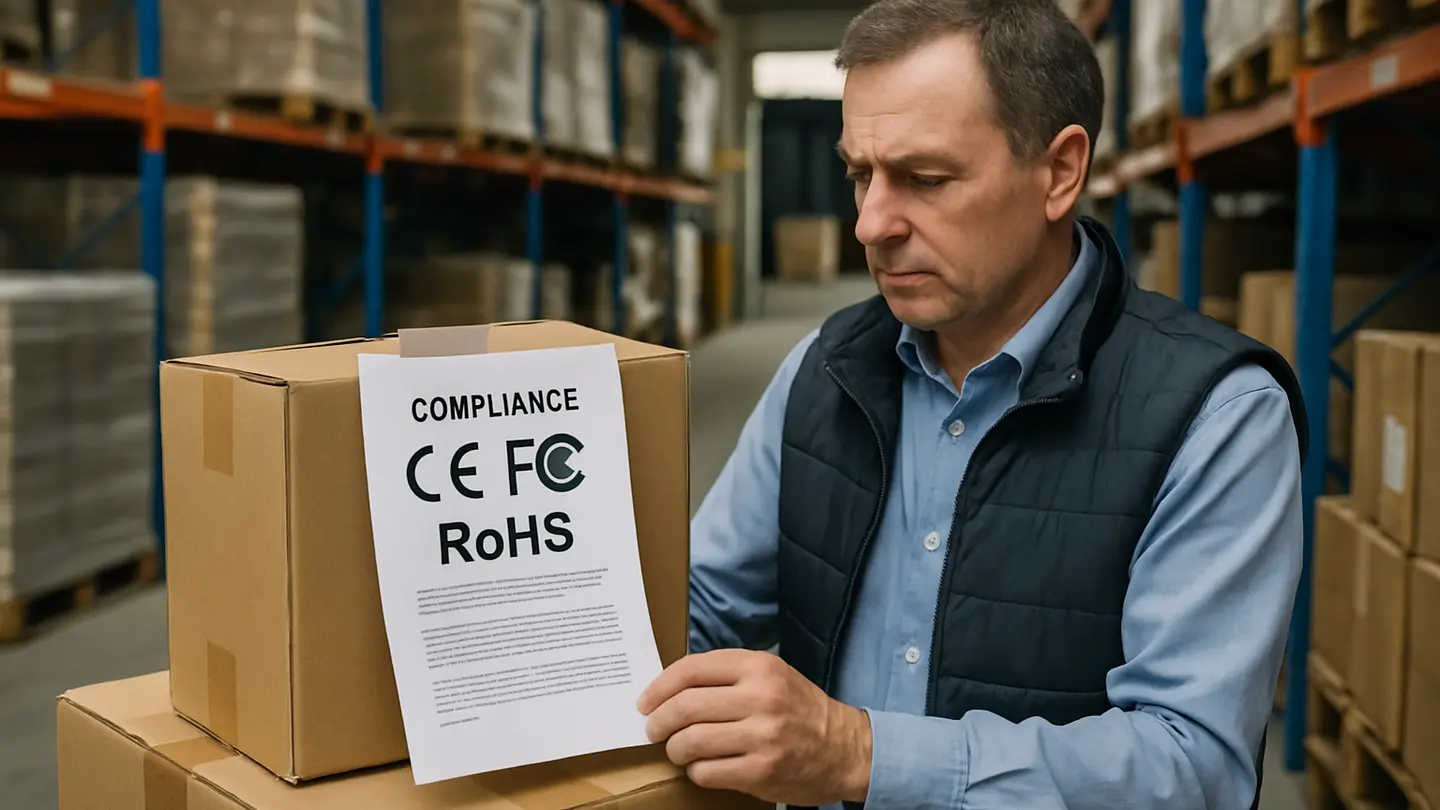
Compliance should also be reviewed early. Products involving any of the following may require additional attention:
- Safety-related claims
- Skin contact
- Food contact
- Children’s use
- Electrical components
- Batteries or charging functions
- Chemical coatings, scents, or liquids
Compliance failures can create listing restrictions, inventory actions, customer complaints, or wider account risk. Sellers should identify potential requirements before placing a purchase order rather than assuming the factory will manage every marketplace obligation.
A practical approach is to eliminate high-risk items early unless the seller has the knowledge, documentation, and operating capacity to manage them. The best initial FBA product is often one that can be sold accurately and safely without creating unnecessary account exposure.
Differentiate Products to Avoid Commodity Price Competition
Undifferentiated products are vulnerable to direct price competition. If multiple sellers offer nearly identical versions of the same item, buyers may choose based on price, review count, delivery speed, or perceived brand familiarity.
Differentiation does not always require inventing a new product. It can come from visible and useful improvements, such as:
- Better material selection or thickness
- More durable fasteners, zippers, clips, or connectors
- Improved finishes or color options
- Clearer sizing guidance
- More functional packaging
- Easier storage or transport
- Better instructions or organization of included parts
Bundles can also improve positioning. A well-designed bundle may solve a broader customer problem than one individual item. For example, several compatible travel or organization accessories can be packaged as a complete kit rather than sold as separate low-value products.
However, bundles add complexity. Each additional component creates more opportunities for missing items, inconsistent colors, incorrect packaging, or damage during transport. A bundle should have a clear purpose, not simply include extra items to justify a higher price.
Quality-control requirements should reflect the bundle structure. Inspections should verify component count, material consistency, packaging accuracy, barcode placement, and whether the complete set can withstand normal handling. If buyers receive incomplete bundles, negative reviews can quickly outweigh the benefits of differentiation.
Score, Sample, and Validate Products Before Placing an Order
A structured scoring model can help sellers compare product opportunities without becoming overly influenced by trend data or supplier pricing. The objective is to reject unsuitable products before significant capital is committed.
A basic product scorecard can include:
| Factor | What to Review |
|---|---|
| Size and weight | Final packaged dimensions, shipping weight, carton efficiency |
| Fragility | Breakage risk during transport, FBA handling, and customer use |
| Compliance | Potential safety, material, battery, food-contact, or children’s-product exposure |
| Competition | Review barriers, price pressure, listing similarity, and brand concentration |
| Differentiation | Materials, features, bundle value, packaging, and positioning |
| Return risk | Fit issues, performance complaints, assembly requirements, customer expectations |
| Replenishment | Lead time, consistent materials, packaging availability, and supplier capacity |
Written specifications are essential once a candidate is selected. A factory should receive clear requirements for dimensions, materials, colors, logo placement if used, packaging, labels, carton configuration, and acceptable quality standards. Verbal instructions alone leave room for misunderstanding.
Samples should be approved against those written specifications. Check not only appearance, but also packaging strength, actual measurements, component completeness, usability, and consistency between units. If the final retail packaging differs from the sample packaging, request a packaging sample before production is completed.
A small initial order can help validate demand, conversion, return reasons, and customer feedback before larger inventory commitments are made. It does not remove risk, but it limits the cost of incorrect assumptions.
Pre-shipment inspections are another useful control point. They can identify defects, missing bundle components, incorrect labels, damaged packaging, or carton discrepancies before inventory enters the FBA supply chain. Once goods have shipped internationally, correcting quality problems becomes much more expensive.
FAQ
Q1: How do I know a category is already too crowded?
A category may be difficult for a new seller when first-page visibility is dominated by established listings with large review counts, strong brand recognition, and limited differentiation between products. Review whether newer listings appear to gain traction or whether the top positions remain concentrated among a small group of entrenched sellers.
Crowding is not defined only by the number of listings. A category with many sellers may still offer opportunities if customers complain about product quality, sizing, materials, or incomplete bundles. The key question is whether a new listing has a realistic reason to be chosen.
Q2: Is private label better than reselling for FBA?
Private label can offer more control over product specifications, packaging, positioning, and pricing. It may allow sellers to build a differentiated offer rather than competing only on the same listing as other sellers.
Reselling can be faster to begin because the product and listing may already exist. However, it often creates heavier price competition and less control over the customer experience. The better model depends on capital, product knowledge, sourcing capability, and the seller’s ability to manage inventory risk.
Q3: Do I need a trademark or Brand Registry for private label?
A seller may begin offering a branded product without a trademark, depending on marketplace requirements and the business structure. However, a trademark and Brand Registry can provide additional brand-protection and listing-management tools.
Without stronger brand protection, sellers may face greater exposure to copycats, unauthorized sellers, or listing-content disputes. Trademark planning is therefore worth considering early, particularly when investing in custom packaging, product improvements, or long-term inventory.
Q4: Does Amazon’s fee calculator cover everything?
Amazon’s fee calculator is useful for estimating fulfillment-related costs, but it should not be treated as a complete profitability model. Sellers should also include factory cost, packaging, freight, customs-related charges where applicable, advertising, storage, inspection, prep work, returns, removals, and potential discounts or promotions.
The most reliable model uses final packaged measurements and conservative assumptions. If profitability only works under ideal conditions, the product may not have enough margin to handle normal marketplace variation.
Conclusion: Choose Products That Are Profitable and Operationally Manageable
The best Amazon FBA products from China are not always the products with the highest apparent demand. Strong candidates are those that can withstand freight, fulfillment fees, storage costs, competitive pricing, and customer returns while remaining manageable to source and replenish.
Small, durable, non-fragile products with clear use cases are often easier to evaluate than bulky, regulated, electronic, or trend-dependent alternatives. Sellers should screen for size, weight, compliance exposure, return risk, differentiation potential, and realistic landed cost before moving forward.
Rejecting unsuitable products early can prevent costly inventory mistakes. Before production begins, confirm final carton dimensions, barcode placement, case-pack rules, retail packaging, and inspection requirements. Factory-stage corrections are generally far less expensive than resolving rejected FBA shipments, missing labels, damaged packaging, or inventory-removal problems after goods have entered the supply chain.
About the Author
Maple Sourcing is a sourcing-focused editorial team covering supplier evaluation, product specifications, quality control, packaging, and Amazon FBA product-selection considerations for businesses buying from China.