Beauty and Healthcare Sourcing from China for Daily-Use Products
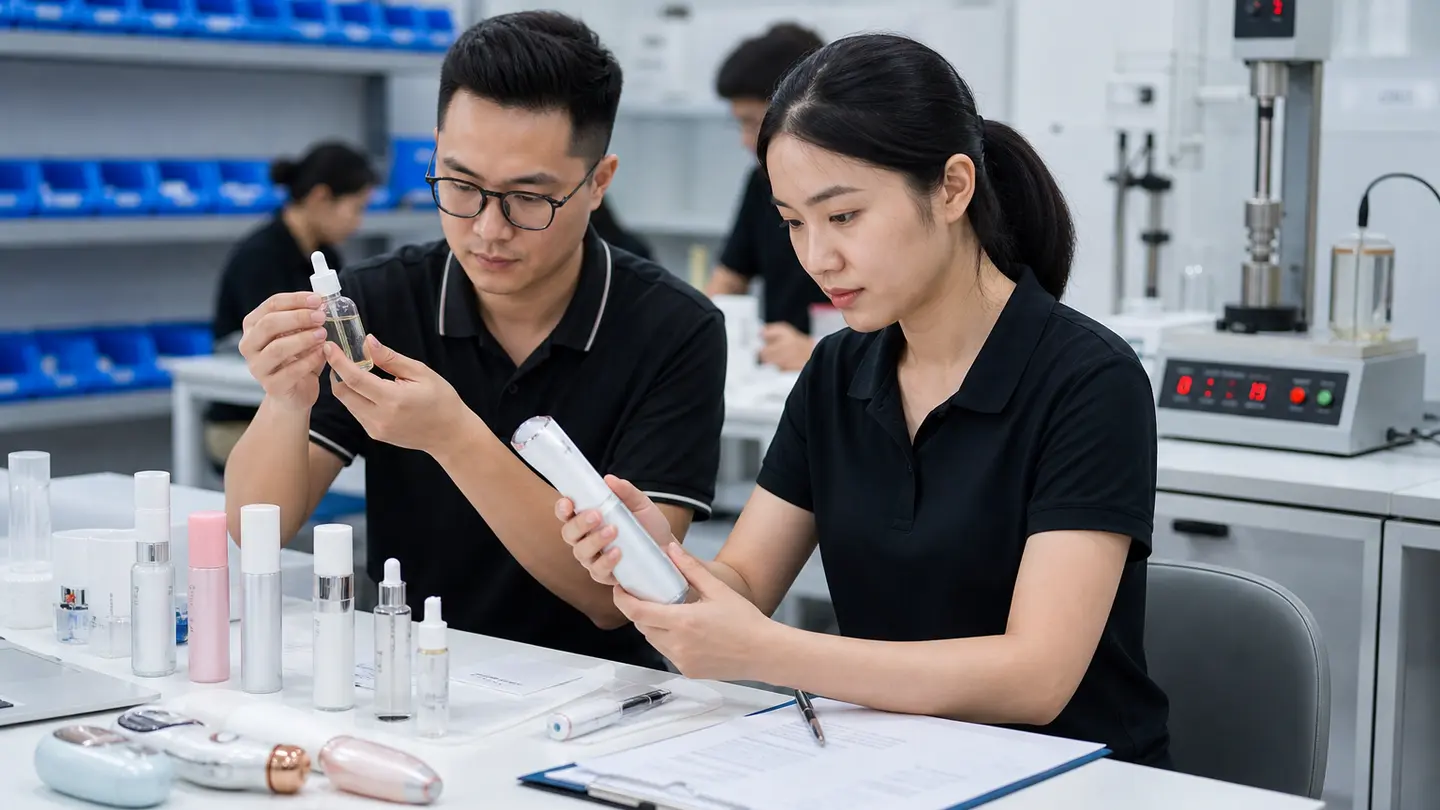
Beauty and healthcare sourcing from China covers a broad range of daily-use products: personal care accessories, oral care devices, skincare tools, haircare appliances, massage equipment, and wellness devices. These categories may appear straightforward at first glance, but they require careful sourcing because users often place the products directly on their skin, hair, teeth, or body for repeated periods.
For buyers, the main risk is not limited to a product failing to work. A rough edge on a facial tool, an unstable heating element in a hair appliance, poor waterproofing in an electric toothbrush, or contamination caused by weak production handling can quickly lead to customer complaints, returns, reputational damage, and potential regulatory concerns.
Daily-use devices should therefore be evaluated differently from low-contact consumer products. A sourcing program should focus on four core areas:
- Material safety: Components that touch skin, hair, gums, lips, or other sensitive areas should match the approved specification and applicable destination-market requirements.
- Cleanliness and hygiene: Assembly conditions, storage practices, packaging, and product handling can affect both product appearance and consumer confidence.
- Mechanical reliability: Motors, batteries, switches, charging systems, seals, and moving parts should perform consistently over the intended use cycle.
- Heat and functional performance: Heated tools, massage devices, and electronic skincare products should reach and maintain the intended settings without unacceptable variation.
For a shower manufacturer or other home-and-personal-care supplier expanding into adjacent daily-use categories, these principles are especially relevant. Products used in humid bathroom environments may face higher exposure to water, steam, cleaning agents, and repeated handling. Product specifications should account for realistic use conditions rather than only basic factory demonstrations.
The strongest sourcing approach begins before a purchase order is placed. Buyers should define the product’s intended use, destination market, user-contact materials, performance claims, packaging expectations, and inspection standards. This creates a practical basis for supplier comparison, sample approval, production monitoring, and final quality control.
Beauty and Healthcare Products to Source and Their Key Requirements
Beauty and healthcare products differ substantially in design complexity and regulatory exposure. A manual facial roller, for example, does not present the same sourcing considerations as a rechargeable oral care device or heated hair appliance. Buyers should identify both the product category and the claims they intend to make before selecting a supplier.
Common sourcing categories include:
| Product category | Typical sourcing considerations |
|---|---|
| Oral care devices | Waterproofing, brush-head fit, motor performance, charging function, battery runtime, hygiene, and market-specific requirements |
| Skincare tools | Skin-contact materials, coating durability, vibration or light functions, cleaning requirements, and user safety instructions |
| Connected beauty devices | App or wireless features, charging systems, data-related functions, functional consistency, and possible wireless compliance considerations |
| Heated haircare products | Heating stability, temperature controls, cord or charging safety, surface durability, and electrical evaluation for the destination market |
| Massage and wellness devices | Motor output, noise, pressure settings, timer functions, battery life, ergonomics, and safety around prolonged contact |
| Skin-contact tools | Material documentation, smoothness, cleanliness, coating adhesion, corrosion resistance, and compatibility with skincare products or water exposure |
Oral care devices can require particular attention because they may be marketed with claims relating to cleaning, gum care, or oral health. Depending on intended use and destination market, buyers may need to consider whether FDA review, CE marking, or RoHS requirements apply. The correct obligations depend on the product’s classification and claims rather than the product’s appearance alone.
Connected beauty devices may create an additional compliance layer. Products with wireless or communication functions may need FCC considerations for the United States, alongside CE and RoHS considerations for relevant European markets. Buyers should confirm the exact configuration of the device, including Bluetooth, wireless charging, app connectivity, and power supply design, before treating a previous test report as applicable.
Heated haircare products require close attention to electrical and thermal performance. For North American markets, buyers may need to consider UL or ETL evaluation where applicable. Beyond formal requirements, practical testing should confirm that the product reaches its claimed temperature, maintains stable performance, and does not create avoidable user risks through excessive surface heat or unreliable controls.
Private labeling is often a lower-risk entry route for buyers that want to test a category. A factory may offer an established model with branding options such as a logo, selected colors, labels, and retail packaging. Standard products can sometimes be ordered with lower minimum quantities than products requiring custom printed retail packaging, new tooling, or fully customized molds. However, a lower minimum order should not reduce the need for sample approval, quality specifications, and inspection planning.
Tools for Finding and Screening China Suppliers
Made-in-China.com is a B2B sourcing platform that buyers can use during supplier discovery for beauty, healthcare, personal care, and related consumer-product categories. It can be useful for building an initial supplier list, comparing product ranges, and identifying manufacturers or trading companies for further evaluation.
Buyers can also review suppliers identified as Audited Suppliers. According to the platform’s available information, these suppliers are subject to third-party verification and on-site audit, and buyers can review available Audit Reports. Such reports may help buyers compare supplier background before committing time to detailed discussions, sample development, or factory visits.
Available Audit Reports can cover areas such as general supplier information, manufacturing capacity, quality control, export trade, and research and development capability. This information can help a buyer ask more informed questions, such as whether the supplier has experience with electronic assembly, coating processes, product testing, export packaging, or the intended destination market.
Audit information should be treated as an initial screening tool rather than a substitute for product-specific due diligence. Buyers should still verify the actual model, approved materials, test scope, packaging requirements, production controls, and documentation relevant to their own order.
What to Inspect on Beauty and Healthcare Orders
Inspection should reflect the product’s use conditions and approved sample, not just its external appearance. A device can look acceptable in a carton while still having weaknesses in materials, sealing, functional stability, or hygiene controls.
For skin-contact products, inspect the materials, plating, and coatings against the approved product specification. This may include checking the color, gloss level, texture, coating adhesion, edge finish, and absence of sharp points, burrs, stains, cracks, or visible contamination. Where a product includes metal components, buyers should consider whether plating or surface treatments are appropriate for repeated contact with moisture, skincare products, toothpaste, or cleaning agents.
Water-resistance claims should be tested rather than accepted solely on a supplier statement. Electric toothbrushes, cleansing brushes, shower-use wellness devices, and rechargeable grooming tools may require seal and waterproof-performance checks consistent with the product’s stated use. The test method should match the approved claim. A product intended for occasional splash exposure should not be presented as suitable for immersion unless that capability has been specified and verified.
Production cleanliness is another important control point. Buyers should review how components are stored before assembly, how workers handle skin-contact parts, whether finished products are protected from dust and scratches, and how retail packaging is sealed. Cleanliness checks are particularly important for products with replaceable heads, silicone contact points, transparent covers, cosmetic applicators, or sealed hygiene packaging.
Functional inspection should cover all advertised and specified settings. Depending on the product, this can include:
- Motor runtime, output consistency, vibration strength, and operating noise
- Charging performance, battery behavior, indicator lights, and power switches
- Temperature settings and heating consistency for heated haircare tools
- Pressure levels, timer functions, and programmed modes for massage or wellness devices
- Brush-head attachment, rotation, oscillation, or pulse function for oral care products
- Display operation, control buttons, and connected functions where applicable
Testing should compare production units with the approved sample and written specification. If a supplier provides a sample that differs from the production version in motor sound, surface finish, packaging, battery configuration, or accessories, the buyer should resolve the discrepancy before mass production proceeds.
Packaging deserves separate attention. Retail packaging should protect the product during shipping while supporting the buyer’s intended presentation. Inspect carton strength, internal trays, protective films, instruction manuals, barcodes, labels, seals, and accessory placement. For products positioned as hygienic or premium, weak packaging seals or visible dust can undermine customer trust even if the device functions correctly.
Case Study: Coated Electric Toothbrushes and Finish Damage
A reported case involving Smile Brilliant illustrates why finish-specific handling controls matter in beauty and healthcare sourcing from China. The company reportedly ordered 10,000 custom-coated electric toothbrushes with soft-touch shells. During production, inadequate protected storage while the coating dried reportedly caused scratches on approximately 30% of the product shells.
The issue was not merely cosmetic. Soft-touch coatings can be difficult to rework after damage because additional treatment may change the surface texture, appearance, or adhesion. In this case, the reportedly scratched shells could not be reworked to the required standard. The affected batch reportedly had to be remade, resulting in a reported 15-day delay.
The lesson is that buyers should define finish requirements before mass production, not after defects appear. A product specification for coated consumer devices should address more than color and logo placement. It should also define:
- The coating type and expected tactile finish
- Acceptable and unacceptable surface defects
- Drying and curing conditions
- Protection between processing stages
- Storage methods for coated parts
- Handling requirements during assembly
- Inspection lighting and sampling expectations
- Packaging materials that prevent rubbing or abrasion
For electric toothbrushes and similar daily-use devices, surface quality influences consumer perception because the product is handled closely and repeatedly. A small scratch that might be overlooked on an industrial product can become a visible defect on a premium personal-care item.
Pre-production samples should be evaluated for both appearance and durability. During mass production, in-process inspections should check the coating before assembly and again after final packaging. This helps identify whether damage is occurring during drying, storage, transport between workstations, assembly, or carton packing.
FAQ
Q1. Can I put my own brand on an existing beauty device?
Yes. Private labeling an established device design is a common way to enter the beauty or healthcare product market. Depending on the supplier and product, customization options may include logos, selected colors, labels, instruction manuals, and retail packaging.
Using an existing model can reduce development time and may allow lower minimum order quantities than developing a fully custom device. This can be useful when testing demand in a new category. However, buyers should still approve samples, confirm material and performance specifications, and verify that the final branded version matches the intended destination market requirements.
Q2. Do beauty and healthcare products have FDA requirements in the US?
Requirements in the United States depend on the product’s intended use and regulatory classification. Some ordinary beauty tools may not have the same obligations as products marketed with medical, therapeutic, oral-health, or skin-treatment claims.
Certain oral care and skin-related devices may have requirements beyond those associated with general beauty accessories. Buyers should assess the product’s classification, intended claims, labeling, and target users before placing a production order. It is important not to assume that a product is exempt from additional obligations simply because similar-looking products are available in the market.
Q3. How do you know the materials are safe on skin?
Start by requesting and reviewing factory documentation for every material that contacts skin, hair, gums, lips, or other sensitive areas. This can include information on plastics, silicone, metal components, plating, coatings, adhesives, and colorants.
The material specification should match the product’s intended use and the applicable standards in the destination market. For higher-risk products, products with prolonged skin contact, or products marketed with sensitive-skin claims, third-party laboratory testing may be appropriate or required. Buyers should also confirm that the materials used in production match the approved sample and documentation, rather than relying only on a supplier’s general statement.
Q4. Can the same device be sold in both the US and Europe?
In some cases, yes, but buyers should address market differences during product specification and development. The same basic device may need changes to voltage, charging systems, plug types, labeling, manuals, and compliance documentation.
The United States and Europe can also have different regulatory obligations depending on the product type and claims. A device intended for both markets should be reviewed early enough that required changes can be incorporated before tooling, packaging design, and mass production. Attempting to adapt a finished product after production may create avoidable delays, extra cost, or non-compliant inventory.