What You Gain From Attending in Person
The Canton Fair can be worth the investment for a first-time buyer, but only when the visit supports an active sourcing project. Buyers with a defined product, target price, expected order volume, and realistic timeline for placing orders are far more likely to recover the cost of travel than those attending simply to see what is available.
For a buyer sourcing shower products, sanitaryware accessories, bathroom hardware, fittings, or related components, the fair can compress weeks of online outreach into several days of conversations. Instead of waiting for replies from dozens of potential suppliers, a buyer can compare product ranges, capabilities, communication quality, and initial commercial positions in person.
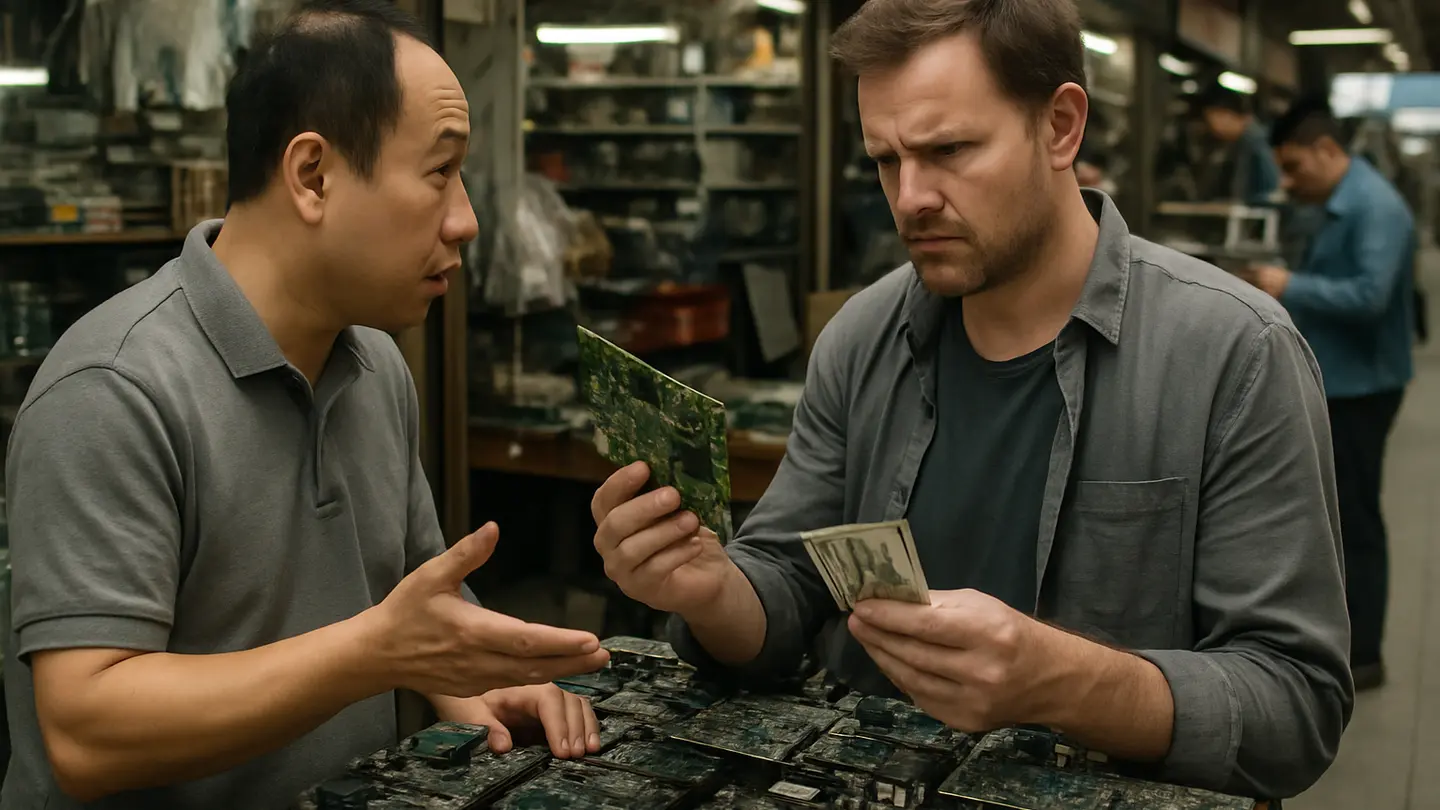
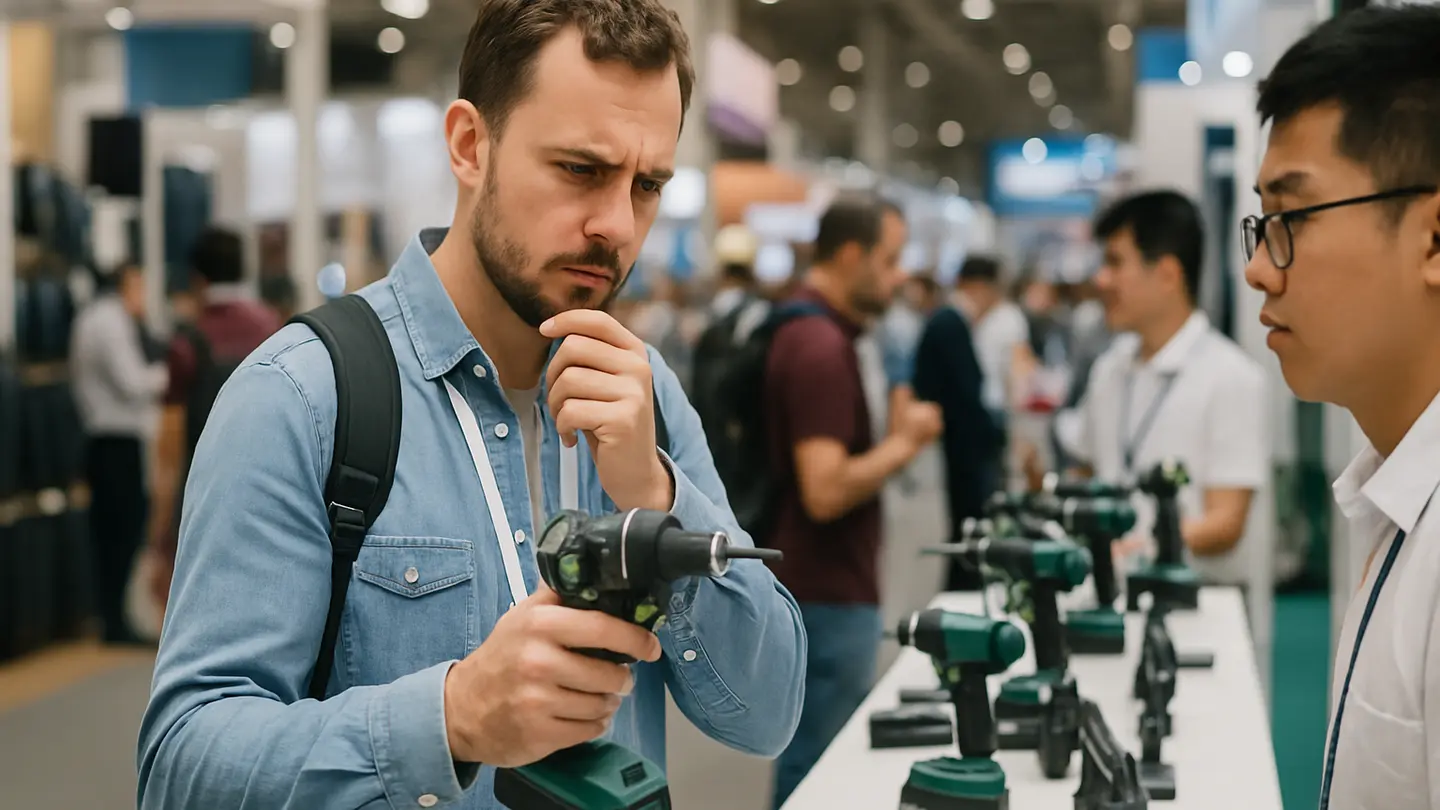
The practical value comes from direct comparison. At a booth, buyers can inspect finishes, handle moving parts, assess packaging examples, ask about material grades, and discuss customization requirements without relying solely on catalogue images. For shower-related products, this may include checking the perceived weight of a mixer, the smoothness of a cartridge, the consistency of plating, the thickness of glass, or the assembly quality of a shower set.
In-person meetings also reveal how suppliers respond to technical questions. A supplier that can clearly explain tooling, testing, lead times, quality control points, and minimum order quantities may be easier to work with than one that offers only broad assurances.
Walking the halls also provides a useful market view. Buyers can identify recurring design trends, common materials, broad export price positioning, and the level of product differentiation in a category. This does not establish a final market price, but it helps buyers recognize whether an initial quotation is broadly credible.
However, an exhibitor’s presence at the fair does not independently confirm that it is a manufacturer. Exhibitors may be factories, trading companies, export agents, or businesses working with multiple production partners. Manufacturing status, production control, and quality systems still require separate due diligence.
Choose the Right Canton Fair Phase
The Canton Fair is generally organized into three category-based phases. Selecting the correct phase is one of the most important planning decisions, since attending the wrong dates can leave a buyer with limited relevant supplier access.
The typical category focus is:
| Phase | Typical product areas |
|---|---|
| Phase 1 | Electronics, machinery, industrial products, hardware, tools, lighting, vehicles, and related components |
| Phase 2 | Household goods, kitchenware, gifts, decorations, furniture, ceramics, consumer goods, and related categories |
| Phase 3 | Apparel, footwear, textiles, bags, personal-care products, food, and consumer lifestyle goods |
Bathroom hardware, plumbing-related products, building materials, tools, lighting, and certain sanitaryware categories may fall within or close to Phase 1 classifications, but buyers should not rely on past schedules alone. Product category assignments, hall layouts, and exhibitor lists can change between sessions.
Before reserving flights or hotels, check the official Canton Fair information for the current session’s dates, product sections, and hall assignments. Search the exhibitor directory where available and identify whether the suppliers relevant to your sourcing project are scheduled to attend during your intended travel period.
If your product category overlaps more than one phase, focus first on the phase most closely aligned with the main product you intend to buy. Extending a trip may be justified when the second phase covers a meaningful part of the sourcing plan, not merely a general interest category.
What to Prepare Before Traveling to Guangzhou
A productive fair visit starts well before arrival in Guangzhou. First-time buyers can lose valuable time at the venue if registration, meetings, product requirements, and travel logistics are left until the last minute.
Complete visitor registration in advance and confirm the process for obtaining your buyer badge. If a visa is required for travel to China, allow sufficient time for the application and determine whether an invitation letter or supporting documentation is needed. Requirements vary by nationality and can change, so verify them with the relevant embassy, consulate, or visa service.
Choose accommodation based on practical access to the Pazhou exhibition complex rather than room price alone. Guangzhou is large, and travel times can become significant during major trade events. Hotels close to a metro station or with convenient transport to Pazhou can make early meetings and end-of-day returns much easier.
A written sourcing brief is equally important. It should cover:
- Product type and intended market
- Required dimensions, materials, finishes, and functions
- Technical standards or certification requirements
- Target price range and commercial terms
- Expected order quantity and annual purchase potential
- Packaging, branding, labeling, and documentation needs
- Desired lead time
- Key supplier questions
- Sample, tooling, and customization requirements
For shower and bathroom-product buyers, the brief may also specify cartridge brand or performance level, brass or stainless-steel grade, coating requirements, water-flow specifications, salt-spray expectations, glass thickness, installation method, spare-parts availability, and packaging drop-test requirements.
Bring the brief in a format that can be shared easily: a concise PDF, a spreadsheet, printed pages, or a QR code linking to the documentation. Avoid relying on verbal descriptions alone. A supplier can give a more useful response when it sees drawings, reference images, material requirements, and expected quantities.
Pre-fair research should also produce an initial supplier shortlist. Review exhibitor directories, supplier websites, product catalogues, and publicly available company information. Arrange meetings with the highest-priority companies, but leave time between appointments for unplanned discoveries.
Common Mistakes First-Time Buyers Should Avoid
The Canton Fair provides useful first-stage information, but it is not a substitute for supplier qualification. Many first-time buyers make decisions too quickly after a positive booth conversation or an attractive sample display.
One common mistake is assuming that booth samples represent normal production quality. Exhibitors naturally display their best-looking products. The materials, components, finish quality, and assembly standard used for a display sample may not fully reflect the consistency of a future bulk order.
Before issuing a full purchase order, request and approve a production-representative sample. This should reflect the agreed specification, packaging, branding, components, and workmanship. Where possible, document the approved sample and convert important requirements into a written specification or quality agreement.
Another mistake is treating booth pricing as a firm final offer. Initial quotations are usually indicative. Actual pricing can change based on order volume, raw-material selection, finish, component specification, packaging, tooling, test requirements, payment terms, Incoterms, and delivery destination.
A useful follow-up quotation should clarify at least:
- Product specification and model reference
- Unit price and currency
- Minimum order quantity
- Price basis, such as EXW or FOB
- Packaging details
- Tooling or development charges
- Sample cost and delivery method
- Production lead time
- Payment terms
- Warranty or spare-parts policy where relevant
- Testing, inspection, and compliance documentation
Buyers should also avoid assuming every exhibitor is a factory. Ask direct but professional questions: Where is production located? Which processes are completed in-house? Is assembly internal or outsourced? Can the supplier modify existing products? Does it own tooling? Who controls quality inspection? Can it arrange a factory visit?
A trading company is not automatically unsuitable. Some offer strong communication, broad product access, and useful export coordination. The issue is transparency. Buyers need to know who is actually responsible for production and quality before assigning risk.
Post-Fair Follow-Up Determines the Value of the Trip
The trip itself is only the first stage. The real value of the Canton Fair is created after the buyer returns home and turns promising conversations into a disciplined supplier evaluation process.
Organize information immediately after each meeting, not weeks later. Record the supplier name, booth number, contact person, product references, indicative prices, minimum order quantities, technical claims, and next actions. Photograph samples and displays where permitted, ensuring the images are labeled with the relevant supplier.
A simple supplier comparison sheet can prevent confusion once dozens of business cards and catalogues begin to look similar. Useful comparison criteria include:
| Evaluation area | Questions to assess |
|---|---|
| Product fit | Does the supplier meet the required specification and design direction? |
| Commercial fit | Are price, MOQ, payment terms, and lead time workable? |
| Capability | Can it support customization, tooling, packaging, and documentation needs? |
| Manufacturing control | Does it clearly explain its production process and quality responsibilities? |
| Communication | Are answers specific, timely, and consistent? |
| Risk profile | Are company details, claims, samples, and commercial terms verifiable? |
Follow up promptly with serious prospects. A useful message should reference the meeting, identify the products discussed, restate your requirements, and request specific next steps. For example, ask for an updated quotation, product drawings, test reports, factory information, sample availability, or a video call with the technical team.
The strongest prospects should then move into a structured process: document review, sample evaluation, commercial negotiation, supplier verification, and where appropriate, factory audit or third-party inspection planning.
For most first-time buyers, a sample order should come before a production purchase order. The sample stage provides an opportunity to test product performance, assess packaging, confirm communication quality, and identify specification gaps before the financial exposure becomes larger.
Canton Fair, Wholesale Markets, or Both?
The Canton Fair and wholesale markets serve different sourcing purposes. Neither is automatically better; the right choice depends on what the buyer intends to purchase and how the supply chain will operate.
The fair is a scheduled event that concentrates export-oriented exhibitors. It is generally better suited to buyers looking for supplier relationships, product development discussions, private-label opportunities, recurring procurement, and larger commercial orders.
Wholesale markets operate year-round and may be more useful for buyers seeking ready-stock products, smaller quantities, faster product comparison, or a broad view of off-the-shelf merchandise. They can be particularly relevant for traders, retailers testing a category, or buyers looking for immediate assortment options rather than custom production.
For shower products and bathroom hardware, a buyer may find the fair useful for identifying export-capable factories and discussing specifications, while regional market or factory visits may provide additional insight into ready-stock ranges, local supply networks, and product breadth.
Some buyers combine the Canton Fair with market visits or pre-arranged factory visits. This can be efficient when the itinerary supports a clear sourcing plan. It is less efficient when every extra visit is added without a specific decision objective.
A practical question is: what must be decided during each visit? If the fair is for supplier discovery and shortlist creation, a factory visit should be for capability verification. If a market visit is for ready-stock purchasing, it should not be confused with factory qualification.
FAQ
Q1: Is the spring or autumn session better?
Neither session is universally better. The spring and autumn editions generally follow a comparable three-phase structure, so the best choice is the one that aligns with your purchasing calendar.
Consider when you need inventory to arrive, how long product development may take, the supplier’s expected production lead time, and the shipping time to your destination. If you need goods available for a seasonal retail period, work backward from the required arrival date rather than selecting a fair session based on convenience alone.
Q2: Should I arrange booth appointments in advance?
Yes, particularly for priority suppliers. Pre-arranged appointments can help secure focused discussions with sales managers, product specialists, or technical staff. This is especially useful if you have detailed specifications, need customization, or plan to compare several suppliers in a short time.
Do not schedule every hour of every day. Leave open time to walk relevant halls, identify unlisted suppliers, revisit promising booths, and recover from meetings that run longer than expected.
Q3: My product sits between two phases. What then?
Prioritize the phase that best matches your principal sourcing category. If most of your budget or expected order value relates to one product group, that phase should determine the core trip.
Attending two phases may require a longer stay in Guangzhou or separate travel arrangements. The additional cost can be worthwhile if both phases contain meaningful supplier opportunities, but it should be justified by an active purchasing plan rather than general curiosity.
Q4: Is the fair useful for small orders?
It can be, but expectations should be realistic. Many exhibitors focus on container-scale, distributor, project, or repeat-order opportunities. Some may accept smaller trial orders, while others will have minimum order quantities that do not suit a new buyer.
Ask about MOQ early in the conversation. Also ask whether the MOQ applies per model, color, finish, packaging design, or mixed order. A buyer may find workable terms through stock items, shared-container arrangements, or a smaller initial sample order, but these options should be confirmed rather than assumed.
Final Verdict: When the Canton Fair Is Worth the Investment
So, is the Canton Fair worth it? For a first-time buyer with a defined product, credible intent to order, and the ability to follow up systematically, it can be a highly efficient sourcing investment.
Its greatest value is not simply the number of suppliers under one roof. It is the ability to compare product quality, supplier responsiveness, commercial positioning, and potential manufacturing capability in a concentrated period. That can accelerate the early stages of supplier selection considerably.
The trip is less likely to pay off when the buyer has no clear specification, no budget, no target quantity, or no capacity to evaluate suppliers after returning home. Browsing can be informative, but it is an expensive way to conduct general market research.
Choose the correct phase, prepare a concise sourcing brief, set meetings with priority exhibitors, and treat booth samples and initial prices as preliminary. Then follow up quickly, evaluate suppliers consistently, and place sample orders before committing to full production.
The travel cost should be measured against the realistic value of the supplier opportunities you expect to pursue—not against the number of business cards collected.
Author Profile
The editorial team covers B2B sourcing, supplier evaluation, product development, procurement risk, and international trade operations. Its articles are designed to help buyers assess sourcing opportunities with clearer specifications, more structured supplier comparisons, and practical commercial due diligence.