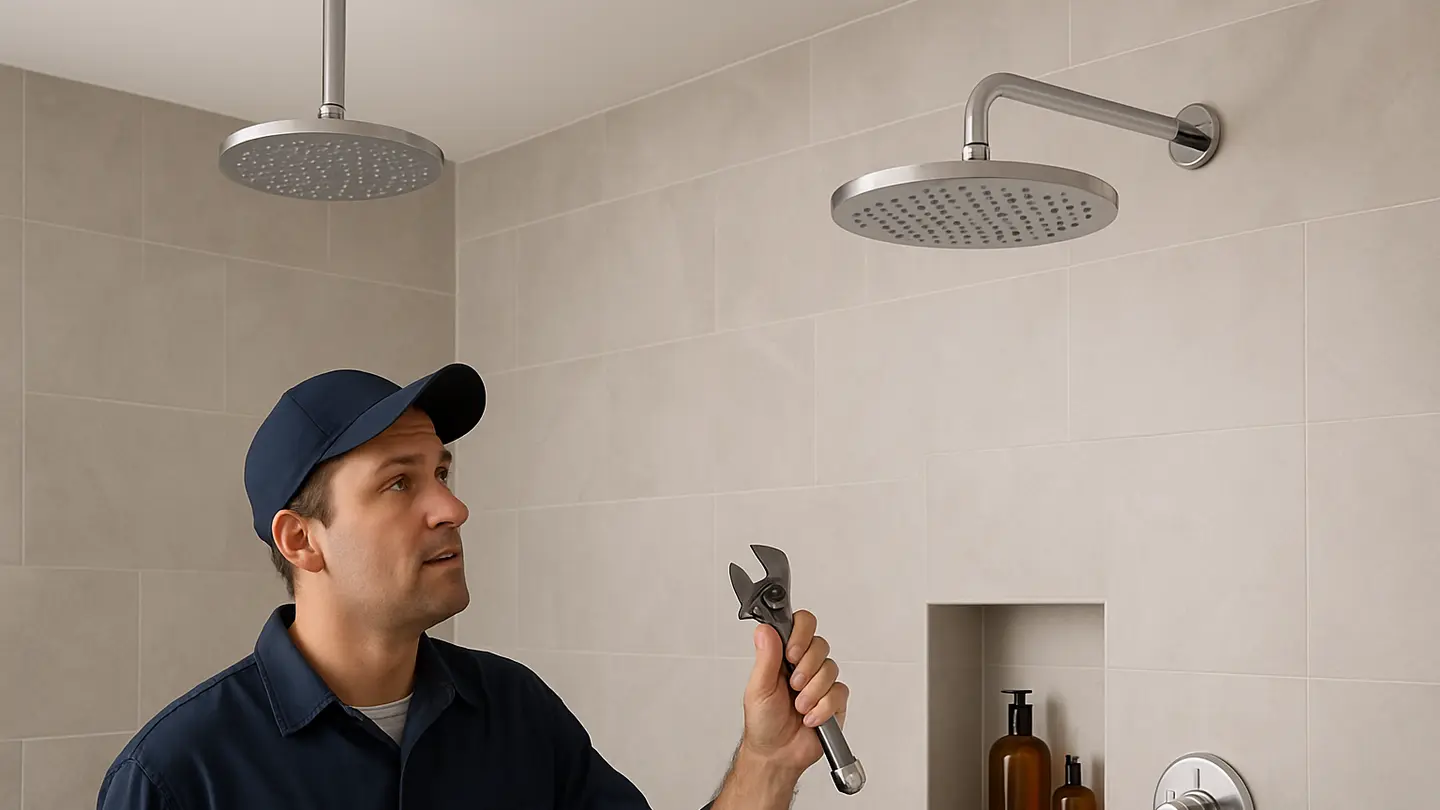
Choosing between ceiling mounted vs wall mounted rain shower heads depends on bathroom layout, budget, plumbing, and user expectations. Both can create a rainfall-style spray, but they differ in water direction, installation complexity, adjustability, maintenance access, and fit for different shower spaces.
Ceiling-mounted rain shower heads create the most vertical rainfall effect because water falls directly from above. They are often chosen for spa-style bathrooms, larger showers, and premium residential or hospitality projects. Wall-mounted rain shower heads are usually easier to install, easier to maintain, and more adjustable for shared bathrooms.
In many projects, the best solution is a dual system: an overhead rain head for broad coverage plus a handheld or directional shower for rinsing control.
What Is a Ceiling-Mounted Rain Shower Head?
A ceiling-mounted rain shower head is installed overhead, with the outlet positioned in the ceiling rather than on the wall. It sends water downward in a broad pattern designed to imitate natural rainfall.
This style is often specified for clean, premium, or spa-inspired bathrooms. Because the water falls from above instead of at an angle, the experience feels different from a standard wall-mounted shower. Larger ceiling-mounted rain heads can provide wider coverage, depending on pressure, flow rate, nozzle design, and enclosure size.
Ceiling-mounted options are common in luxury homes, hotel suites, wellness areas, and high-end renovations. However, they require more planning than a simple wall replacement, especially when existing plumbing does not already run through the ceiling.
Broader, More Vertical Water Coverage
The main advantage of an overhead rain shower is spray direction. Water falls vertically across the showering area, creating a more even rainfall sensation. With a wider rain head, the user may not need to shift position as much to stay under the stream.
Coverage depends on fixture size and internal water distribution. A large square or round head with well-spaced nozzles can spread water across a broader area, while smaller heads may feel more concentrated.
For commercial buyers and project specifiers, coverage should be checked against the shower footprint. A large overhead head can feel luxurious in a spacious walk-in shower but may be excessive in a compact enclosure if spray containment is not planned.
A Spa-Like and Immersive Shower Feel
Ceiling-mounted rain showers are associated with spa-inspired bathrooms because water falls directly from above. The effect can feel calm, immersive, and less directional than a standard angled shower head.
This makes them popular in premium interiors where the shower is meant to feel like a retreat. For users who value relaxation after work, exercise, or travel, overhead flow can be a major benefit.
Some premium models may include ambience features such as integrated lighting, color effects, or audio-related functions. These should be assessed for safety compliance, serviceability, and compatibility with the bathroom specification.
Design Options, Finishes, and Spray Customization
Ceiling-mounted rain shower heads come in round, square, and rectangular formats. Finishes may include chrome, brushed nickel, matte black, bronze, gunmetal, and other tones coordinated with valves, drains, towel bars, and bathroom hardware.
Some models offer multiple spray settings, such as:
- Rainfall spray for broad, gentle coverage
- Mist-style spray for a softer effect
- Massage-style spray for a more concentrated stream
- Mixed spray modes with different outlet patterns
For B2B buyers, a ceiling-mounted head should still be checked for flow performance, installation depth, ceiling access, valve compatibility, finish durability, warranty terms, and ease of cleaning.
What Is a Wall-Mounted Rain Shower Head?
A wall-mounted rain shower head attaches to plumbing on the shower wall. It may connect to a standard shower arm, use an extended arm to position the head farther overhead, or form part of a larger system with a valve, diverter, and handheld attachment.
Its main advantage is practicality. Wall-mounted rain shower heads can provide a rainfall-style flow while retaining more directional control than a fixed ceiling outlet. Many models allow angle adjustment, making them useful for shared bathrooms, rental units, hotels, gyms, and renovations.
Wall-mounted options are also usually simpler and less expensive to install than ceiling-mounted alternatives, especially when existing wall plumbing can be used.
Simpler Installation and Easier Maintenance Access
In many retrofit projects, a wall-mounted rain shower head can connect to the existing shower outlet. If the plumbing is in good condition and the replacement is like-for-like, installation may be simple. Commercial projects, multi-unit properties, and regulated environments should follow local plumbing codes and professional installation requirements.
Maintenance access is another advantage. Because the fixture is on the wall, users or maintenance staff can usually reach it for cleaning, inspection, or replacement. Regular wiping helps reduce soap scum, water spots, and mineral buildup. Silicone nozzles can often be rubbed periodically to help dislodge scale.
Replacement parts and accessories are often easier to access for wall-mounted systems than for concealed ceiling-mounted installations. This matters in hotels, rental portfolios, senior living facilities, and other settings where service time affects operating costs.
Adjustable Angles for Different Users
Many wall-mounted rain shower heads allow users to adjust the spray angle. This is useful in bathrooms used by people of different heights or preferences.
Swiveling joints, adjustable arms, and extendable shower arms can position the head closer to an overhead rainfall effect while preserving directional control. A user may angle the spray lower for rinsing, higher for a broader rainfall feel, or away from the head to avoid wetting hair.
Some wall-mounted models also include multiple spray patterns, from gentle rainfall to stronger streams. This is valuable in family bathrooms and hospitality settings where one fixed spray experience may not satisfy every user.
Budget Range, Availability, and Retrofit Appeal
Wall-mounted rain shower heads are available across a wide price range, from basic replacement heads to complete exposed shower systems. Their availability makes it easier to match existing decor, including polished chrome, brushed nickel, matte black, bronze, or other finishes.
They also support phased upgrades. A property owner may replace shower heads first and delay invasive plumbing work until a larger renovation. In rental properties, nonpermanent wall-mounted options can be attractive when they can be removed without changing concealed plumbing.
For renters or temporary installations, choose a model that fits the existing outlet, avoids prohibited modifications, and can be removed when moving. For B2B buyers managing multiple units, standard connection sizes and finishes simplify procurement and maintenance.
Ceiling Mounted vs Wall Mounted Rain Shower Heads: Key Differences
The comparison between ceiling-mounted and wall-mounted rain shower heads should be based on project conditions. The two mounting styles create different showering experiences and affect bathroom design in different ways.
| Criteria | Ceiling-Mounted Rain Shower Head | Wall-Mounted Rain Shower Head |
|---|---|---|
| Spray direction | Falls vertically from above | Projects from the wall, often adjustable |
| Installation | May require ceiling plumbing | Often uses existing wall plumbing |
| Visual effect | Clean, integrated, spa-like | More visible hardware and style variety |
| Adjustability | Usually fixed once installed | Often adjustable by angle or arm position |
| Maintenance access | May be harder to reach | Usually easier to clean and replace |
| Best fit | New builds, luxury renovations, open showers | Retrofits, shared bathrooms, budget-conscious projects |
Neither format is automatically superior. Ceiling-mounted systems often deliver a more authentic overhead rainfall experience, while wall-mounted systems usually offer better flexibility and lower installation complexity.
Design Impact and Visual Style
Ceiling-mounted rain heads create a clean, modern, integrated appearance. Since the outlet is overhead, the wall can remain visually uncluttered, especially when paired with concealed controls. This supports open showers and minimalist design schemes.
Overhead installation also strengthens the spa-like rainfall effect. Ceiling-mounted rain heads are often larger than wall-mounted options, making them visually significant even when the hardware is understated.
Wall-mounted models offer a different design advantage: visible variety. The arm shape, head profile, exposed pipework, and handheld bracket can all contribute to the bathroom’s style. In traditional or industrial-inspired bathrooms, visible hardware may be intentional.
For hotels, apartments, and residential developments, the choice should match the broader property positioning: open and understated, or more hardware-forward and adjustable.
Plumbing Requirements and Installation Complexity
Ceiling-mounted shower heads may require plumbing through the ceiling. This is easiest in new construction or full bathroom renovations when walls and ceilings are already open. Retrofitting one into a finished bathroom can be more complex, especially with limited ceiling access, structural obstruction, or a finished room above.
Wall-mounted models often use existing wall plumbing, reducing installation time and cost. In many cases, the main work is selecting the correct shower arm, confirming thread compatibility, sealing connections, and checking that the head position suits the user.
Water pressure should be checked before choosing either type, especially for large rainfall heads. A wide rain head with many outlets may feel weak if the building has limited pressure or flow capacity. Smaller heads, pressure-optimized nozzles, or reduced-flow designs may perform better.
Bathroom Layout, Ceiling Height, and Spray Containment
Ceiling-mounted rain heads work best where ceiling height allows comfortable overhead clearance. If the ceiling is too low, the head may feel intrusive or cause splash issues. If it is too high, water may cool or disperse before reaching the user.
Overhead fixtures can preserve wall space and support large walk-in showers with fixed glass panels, linear drains, or wet-room designs. However, spray containment must be planned because a large vertical spray pattern may require a wider shower area than a standard angled head.
Wall-mounted rain shower heads suit bathrooms with varied ceiling heights because their position depends more on wall outlet height and arm design. An extended arm can improve rainfall feel but also changes the spray landing point, so shower depth and enclosure dimensions should be reviewed.
When a Dual Shower Head System Makes Sense
A dual shower head system combines an overhead rain head with a handheld or wall-mounted unit. This is often the most practical answer when users want both broad rainfall coverage and targeted rinsing control.
The rain head provides the relaxing overhead experience. The handheld shower supports tasks a fixed rain head handles less effectively, such as rinsing shampoo, cleaning the enclosure, washing pets, assisting children, or helping users with limited mobility. It also helps when someone wants to shower without wetting their hair.
Some systems allow both outlets to run at the same time, while others use a diverter to switch between them. Buyers should confirm operation before ordering because simultaneous use can require adequate water pressure and compatible valve capacity.
Important selection factors include:
- Reliable diverter and flow control
- Easy-to-clean nozzles
- Durable hose and handheld materials
- Secure brackets or slide bars
- Finish consistency across visible components
- Compatibility with local flow regulations and plumbing standards
Dual systems are especially useful in hotels, family bathrooms, premium apartments, and projects where user flexibility is a selling point.
How to Choose the Right Rain Shower System
Choosing between ceiling-mounted and wall-mounted systems requires a practical review of the bathroom, not just the fixture. Buyers should consider water pressure, routines, maintenance needs, layout constraints, material quality, and finish coordination.
For B2B procurement, consistency also matters. A product that works well in one display bathroom may not suit a full development if ceiling heights, pressure, or maintenance access vary by unit. Mockups, samples, and technical submittals can reduce specification errors before volume purchasing.
Water Pressure and Preferred Flow Strength
Water pressure directly affects shower performance. Rain shower heads spread water across a wider area, which can make the flow feel softer than a smaller high-pressure shower head.
Low-pressure homes or buildings may need shower heads designed for reduced flow conditions. Buyers should check recommended pressure range, flow rate, and valve compatibility. A large rain head may look impressive but perform poorly if the plumbing cannot supply enough water.
User preference also matters. Some people want a strong rinsing stream; others prefer gentle rainfall. If both preferences must be satisfied, a wall-mounted adjustable model or dual system may be more practical than a single fixed overhead head.
Rain shower heads may also use more water than some standard shower heads, depending on model and local regulations. In hospitality, multifamily, and commercial settings, water consumption should be considered alongside guest experience and operating cost.
Daily Routines, Household Needs, and Spray Control
The right system should reflect how people actually use the bathroom. A ceiling-mounted system emphasizes a fixed, immersive overhead experience. This suits users who want a calm rainfall effect and do not need frequent directional adjustment.
Wall-mounted systems are easier to adapt for different users. Angle adjustment can accommodate height differences, standing positions, and rinsing habits. For shared bathrooms, this flexibility can prevent dissatisfaction after installation.
A handheld shower head is especially useful for rinsing long hair, cleaning the shower area, washing children or pets, and avoiding wet hair when desired. Dual systems provide both overhead and directional spray, making them strong choices where comfort and practicality are both priorities.
Features, Accessories, and Finish Coordination
Modern shower systems may include multiple spray patterns, massage jets, mist functions, filters, or LED lighting. These can improve the experience when well designed, but they should be evaluated for maintenance and reliability.
Filters may require replacement schedules and compatible cartridges. LED features can add ambience, but buyers should review power source, safety compliance, and long-term serviceability. Massage jets and multi-spray mechanisms should be tested for ease of operation and cleaning.
Accessories also affect usability. Handheld holders, slide bars, brackets, shelves, and hose lengths matter in daily use. In commercial environments, components should feel secure, easy to clean, and resistant to wear.
Finish coordination is practical as well as visual. The shower head, valve trim, diverter, drain, towel hardware, and enclosure hardware should work together. Matching finishes across suppliers can be difficult, so buyers should request finish samples or reference standards when consistency is critical.
Mounting Height and Material Checks for B2B Buyers
Before specifying ceiling-mounted or wall-mounted rain shower heads, confirm the recommended mounting height range. Ceiling-mounted heads should preserve comfortable clearance. Wall-mounted rain heads with arms should provide adequate headroom while keeping spray close enough for useful pressure and containment.
Material selection affects durability and cost. Solid brass is often chosen for long service life and a substantial feel. Stainless steel offers strong corrosion resistance for humid bathrooms. High-quality ABS can be budget-friendly for cost-sensitive projects, but buyers should assess thread quality, finish performance, and impact resistance.
Finish durability should not be overlooked. PVD finishes, where available, can improve resistance to fading, peeling, and surface wear compared with lower-grade coatings. For high-use properties, the best choice is often the product that balances appearance, cleanability, replacement availability, and long-term service cost.
Related Buying Guide Topics
For buyers planning a broader shower specification, related research may include:
- Rain shower head size selection for different enclosure dimensions
- Shower valve and diverter compatibility
- Handheld shower systems for hotels and multifamily projects
- Finish selection for coordinated bathroom hardware
- Low-pressure shower head options
- Cleaning and maintenance considerations for rainfall nozzles
- Water-saving shower fixtures and flow regulation compliance