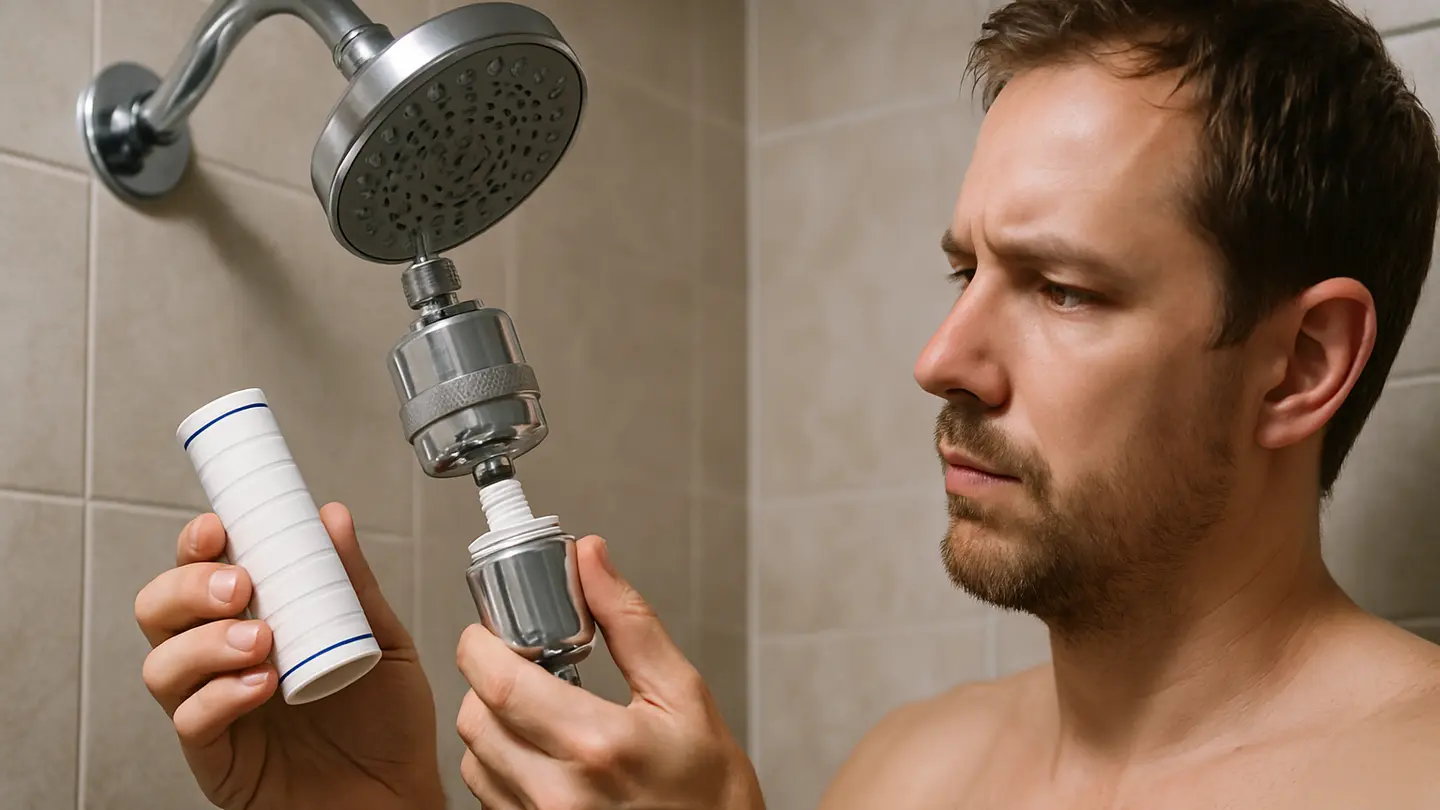
For property managers, hotel operators, wellness facility buyers, and distributors, shower filter replacement is not just a consumer afterthought. A cartridge that is left in service too long can reduce perceived water quality, weaken shower performance, and increase complaints about odor, scale, dry skin, or dull hair. The practical question is simple: how often to change shower filter cartridges so that performance remains consistent without replacing them unnecessarily early.
A useful general rule is that many shower filters are replaced about every six months. However, that interval is only a starting point. Actual timing depends on the filter design, shower frequency, household or guest volume, water chemistry, sediment load, and local plumbing conditions. In high-use settings, hard-water regions, or buildings with older pipework, replacement may need to happen sooner.
The best approach is to combine three inputs: the manufacturer’s stated service life, real-world shower performance, and visible or sensory warning signs. A calendar schedule helps, but it should not override evidence that the filter is clogged, saturated, or no longer delivering the expected shower experience.
Typical Shower Filter Replacement Intervals
Most shower filter replacement intervals fall in the three-to-six-month range. For a small household with moderate use and relatively clean municipal water, six months may be realistic. For a larger household, rental unit, gym, spa, hotel, or other high-turnover environment, three months may be a more practical planning interval.
Several conditions can shorten the replacement cycle:
| Factor | Effect on replacement timing |
|---|---|
| Heavy shower use | More water passes through the media, exhausting capacity faster |
| Larger households or guest rooms | Higher daily flow volume reduces service life |
| Hard water | Mineral load can contribute to scale and clogging |
| High sediment | Particles can restrict flow and load the cartridge early |
| Older plumbing | Rust, pipe scale, or debris may accumulate in the filter |
| High chlorine odor | Treatment chemicals may exhaust certain filter media sooner |
The type of filter media also matters. KDF-based media is commonly used in shower filters because it can tolerate hot water better than some carbon-only systems and may offer a relatively longer service window in some designs. Vitamin C filters are often used to reduce chlorine or chloramine odor, but their active media can be consumed more quickly depending on water chemistry and usage. Activated carbon, calcium sulfite, ceramic, and multi-stage cartridges each have their own performance profile.
Because designs vary, buyers should avoid applying one universal interval to every model. A manufacturer may specify replacement by months, estimated gallons, or both. Some filtered shower heads also include built-in indicators, such as color-change elements, timers, digital displays, or flow-based tracking. These indicators can help facilities and households stay ahead of declining performance, especially when multiple units are installed.
Even with a stated interval, the filter should be changed earlier if shower performance changes. Reduced pressure, a weaker spray, chlorine odor, discoloration, cloudiness, visible sediment, or unusual buildup around the shower head can all mean the cartridge is no longer performing as intended.
When to Replace a Shower Filter Earlier Than Scheduled
Timely replacement matters because shower filter media has a finite working life. As water passes through the cartridge, the media captures particles, reacts with treatment chemicals, or adsorbs certain substances depending on the technology used. Once that capacity is reached, the filter may still allow water to pass through, but its filtration performance can decline.
This is why a shower filter can appear “fine” from the outside while providing less benefit than expected. Users may notice that water smells more strongly of chlorine, skin feels drier after showering, hair feels rougher, or scale appears more quickly around the shower head. In commercial and hospitality settings, these subjective signs can become service complaints before maintenance teams realize that the filter schedule is too long.
A standard replacement calendar is useful, but it should not be treated as fixed under all conditions. Local water conditions can vary seasonally, and municipal treatment levels may change. Buildings with fluctuating occupancy can also see large swings in shower volume. A hotel wing, student housing facility, or short-term rental may exhaust shower cartridges faster during peak occupancy than during low-demand periods.
For best results, combine manufacturer guidance with observation. If the cartridge is rated for six months but the shower begins to lose pressure after three months, investigate and replace if needed. If multiple units in the same building show similar symptoms early, the standard maintenance interval may need to be shortened across that property.
Lower Water Pressure or Weaker Spray
A noticeable drop in water pressure is one of the most practical signs that a shower filter may need attention. Sediment, minerals, pipe debris, and rust particles can accumulate inside the cartridge or filter housing. As the filter becomes loaded, water has less room to pass through, which can reduce flow and weaken the spray pattern.
In some cases, rinsing the cartridge or cleaning the shower head face may improve flow temporarily, provided the manufacturer’s instructions allow it. This is especially relevant when loose sediment has collected near the inlet screen or outer cartridge surface. However, cleaning is not a substitute for replacement when the internal media is clogged or exhausted.
Persistent low pressure usually points to replacement rather than routine cleaning. This is particularly true in hard-water or high-sediment areas, where mineral scale and fine particles can build up quickly. For B2B buyers evaluating shower filter programs across multiple rooms or properties, repeated pressure complaints are a strong indication that the selected replacement interval may be too long for the site conditions.
It is also important to separate filter issues from plumbing issues. If one shower loses pressure shortly after a new cartridge is installed, the problem may be the shower head, valve, restrictor, or pipework. If pressure declines gradually across several filtered showers at roughly the same point in the service cycle, the filter interval is more likely the cause.
Unusual Chlorine, Musty, or Sulfur-Like Odors
Odor is another early warning sign. Many buyers choose shower filters to reduce the smell of chlorine or other treatment-related odors. If the chlorine smell returns after a period of normal operation, the filter media may be saturated or no longer reducing those chemicals effectively.
A musty odor, earthy smell, or sulfur-like odor should also be taken seriously. These smells may come from the water supply, plumbing, water heater, or stagnant sections of pipework rather than the shower filter itself. Still, a filter that previously reduced odor but no longer does so may be at the end of its useful life.
Odor-free water is not a complete proof of filtration performance, but it is a useful day-to-day indicator. In hotels, serviced apartments, salons, spas, and healthcare-adjacent facilities, odor changes can affect user confidence quickly. Maintenance teams should encourage staff to report odor complaints rather than waiting for the next scheduled replacement date.
If odor persists after a cartridge change, the issue may require broader water-quality investigation. Shower filters are point-of-use devices, not a cure-all for every plumbing or source-water problem. Strong sulfur smells, recurring mustiness, or sudden changes in water odor may justify water testing or inspection of the building’s water system.
Noticeable Changes in Water, Skin, or Hair Feel
Many shower filter users associate filtered shower water with softer-feeling skin, smoother hair, and less irritation after showering. While these perceptions vary from person to person, changes in skin or hair feel can be a useful signal that the cartridge is losing effectiveness.
Common user-reported signs include:
- Skin feeling unusually dry, tight, or itchy after showering
- Hair becoming dull, brittle, frizzy, or harder to manage
- Soap or shampoo feeling different than usual
- More visible scale on fixtures, glass, or tile
- Cloudy or discolored water
- Small particles appearing in the spray or on the shower floor
These signs do not always prove that the shower filter has failed. Hard water, seasonal water treatment changes, new personal care products, or plumbing work can also affect the shower experience. However, if the symptoms appear near the end of the expected filter life—or improve after replacement—the cartridge schedule should be adjusted accordingly.
For commercial buyers, this is where feedback records can be valuable. If customers or residents repeatedly report dry skin, odor, or hair feel issues after a similar number of weeks, the organization can use those patterns to set a more accurate replacement interval. This is more reliable than applying a generic six-month cycle across all sites.
Visible Buildup on or Inside the Filter
Where the filter design allows safe inspection, visual checks can reveal whether the cartridge is heavily loaded. Discoloration, rust staining, dark spotting, mold-like marks, mineral crust, or visible sediment inside the housing may indicate that replacement is needed.
Some discoloration is expected as the filter captures contaminants. However, heavy staining or thick buildup suggests that the cartridge has reached a point where performance and flow may be compromised. Filter media is not unlimited; once its contaminant-holding capacity is used, rinsing the outside cannot restore the internal media to new condition.
Light rinsing may help remove loose surface debris if the manufacturer permits it. Aggressive cleaning is different. Harsh chemicals, abrasive scrubbing, bleach, or unapproved descaling agents can damage the cartridge, leave residues, or reduce filtration performance. In B2B environments, staff should be trained to replace heavily soiled cartridges instead of attempting improvised deep cleaning.
Also inspect the housing, seals, and threads during replacement. Mineral buildup around connections can cause leaks or make the next cartridge change more difficult. A simple wipe-down during each scheduled change helps keep the assembly serviceable.
Replacement Indicators and Calendar Reminders
Some shower filters include replacement indicators to simplify timing. These may use color changes, date dials, mechanical timers, digital displays, or flow-based measurements. The exact method varies by product, so the indicator should be interpreted according to the instructions for that model.
Indicators are useful, but they should not be treated as a substitute for observation. If the indicator suggests that life remains but the shower has a strong chlorine odor, low pressure, or visible sediment, the cartridge may still need replacement. Conversely, a time-based indicator may prompt replacement even when actual water use has been unusually low.
For filters without built-in indicators, calendar reminders are the simplest control method. Facility teams can record the installation date on the cartridge housing, maintenance log, room file, or asset management system. For households, a phone reminder every three to six months is usually enough.
In multi-unit properties, consider grouping replacements by floor, wing, room type, or installation batch. This reduces the risk of missed units and makes inventory planning easier. Keeping spare cartridges available also prevents delays when an early replacement sign appears.
How to Maintain a Shower Filter Between Replacements
Routine care can help preserve flow and maintain a more consistent shower experience between cartridge changes. Maintenance does not extend filter media capacity indefinitely, but it can reduce avoidable clogging and keep the shower assembly working properly.
Start with the manufacturer’s care instructions. Some cartridges can be removed and rinsed periodically to clear loose surface debris. Others should not be opened, reversed, soaked, or handled beyond normal replacement. If the product includes screens or washers, check that they are seated correctly after cleaning.
Mineral buildup around the shower head, housing, or connection points can often be managed with routine cleaning. A vinegar soak may help dissolve scale on compatible external parts, but it should only be used on the cartridge itself if the manufacturer specifically allows it. Acidic soaking can damage certain media, seals, coatings, or plastics.
Avoid using harsh chemicals on filter cartridges. Bleach, strong descalers, solvents, and abrasive cleaners can degrade components or leave residues in the water path. If a cartridge is heavily stained, clogged, or foul-smelling, replacement is usually the safer and more practical option.
Good inventory handling also matters. Store replacement cartridges in a cool, dry place until installation. Keep them sealed or protected from dust and moisture. For commercial buyers, rotate stock so older cartridges are used first, and avoid overbuying if product specifications or shower models may change.
A simple maintenance routine may include:
- Recording the installation date at every replacement
- Checking for leaks after installation
- Cleaning shower head nozzles to prevent mineral blockage
- Inspecting the housing for scale, cracks, or worn seals
- Rinsing only when approved by the manufacturer
- Replacing cartridges early when pressure, odor, or water appearance changes
For procurement teams, maintenance requirements should be part of product evaluation. A low-cost cartridge that is difficult to replace, lacks clear instructions, or needs frequent attention may create higher labor costs than a better-designed option with clearer service guidance.
Another Way to Build a China Supplier Shortlist
For buyers comparing shower filters, replacement cartridges, shower heads, or related bathroom hardware from China, Made-in-China.com can be used as one channel for early-stage supplier discovery. The platform’s Supplier Discovery function helps buyers find potential suppliers and begin narrowing an initial shortlist before direct outreach.
For due diligence, Made-in-China.com identifies Audited Suppliers that are subject to third-party verification and on-site audit. Available Audit Reports can provide structured information such as general company details, export trade, manufacturing capacity, quality control, and R&D capability. These reports do not replace a buyer’s own qualification process, but they can support early comparison before requesting samples or negotiating terms.
Buyers that want to reduce one-by-one outreach can also use Easy Sourcing. This service allows buyers to submit one sourcing request, receive multiple quotations from matched suppliers, compare quotes, and request samples. For B2B procurement teams, that can make the early quotation stage more organized, especially when comparing cartridge specifications, packaging options, minimum order quantities, and replacement-part availability.
Related Buying Guide Topics
Shower filter replacement timing is only one part of a complete buying decision. Buyers may also need to compare cartridge media, replacement availability, flow rate, housing compatibility, packaging, certification claims, and after-sales support.
Useful adjacent topics include:
- Choosing between KDF, Vitamin C, activated carbon, calcium sulfite, ceramic, and multi-stage shower filter media
- Understanding hard-water symptoms and how they affect shower heads, cartridges, glass, and tile
- Comparing replacement cartridge specifications, including expected service life, temperature limits, and compatible models
- Evaluating filtered shower heads for hotels, apartments, spas, gyms, and retail programs
- Building a maintenance plan for multi-unit shower filter installations
- Reviewing supplier documentation, sample testing, and quality control expectations before bulk purchasing
The simplest operational rule remains: start with the manufacturer’s recommended interval, usually around three to six months, then adjust based on water quality, usage volume, and actual shower performance. If pressure drops, odors return, water looks different, or users notice declining skin and hair comfort, replace the filter sooner rather than waiting for the calendar date.