How Much Cheaper Is Manufacturing in China? The Real 20% to 50% Cost Gap
For many consumer goods and light industrial products, the common answer to how much cheaper is manufacturing in China is: often 20% to 50% cheaper than comparable sourcing options in higher-cost markets. That range is realistic in many categories, but it is not a universal discount.
The final saving depends on the full cost chain: product design, materials, tooling, order volume, packaging, freight, duties, inspection, warehousing, and the cost of fixing defects. A low factory quote can look attractive at the purchase-order stage and still become uncompetitive once ocean freight, tariffs, rework, and inventory delays are included.
China tends to show its strongest advantage when a product needs several components, custom tooling, competitive packaging, manual assembly, or fast supplier coordination. Examples include electronics accessories, bath and kitchen hardware, private-label home goods, small appliances, and many made-to-spec consumer products.
The advantage can shrink quickly for products that are bulky, low in unit value, highly automated, heavily tariffed, or poorly specified. A lightweight metal fitting may travel profitably across the ocean; a low-margin molded plastic item that fills containers with air may not. The right question is therefore not only “What is the ex-factory price?” but “What is the landed cost of a saleable unit?”
Why China’s Cost Advantage Is No Longer Just About Wages
China’s manufacturing advantage is often explained as a labor-cost story. That is now too simple. Chinese wages have risen substantially over the past two decades, and many factories are no longer competing only by offering the cheapest labor hour.
The more durable advantage is industrial concentration. In many production clusters, component suppliers, mold makers, packaging vendors, finishing workshops, testing labs, freight forwarders, and assembly factories operate within practical reach of one another. That density reduces the time and cost required to coordinate a production chain.
For a B2B buyer, supplier density matters in practical ways:
| Cost driver | Why supplier density matters |
|---|---|
| Components | Factories can source standard parts from nearby vendors instead of importing or custom-making every item. |
| Tooling | Mold makers and CNC shops can iterate faster when they work closely with the assembly factory. |
| Packaging | Retail cartons, inserts, labels, and manuals can be revised without long lead-time penalties. |
| Rework | Minor issues can sometimes be corrected before shipment rather than after arrival. |
| Quote comparison | Buyers can compare multiple qualified suppliers in the same category more easily. |
Automation is another reason China remains competitive despite higher wages. Many factories have invested in automated cutting, molding, machining, assembly, testing, and packing equipment. In categories such as metal hardware, plastic components, electronics assembly, and sanitaryware parts, a buyer may be purchasing the output of an efficient production system, not simply low-cost manual work.
This is why comparing countries only by hourly labor rate can mislead sourcing teams. A country with lower wages may still have higher total production cost if it lacks local tooling, imported components cost more, lead times are longer, or quality control requires more intervention.
Where China Manufacturing Savings Usually Come From
The savings in China manufacturing usually come from several layers rather than one big discount.
Tooling is often one of the largest contributors. For molded plastic, die-cast metal, stamped parts, rubber components, and certain shower or plumbing accessories, the initial mold or die cost can determine whether a new product is commercially viable. China’s large tooling base often gives buyers more options at different price and quality levels.
Lower tooling costs can be especially important for startups and product teams testing the market. If a buyer can produce a pilot mold faster and at a lower cost, the company can validate the design, collect feedback, and move to production sooner. That does not mean buyers should automatically choose the cheapest mold. A weak tool can create dimensional variation, cosmetic defects, high scrap rates, and repeated maintenance costs. But in mature categories, the ability to compare tooling vendors is a real advantage.
Mature supplier categories are another source of savings. When many factories produce similar goods, pricing becomes more transparent. Buyers can compare quotes across suppliers, challenge unexplained cost differences, and identify whether a quote is unusually high or suspiciously low.
This competition is helpful, but it also creates a common trap: selecting the lowest quote without testing supplier fit. A supplier may quote aggressively and then recover margin through cheaper materials, looser tolerances, thinner packaging, slower communication, or change orders after sampling. For B2B buyers, the best value is usually a supplier that understands the specification, communicates clearly, controls its subcontractors, and can repeat the approved sample at scale.
How Much Can Buyers Actually Save After Landed Costs?
The 20% to 50% savings range is most realistic for products with one or more of these characteristics:
- Labor-intensive assembly
- Multiple sourced components
- Custom packaging or kitting
- Established Chinese supplier base
- Moderate to high order volume
- Reasonable freight efficiency
- Manageable regulatory and tariff exposure
Electronics accessories, small hardware, home goods, private-label retail products, fixtures, fittings, and many component-heavy items often fall into this stronger-savings zone. A product that combines plastic, metal, fasteners, packaging, labels, and manual assembly may benefit from China’s supplier ecosystem more than a simple single-material product.
However, buyers should calculate savings after landed cost, not against the factory’s ex-works or FOB quote alone. A basic landed-cost model should include:
| Cost element | What to include |
|---|---|
| Unit price | Factory price based on agreed specification and Incoterms |
| Tooling | Molds, dies, fixtures, jigs, and amortization per unit |
| Packaging | Inner cartons, master cartons, inserts, labels, pallets, compliance marks |
| Quality control | Sample reviews, pre-production checks, in-production inspection, final inspection |
| Freight | Inland transport, port charges, ocean or air freight, insurance, destination charges |
| Duties and tariffs | HS code duty rate, additional tariffs, customs brokerage, bond costs where applicable |
| Warehousing | Receiving, storage, handling, repacking, and domestic distribution |
| Rework risk | Expected cost of sorting, repair, replacement, returns, or warranty claims |
Bulky, low-value products are the classic case where savings disappear. If a product takes up too much container space relative to its selling price, freight can consume the margin. A buyer sourcing shower enclosures, large plastic housings, low-cost furniture, or oversized display items must pay close attention to cube utilization, packaging design, loading plans, and damage rates.
Order volume also changes the calculation. A 5,000-unit order may carry high per-unit tooling, inspection, and logistics costs, while a 50,000-unit repeat order spreads those fixed costs more efficiently. This is why a first production run may not show the same savings as ongoing production after tooling is complete and specifications are stabilized.
Hidden Costs That Can Wipe Out the Savings
Many failed China sourcing projects do not fail because the original quote was mathematically wrong. They fail because the buyer and supplier were not aligned on what the quote covered.
Weak specifications are the most common cause. If a drawing says “stainless steel” but not the grade, finish, thickness, corrosion-resistance requirement, surface treatment, or testing method, the supplier has room to choose a cheaper interpretation. If packaging is described only as “export carton,” the buyer may receive cartons that are adequate for a warehouse shipment but not strong enough for parcel distribution or retail handling.
A practical specification should define the product in measurable terms:
- Material grade and approved alternatives
- Critical dimensions and tolerances
- Finish, color, gloss, texture, and coating requirements
- Functional performance requirements
- Packaging structure and drop-test expectations
- Labeling, barcode, and compliance requirements
- Acceptable quality limits and defect definitions
- Approved sample status and change-control process
Sampling is not just a product check. It is also a communication test. A good sampling process shows whether the supplier reads instructions accurately, asks intelligent questions, documents deviations, and can explain cost implications. If a supplier cannot manage the sample stage cleanly, larger production is unlikely to improve without close management.
In-production inspection can protect savings by catching problems before they become expensive. A final inspection after all goods are packed is useful, but it may be too late to fix a process issue efficiently. Checking materials, components, first-off samples, and early production output can identify defects before thousands of units are completed.
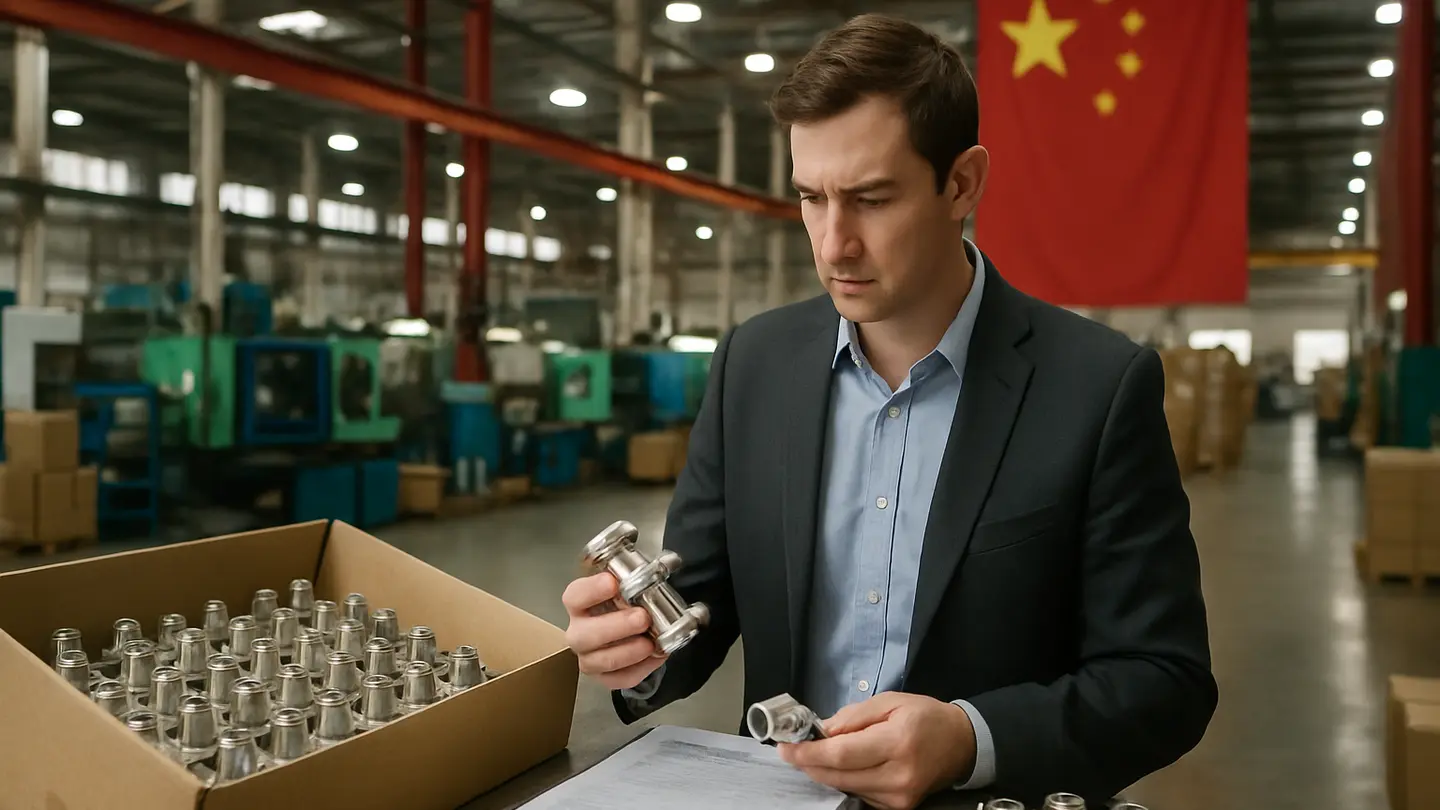
Supplier audits are also useful when the order has technical, regulatory, or capacity risk. An audit can confirm whether the factory has the equipment, staff, process controls, subcontractor management, and quality systems needed to meet the quoted requirements. This is particularly important if the supplier presents itself as a manufacturer but relies heavily on outside workshops.
Defects erase savings quickly. A 30% unit-cost reduction is not attractive if 8% of units require sorting, repacking, replacement parts, or customer credits. For B2B buyers, the cheapest order is the one that arrives saleable, compliant, and repeatable.
What Changed for China Sourcing in 2026
In 2026, trade policy remains one of the biggest variables in China landed-cost calculations. Tariffs, low-value import thresholds, customs documentation, forced-labor compliance rules, and product-specific regulations can materially change the cost and risk profile of a shipment.
Buyers should not treat duty as a footnote. The correct HS code, country of origin, declared value, and product description affect customs treatment. A product that looks profitable before duties may become marginal once all border costs are applied.
Country-of-origin treatment is especially important for companies using multi-country supply chains. Origin is generally tied to where substantial manufacturing or transformation occurs, not simply where goods are packed, labeled, or transshipped. Moving final packing to another country does not necessarily change origin. Buyers should obtain qualified customs advice before relying on any origin strategy.
Low-value import thresholds also deserve attention. Some business models depend on small direct-to-consumer shipments, while others import bulk inventory through traditional customs entry. Changes in threshold rules, documentation expectations, or enforcement priorities can affect landed cost, delivery time, and compliance exposure.
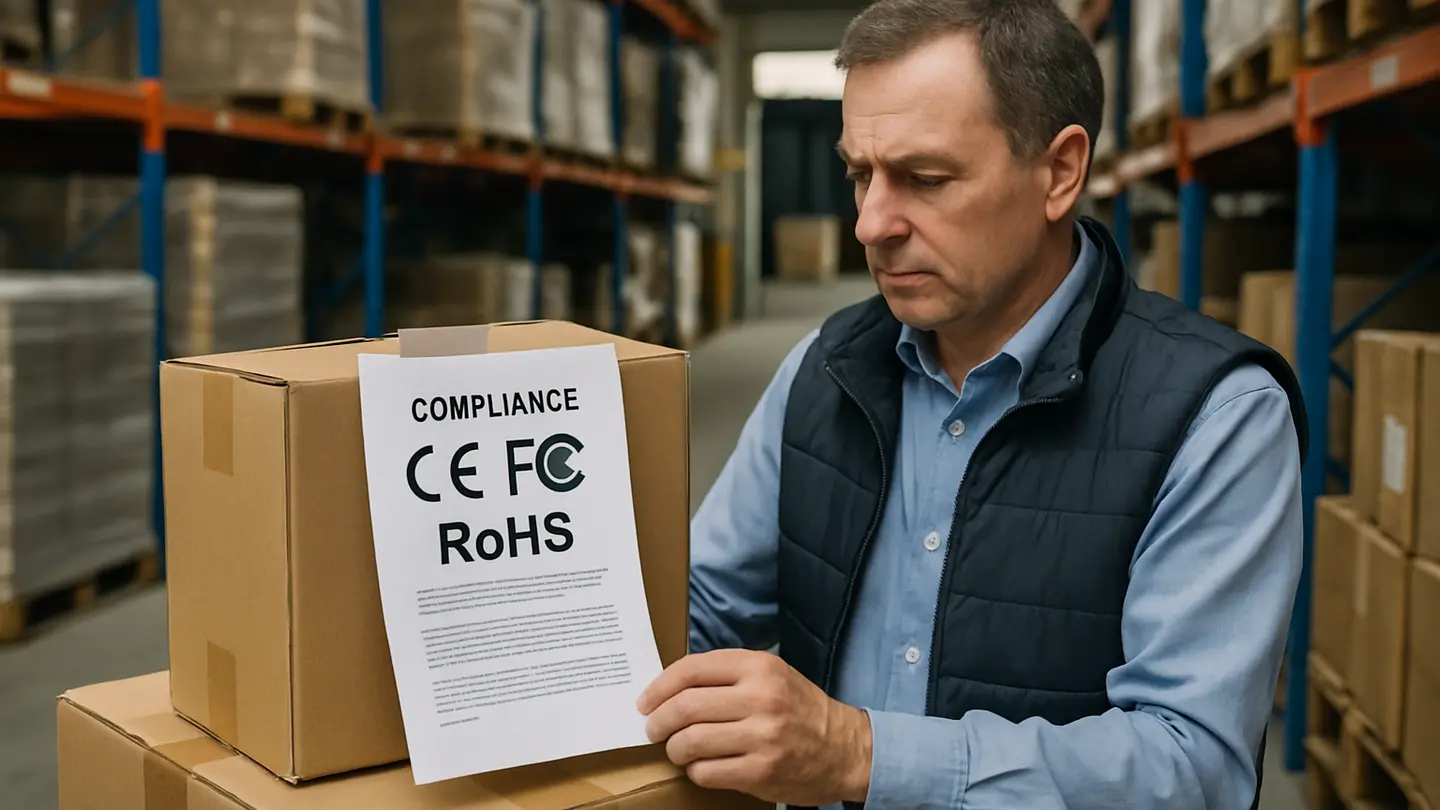
Regulated products require planning before sampling, not after mass production. Depending on the product and destination market, buyers may need to consider chemical restrictions, electrical safety, water-contact requirements, labeling rules, packaging regulations, environmental claims, or product testing. For shower and bath-related goods, this can include material performance, corrosion resistance, water efficiency claims, and market-specific plumbing or safety expectations.
China Plus One strategies have also become more common. Many buyers now keep China as a core sourcing base while developing secondary production in Vietnam, India, Mexico, Thailand, or other markets. The pattern is not always a full departure from China. Simpler, labor-heavy products may move elsewhere, while complex or component-heavy products remain in China because the supplier ecosystem is harder to replicate.
FAQ
Q1: Is China still cheaper than Vietnam, India, or Mexico?
Not always. Vietnam and India can compete strongly in apparel, textiles, basic consumer goods, and other labor-heavy products. Mexico can be attractive for North American buyers because shorter transit times reduce inventory carrying cost, speed up replenishment, and lower some logistics risks.
China often remains stronger when the product requires many components, custom tooling, packaging coordination, engineering support, or fast supplier iteration. The best country depends on the product’s cost structure, not on a general ranking of manufacturing markets.
Q2: How accurate is that headline range for my product?
The 20% to 50% range is an estimate, not a guarantee. It is a useful starting point for many consumer and light industrial goods, but category differences are large.
To test the range, buyers should compare real supplier quotes using the same specification, Incoterms, order quantity, tooling assumptions, freight method, duty rate, inspection plan, and payment terms. A quote comparison is only meaningful when every supplier is pricing the same requirement.
Q3: What should I measure the saving against?
Measure the saving against the sourcing option you would realistically use. For an established importer, that may be the current supplier’s landed cost. For a new product team, it may be a domestic contract manufacturer, a regional supplier, or an alternative Asian production base.
Comparing a China quote against an unrealistic domestic quote can exaggerate savings. The most useful benchmark is the next-best practical option that meets your quality, lead-time, compliance, and volume requirements.
Q4: What order size do I need to see real savings?
There is no universal order size that guarantees savings. The required volume depends on tooling cost, product value, freight efficiency, supplier MOQ, inspection cost, and duty exposure.
Larger orders usually improve the calculation because fixed costs such as tooling, setup, customs clearance, and supplier onboarding are spread across more units. Small first orders may look expensive, but they can still be worthwhile as controlled trials. If the product repeats successfully, later production runs often become more cost-efficient.
Bottom Line: China Can Be Cheaper, but Only If the Savings Survive Execution
China’s manufacturing advantage is structural, but it does not guarantee a cheap final order. The country remains highly competitive in many categories because of supplier density, tooling speed, component availability, production experience, and scalable factory networks.
The savings survive only when buyers manage the execution details. Clear specifications prevent material and tolerance drift. Supplier fit checks reduce the risk of misquoted capability. Sampling confirms both product quality and communication accuracy. In-production and final inspections catch defects before final payment and shipment. Freight planning, packaging design, and tariff analysis determine whether the factory saving remains intact at the warehouse door.
For B2B buyers, the practical takeaway is simple: do not buy the lowest unit price; buy the lowest reliable landed cost. China may be 20% to 50% cheaper for the right product, but the real saving is the margin left after tooling, freight, duties, quality control, and rework risk are honestly counted.