Chenghai Toy Market: How to Buy Toys That Clear Customs
Buying from the Chenghai toy market is not only a product-selection exercise. For importers, it is also a compliance-led sourcing process that must connect product design, age grading, materials, packaging, testing, and shipping paperwork before goods leave China.
A toy may look suitable in a showroom but still create import problems if it contains an unsuitable battery compartment, loose magnets, detachable small parts, incomplete warnings, or packaging that does not meet destination-market requirements. Customs and market-surveillance concerns can also arise when the test report, product label, invoice, packing list, and carton markings identify different models or versions.
The most cost-effective time to solve these issues is before production begins. A customs hold, rejected shipment, relabeling project, or product recall can be far more expensive than reviewing compliance requirements during supplier selection and sample approval.
What the Chenghai Toy Market Is
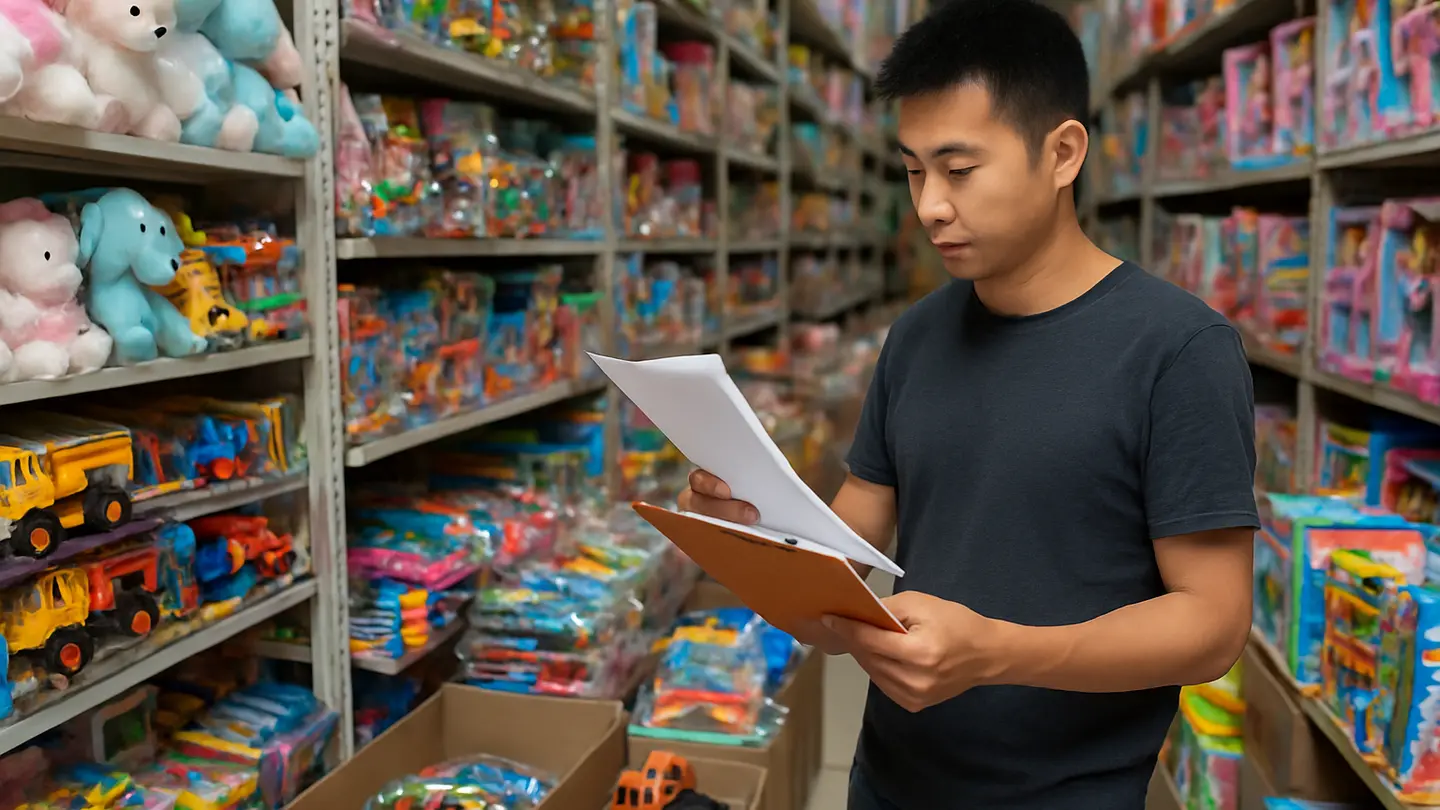
The Chenghai toy market refers broadly to the toy-manufacturing and trading ecosystem in Chenghai District, Shantou, Guangdong. The area is associated with a concentrated supply chain for plastic toys, electronic toys, educational toys, remote-control products, dolls, novelty items, and related packaging and components.
Buyers may encounter several types of businesses during a sourcing trip or remote search:
- Showrooms and exhibition halls, which display a broad selection of ready-made products from one or more suppliers.
- Wholesale centers, where buyers can compare existing items and sometimes buy stock products by carton.
- Trading companies, which may coordinate products from multiple factories and manage export documentation.
- Factories, which manufacture products, operate assembly lines, manage molds, and may control component sourcing and production quality.
These channels can overlap, but they should not be treated as identical. A showroom representative may be able to quote a product without owning the factory that produces it. That may be sufficient for a standard stock item, but it becomes more important to identify the actual manufacturer when an order involves customized colors, private-label packaging, new tooling, electronics changes, or destination-market testing.
For compliance-sensitive products, factory verification helps buyers understand whether the supplier can keep the approved specification stable through mass production. It also helps clarify who controls materials, battery components, molds, packaging artwork, and corrective actions if a test or inspection identifies a problem.
Match Toy Certificates to the Destination Market
Toy compliance requirements are determined by the market where the product will be sold, not simply by whether the product is acceptable for domestic sale in China. Before selecting a toy, buyers should identify the destination country, intended age range, sales channel, and whether the product will be sold under the importer’s own brand.
For the United States, applicable toy safety testing, importer certification, and tracking information are commonly part of the compliance process for children’s products. The exact obligations depend on the product and its intended users. Importers should confirm what testing and documentation apply to their toy category, including any requirements associated with batteries, small parts, flammability, chemical content, or mechanical hazards.
For the European Union, toy compliance generally involves CE marking and applicable EN 71 testing, alongside other relevant requirements where appropriate. The technical file, declaration process, labeling, warnings, and traceability information must correspond to the actual product being placed on the EU market.
Great Britain and Northern Ireland can follow different product-marking regimes. Buyers should not assume that one label or documentation package automatically covers England, Scotland, Wales, Northern Ireland, and EU member states in the same way. Marking requirements can change, so importers should verify the applicable rules for the intended territory before packaging is finalized.
A useful compliance checklist should confirm:
| Item to verify | Why it matters |
|---|---|
| Destination market | Determines applicable toy rules, labeling, and documentation |
| Intended age grade | Affects design review, warnings, small-parts assessment, and testing |
| Exact model and configuration | Ensures reports match the toy being imported |
| Laboratory scope | Confirms the lab and report are suitable for the required tests |
| Importer details | May be needed on packaging or product labels |
| Traceability details | Helps connect goods, documents, and production records |
A report is only useful if it covers the exact version being shipped. Buyers should check the product identity, photos, model number, materials, test date, applicable standards, and any limitations stated in the report.
Common Reasons Toy Shipments Face Border Delays
Certain toy features require early review because they can increase compliance risk. Common examples include button batteries, magnets, detachable components, cords, projectile functions, accessible electrical parts, and products intended for young children.
The intended age grade is especially important. A toy marketed for a younger child may be assessed differently from a similar item intended for an older age group. Age grading can influence product design, warning language, packaging, small-parts considerations, and test requirements.
For example, changing packaging from “Ages 6+” to “Ages 3+” after testing is not only a marketing decision. It may change the compliance basis for the product. The revised age grade could require a new safety review, updated warnings, or further testing.
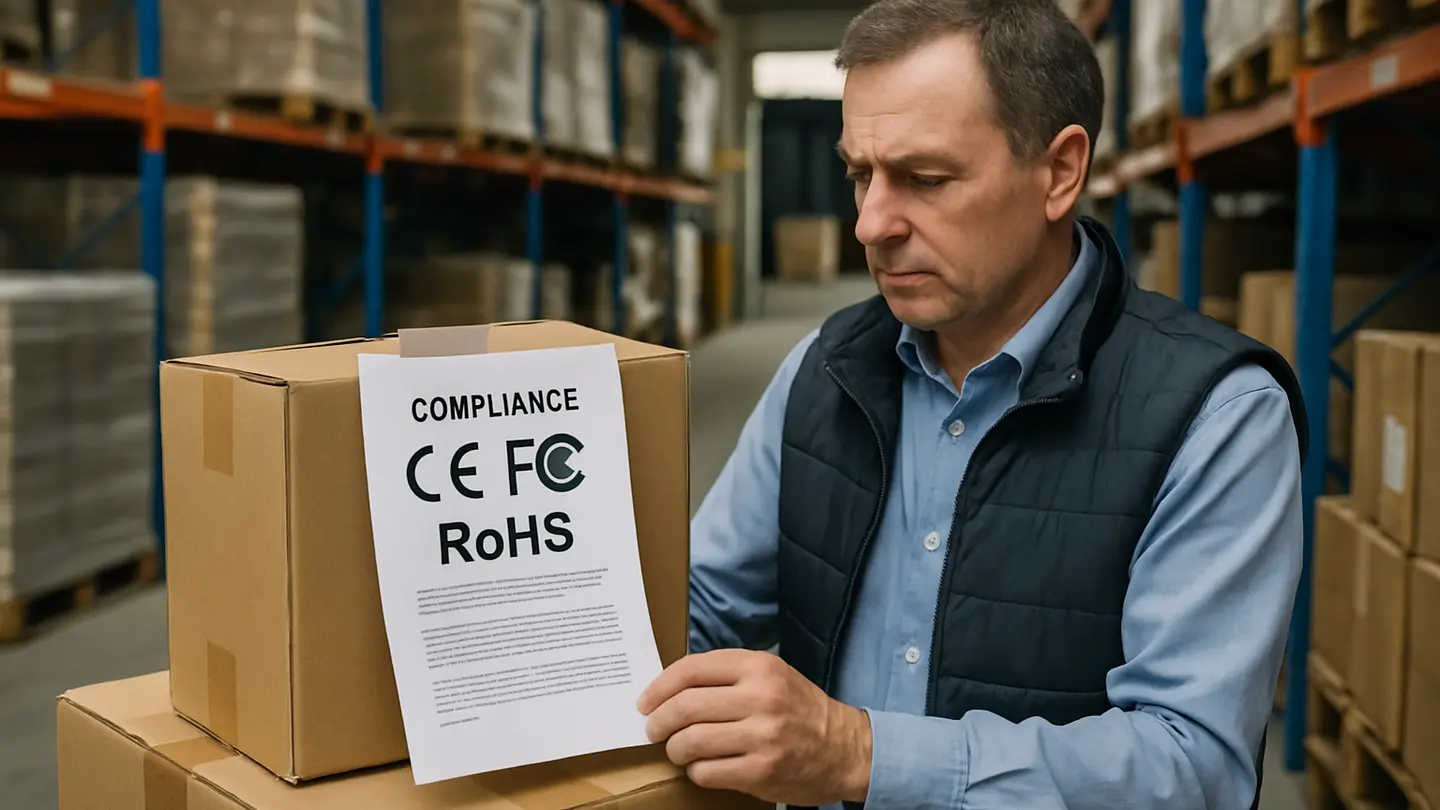
Border delays and post-arrival questions are also more likely when documents do not align. The following should identify the same product version wherever possible:
- Commercial invoice
- Packing list
- Carton marks
- Product label
- Packaging artwork
- Test report
- Certificate or declaration
- Purchase order
- Model number and product description
If the test report describes one model, the retail box shows another, and the invoice uses a third reference, customs authorities or buyers’ compliance teams may question whether the documents apply to the goods.
Test the Exact Toy Version You Will Ship
Testing should reflect the final toy, not an early showroom sample or a loosely similar product. The tested unit should match the production version in materials, components, dimensions, battery arrangement, magnet specification, paint or coating, packaging claims, and intended age grade.
Material substitutions are a frequent sourcing risk. A supplier may change resin, paint, fabric, battery compartment, screw type, packaging insert, or electronic component due to cost, availability, or production convenience. Even a seemingly minor substitution can affect whether an earlier report remains relevant.
Buyers can reduce this risk by establishing a controlled approval process:
- Approve the final product specification and packaging artwork.
- Request production-representative samples for testing.
- Keep a dated and sealed approval sample as a production reference.
- Record the product model, revision number, materials, and key components.
- Inspect mass-production units against the approved sample before shipment.
- Keep test reports and production records traceable to the relevant version or batch.
A showroom sample can be useful for product selection, but it should not automatically be treated as evidence of production conformity. The sample presented during sourcing may use different materials or assembly methods from the units eventually packed for export.
Choosing Between a Showroom, Trading Company, and Factory
Each sourcing route can be useful, depending on the order type and buyer’s level of technical involvement.
| Supplier type | Best suited to | Main limitation to consider |
|---|---|---|
| Showroom | Comparing existing products quickly | May have limited authority over production changes |
| Trading company | Multi-supplier sourcing and export coordination | May not directly control manufacturing or components |
| Factory | Custom tooling, design changes, electronics work, and production control | Often requires clearer specifications and higher commitment |
Showrooms are efficient for identifying market trends, comparing product categories, and locating standard designs. They are often helpful when a buyer needs a broad first view of available toys. However, the showroom may not control molds, production schedules, or material changes.
Trading companies can be useful when a buyer needs several categories consolidated into one shipment. They may also coordinate communication, sampling, export paperwork, and modest customization. Buyers should still establish who manufactures each product and who is responsible for quality and compliance documents.
Factories are generally better positioned for mold changes, electronics modifications, custom colors, private-label packaging, and technical discussions about product construction. For a toy requiring new tooling, a different battery system, or redesigned packaging, direct factory access can make specification control easier.
Supplier verification is not merely an administrative task. It helps buyers assess whether the business can reproduce an approved product consistently. Weak control over materials or subcontracted assembly can lead to specification drift, safety issues, delayed testing, and potential recall exposure.
Understanding MOQs, Packaging, and Toy Pricing
Minimum order quantities vary significantly between stock products and customized projects. A ready-made toy may be available at carton level, while a custom color, printed box, private label, or new mold can require a much larger order.
Buyers should request quotations that separate the major cost elements rather than relying on a single unit price. A useful quote may include:
- Unit price by order quantity tier
- Carton quantity and carton dimensions
- Sample cost, if applicable
- Tooling or mold charges
- Custom color charges
- Packaging and printing costs
- Battery inclusion or exclusion
- Testing-related costs, where relevant
- Estimated production lead time
Packaging should be treated as part of the compliance package, not only as a marketing asset. Depending on the destination market, it may need to carry warnings, age grades, importer or responsible-party details, traceability information, and required language content.
Before packaging enters production, buyers should approve compliance artwork as carefully as the product itself. The approval should confirm that the model number, warnings, age grade, importer information, and any certification marks are accurate and consistent with the supporting documents. Late packaging changes can create relabeling costs or require additional compliance review.
Chenghai vs. Yiwu: Which Market Fits Your Toy Sourcing Plan?
Chenghai and Yiwu can serve different buying strategies.
Chenghai is often a practical choice for buyers focused specifically on toys, especially where factory access, product customization, electronics adjustments, or development work are important. Its concentrated toy supply chain can be useful when a buyer needs to compare similar toy types, discuss production capability, or manage a more detailed sourcing project.
Yiwu may be better suited to buyers purchasing a wider mix of consumer goods, gift items, accessories, party products, household goods, and smaller-volume merchandise. It can be efficient for mixed-category orders where toys are only one part of the purchasing plan.
The right choice depends on several factors:
- Product mix: Focused toy range or diverse general merchandise order
- Order size: Carton-level buying versus production-scale orders
- Customization needs: Stock products versus custom colors, packaging, or tooling
- Supplier depth: Need for factory-level technical discussions or broad product comparison
- Travel plan: Time available for supplier visits, sampling, and inspections
Neither location is automatically better for every buyer. The key is matching the market to the sourcing task.
FAQ
Q1: Do I need to visit Chenghai, or can I buy remotely?
Remote sourcing can work once the supplier and product have been properly validated. Buyers can review product photos, videos, sample shipments, packaging artwork, test reports, and factory documentation without visiting in person.
However, an in-person visit can be valuable for a first custom project, a complex electronic toy, or a large product comparison exercise. Visiting may help buyers assess showroom offerings, discuss specifications directly, and understand whether the quoted supplier is the actual manufacturer.
Q2: When is the worst time to plan a Chenghai trip?
Chinese New Year is typically the most challenging period for sourcing and production planning. Factory shutdowns, staffing changes, delayed material supply, and reduced assembly capacity can affect sampling and lead-time reliability before and after the holiday.
Buyers should build holiday disruption into their sourcing schedule, especially for projects involving molds, testing, packaging approval, or pre-shipment inspection. Autumn toy fairs can also be useful periods to see new designs and meet suppliers, although travel and supplier availability should be planned in advance.
Q3: Who owns the test report if the supplier paid for it?
A supplier-funded test report can still be useful if it clearly covers the exact product version being imported. Buyers should verify the laboratory’s credentials, report scope, test date, product photos, model number, and destination-market relevance.
For own-brand products, proprietary designs, or high-risk categories, commissioning independent testing may provide greater control over the report, sample selection, and product identity. The important issue is not only who paid, but whether the report genuinely applies to the goods being shipped.
Q4: What happens if I change the packaging after testing?
Packaging changes should receive a compliance review even if the toy itself has not changed. Updated artwork must retain accurate warnings, age grading, importer details, traceability information, and required language content.
If the revision changes the intended age range, product claims, included components, packaging materials, or presentation of small parts, further testing or review may be needed. Packaging revisions should therefore be managed through the same approval controls used for product changes.
Plan Compliance Before You Place the Toy Order
Successful Chenghai toy sourcing begins before the purchase order is issued. Buyers should first define the destination market, intended age range, product features, packaging requirements, testing strategy, and documentation needed for import.
They should also identify whether they are dealing with a showroom seller, trading company, or actual factory. This matters because the party presenting the product may not be the party that controls molds, materials, production, or corrective action.
By validating the supplier, approving the final specification, testing production-representative units, and aligning all labels and shipment documents, importers can reduce the risk of border delays and avoid costly last-minute changes.
About the Author
The author covers B2B sourcing, supplier evaluation, product compliance, and international trade processes. The focus is on practical purchasing controls that help importers connect product requirements, factory capability, documentation, and shipment readiness.