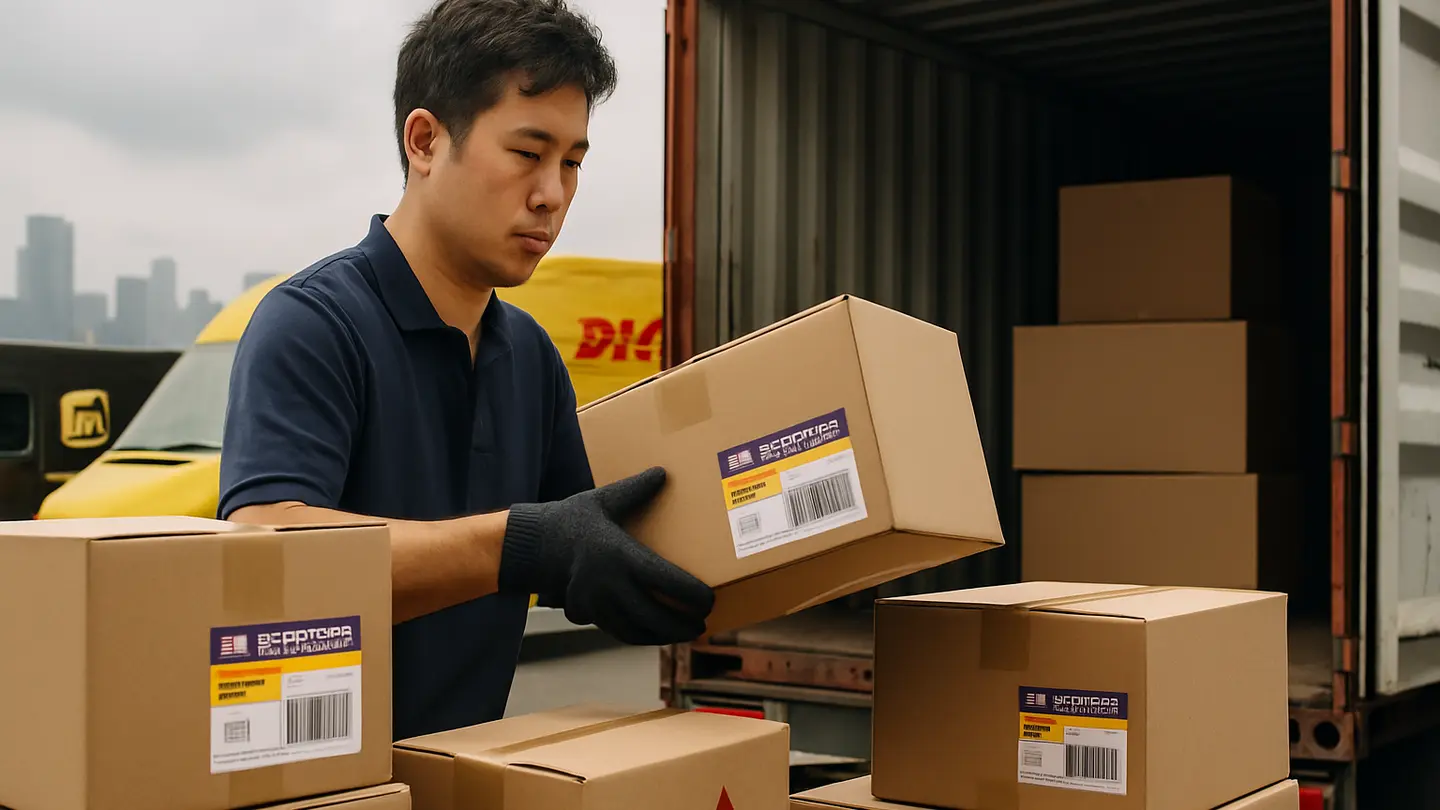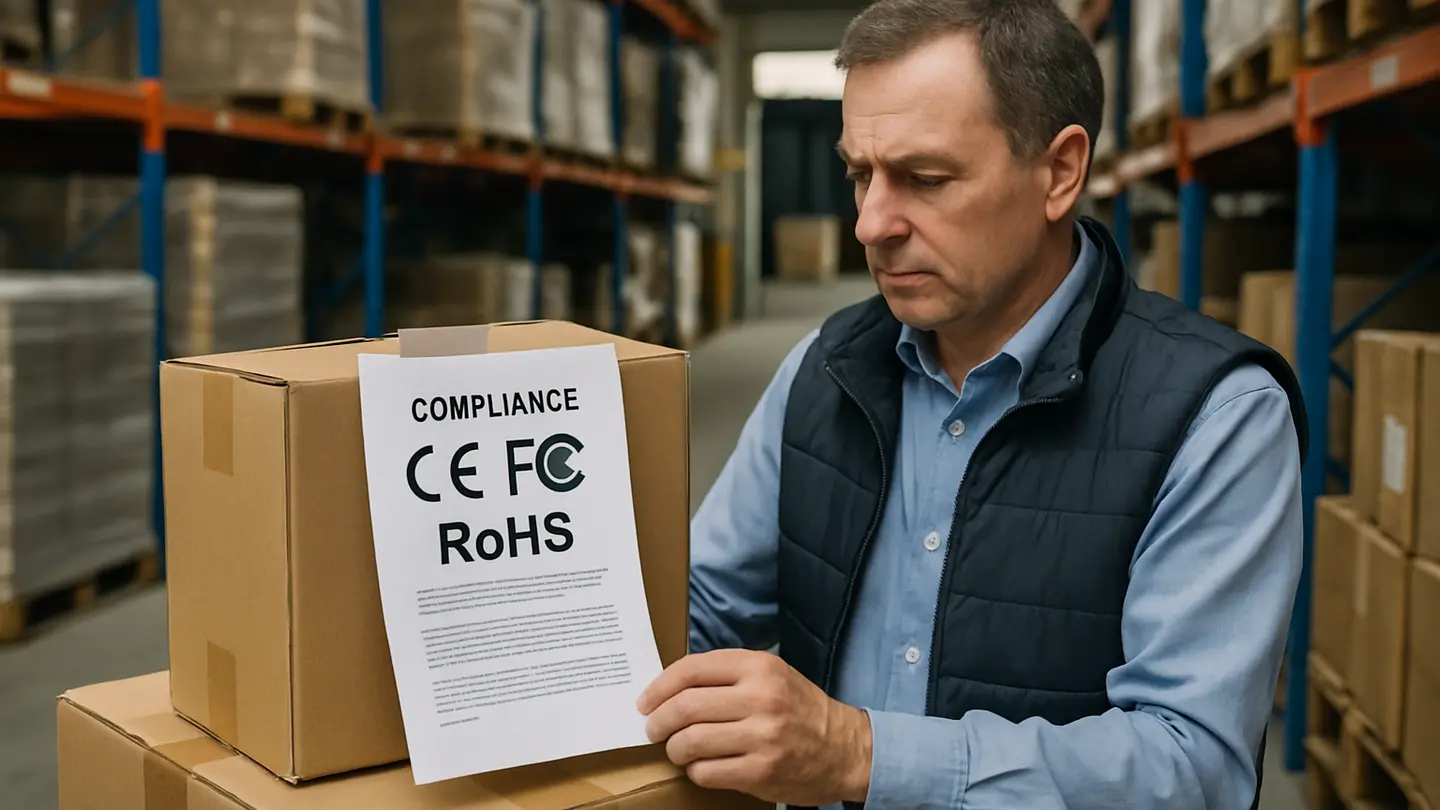
A China freight forwarder coordinates the movement of goods from suppliers in China to an overseas destination. It usually does not operate the vessel, aircraft, truck, or rail service carrying the cargo. It books space, coordinates pickup, checks shipping documents, communicates with carriers and agents, and manages handoffs between factory, port, customs, and final delivery.
That distinction matters. A carrier physically transports cargo. A customs broker files import or export declarations. The importer of record is legally responsible for the import entry, duties, taxes, and regulatory compliance in the destination country. A freight forwarder may arrange these services, but it is not automatically responsible for all of them unless the contract says so.
For B2B buyers sourcing shower systems, bathroom accessories, valves, glass panels, sanitaryware, or other manufactured goods from China, the main risk is assuming that “the forwarder will handle everything.” Before cargo moves, define who controls the booking, pays each charge, files customs entries, insures the cargo, and approves routing changes.
What a China Freight Forwarder Typically Manages
A China freight forwarder turns a supplier’s cargo-ready date into a shipment plan. It collects shipment details, checks the route, books space with a carrier or co-loader, arranges local pickup if required, and coordinates export procedures.
For ocean freight, this may include booking FCL or LCL service, confirming the sailing schedule, arranging container pickup, monitoring cutoff times, and ensuring the cargo reaches the terminal on time. For air freight, the forwarder checks flight availability, airline restrictions, chargeable weight, export documents, and airport handling requirements.
A good forwarder also performs basic document consistency checks before goods move. The commercial invoice, packing list, and bill of lading or air waybill should align on essential details such as:
| Document detail | Why it matters |
|---|---|
| Shipper and consignee names | Incorrect parties can delay release or customs filing |
| Product description | Vague or inconsistent descriptions can trigger customs questions |
| Carton count, weight, and volume | Differences can affect freight charges and inspections |
| Incoterm | Determines who is paying for which shipment leg |
| Marks, container number, and seal number | Needed for tracking, terminal release, and customs control |
These checks do not replace the buyer’s compliance responsibilities, but they can catch preventable errors before transit.
Forwarders are often judged by exceptions. Their value becomes clearer when a factory misses the cutoff, a port is congested, a container is rolled, customs selects the shipment for examination, or the destination warehouse refuses a delivery appointment.
Many China forwarders also offer consolidation for buyers purchasing smaller orders from multiple factories. Confirm whether consolidation includes only logistics handling or also inspection, labeling, repacking, palletizing, or quantity checks.
Where a Forwarder’s Responsibility Ends
The forwarder’s legal responsibility depends on how it contracts with the buyer. Some forwarders act mainly as agents, arranging transport while the actual carrier issues the transport document and carries the goods under its own terms.
Other forwarders operate as non-vessel operating common carriers, or NVOCCs, in ocean freight. An NVOCC may buy space from shipping lines and resell it under its own house bill of lading. In that case, the forwarder may be the contractual carrier to the buyer, even though another company operates the vessel.
This affects cargo claims. If goods are damaged, lost, delayed, or short-shipped, the buyer needs to know which contract governs the claim and what liability limits apply. Freight contracts often limit liability compared with the commercial value of the goods, so cargo insurance should be discussed before shipment. Do not assume standard freight charges include full-value protection.
A forwarder is also not automatically the customs broker at destination. Some forwarders have in-house brokerage teams or overseas agents. Others only handle freight to the port or airport, leaving the buyer to appoint a broker separately. Confirm who files the import declaration, who acts as importer of record, and who is responsible for classification, valuation, duty payment, and regulatory documentation.
Courier shipments can add confusion because parcel networks may bundle pickup, international transport, customs processing, and final delivery. Ordinary air freight or ocean freight is different because responsibilities are more segmented.
How Incoterms Define the Scope You Are Buying
Incoterms define which parts of the shipment are controlled and paid for by the seller and which parts are controlled and paid for by the buyer. They do not replace a freight contract, customs law, or payment terms, but they are central to deciding what a China freight forwarder is expected to manage.
Under EXW, or Ex Works, the supplier makes the goods available at its premises or another named place. The buyer takes on most transport responsibility from that point, including pickup, local handling, export coordination, and documentation follow-up. In practice, export clearance from China may still require supplier cooperation.
Under FOB, or Free on Board, the supplier usually handles delivery to the named Chinese port, export clearance, and loading onto the vessel. Once the goods are loaded on board, the buyer controls the main international freight and destination-side process. FOB is common for ocean shipments because it creates a practical split between supplier and buyer responsibilities.
Under DDP, or Delivered Duty Paid, the seller takes on a wider scope: transport to the named destination, import clearance, duties, taxes, and delivery. This can be convenient, but buyers should still ask who will act as importer of record, how duties and taxes are being handled, and whether the arrangement is compliant in the destination market.
The Incoterm should appear consistently on the purchase order, commercial invoice, freight quote, and shipment instructions. Misalignment often leads to duplicated charges, missing services, or disputes.
How Freight Forwarders Earn Money
Freight forwarders earn money in several ways, and understanding the model helps buyers read quotes carefully.
An agent-style forwarder may charge service fees for arranging transport, documentation, customs coordination, pickup, warehousing, or delivery. These fees may be shown separately or embedded in broader handling charges.
An NVOCC or consolidator may buy freight capacity from carriers and resell it under its own contract. The margin is the difference between the cost of the space and the rate charged to the buyer. This is not necessarily a problem; forwarders with larger shipment volumes may access rates that a small importer could not obtain directly.
The issue is transparency. A low headline freight rate can be offset by higher origin handling, documentation, warehouse receiving, destination terminal handling, customs coordination, delivery, and administrative fees. Compare quotes on the same scope, route, Incoterm, cargo details, and delivery address.
What a Freight Forwarding Quote Should Show
A useful freight quote should separate costs into origin charges, main freight, destination charges, and optional services.
Origin charges may include pickup, export documentation, warehouse receiving, consolidation, container loading, trucking to port, terminal charges, and customs declaration support. Main freight covers the ocean, air, rail, or multimodal movement. Destination charges may include terminal handling, documentation, customs brokerage, delivery order fees, port or airport charges, drayage, unloading, and final delivery. Optional services can include cargo insurance, palletizing, labeling, inspection support, storage, or special handling.
To quote accurately, the forwarder needs reliable assumptions. Buyers should provide:
- Goods description and HS code if available
- Commodity type and restrictions, such as batteries, liquids, magnets, chemicals, or fragile glass
- Carton count, dimensions, gross weight, and total volume
- Incoterm and named place or port
- Supplier pickup address or origin port
- Destination port, warehouse, or final delivery address
- Cargo-ready date
- Required delivery deadline
- Preferred mode: FCL, LCL, air freight, courier, or undecided
- Delivery requirements, such as liftgate, appointment, residential restriction, pallet exchange, or inside delivery
The quote should distinguish fixed charges from event-driven costs. Fixed charges are expected under normal movement, such as pickup, freight, and standard documentation fees. Event-driven costs arise only if something happens, such as customs examination, storage, demurrage, detention, re-delivery, waiting time, port congestion surcharge, or routing changes.
Quote validity is important. The forwarder should state the validity date, sailing or flight basis, currency, included services, excluded charges, and triggers that can change the final invoice. Common triggers include actual weight or volume differing from estimates, missed cutoff, cargo not ready on time, carrier rate changes, customs inspection, or delivery complications.
Extra Charges That Can Appear After Booking
Some charges appear only after booking because they depend on timing, inspections, carrier decisions, or terminal conditions.
Demurrage is charged when a container remains at the terminal beyond the allowed free time. This can happen if import clearance is delayed, documents are missing, duties are not paid in time, or the container is not picked up promptly.
Detention is charged when a container has left the terminal but is not returned to the carrier within the allowed free period. If a warehouse delays unloading, detention may apply until the empty container is returned.
Customs examinations can create additional costs. If authorities select a shipment for inspection, the container may need to be moved, unloaded, scanned, handled, resealed, or stored. Even when goods are compliant, the buyer may still be responsible for examination-related handling and storage charges.
Peak-season surcharges, congestion surcharges, equipment imbalance fees, fuel adjustments, and emergency carrier surcharges can also affect cost near the booking window. A forwarder cannot always prevent these charges, but it should explain which costs are known, estimated, or outside its control.
The best protection is not simply asking for “all-in pricing.” Buyers should ask what “all-in” excludes. No quote can include every possible customs exam, terminal delay, or warehouse waiting charge unless the provider explicitly assumes those risks, which is uncommon.
When You May Not Need a Freight Forwarder
Not every shipment from China requires a traditional freight forwarder. Small, urgent sample shipments are often easier to move through express courier services. For faucet finish samples, shower head prototypes, cartridge samples, or small packaging mockups, courier service may be simplest because pickup, export handling, import clearance, and final delivery are usually bundled.
Courier services are often priced by chargeable weight and designed for parcels rather than commercial freight. They can be fast and convenient, but expensive for heavier cartons, bulky goods, or shipments requiring special documentation.
Ordinary air freight and ocean freight require more coordination. Someone must book the cargo, prepare and check documents, arrange export clearance, monitor departure, handle arrival notices, coordinate import clearance, pay destination charges, and arrange final delivery. The buyer can appoint separate providers or pay one lead forwarder to coordinate the process.
For occasional importers, one coordinated provider may reduce administrative burden. For experienced importers with regular volume, separating providers can improve control and cost visibility. The right choice depends on shipment size, internal logistics knowledge, risk tolerance, and routing control.
FAQ
Q1: Should I use the forwarder my supplier recommends?
A supplier-recommended forwarder can be convenient, especially for early shipments when the buyer is still learning the supplier’s process and export port. The supplier may already know the forwarder’s warehouse, contact person, cutoff routine, and documentation requirements.
However, convenience should not replace control. Clarify who contracts with the forwarder: the supplier or the buyer. If the supplier is the forwarder’s customer, the buyer may have limited authority to change routing, request documents, dispute charges, or redirect the shipment.
Before booking, confirm routing authority, charge visibility, and instruction rights. Know who approves the sailing or flight, who receives the bill of lading draft, who controls cargo release, and whether destination charges will be billed later.
Q2: How do I compare a DDP price against buying FOB?
Compare DDP and FOB only after building both options to the same delivered address. A DDP price commonly includes international freight, import clearance, duties, taxes, and final delivery. FOB pricing usually stops once goods are loaded at the origin port, so the buyer must add freight, insurance if required, destination charges, customs brokerage, duties, taxes, and inland delivery.
The comparison should include cost and control. DDP may look simple, but the buyer should confirm who clears the import shipment and under which importer registration or tax number. FOB gives more freight visibility, but it also requires the buyer to manage the forwarder and customs process.
Q3: Should my forwarder be based in China or in my own country?
A China-based forwarder may be closer to the factory, origin warehouse, carrier booking desk, and Chinese port process. This can help with pickups, consolidation, export documents, and missed cutoffs.
A forwarder based in the buyer’s country may offer stronger destination-side support, clearer communication in the buyer’s time zone, and closer familiarity with local customs practices and delivery requirements. In many shipments, one lead forwarder coordinates with an agent on the other side.
If two providers are used, define the handover point clearly. One company may handle China origin through vessel departure, while another handles arrival, customs clearance, and delivery. Without a written split, both sides may assume the other is handling a time-sensitive task.
Q4: What does a forwarder need from me before they can quote and book?
A forwarder needs the goods description, carton count, dimensions, gross weight, total volume, origin address, destination address, and preferred transport mode. The Incoterm and cargo-ready date are also essential because they determine where the forwarder’s responsibility begins and whether the schedule is realistic.
Before departure, the final commercial invoice and packing list are usually required. Depending on the product and destination country, additional certificates, test reports, import permits, or compliance documents may also be needed.
Inaccurate dimensions or weights can change the final price. For LCL and air freight, chargeable weight is especially important. If the supplier estimates carton sizes before production and the actual cartons are larger, the freight invoice may increase even if the forwarder quoted correctly.
Conclusion: Define Scope Before the Shipment Moves
A China freight forwarder can be a valuable coordinator, but the buyer still needs to define the scope of work. Before cargo is collected or booked, confirm who has booking authority, who checks documents, who arranges export and import customs filings, who acts as importer of record, and who pays duties, taxes, and destination charges.
Cargo liability and insurance should also be addressed before shipment. A forwarder’s standard liability may be limited, and freight movement does not automatically include full-value cargo protection. Event-driven charges such as demurrage, detention, customs exams, storage, and waiting time should be discussed in advance.
The lowest quote is not always the safest choice. For B2B buyers managing production timelines and customer delivery commitments, responsiveness during delays, port problems, customs exams, or documentation issues can be more valuable than a slightly cheaper rate.
About the Author
The author is an independent B2B trade editor focused on sourcing, manufacturing, and international supply chain topics for professional buyers. Editorial coverage emphasizes practical purchasing decisions, supplier coordination, logistics risk, and landed-cost visibility.