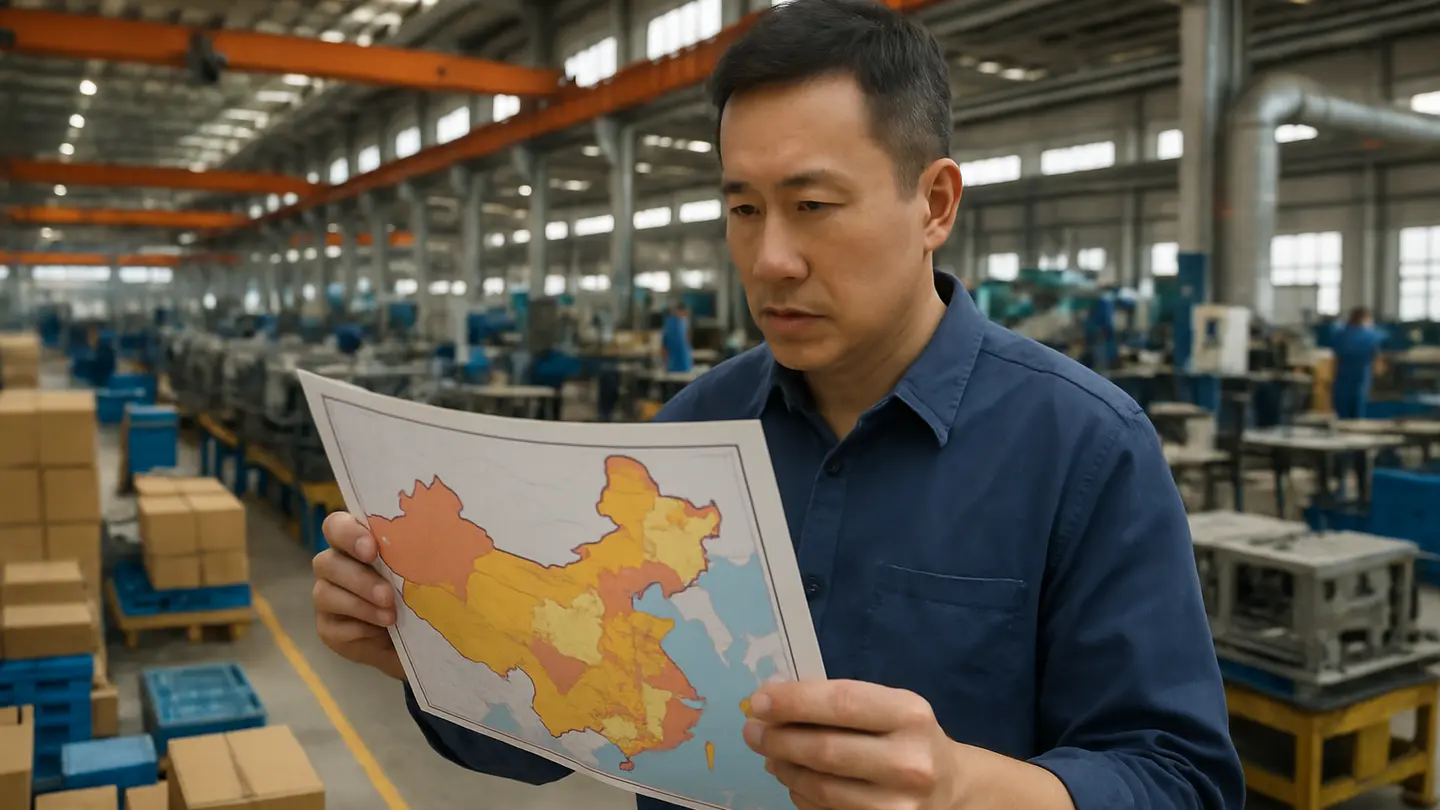
China is not one sourcing market with interchangeable factory locations. It is a network of product-specialized ecosystems, where cities and provinces develop expertise around particular materials, processes, components, and export channels.
For B2B buyers, this matters before supplier comparison begins. Shenzhen is widely associated with electronics and components. Guangzhou is a practical starting point for apparel, textiles, leather goods, cosmetics, and trade-fair access. Foshan and Dongguan are often relevant for furniture-related categories, plastics, molding, and home products. Yiwu is known for small consumer goods and broad wholesale availability.
Choosing the wrong region can make a project harder even when the quoted unit price looks acceptable. A supplier outside the right cluster may need to buy components from another province, outsource production steps, wait longer for tooling revisions, or add domestic freight into the final price. Regional fit is therefore a practical sourcing filter, not a geography exercise.
Why Regional Fit Affects Supplier Pricing
Regional manufacturing clusters reduce friction. A strong cluster brings together finished-goods factories, component vendors, tooling workshops, packaging suppliers, subcontractors, test labs, freight forwarders, and export service providers. When these businesses are close together, a supplier can solve problems faster and quote more competitively.
That density affects pricing in three important ways.
First, component access improves. A factory in the right cluster may have multiple local vendors for motors, fasteners, molds, textiles, glass, plastics, electronics, or packaging. Competition among those vendors can support better pricing and shorter lead times.
Second, sampling becomes more efficient. If a prototype needs a revised mold insert, different fabric, changed circuit board, alternative finish, or packaging adjustment, local support can shorten the next sample cycle. In a weaker regional fit, the supplier may wait for parts from another city before making even a small revision.
Third, product knowledge is deeper. Factories inside mature clusters often understand export requirements, buyer expectations, component options, and category-specific defects. This does not remove the need for audits, inspections, or clear specifications, but it can reduce basic misunderstandings.
A supplier outside the relevant cluster may still be capable. However, buyers should check for hidden dependencies. Does the supplier make the product in-house, or trade from another factory? Are key components local, or shipped from another province? Are tooling changes handled on site, or subcontracted? Is the quoted price factory-gate, or does it include domestic movement from a separate production location?
Before creating a supplier shortlist, buyers should ask whether the region itself fits the product. A strong supplier in the wrong region may be less competitive than an average supplier inside the right ecosystem.
Pearl River Delta: Guangdong’s Core Manufacturing Cities
The Pearl River Delta in Guangdong is one of China’s most important export manufacturing regions. Guangzhou, Shenzhen, Dongguan, and Foshan form a compact manufacturing belt with strong port access, mature logistics services, experienced exporters, and proximity to Hong Kong.
For many international buyers, Guangdong remains a first search area because the region combines product variety with export experience. However, each city has a different sourcing profile.
| City | Common sourcing strengths | Buyer considerations |
|---|---|---|
| Shenzhen | Electronics, components, communications products, hardware startups, rapid prototyping | Strong for products requiring electronic integration, but costs can be higher than lower-tier cities |
| Guangzhou | Apparel, textiles, leather goods, cosmetics, trade-show access | Useful for buyers attending the Canton Fair or building apparel and lifestyle supplier lists |
| Dongguan | Toys, plastics, injection molding, knitwear, furniture components, contract manufacturing | Strong subcontracting base; verify whether processes are in-house or outsourced |
| Foshan | Furniture, ceramics, tiles, building materials, appliances, bathroom and home improvement products | Relevant for building-material and home-product buyers; specifications and quality standards vary widely |
Shenzhen is the clearest example of a cluster where speed and component availability can matter more than a low headline price. The city and surrounding area support electronics sourcing, PCB assembly, batteries, sensors, cables, housings, rapid prototyping, and related engineering services. Buyers working on connected devices, control modules, LED products, or electronics-heavy assemblies often start here because many required inputs are nearby.
Guangzhou has a broader trading and commercial role. Its apparel and textile networks are supported by fabric markets, accessories suppliers, sample rooms, and export agents. It is also associated with leather goods, cosmetics, and buyer access through major trade events such as the Canton Fair.
Dongguan has long been known for export manufacturing, including toys, plastics, injection molding, knitwear, and furniture components. Its strength often lies in production networks rather than one finished-product category. Buyers sourcing molded plastic products or assemblies with multiple plastic parts should check which processes are controlled by the main factory and which are passed to nearby partners.
Foshan is important for furniture, ceramics, tiles, building materials, appliances, and home-improvement products. For shower, bathroom, kitchen, tile, and building-material supply chains, Foshan and nearby Guangdong cities can offer a wide supplier base. The challenge is variation: buyers may find everything from low-cost domestic-grade products to export-focused factories with more disciplined quality systems.
Yangtze River Delta: Shanghai, Jiangsu, and Zhejiang
The Yangtze River Delta is often a better fit for engineered, higher-specification, and precision-oriented sourcing. The region includes Shanghai, Jiangsu, and Zhejiang, with strong transport infrastructure, deep industrial capability, and many private manufacturing clusters.
Shanghai plays a major role in logistics, finance, engineering coordination, automotive components, precision equipment, medical devices, and biopharma-related manufacturing. For high-specification products, Shanghai can be useful as a coordination point even when the factory itself is in nearby Jiangsu or Zhejiang.
Jiangsu has a broad industrial base. Relevant clusters include laptops, computer peripherals, machinery, automation equipment, home textiles, solar panels, and advanced manufacturing inputs. Cities across Jiangsu can be attractive for buyers who need technical production capability, stronger process control, or machinery-related expertise. The province is also well connected to Shanghai’s logistics channels.
Zhejiang is known for dense specialized private manufacturing clusters. Many cities and counties concentrate around one product category or process. This structure can be efficient for buyers who know exactly what they need, because suppliers, material vendors, and supporting workshops may be clustered tightly around the same category.
Yiwu, in Zhejiang, is especially well known for small consumer goods. It is useful for low-complexity items, promotional products, accessories, general merchandise, and mixed-SKU purchasing. Buyers often use Yiwu when they need variety, smaller minimum order quantities, and access to many product lines from one market environment. It is less suitable for highly engineered custom products unless the relevant production base is nearby and verified.
The Yangtze River Delta is not always the cheapest option, but it can be better when product reliability, tolerances, technical documentation, and repeatability matter. Buyers should compare not only unit prices but also tooling capability, quality-control maturity, and engineering communication.
Important China Manufacturing Regions Buyers Often Overlook
Not every strong product cluster is located in the Pearl River Delta or Yangtze River Delta. Buyers who only search Guangdong, Zhejiang, Jiangsu, and Shanghai may miss regions better aligned with their category.
Qingdao, in Shandong, is associated with white goods, textiles, and rubber-related manufacturing. For buyers sourcing appliances, rubber products, tires, certain industrial goods, or textile-related categories, Qingdao and the wider Shandong manufacturing base may deserve attention. Its port access also makes it relevant for export programs.
Tianjin, near Beijing, is linked to automotive, aerospace, and petrochemical categories. It can be relevant for industrial parts, chemical-related inputs, machinery, or products connected to northern China’s heavy manufacturing base. Supplier qualification should include process capability, certifications where applicable, and evidence of export experience.
Jinjiang and Quanzhou, in Fujian, form one of China’s major athletic footwear clusters. Buyers sourcing sports shoes, casual footwear, shoe components, soles, uppers, and related materials often find stronger specialization there than in general sourcing regions. Footwear sourcing is highly material- and process-dependent, so proximity to the right subcontractors can affect cost and development speed.
Inland cities have also become more important. Chengdu, Chongqing, and Xi’an support electronics, automotive, computer peripherals, aerospace, semiconductors, and related supply chains. These regions benefit from industrial policy support, large labor markets, and growing infrastructure.
However, buyers should not assume that an inland quote is automatically cheaper on a landed-cost basis. Lower operating costs can be offset by domestic freight, longer transit to ports, coordination complexity, and consolidation needs.
How to Source Across Multiple Manufacturing Hubs
Many purchasing programs do not fit neatly into one region. A distributor may source bathroom hardware from Guangdong, textiles from Zhejiang, small accessories from Yiwu, and electronics from Shenzhen. A retailer may combine furniture, lighting, packaging, and promotional items from different supplier bases.
This can improve category fit, but it adds operational complexity. Separate origins may mean separate freight bills, pickup dates, export document sets, customs paperwork, container loading plans, and arrival schedules. If each supplier ships independently, the buyer may receive goods in multiple partial shipments.
Shipment consolidation is often the practical solution. Goods from several suppliers are sent to a consolidation warehouse, checked against packing lists, and combined into one container or larger shipment. This can reduce international freight cost, simplify customs documentation, and make delivery planning easier.
Freight forwarders, sourcing agents, or third-party logistics providers commonly coordinate consolidation. The right arrangement depends on order size, number of suppliers, product type, inspection needs, and Incoterms. A buyer combining cartons from Yiwu and components from Guangdong may need a warehouse plan that accounts for domestic trucking time before the export vessel cutoff.
Buyers should clarify consolidation responsibilities early. Key questions include:
- Who books domestic trucking from each factory?
- Where will goods be consolidated?
- Who checks carton marks, quantities, and packaging condition?
- Which party prepares export documents?
- What happens if one supplier is late?
- Are inspections done at the factory, at the warehouse, or both?
Sourcing across multiple China manufacturing hubs can work well, but logistics must be designed into the purchasing plan from the start.
When One Product Depends on More Than One Region
Some products rely on capabilities from more than one cluster. A bathroom product may combine metal parts, plastic housings, glass, packaging, and electronic controls. A smart appliance may require molded plastics from one region and electronics from another. A furniture item may include hardware, upholstery, wood components, and lighting elements.
In these cases, final assembly should usually sit with the supplier responsible for the largest quality risk. If electronics define performance and failure risk, an electronics-capable lead factory may be the best anchor. If injection-molded parts require tight tolerances and cosmetic consistency, the molding specialist may need to control assembly. If surface finishing or waterproofing is most critical, the lead supplier should be strong in that process.
One factory should be appointed as the lead factory. That supplier should control the complete bill of materials, drawings, approved samples, change records, and technical communication. Without a lead factory, buyers can become the middleman between suppliers, each blaming the other for delays, defects, or compatibility problems.
Moving components between provinces adds cost and time. A simple part shipped from another region may not matter much. But when components are custom, frequently revised, fragile, or quality-critical, distance can slow every sample cycle.
For custom secondary components, it is often safer for the lead factory to purchase and manage them directly. This gives one supplier responsibility for fit, function, assembly performance, and final quality. The buyer should still approve key sub-suppliers where necessary.
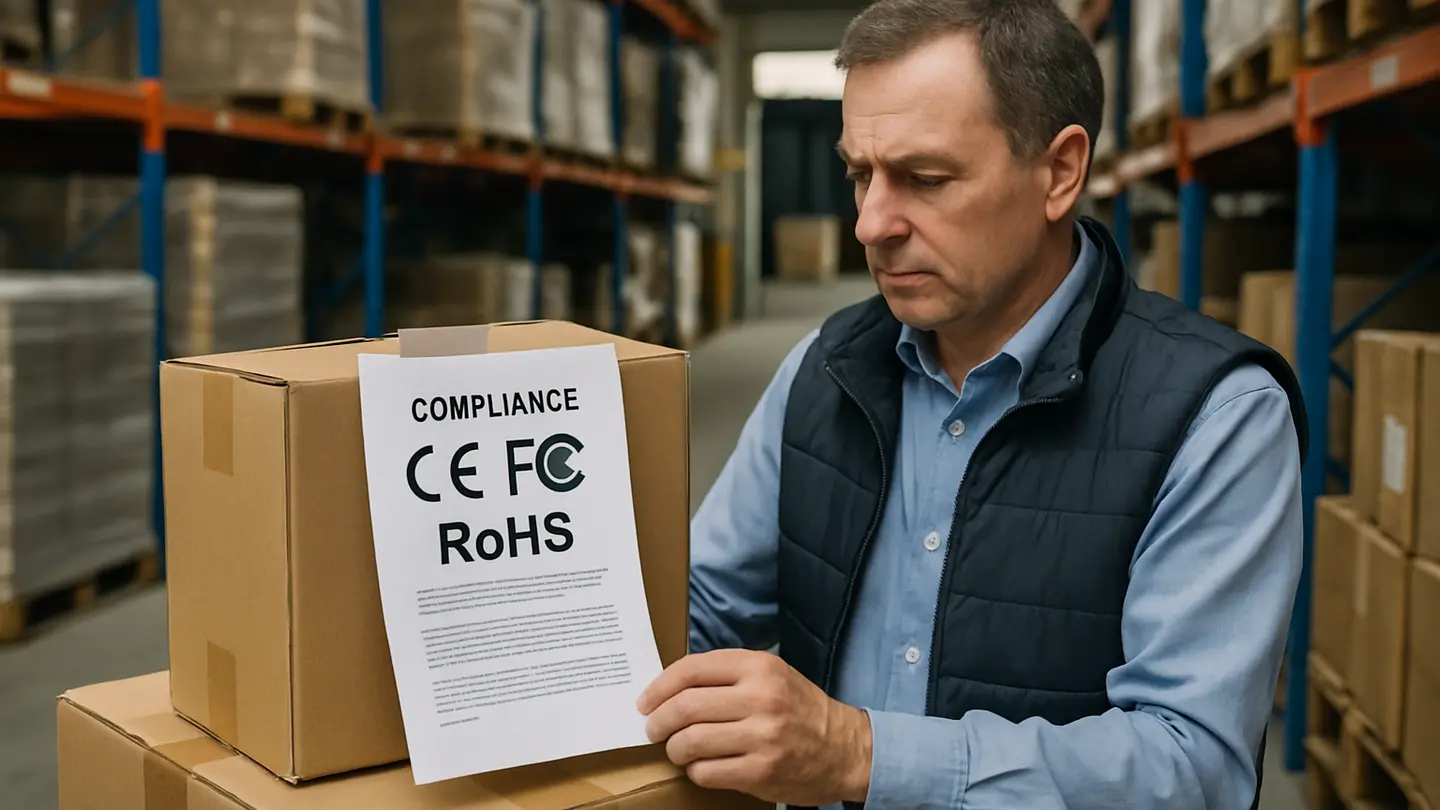
Importers should also remember that certification obligations remain with the buyer or importer in markets such as the United States and European Union. Even if a supplier manages production, the importer may still be responsible for ensuring that the product meets applicable safety, labeling, testing, chemical, electrical, or documentation requirements.
FAQ
Q1: Does the region still matter if the supplier is on a big platform?
Yes. Marketplace listings do not always show the true production location. A listed supplier may be a manufacturer, trading company, regional office, or reseller. Some suppliers outside the right cluster may outsource production to factories inside it.
This can still work, but it may reduce sampling speed, customization flexibility, and component choice. Buyers should confirm the actual production address, ask where key processes are performed, and request evidence such as factory licenses, production photos, audit reports, or inspection arrangements.
Q2: Do these clusters move over time?
Yes, but usually gradually. Manufacturing clusters shift as labor costs, land costs, environmental rules, infrastructure, and local policy change. Some assembly work may move inland when coastal operating costs rise.
However, deep supplier ecosystems are difficult to recreate quickly. Tooling shops, component vendors, skilled workers, export service providers, and logistics networks tend to remain concentrated in established cities for a long time. Buyers should watch for change, but not assume that a new low-cost region has the same support base as a mature cluster.
Q3: What if my product spans two clusters?
Anchor the project in the cluster that produces the hardest, most expensive, or highest-risk component. Tooling-heavy products often belong near the tooling and molding base. Electronics-heavy products often belong near electronics suppliers and engineers. Precision metal, glass, ceramics, or technical textiles may each point to a different lead region.
Simple parts are usually easier to source from another region than complex or quality-critical components. The lead supplier should manage compatibility, assembly, drawings, revisions, and final quality.
Q4: Is inland China actually cheaper than Guangdong or Zhejiang?
Sometimes, but not always. Inland factories may have lower labor, land, or operating costs than coastal suppliers. That can produce an attractive ex-factory quote.
The landed cost may be different. Distance from ports, domestic trucking, consolidation requirements, longer transit times, and lower access to specialized components can offset factory-price savings. Before treating an inland quote as cheaper, buyers should price domestic logistics, lead-time impact, and the cost of managing production farther from the main export gateways.
Conclusion: Choose the Region Before the Supplier
Region selection affects supplier competition, minimum order quantities, sample revisions, customization options, and lead times. China’s manufacturing hubs are specialized ecosystems, not fully interchangeable production locations.
For buyers, the practical sequence is clear: identify the most suitable region first, then compare individual suppliers. A quote alone may not reveal component-sourcing distance, outsourced production, domestic freight exposure, or sample-cycle risk.
The best sourcing region is not always the cheapest on paper. It is the region where the supplier base, component network, technical capability, and logistics structure match the product.