Working with China OEM factories is often treated as a supplier-search task: find a factory, negotiate a price, place the order, and wait. In practice, many failures are project-management failures. A factory may have equipment and export experience, yet the order can still fail because the buyer did not define the product, control tooling, approve the right sample, monitor production, or inspect before payment.
The right sequence matters. Match factories to the product requirement before comparing prices. A low unit price is not useful if the factory has never made the product type, plans to subcontract key processes, or quoted against assumptions that do not match your specification.
The following eight-step process focuses on the control points that reduce avoidable risk: specifications, contracts, samples, production monitoring, inspections, and payment leverage.
What an OEM Factory Does in Practice
OEM stands for “original equipment manufacturer,” but in sourcing it often describes a manufacturing arrangement rather than proof of design ownership. A China OEM supplier may produce a buyer’s developed design, modify an existing catalog product, or apply a buyer’s brand to a factory-developed item.
The label “OEM” does not answer the key questions:
- Who owns the design files?
- Who owns the tooling or molds?
- Can the factory sell a similar version to another customer?
- Are test reports for the exact product being ordered?
- What specification controls the finished goods?
Professional buyers rely on documents, not labels. Drawings, bills of materials, tolerances, finishes, packaging artwork, approved samples, and contract terms determine what the supplier must deliver.
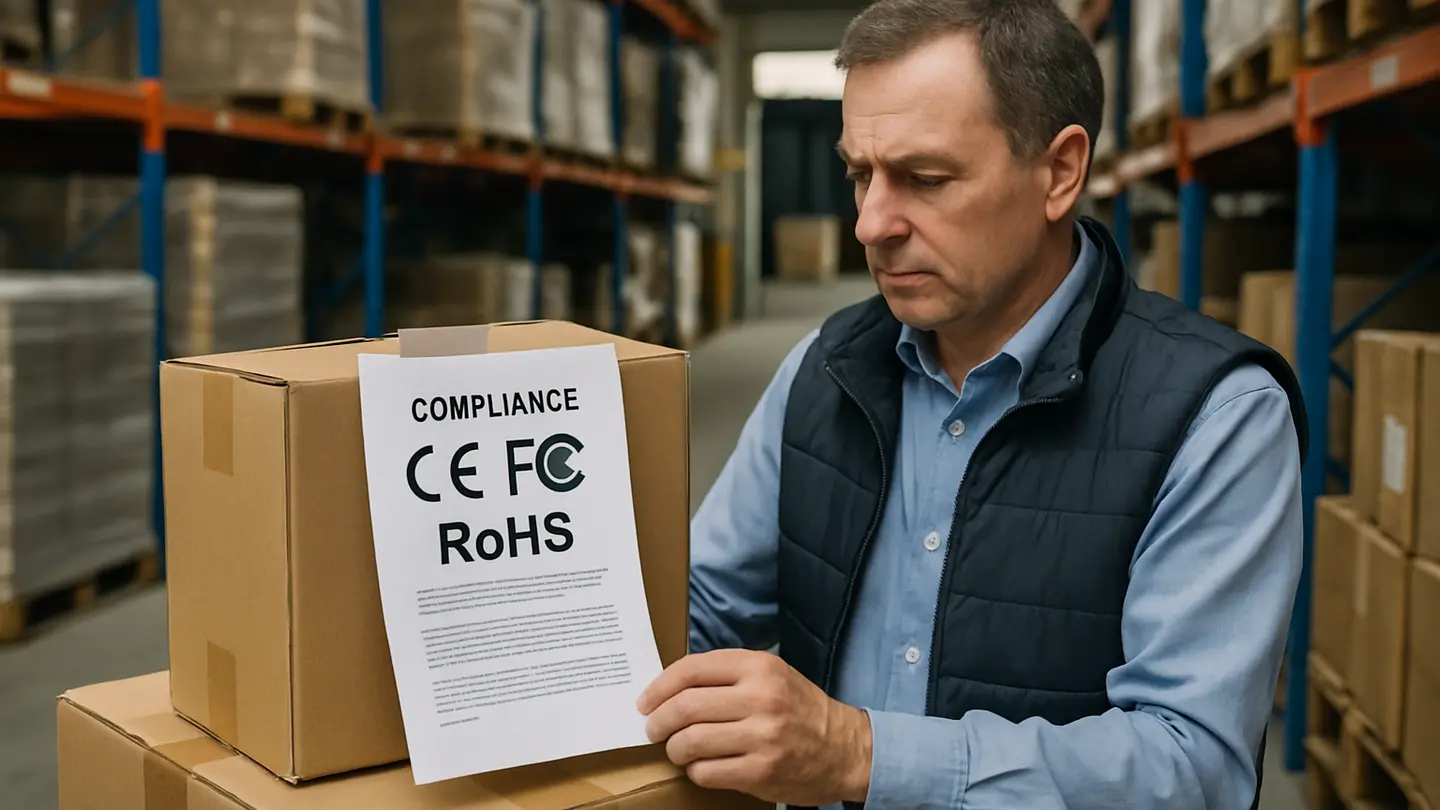
If the factory provides compliance documents, check whether they apply to the exact model, material, process, or product family being ordered. A report for a similar item is not evidence for your version, especially in regulated markets.
Ownership should also be clarified early. Editable design files, CAD drawings, packaging artwork, tooling, molds, and future product versions can become disputes after the deposit is paid or the mold is built.
Step 1: Match the Factory to the Product Before the Price
The first screening question is not “What is your best price?” It is “Have you made this type of product, to this level, for this market, on this production line?”
Factories that look similar can have different strengths. A factory making basic metal fittings may not be suitable for precision components with tight tolerances. A supplier strong in residential bathroom accessories may not be set up for commercial-grade systems, pressure-bearing parts, or finishes requiring consistent corrosion resistance. A plastics factory may be excellent at injection molding but weak in assembly or packaging control.
Before comparing prices, assess direct experience with:
- The exact product category and construction method
- Required materials and grades
- Surface treatment, coating, plating, or finishing
- Intended production volume
- Required testing or certification
- Export to your destination market
- Similar packaging, labeling, and channel requirements
Ask what else runs on the same production line. Shared capacity with unrelated, seasonal, or lower-specification products can affect scheduling and process discipline.
Listing-site claims should be checked independently. Supplier profiles and “factory” labels are starting points, not proof. Ask for recent production photos, process descriptions, references, and documentation confirming the factory can make the actual item. If possible, use an audit, video walkthrough, or third-party visit before tooling or a large deposit.
Step 2: Send an RFQ That Leaves Little Room for Guesswork
A vague request for quotation produces vague pricing. If suppliers receive different information, their quotes will not be comparable. One may assume cheaper materials, another may include export packaging, and another may exclude testing, tooling, or artwork charges.
A strong RFQ should include the main commercial and technical requirements:
- Product category and intended use
- Drawings, photos, CAD files, or reference samples
- Materials and grades
- Dimensions and tolerances
- Weight, thickness, or performance requirements
- Finishes, colors, textures, or plating requirements
- Components, accessories, and assembly requirements
- Order quantity and annual demand estimate
- Certification, testing, or compliance requirements
- Packaging, labeling, carton marks, and manuals
- Destination country and delivery address or port
- Preferred shipping terms, such as FOB, FCA, CIF, or DDP
- Required sample type and deadline
- Target production lead time
- Inspection expectations and acceptable defect criteria
Sending the same RFQ to each shortlisted supplier makes replies easier to compare. It also shows how suppliers think. A capable factory will ask about tolerances, finish standards, packaging strength, testing conditions, or acceptable component alternatives.
A fast quote with no assumptions, questions, or reference to technical details may be unreliable. It may be based on a generic product or an optimistic estimate designed to win the conversation.
Step 3: Protect Designs and Tooling Before Sharing Files
OEM sourcing often requires buyers to share sensitive assets: drawings, formulas, molds, software, patterns, artwork, packaging designs, brand files, or product concepts. Decide what must be protected before sending the full package.
At minimum, disclose sensitive files only after a confidentiality agreement is signed. For higher-value projects, buyers may need broader terms covering non-use, non-circumvention, restrictions on sales to third parties, and remedies if the factory uses the design outside the approved order.
If the product carries a brand, consider China trademark registration early. Trademark rights are territorial, and a home-market registration does not automatically provide the same position in China. Delaying registration can create risk if the brand appears on samples, packaging, molds, or supplier documents.
Depending on the product, buyers may also need to consider patents, design registrations, copyright, or market-specific legal tools before showing the product widely to factories, trading companies, or subcontractors.
Tooling needs its own terms. If the buyer pays for a mold, fixture, die, or dedicated tool, the contract should state:
- Who owns the tooling
- Whether the factory may use it for other customers
- Where it will be stored
- Who pays for maintenance and repairs
- Expected shots or cycles
- How damage or loss will be handled
- Whether and how it can be transferred to another factory
Without clear tooling terms, a buyer may later find that the factory treats the mold as its own asset or refuses to release it.
Step 4: Compare Quotes Beyond the Unit Price
The lowest unit price is rarely the full cost of the order. OEM quotations should be compared at realistic quantities and under the same assumptions. A supplier quoting well at 10,000 units may not be competitive at 1,000 units. Another may cost more per unit but include better materials, stronger packaging, or more stable lead times.
| Quote factor | Why it matters |
|---|---|
| Unit price at actual order quantity | Prevents misleading comparison based on unrealistic volume |
| MOQ | Determines cash exposure and inventory risk |
| Tooling cost | Can change the economics of the first order |
| Sample cost and timing | Affects development schedule |
| Production lead time | Impacts launch dates and customer commitments |
| Payment terms | Determines buyer leverage during production |
| Packaging included or excluded | Can create hidden cost differences |
| Testing and certification | May be essential for market access |
| Rejected-batch handling | Defines who pays when goods fail inspection |
Very low quotes often reflect different assumptions: lower-grade material, thinner wall thickness, simpler packaging, looser tolerances, or a finish that looks similar in photos but performs differently. Low pricing may also signal weaker process control or a plan to renegotiate later.
MOQ can sometimes be negotiated when buyers show credible annual demand. A factory may accept a smaller first run if it sees repeat orders, standardized components, or shared tooling costs. If the quantity is far below efficient production volume, expect a higher unit cost.
Step 5: Use a Contract That Defines Remedies and Restrictions
A purchase order is not always enough for OEM manufacturing. The more the project depends on custom specifications, tooling, branding, or exclusivity, the more important it is to define obligations and remedies.
An OEM contract should address:
- Payment milestones and conditions
- Production start date and lead time
- Delay consequences
- Inspection standards and procedures
- Remedies for failed inspection
- Rework timelines
- Replacement or refund obligations
- Responsibility for defective goods
- Packaging and labeling requirements
- Intellectual property and confidentiality obligations
- Restrictions on selling the buyer’s version to others
- Rules for subcontracting or production location changes
The contract should also state which documents control the order: specification sheets, drawings, approved samples, packaging files, test requirements, and agreed revisions. Otherwise, disputes can become arguments over emails or sales promises.
Factory templates usually protect the supplier. They may limit liability, leave inspection remedies vague, or omit restrictions on selling similar products. For meaningful OEM work, buyers should have agreements reviewed by counsel or contract specialists familiar with China manufacturing disputes and enforcement realities.
Step 6: Approve the Final Sample Before Mass Production
Mass production should not begin until the buyer approves a final sample. Early samples are often development tools. They may be handmade, use temporary materials, or rely on processes different from full production.
Sample feedback should be measurable. “Looks better” or “make it stronger” is not enough. Use specific instructions:
- Increase wall thickness from 1.5 mm to 2.0 mm
- Match finish to the approved color chip
- Reduce visible gap to less than 0.5 mm
- Use specified grade of stainless steel
- Adjust logo position by 3 mm
- Improve carton strength to meet shipping requirement
Both buyer and factory should keep sealed reference samples labeled with the model, revision date, approval mark, and production notes. If disputes arise, the approved sample becomes a practical reference alongside the written specification.
The purchase order should state that the approved sample is part of the production standard. It does not replace written specifications, but it helps align expectations for appearance, assembly, workmanship, and packaging. For complex products, buyers may also approve component, finish, packaging, or pre-production samples.
Step 7: Monitor Production Instead of Waiting in Silence
After the deposit is paid, buyers should not disappear until shipment. Silence often hides schedule slippage, material substitutions, packaging delays, or confusion about the approved version.
Ask for a production schedule showing key milestones: material purchase, material arrival, tooling setup, first output, in-process production, packing, final inspection, and shipment readiness. Then request evidence at important stages.
Useful progress checks include:
- Photos of incoming materials and labels
- Confirmation of material grade, batch, or supplier
- Photos or videos of first production output
- Assembly-line or process photos
- Packaging and carton-mark photos before full packing
- Updated completion percentage against the schedule
Material labels can reveal problems earlier than finished-product photos. If a product requires a specific polymer, metal grade, cartridge model, hose specification, coating, or electronic component, identify it clearly in the order. Otherwise, the factory may treat a substitute as acceptable even if it affects durability, compliance, or customer acceptance.
Monitoring also keeps the order visible inside the factory. A buyer who asks precise questions at scheduled points often receives better information than one who sends urgent messages only after the promised completion date.
Step 8: Inspect the Order Before Paying the Balance
Final inspection should happen before shipment and before the balance payment is released. Once goods leave the factory and the supplier has full payment, leverage drops sharply. Rework becomes slower, return shipping may be uneconomic, and price adjustments become harder.
A pre-shipment inspection compares finished goods against the approved sample and written specification. Checks may include:
- Quantity and assortment
- Dimensions and weight
- Materials and components
- Finish, color, and appearance
- Workmanship and assembly
- Function and performance
- Safety or compliance markings
- Packaging method and carton strength
- Barcode, label, logo, and manual accuracy
- Carton marks and shipping documentation
Many consumer and light industrial products use sampling methods such as AQL-based plans. High-risk or highly engineered products may require specialized testing, in-process inspection, or laboratory verification. The right plan depends on product risk, order value, and market requirements.
Payment terms should make the balance conditional on a passed inspection. A common structure is deposit before production and balance after inspection but before shipment. The unpaid balance gives the buyer leverage to request rework, replacement, sorting, or a price adjustment.
Inspection is not a substitute for supplier selection or clear specifications. It is the final control point before goods enter the logistics chain.
FAQ
Q1: Is OEM sensible for a first China order?
OEM can work for first-time China buyers, but it is more complex than buying an existing product with minor branding changes. The buyer must manage design files, sampling, tooling, supplier qualification, contracts, production follow-up, inspection, and shipment timing.
For a first order, keep the project simple. Avoid too many custom components, untested materials, tight launch deadlines, or complex packaging. A controlled first OEM order can build supplier knowledge without unnecessary execution risk.
Q2: Should I insist on talking to the factory’s engineer rather than the sales contact?
For technical questions, yes. Sales contacts may manage communication well, but they may not fully understand tolerances, material grades, tooling constraints, production yield, or testing details. A short discussion with an engineer or production manager can prevent misunderstandings during sampling or mass production.
Confirm technical answers in writing. After a call, summarize the agreed points and ask the supplier to confirm. This creates a clearer record for the sample, purchase order, and inspection checklist.
Q3: What if the factory subcontracts my order to another plant?
Unapproved subcontracting can move production to equipment, workers, or facilities the buyer never vetted. It can also weaken process control, confidentiality, and schedule reliability. A final inspection may catch visible defects, but it may not fully offset these risks.
Before ordering, ask which steps will be outsourced. Some outsourcing is normal, such as plating, heat treatment, printing, or specialized testing. The contract should require written approval before changes to subcontractors, production sites, or major outsourced processes.
Q4: Should I run samples with more than one factory?
Sampling with two factories can be useful when the product is important or the buyer is unsure which supplier is stronger. It compares communication, engineering understanding, finish quality, timing, and problem-solving.
Sampling with too many suppliers can add cost, delay decisions, and create version-control problems. All sampled factories should work from the same specification, drawings, and feedback format so differences reflect factory performance, not unclear instructions.
Key Takeaway: OEM Success Depends on Control Points
Working with China OEM factories is not just about finding a supplier with the right machinery. The result depends on the buyer’s control system: specifications, supplier qualification, design protection, quote comparison, contracts, sample approval, production monitoring, and final inspection.
Many problems arise when buyers are under time pressure or focused only on unit price. That is when incorrect materials, disputed tooling, delayed shipments, rejected goods, or products that differ from the approved sample become expensive.
A disciplined OEM process does not remove all risk, but it makes risk visible early enough to manage. The best results come when the factory knows exactly what to make, the buyer knows exactly what has been agreed, and both sides understand what happens if the order falls short.