A China Plus One strategy is best understood as risk insurance, not a fashionable sourcing move. For small importers, the question is not “Should we follow the trend?” but “What disruption are we paying to protect against, and is that protection worth the cost?”
Adding a second supply chain can reduce dependence on one country, production cluster, or factory. It may give an importer more options during port congestion, tariff changes, lockdowns, capacity shortages, geopolitical friction, or supplier failure. But the backup is not free. It often requires duplicated tooling, sample development, minimum order quantities, inspections, compliance checks, supplier management time, and extra inventory buffers.
The economics vary sharply by product. A standardized item with existing tooling and simple packaging may be easy to qualify elsewhere. A technical product that depends on specialized molds, finishes, electronics, plated components, or a dense upstream supplier base may be much harder to relocate. For small importers, the right answer depends less on the headline country and more on product complexity, margin, supplier setup, and the buyer’s exposure if supply stops.
What a Second Supply Chain Really Adds to Your Cost Base
A second supplier is not just another price quote. It is a second operating system that must be developed, tested, monitored, and financed.
The first major cost is often tooling. Importers sometimes assume molds, dies, fixtures, or jigs can simply be moved from one factory to another. In practice, tooling may be owned by the factory, built around specific machines, maintained to local standards, or integrated into production methods that do not transfer cleanly. Even importer-owned tooling can create downtime, customs complications, damage risk, and disputes if moved across borders.
For molded, cast, stamped, or precision-machined products, a plus-one supplier may require new tooling or significant adaptation. A lower factory-gate price may not matter if the importer must spend months and thousands of dollars rebuilding production assets.
Sampling and validation are another undercounted expense. A new supplier needs drawings, golden samples, packaging files, quality limits, labeling instructions, and compliance requirements. The first sample is rarely the final sample. Surface finish, dimensions, assembly fit, coating thickness, color matching, carton strength, barcode placement, and manuals may all require adjustment.
Trial production adds another layer. A supplier may produce acceptable hand samples but struggle during mass production. Small importers should budget for pilot runs, pre-shipment inspections, lab testing where relevant, and time for corrective actions. The cost is not only the samples; it is the management attention required to get the second source production-ready.
Splitting volume can also raise unit costs. An importer ordering 10,000 units from one factory may not receive the same price if it splits the business into 5,000 units in China and 5,000 units elsewhere. Each factory may quote higher because it receives less volume, runs smaller batches, buys fewer components, or has less incentive to prioritize the account. MOQs can also become harder to manage when two suppliers each require a separate run.
Quality control must be duplicated. Two factories require separate inspection routines, production checklists, defect classifications, and corrective-action follow-up. The importer must ensure both suppliers follow the same master specification, not informal interpretations of an old sample. If the China factory packs one way and the plus-one factory packs another, the customer may see inconsistency even when the product is acceptable.
Lead times and reliability can increase inventory costs. If one origin ships in 35 days and the other in 60 days, the importer needs separate planning assumptions. If one supplier has less predictable component access or longer inland logistics, safety stock may rise. The result can be more cash tied up in inventory, more warehouse space, and more complicated replenishment.
A practical cost review should include more than the quoted unit price:
| Cost area | What to check before committing |
|---|---|
| Tooling | Ownership, transferability, replacement cost, maintenance responsibility |
| Samples | Number of expected rounds, testing requirements, courier costs, engineering time |
| MOQs | Whether split volume creates higher prices or excess inventory |
| Inspections | Separate inspection plans, defect standards, rework procedures |
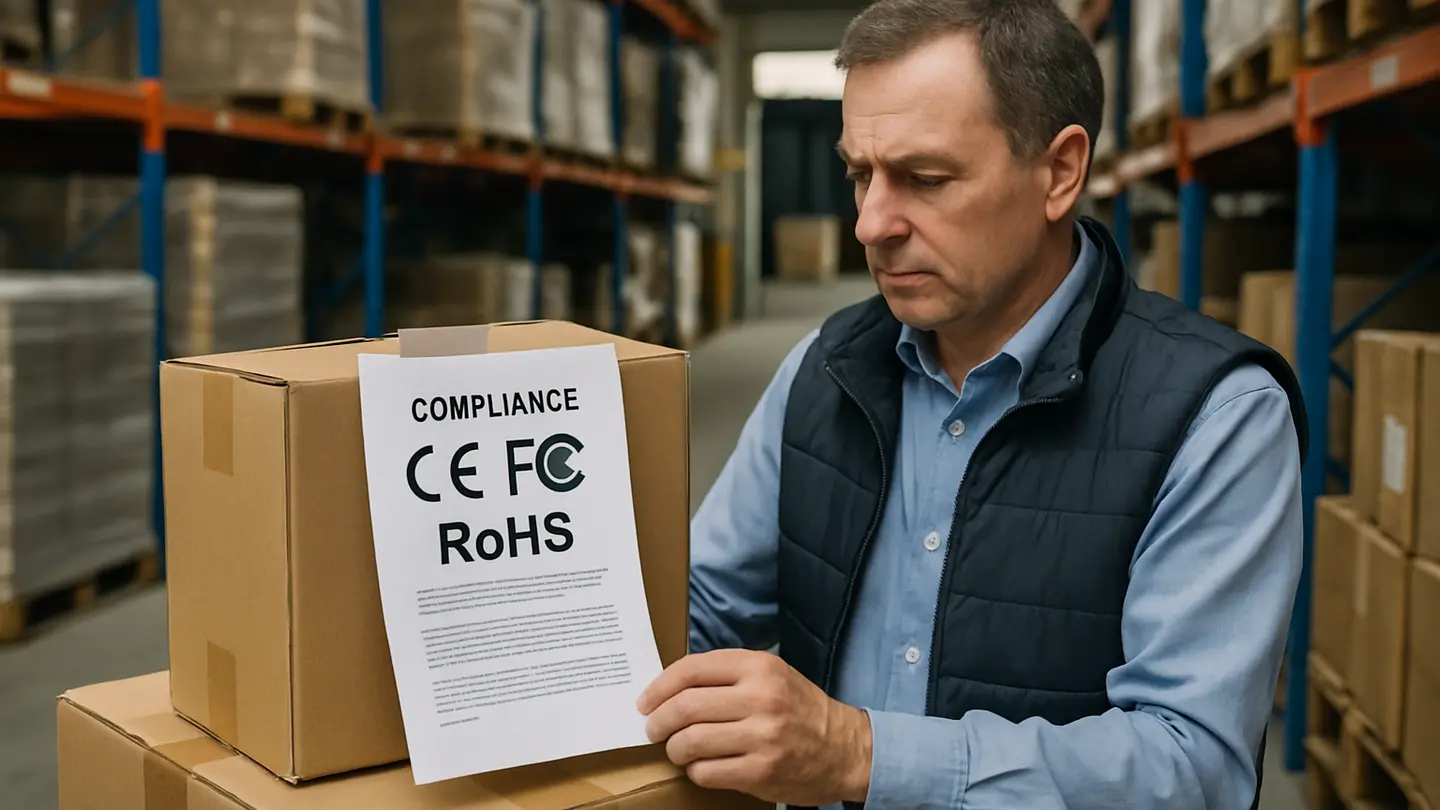
| Compliance | Product testing, labeling, destination-market requirements |
| Inventory | Longer lead times, different reliability, added safety stock |
| Management time | Supplier communication, audits, issue resolution, documentation control |
The second supply chain should be priced as a full operating capability, not as a second quotation line.
Use Risk Exposure, Not Order Size, as the Trigger
Small importers often ask how much volume they need before a China Plus One strategy makes sense. Volume matters, but exposure is the better trigger.
A useful stress test is simple: what happens if your main factory stops shipping for six weeks?
For some importers, the answer is inconvenient but survivable. They may have enough stock, flexible customers, no strict seasonal window, and products that can be backordered. For others, a six-week stoppage can create serious financial harm: missed retail delivery windows, chargebacks, lost marketplace ranking, disappointed project customers, or competitors gaining an opening.
Exposure is especially high when sales are seasonal. A product that must arrive before a holiday, construction season, renovation cycle, or promotional event cannot always recover from late delivery. If inventory arrives two months late, it may become obsolete or heavily discounted stock.
Retail and distributor commitments also change the calculation. If a buyer faces penalties for late delivery, lost shelf space, canceled purchase orders, or damaged relationships with key accounts, the cost of disruption can quickly exceed the cost of qualifying a second source.
Marketplace sellers face a different but real risk. Stockouts can reduce search ranking, advertising efficiency, review momentum, and customer repeat behavior. A temporary supply interruption can affect sales long after the factory resumes production.
Duty exposure is another trigger. A tariff change, anti-dumping measure, or classification issue can materially reduce margin. A second country does not automatically solve this, but it may provide flexibility if the product can genuinely qualify under a different country of origin.
The importer should quantify the downside before paying for redundancy. Estimate the financial impact of a disruption:
- Gross margin lost during the stockout period
- Penalties, chargebacks, or canceled orders
- Expedited freight required to recover
- Discounting needed for late inventory
- Customer churn or lost account value
- Operational time spent managing the crisis
If the likely downside is small, the second supply chain may be unnecessary. If the downside threatens customer relationships or cash flow, duplicated costs may be justified.
Start With One Product Before Moving the Whole Catalog
For small importers, the safest China Plus One strategy usually starts with one product, not the entire catalog. A controlled test shows how the new supplier performs without exposing the whole business to quality failures, delays, or hidden landed-cost problems.
The best first candidates are simple, standardized products with clear specifications, limited components, common materials, and fewer process variables. Products that already have existing production capability in the target country are easier to validate than products requiring a supplier to build new expertise from scratch.
A poor first candidate is a product that depends heavily on China’s dense supplier ecosystem. Many items appear simple as finished goods but rely on nearby subcontractors for plating, injection molding, electronics, fasteners, packaging, surface treatment, printing, or testing. If the plus-one factory must import many components from China, the importer may still carry much of the same upstream risk while adding lead time and coordination.
Trial orders should measure more than whether the product can be made. They should test how the supplier behaves under normal commercial pressure:
- Does the factory understand the specification without repeated clarification?
- Are samples and production units consistent?
- Does the supplier communicate early when problems appear?
- Are delivery dates realistic or optimistic?
- How does the factory handle rework, shortages, and packaging errors?
- Are inspection findings treated seriously?
- Does the supplier document corrective actions?
The first order should also compare landed cost, not just factory-gate price. A lower ex-works or FOB quote may be offset by higher freight, longer lead time, lower container utilization, more expensive packaging, higher scrap rates, extra inspections, or higher financing cost due to longer cash cycles.
For example, a plus-one supplier may quote a similar unit price to a China supplier. But if the second origin has less frequent sailings, longer inland transport, smaller production runs, and higher packaging costs, the landed cost may be higher than expected. That does not automatically make the second source a bad decision; it means the importer is paying a risk premium and should know how large it is.
A one-product trial gives the importer real data. If the second supplier performs well, the buyer can gradually add related products. If problems appear, the importer can correct course before committing tooling, inventory, and customer promises across the full catalog.
When a Single-Source Setup Is Still the Better Choice
China Plus One is not always economical for small importers. In many cases, a focused single-source setup is still the better commercial decision.
Low order volume is the most obvious constraint. If annual demand barely meets one supplier’s MOQ, splitting the business may create excess stock or push both suppliers below efficient production levels. The importer may lose volume pricing, increase working capital needs, and complicate forecasting without gaining enough protection.
Thin margins create the same problem. If the product has little room for extra inspections, duplicate samples, new tooling, or higher freight, diversification can weaken the business instead of protecting it. Redundancy is useful only if the importer can afford to maintain it.
It is also important to separate supplier concentration risk from country concentration risk. An importer may not need a second country if the main concern is overdependence on one factory. A second qualified factory within China may reduce the risk of factory failure, capacity shortage, management change, or quality decline at a lower cost than developing a new country source.
A second China-based supplier may also be more practical when the product depends on local component clusters. The importer can maintain access to the same upstream ecosystem while reducing reliance on one manufacturer. This does not solve tariff or country-level disruption risk, but it may solve the most likely operational risk at a lower cost.
Small importers should revisit the decision at defined thresholds rather than treating it as permanent. Useful triggers include:
- Annual volume reaches a level where two MOQs are practical
- Gross margin improves enough to fund duplicate setup costs
- A major customer requires supply continuity planning
- Tariff exposure materially changes product profitability
- The main supplier becomes less reliable or less cooperative
- A product becomes strategically important to the business
A single-source model can be rational today and inadequate next year. The key is to define when the decision will be reviewed.
FAQ
Q1: Is China Plus One the same as leaving China?
No. China Plus One usually means keeping China as an anchor source while adding another qualified supply option. The importer continues using Chinese suppliers where they remain competitive, reliable, and strategically useful, but avoids depending on China alone.
Fully leaving China is a broader move. It may require rebuilding the supplier base, requalifying components, changing tooling, redesigning packaging, adjusting logistics, and accepting different cost and capability trade-offs. For many small importers, the practical goal is not to leave China, but to avoid having only one route to supply.
Q2: Does a second country protect me from tariffs?
Not automatically. Tariff treatment depends on the product’s actual country of origin under the rules of the destination market. If components are made in China and only simple assembly occurs elsewhere, the finished product may not qualify for different duty treatment.
Origin rules are product-specific and can be technical. Before making a sourcing decision based on tariff savings, importers should confirm the likely country-of-origin treatment, duty rate, documentation requirements, and compliance risk with a qualified customs broker or trade adviser.
Q3: How long before a new plus-one factory is producing properly?
The timeline depends on the product. Standard items that a factory already produces on existing lines may move relatively quickly, especially if the importer’s requirements are close to the supplier’s normal production. Tooling-dependent or highly customized products can take several months to ramp up.
Sample rounds and validation usually drive the schedule. Each round may reveal issues with dimensions, materials, finish, assembly, packaging, labeling, or performance. Importers should allow time for trial production and inspection before relying on the second source for important customer orders.
Q4: Can I use the same drawings and specifications in both countries?
Yes, and you should. A single master specification pack helps both suppliers work to the same standard and allows the importer to compare quality consistently. The pack should include drawings, materials, tolerances, approved samples, packaging requirements, labeling rules, inspection criteria, and compliance obligations.
However, factories may interpret the same documents differently at first. One supplier may read a tolerance loosely, use a different finish standard, or pack cartons in a way that creates damage risk. The importer must clarify expectations, enforce the same quality limits, and audit both production sites against the same requirements.
Final Takeaway: Price the Protection Before You Diversify
A second source can give a small importer valuable protection: more continuity during disruption, more flexibility if tariffs change, and more reaction time when a supplier or region becomes unstable. But that protection has a price.
Before implementing a China Plus One strategy, importers should calculate the duplicated setup and operating costs: tooling, samples, validation, MOQs, inspections, compliance checks, freight differences, and inventory buffers. Those costs should be compared against the realistic financial impact of a supply interruption.
The practical approach is to start small, test one product, measure landed cost, and confirm factory capability at the production level. A backup supply chain should not exist only on a spreadsheet. It should be proven before the business needs it.