China Pre-Shipment Inspection: Check Before You Pay
A China pre-shipment inspection service is a final-stage quality control check performed when an order is completed, largely packed, and still under the supplier’s control. It gives the buyer an independent view of the shipment before authorizing final payment or allowing dispatch.
For shower manufacturers, importers, retailers, and project buyers, this timing matters. A shipment may include shower enclosures, doors, trays, screens, fittings, seals, hardware kits, or packaged bathroom accessories. Problems discovered after containers leave the factory—such as scratched glass, incorrect hardware finishes, missing installation parts, weak packaging, or inaccurate carton labels—can be costly to correct.
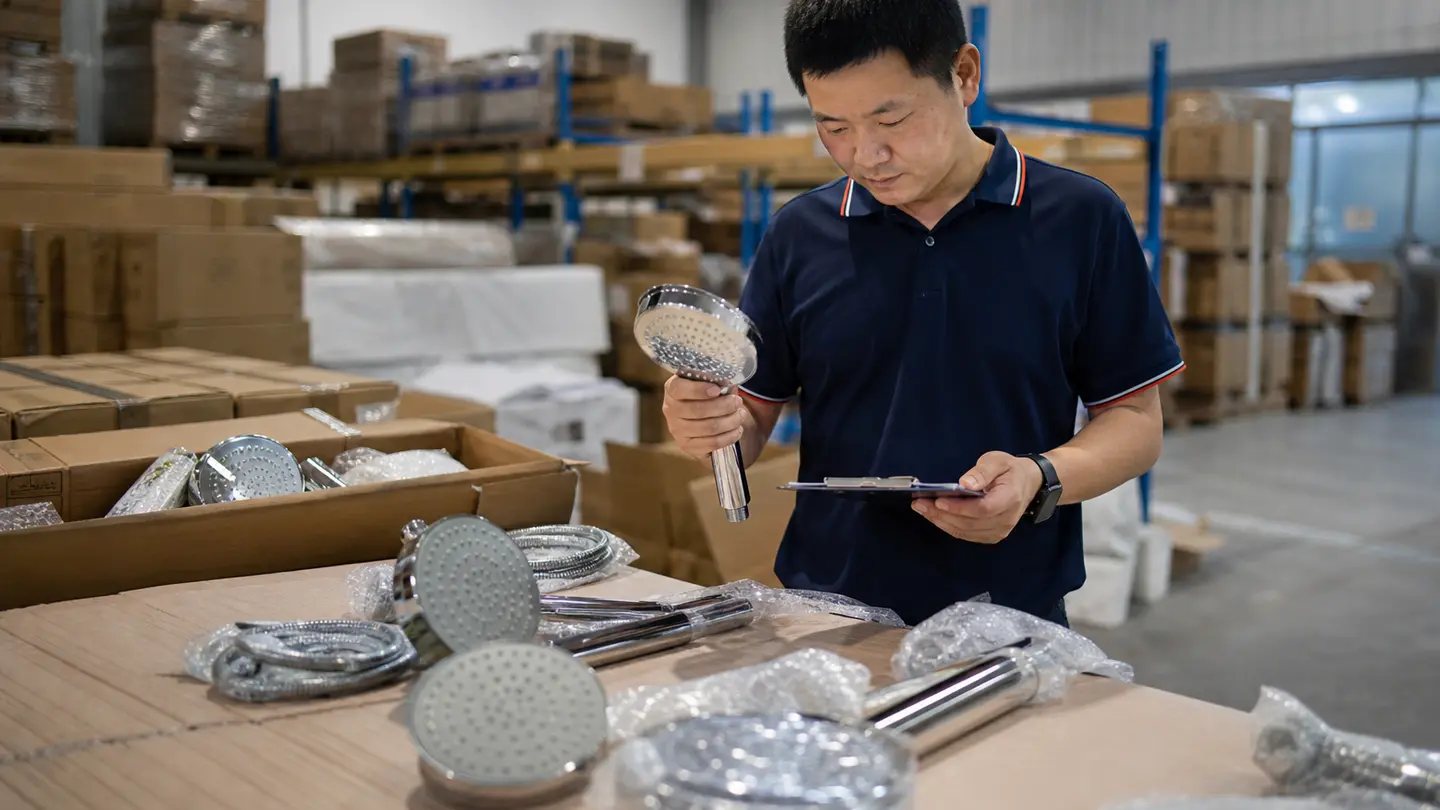
During inspection, selected products are assessed against the agreed purchase order, approved production sample, drawings, bill of materials, packaging instructions, and other documented requirements. The inspector normally records findings with photographs and provides a written report. This gives the buyer evidence to support one of three decisions:
- Release the balance payment and approve shipment.
- Request corrective rework before shipment.
- Put the shipment on hold while material issues are resolved.
A pre-shipment inspection does not replace clear specifications. It works best when the buyer has already defined acceptable materials, dimensions, finishes, functions, packaging, labeling, and defect tolerances. However, it adds an important control point when the buyer has more leverage than they would after final payment has been released.
What a Pre-Shipment Inspection Can Check
The scope of a China pre-shipment inspection service should reflect the product and the commercial risks of the order. A standard inspection can cover both the goods themselves and their readiness for shipping.
For shower products, key checks often include:
- Quantity verification: Confirming the observed product quantity, packed-carton quantity, and visible carton markings against the order.
- Workmanship: Checking whether products match the approved sample and required finish. For example, inspectors may look for chips, scratches, uneven coatings, seal defects, sharp edges, poor silicone application, or inconsistent colors.
- Components and assembly: Confirming that expected parts are present, such as handles, hinges, rollers, brackets, fixing kits, seals, gaskets, screws, wall profiles, or drainage accessories.
- Product operation: Testing practical functions where feasible, including door opening and closing, roller movement, hinge alignment, lock or handle operation, and the general fit of moving parts.
- Dimensions and appearance: Comparing accessible measurements and visible design details with approved drawings, samples, or specifications. This may be especially important for shower doors, tray dimensions, glass thickness requirements, and installation hardware.
- Packaging condition: Reviewing whether cartons, internal protection, corner guards, foam, dividers, protective film, and pallet packing appear consistent with instructions.
- Labels and barcodes: Checking carton marks, product labels, barcode readability, model identification, color or finish codes, country-of-origin markings where required, and buyer-provided shipping marks.
- Marketplace or destination-market requirements: Verifying visible labeling or package content requirements supplied by the buyer. These can include warning labels, instruction-booklet placement, SKU labels, or fulfillment-channel carton rules.
Inspection is most effective when each requirement can be checked objectively. Instead of stating that a shower enclosure should be “high quality,” specify the glass type, profile finish, hardware color, permitted dimensional variation, packaging method, installation-kit contents, and acceptable cosmetic condition.
How Sampling and Defect Classification Work
Pre-shipment inspection is generally conducted after production is complete and most goods are packed. Inspectors select samples randomly from different areas of the shipment rather than examining only units chosen by the supplier. Random selection is important because supplier-selected units may not represent the quality of the full production batch.
Before booking the inspection, the buyer should agree on a sampling plan and acceptance criteria. These rules determine how many units are checked and the number of defects that may be accepted before the shipment is considered to have failed the agreed threshold.
Defects are commonly classified by severity:
| Defect category | Typical meaning | Shower-product examples |
|---|---|---|
| Critical | A defect that may create a serious safety, regulatory, or functional concern | Cracked glass, exposed sharp edges, unstable structural components, or incorrect electrical parts where applicable |
| Major | A defect likely to affect usability, appearance, installation, or customer acceptance | Missing hardware kit, faulty hinge, damaged finish, badly misaligned door, or incorrect product dimensions |
| Minor | A smaller issue that does not normally prevent use but falls below agreed expectations | Small cosmetic marks within the defined check area, minor printing inconsistency, or slight packaging presentation issues |
The classification should be agreed in advance because the same issue can have different implications depending on the product and market. For instance, a small scratch on an internal bracket may be treated differently from a scratch visible on a polished shower-door handle or a black-framed glass panel.
Many buyers use an AQL-based sampling approach. Under this approach, the sample size and permitted number of defects are linked to the total lot size and the agreed quality thresholds. The buyer may set separate limits for critical, major, and minor defects. There is no universally correct threshold for every shower order: higher-value retail products, safety-sensitive components, or products with strict marketplace expectations may need tighter limits than basic bulk purchases.
The final result can support acceptance, rework, re-sorting, or a shipment hold. Importantly, the buyer should define in the purchase agreement who bears the cost of corrective action and follow-up inspection if the shipment fails.
What You Receive in an Inspection Report
A useful inspection report provides more than a pass-or-fail statement. It should document what was observed so the buyer can evaluate the shipment against the agreed requirements.
A report may include:
- Inspection date and location.
- Product name, order reference, supplier information, and batch or lot details where available.
- Production and packing status observed at the time of the visit.
- Quantity checked and quantity observed.
- Sample size and agreed sampling basis.
- Product measurements, functional-check results, and packaging observations.
- Defect findings grouped by critical, major, and minor severity.
- Photographs of products, cartons, labels, packaging, defects, and the general inspection process.
- An assessment of whether findings meet the agreed acceptance threshold.
For shower products, photographs are particularly helpful when reviewing cosmetic and packing issues. Images can show damaged corner protectors, scratched metal frames, broken glass packaging, incorrect finish colors, loose fittings, missing labels, or cartons carrying the wrong SKU information.
The report allows the buyer to make a documented commercial decision before final payment. If results are acceptable, the buyer can authorize release. If they are not, the report can help define the corrective actions required, such as replacing damaged panels, re-packing cartons, correcting labels, adding missing hardware, or reworking alignment issues.
How to Arrange a Pre-Shipment Inspection
Start planning the inspection before production is finished. Waiting until the factory is ready to load can leave too little time for rework or a follow-up check.
A practical process is as follows:
- Schedule at the right stage. Arrange the inspection when production is complete and most goods are packed. A substantial portion of the final order should be available for random selection.
- Provide clear inspection documents. Share the purchase order, approved sample details, drawings, packaging instructions, label artwork, barcode requirements, quality checklist, defect definitions, and applicable destination-market requirements.
- Confirm the sampling and acceptance plan. Agree on sample size, defect severity definitions, AQL or other acceptance criteria, and any units that require special testing.
- Allow independent random sampling. The inspector should be able to access cartons across the shipment and document the packing status.
- Review the report before payment or dispatch. Use the report as part of the decision process for releasing the final balance and authorizing shipment.
- Manage failed findings promptly. If the order requires rework, request evidence of correction and consider a further inspection before approving shipment.
For shower assemblies, buyers should also ensure that the approved reference includes enough detail to inspect complex component combinations. A shower door may appear correct externally but still contain the wrong rollers, handles, seals, brackets, or fixing parts. A packaging checklist can be as important as the finished-product sample.
When Buyers Should Use This Inspection Service
A China pre-shipment inspection service can be useful for many types of buyers, but it is particularly relevant where replacement costs, returns, or installation problems would be expensive.
First-time importers often use pre-shipment inspection to reduce uncertainty before releasing the balance payment. They may have limited experience assessing a factory’s packing quality or identifying risks in a shipment of assembled bathroom products.
Fulfillment-channel and marketplace sellers may need added checks for barcode placement, carton dimensions, SKU labeling, instruction inserts, retail packaging, and carton condition. A quality product can still create operational problems if it arrives with incorrect labeling or unsuitable packaging.
Buyers responding to previous quality issues can use inspection to verify that corrective actions have been implemented. For example, a buyer that previously received damaged glass panels or incomplete hardware kits may ask for specific inspection points on later orders.
Established importers may build inspection rules into their sourcing procedures. They may require inspection above a certain order value, for new suppliers, for complex shower systems, for products with custom finishes, or for shipments serving demanding retail channels.
Not every order needs the same level of control. Small, repeat orders from a well-understood supplier may justify a different approach from a first order involving custom shower enclosures, multiple finishes, fragile glass, and buyer-branded retail packaging.
Tools for Finding and Evaluating China Suppliers
Inspection is most effective when it forms part of a broader supplier-management process. Before an order reaches the final inspection stage, buyers need to identify suppliers whose manufacturing capacity, product scope, and quality controls fit the project.
Made-in-China.com is a B2B sourcing platform that can support early supplier discovery and evaluation. Buyers can review Audited Suppliers, which are subject to third-party verification and on-site audit. Available Audit Reports can help buyers review areas such as supplier background, manufacturing capacity, quality control, export trade, and R&D capability.
These reports do not replace product-specific due diligence, sample approval, or pre-shipment inspection. They can, however, provide useful background when comparing potential suppliers before placing an order for shower doors, screens, trays, fittings, or related bathroom products.
Made-in-China.com also offers Easy Sourcing, through which buyers can submit one sourcing request, receive quotations from matched suppliers, compare offers, and request samples. This can help structure the early sourcing stage before requirements are converted into a detailed purchase order and inspection checklist.
What Pre-Shipment Inspection Does Not Cover
A pre-shipment inspection is a sampling-based end-of-production control. It provides evidence about the inspected shipment, but it does not guarantee that every unit in the order is defect-free.
Because only a sample is checked, defects can still exist in units that were not selected. The level of confidence depends on the sampling plan, sample size, product complexity, and consistency of production.
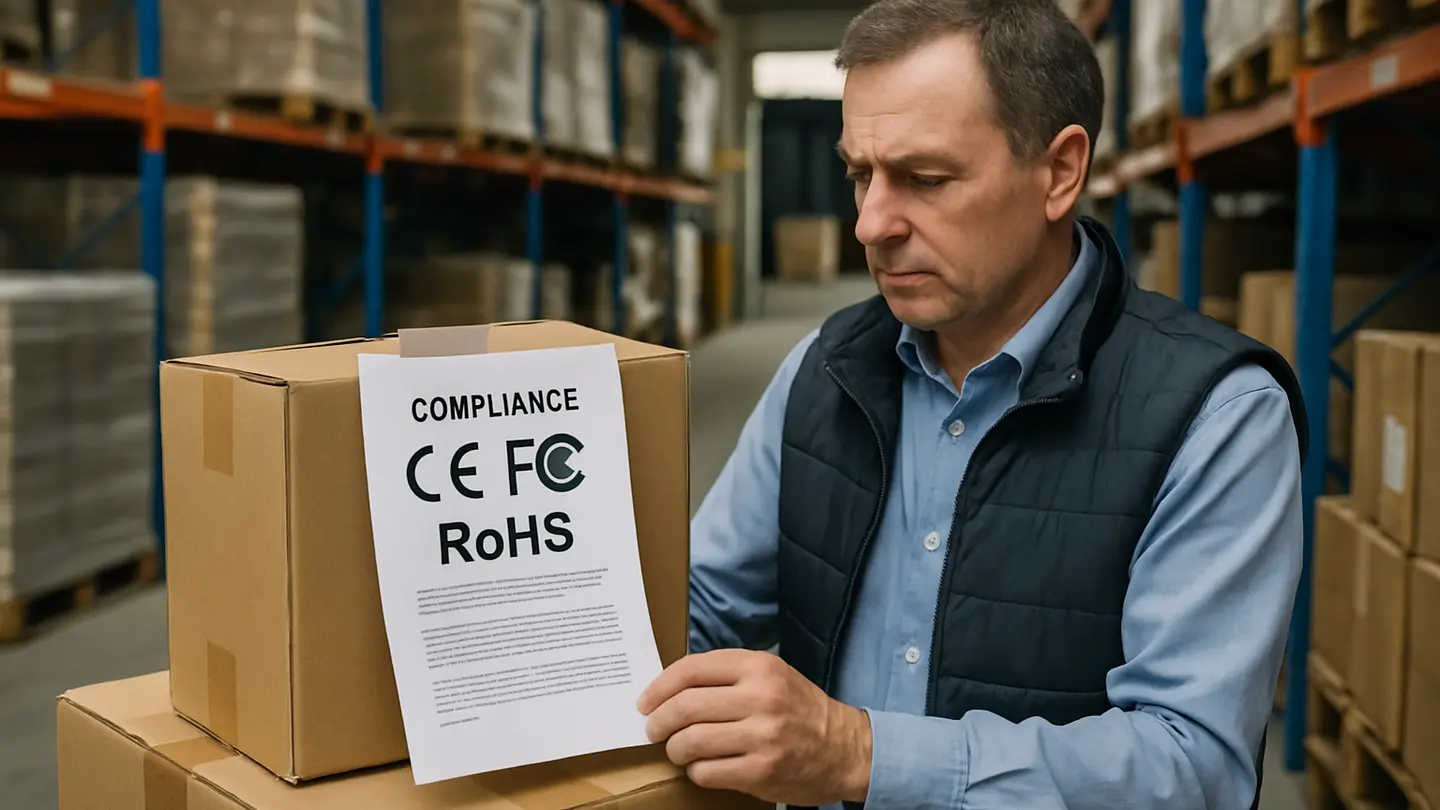
Pre-shipment inspection should also not be confused with laboratory testing or product certification. Laboratory testing may be required to assess material properties, safety performance, chemical content, durability, or other technical characteristics. Product certification is a separate compliance process and may be necessary for particular products or destination markets. A visual and functional factory inspection does not prove regulatory compliance unless those requirements are separately tested and documented.
For higher-risk shower products, end-stage inspection may also be insufficient on its own. Batch-wide problems can start earlier in production, such as using the wrong glass, incorrect profile material, unsuitable coatings, poor component tolerances, or an assembly method that causes recurring alignment issues. In these cases, buyers may need in-process controls during manufacturing, especially for new designs, custom projects, or suppliers with limited production history.
FAQ
Q1. Why does the inspection wait until at least 80% of goods are packed?
Representative sampling requires access to a substantial portion of the final shipment. If an inspection is carried out too early, later-produced goods may differ from the units checked in material, finish, assembly quality, packaging, or labeling. When most goods are complete and packed, the sample is more likely to reflect the shipment that will actually be dispatched.
Q2. How long does the inspection take, and when do I get the report?
Many pre-shipment inspections can be completed within one on-site working day. The exact duration depends on order size, number of product models, required checks, accessibility of cartons, and the complexity of functional testing. Confirm report turnaround when booking the inspection so that payment approval and shipping arrangements are not delayed.
Q3. Do you inspect every unit?
Standard pre-shipment inspections usually use random sampling rather than checking every unit. This balances cost and inspection confidence for typical commercial orders. A 100% inspection may be appropriate for high-value, fragile, safety-sensitive, or previously problematic products, but it requires more time and cost. For shower products, buyers may consider broader checks where glass breakage, missing hardware, or finish consistency creates a high returns risk.
Q4. What is AQL and which level do you use?
AQL refers to an acceptance-quality-limit approach used in sampling plans. It helps determine sample sizes and the number of defects that may be accepted for different defect categories. Critical, major, and minor defects should have separate agreed tolerances. The suitable level depends on product risk, order value, customer expectations, and destination-market requirements. Buyers should agree the major and minor defect limits before inspection rather than relying on assumptions after defects are found.