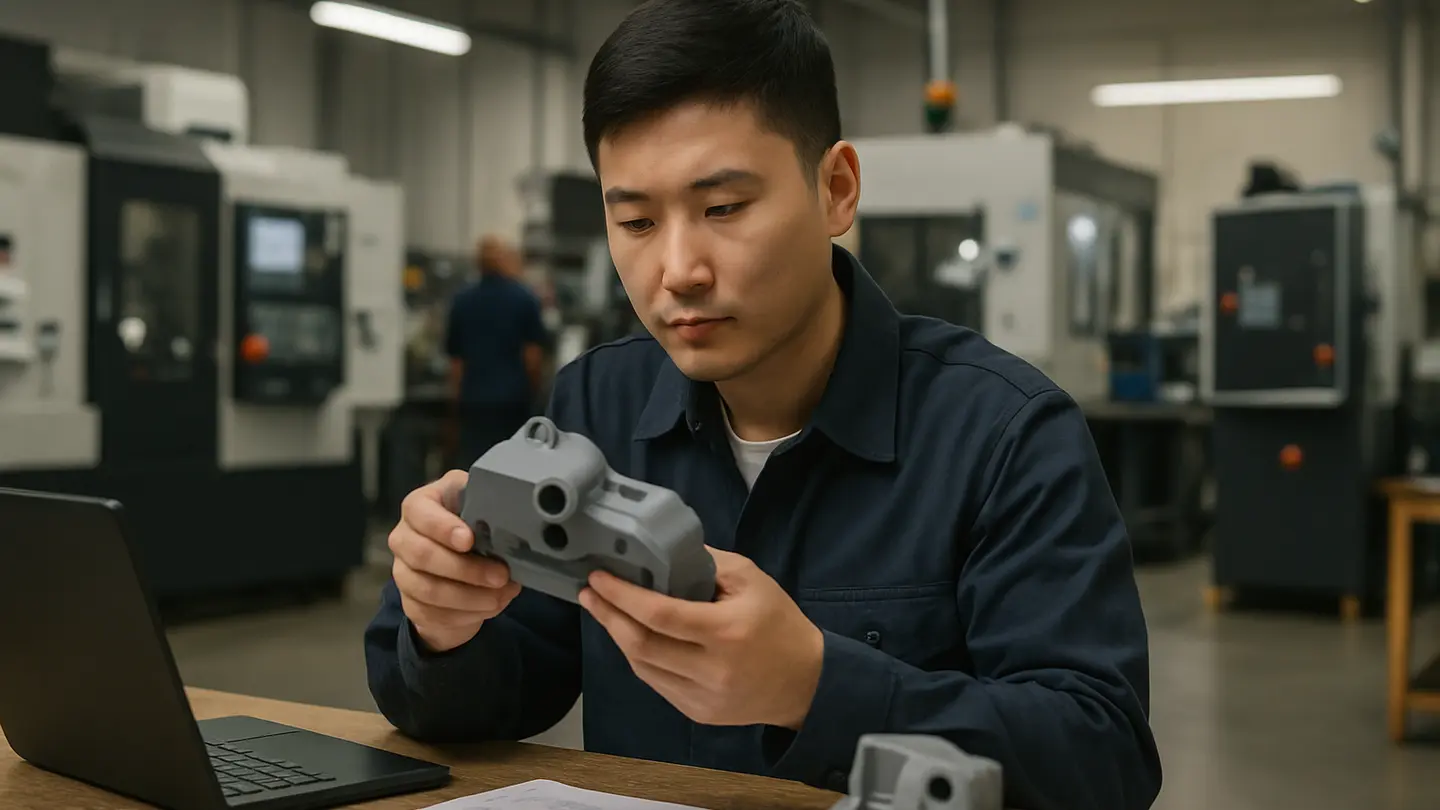
China prototype manufacturing can be attractive for B2B buyers because it combines broad process availability, competitive labor and machining costs, and supplier ecosystems for plastics, metals, electronics, packaging, and assembly. For product teams, importers, and OEM buyers, the practical question is not simply “Can China make this?” but “What will the first usable sample cost, how long will it take, and which type of supplier should build it?”
As a rough guide, many prototype builds fall somewhere between $50 and $3,000. A simple 3D printed housing, bracket, or appearance model may sit at the low end. A machined metal component, polished cosmetic sample, assembled device, or prototype with electronics can move quickly toward the higher end. Costs rise further when the design is unfinished, drawings need cleanup, tolerances are unclear, or the buyer expects engineering support as part of the build.
Lead times also vary. When usable CAD files, drawings, materials, and specifications are ready, many prototypes can be completed in one to five weeks. Simple 3D printed parts are often the fastest. CNC machining, finishing, small-batch casting, outsourced components, and inspection requirements can extend the schedule. Design work, electronics development, firmware, and certification planning are usually outside basic prototype build pricing and should be scoped separately.
What Goes Into a Prototype Quote
A prototype quote is usually a combination of several cost drivers. The main items are material, machine time, finishing, assembly labor, and testing or inspection where required.
For a mechanical part, the base price may look simple: a block of aluminum, a few hours on a CNC machine, and deburring. But the same part can become much more expensive if it needs tight tolerances, complex internal features, mirror polishing, anodizing, painting, plating, laser marking, or a cosmetic surface suitable for a sales presentation.
Finishing is often underestimated. A raw CNC part may be functional but unattractive. A painted, textured, color-matched, and logo-marked part may require sanding, primer, multiple coating steps, masking, and extra handling. For shower components, bathroom hardware, consumer products, or visible enclosures, the cosmetic standard can be as important as the dimensional result.
For electronics prototypes, buyers should separate the quote into:
| Cost area | What it may include |
|---|---|
| PCB fabrication | Board layers, material, surface finish, panelization, tooling |
| Components | ICs, connectors, sensors, displays, switches, cables |
| Assembly | SMT placement, through-hole soldering, hand assembly, rework |
| Testing | Power-on checks, functional testing, programming, test fixtures |
| Enclosure integration | Fitting the PCB into housings, wiring, sealing, mechanical adjustments |
Small component orders can carry setup fees, minimum purchase quantities, and sourcing charges. If one sensor, connector, cartridge, display, or chip has a long lead time, it may affect both price and delivery.
When comparing quotes, do not look only at the final number. Ask what is excluded. Common exclusions include international shipping, taxes and duties, file cleanup, engineering revisions, inspection reports, packing, color matching, destructive testing, and additional samples after a failed fit check. A $600 quote with inspection photos, material confirmation, and clear revision terms may be better than a $420 quote that only covers “make part according to file.”
Lead Times and the Delays Buyers Should Expect
The actual manufacturing step may be relatively short. A simple print can be produced within days. A CNC part can sometimes be machined quickly once the program is ready and material is available. The longer delays usually come from coordination, clarification, approvals, sourcing, and rework.
Common delay sources include:
- incomplete CAD files or missing 2D drawings;
- unclear material grades or substitutions;
- tolerances that are either missing or unnecessarily tight;
- cosmetic requirements that are described only in subjective terms;
- buyer feedback that takes several days at each approval step;
- supplier questions that are not answered by the engineering team;
- components that must be bought from outside vendors;
- unclear test procedures or acceptance criteria.
Prototype schedules are especially vulnerable when the product includes electronics, seals, sensors, connectors, valves, pumps, displays, or custom fittings. Even if the local machine shop can finish the housing in five days, one long-lead component can determine the completion date.
Buyers should also plan around the Chinese New Year period. Factory shutdowns, worker travel, backlogs, and supplier restarts can disrupt schedules for several weeks. The risk is not limited to the official holiday dates. In practice, material suppliers, plating shops, logistics providers, and assembly subcontractors may slow down before the holiday and take time to return to normal afterward.
A practical schedule should include time for quotation, technical questions, deposit payment, material purchasing, production, finishing, inspection, packing, export shipping, customs clearance, and internal review after arrival. If a launch plan depends on a prototype arriving by a fixed date, build in buffer time rather than assuming the quoted production days equal the total calendar time.
Choosing the Right Prototype Process
The best prototype process depends on quantity, function, material, tolerance, and how close the sample must be to the final production product. A buyer looking for a shape-and-fit model has different needs from a buyer validating water pressure, load strength, heat resistance, electrical function, or long-term sealing.
3D printing is usually the fastest option for shape, fit, and early design review. It is useful for checking hand feel, assembly layout, bracket position, housing clearance, and general appearance. It is less suitable when the final material properties, surface finish, or strength must match production parts. Printed parts can be painted or polished, but buyers should be cautious about treating them as proof of production performance.
CNC machining is common for functional metal and plastic prototypes. It can produce parts from aluminum, stainless steel, brass, copper, engineering plastics, and other materials close to the intended production material. CNC is often appropriate for mechanical testing, mounting interfaces, heat sinks, valves, brackets, and precise housings. Cost rises with complex geometry, deep cavities, thin walls, difficult-to-machine materials, tight tolerances, and multiple setups.
Vacuum casting can be suitable for small batches of similar-looking resin parts. It is often used after a master pattern has been made, allowing the supplier to produce several units with a consistent appearance. This can help buyers test market reaction, assemble demonstration units, or compare colors and textures before tooling. It is not the same as injection molding, but it can be a useful bridge for low quantities.
Aluminum tooling may be appropriate when a buyer needs trial production before committing to full production molds. It can support a limited run of molded parts and provide better insight into production-like geometry, material flow, shrinkage, and assembly performance. It is more expensive than one-off prototyping but can reduce risk before investing in hardened steel tools for mass production.
The key is to match the process to the decision you need to make. If the question is “Does this fit in the package?” use a fast and inexpensive method. If the question is “Will this seal, hold pressure, pass load testing, or assemble repeatedly?” choose a process and material closer to production reality.
How to Shortlist a Prototype Supplier in China
China prototype manufacturing suppliers are not all the same. Buyers may encounter model shops, specialist prototype factories, full-scale production factories, and trading companies.
A model shop may be fast and flexible for one-off appearance models, simple CNC parts, or 3D prints. A prototype factory may offer several in-house processes, such as CNC machining, 3D printing, vacuum casting, sheet metal, and finishing. A production factory may be useful if the prototype is already close to mass production and the buyer wants early manufacturability feedback. A trading company may help coordinate multiple processes or components, but the buyer should understand who is actually making the sample.
A good shortlisting process starts broadly and narrows through evidence. Ask suppliers for workshop photos, equipment lists, material capabilities, tolerances they can realistically hold, finishing options, and examples of anonymized inspection reports. The goal is not to collect marketing brochures, but to confirm whether the supplier has the process knowledge and control needed for the specific project.
Communication quality is also a selection criterion. A reliable prototype supplier should ask practical questions about materials, tolerances, finish, use conditions, assembly, and inspection. A supplier that quotes instantly without reviewing the files may still be competent for simple parts, but for complex prototypes it can be a warning sign.
Confidentiality should be treated seriously. If a supplier casually shares another customer’s drawings, full CAD files, or identifiable product photos, that behavior may indicate how they will treat your files later. Before sending sensitive designs, verify company credentials, confirm the legal entity, use confidentiality agreements where appropriate, and limit file disclosure during early pricing.
A paid test order is often the best filter. Start with a controlled part or limited sample, evaluate communication, dimensional results, finishing quality, packing, and response to problems, then decide whether to proceed with a larger prototype package.
From Build Files to an Approved Sample
Even when a design is still evolving, prototype files should define the build requirements clearly. “Make according to CAD” is rarely enough. Suppliers need to know the intended material, critical dimensions, tolerances, finish, color, surface texture, markings, assembly requirements, and any test conditions.
A useful file package may include:
- 3D CAD files in a common format;
- 2D drawings for critical dimensions and tolerances;
- material grade or acceptable alternatives;
- finish requirements, including color references where relevant;
- bill of materials for assemblies;
- wiring diagrams or PCB files for electronics;
- photos or sketches explaining function and appearance;
- inspection requirements and acceptance criteria.
Component availability should be confirmed before the schedule is accepted. If the prototype uses purchased valves, cartridges, sensors, connectors, pumps, displays, fasteners, or seals, ask the supplier to confirm stock status and lead times. Do not assume all components are locally available at short notice.
Request line-item quotes rather than bundled totals. A clear quote should separate machining or printing, finishing, components, assembly, testing, packing, and shipping. This makes it easier to compare suppliers and decide where to reduce cost. For example, you may choose a cheaper raw finish for the first functional sample and reserve cosmetic finishing for the second iteration.
Two or three prototype iterations are common. The first sample may reveal fit issues, weak features, difficult assembly steps, or unexpected cosmetic problems. The second may correct the design and confirm function. A third may refine finish, packaging, or production handover details.
Once a sample is approved, document it carefully. Keep the final CAD and drawing revisions, measurement reports, photos, test records, finish references, supplier comments, and change history. If possible, retain a physical approved sample under controlled conditions. This reference can become important when production suppliers interpret drawings differently or when internal teams debate whether later samples match the approved version.
Moving From Prototype to Production
A working prototype does not automatically prove the product is ready for mass production. Prototype technicians can often make a sample work through manual adjustment, selective fitting, hand polishing, extra adhesive, custom shims, rework, or careful assembly by a senior worker. Those practices may be acceptable for a one-off prototype but unsuitable for repeatable production.
Production handover should be treated as a separate stage. It should include a manufacturability review, process planning, tooling decisions, assembly sequence, quality standards, inspection methods, packaging requirements, and supplier alignment. The production factory may need to adjust wall thickness, draft angles, fastener choices, connector positions, material grades, or tolerances to make the product stable at volume.
This gap affects budget and launch timing. A buyer may spend $1,000 on a prototype and then discover that tooling, fixtures, testing equipment, supplier qualification, or design changes require much more time and money. The earlier this is recognized, the easier it is to plan.
Before moving to mass production, buyers should ask:
- Which prototype features require manual adjustment?
- Which tolerances are truly critical?
- Are production materials the same as prototype materials?
- Will the same supplier handle production, or will files be transferred?
- Are testing methods defined and repeatable?
- Are cosmetic standards measurable?
- Are packaging and transport risks understood?
- Has the supplier reviewed the product for manufacturability?
The approved sample is an important milestone, but it is not the end of development. It is the bridge between design intent and a controlled production process.
FAQ
Q1: Do I need finished CAD files, or will a sketch do?
A sketch can help a supplier understand the concept and provide rough pricing, but it is usually not enough for a production-ready prototype. For accurate building, the supplier will need CAD files, dimensions, materials, tolerances, and finish requirements. Some suppliers can create CAD files for an added engineering fee. Confirm file ownership in writing before that work begins.
Q2: How tight do my tolerances need to be on a prototype?
Tight tolerances should be used where they matter: mating surfaces, sealing areas, moving parts, alignment points, and function-critical features. Applying tight tolerances everywhere can increase cost and slow the build without improving the prototype’s value. Inspection depth also affects price, especially if the supplier must provide detailed reports or use precision measuring equipment.
Q3: Is it risky to send the same file to three shops for quotes?
There is always some design leakage risk when full files are sent to multiple shops. For early pricing, consider using reduced file packs, screenshots, simplified models, or drawings that show enough information to estimate cost without disclosing every detail. Share full build files only with the selected supplier after basic checks and confidentiality steps.
Q4: Can a sourcing agent handle prototyping, or should I go direct?
Going direct may reduce per-part cost if your team understands the process and can manage technical communication. A sourcing agent may help when the prototype involves several processes, purchased components, electronics, finishing vendors, or multiple supplier quotes. Agents can add value through quote review, supplier coordination, sample inspection, and follow-up when problems occur.
Another Way to Build a China Supplier Shortlist
For buyers building an initial supplier list, Made-in-China.com can be used alongside direct research, referrals, trade shows, and independent verification. It is a B2B sourcing platform, not a substitute for technical due diligence, but it can help organize the early search.
Supplier Discovery provides ways to find and narrow potential China suppliers, including Audited Suppliers and regional supplier channels. For buyers comparing unfamiliar companies, Audited Suppliers and available Audit Reports can provide structured background information before deeper discussions. According to the platform’s official information, Audit Reports may cover areas such as general information, export trade, manufacturing capacity, quality control, and R&D capability.
Easy Sourcing is another practical option when buyers do not want to contact suppliers one by one at the first quotation stage. Buyers can submit one sourcing request, receive multiple quotations from matched suppliers, compare quotes, and request samples. The next step should still be careful technical review, confidentiality control, and sample evaluation before committing to a prototype supplier.