Sourcing from a China shower manufacturer can reduce product cost and expand your bathroom range, but the main risk is rarely the first quotation. Problems usually appear after the quote is accepted: mass production differs from the sample, materials change, delivery slips, or payment details become unclear.
A safer process starts before supplier outreach. You need clear specifications, verified factory identity, controlled samples, inspection milestones, and payment terms that preserve leverage until the order is proven ready to ship.
Set Up Your Shower Sourcing Control Plan Before Contacting Factories
Before contacting any China shower manufacturer, prepare a control plan that defines what you are buying, who approves each decision, and what evidence is required before money moves.
Start with product basics: shower type, expected order volume, acceptable price range, target landed cost, destination market, and required launch date. A handheld shower head, exposed shower system, concealed valve set, rainfall shower, or full shower kit may involve different materials, fittings, testing needs, and packaging. Treat them as separate sourcing projects, not generic “bathroom products.”
Assign internal responsibility early. Someone should own quality assurance, someone should review import and customs requirements, someone should check legal or contract terms, and someone should give final purchase approval. If these roles are unclear, supplier communication becomes fragmented and key details get lost across emails, spreadsheets, and chat messages.
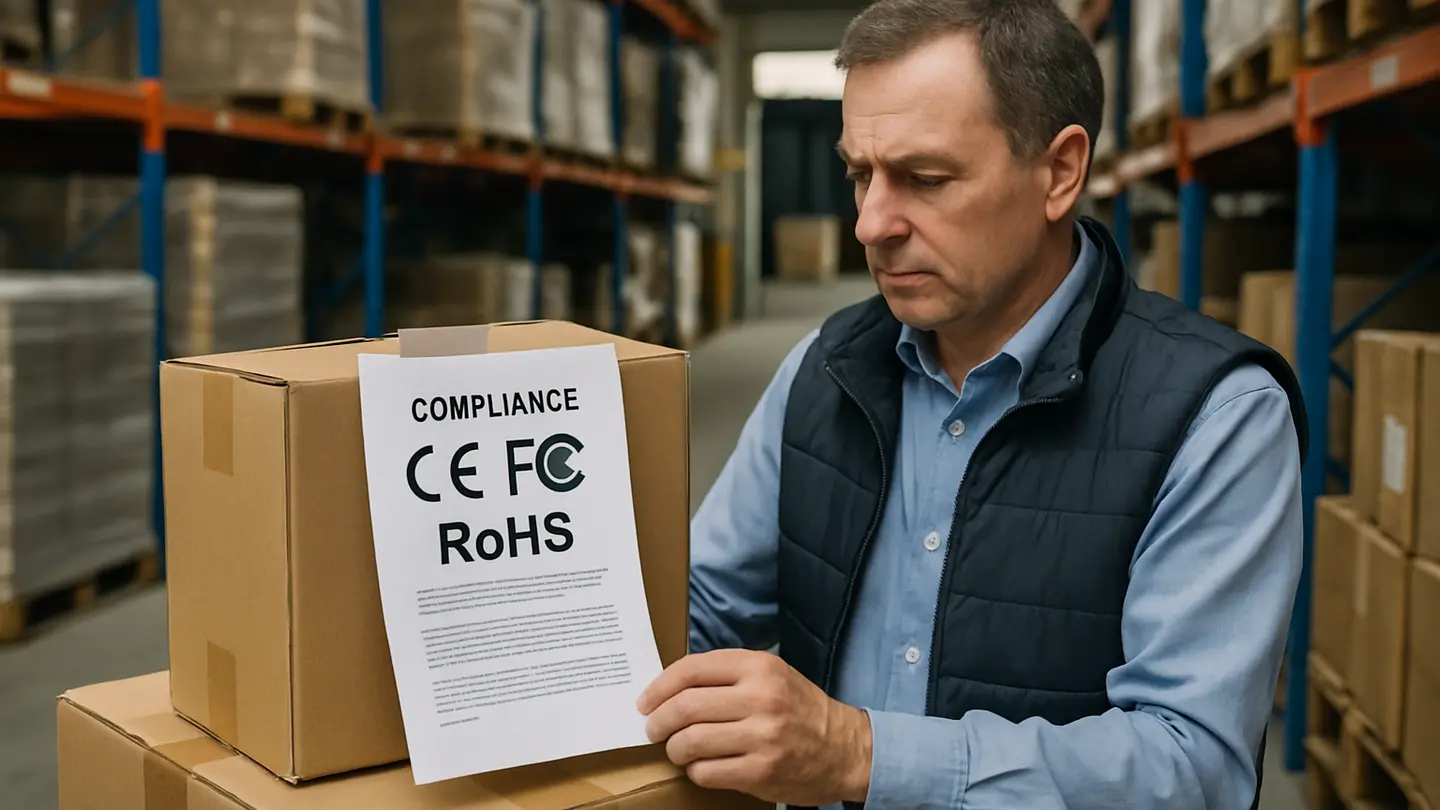
Also check destination-market requirements. Shower products may need to meet local plumbing compatibility, material safety, labeling, packaging, water-flow, or installation-document rules. Requirements vary by market and product type, so do not assume a supplier’s export history automatically covers your country or sales channel.
Direct-factory sourcing can work if your team can verify suppliers, manage samples, review documents, and arrange inspections. High-value, customized, private-label, or time-sensitive shower orders may justify independent factory audits, on-site production checks, or local sourcing support.
Use a Six-Step SOP Instead of Treating Shower Sourcing as a One-Off Deal
A shower order should not be managed as a simple quote-and-deposit transaction. Use a repeatable six-step SOP that connects supplier sourcing, sample approval, production follow-up, quality inspection, and logistics.
The six steps are:
- Write a procurement-ready product brief.
- Find and shortlist suppliers with real shower category focus.
- Verify the supplier’s legal identity before any deposit.
- Audit the factory and approve a Golden Sample.
- Control mass production with milestones and inspections.
- Lock commercial terms and ship only after document review.
This sequence matters. Many buyers negotiate price too early, then discover the supplier is not the actual factory, cannot meet the finish requirement, or plans to outsource production. Factory verification should happen before serious price negotiation and certainly before deposit payment.
A Golden Sample is the approved production-intent sample that becomes the benchmark for mass production. It should be signed, dated, labeled, photographed, and available for comparison during inspection. Without it, disputes over “acceptable” finish, weight, function, packaging, or accessories are harder to resolve.
Step 1: Write a Procurement-Ready Brief for the Shower Product
A strong sourcing brief reduces vague quotations, unsuitable samples, and production shortcuts. If the supplier has to guess your requirements, you are inviting inconsistent quotes and later disputes.
Your RFQ should include the shower type and full technical description. Specify whether you need a handheld shower head, overhead rain shower, thermostatic shower system, shower column, faucet and shower mixer, concealed valve, hose, bracket, or complete kit. Include materials such as stainless steel, brass, ABS, zinc alloy, or other required components where relevant. State dimensions, thread or fitting standards, surface finish, color, tolerance expectations, and critical performance requirements.
Include a bill of materials when possible. Important shower components may include cartridges, valves, diverters, hoses, washers, aerators, brackets, wall mounts, flow restrictors, screws, installation accessories, and user manuals. If a cartridge, valve, hose, or fitting must meet a specific requirement, state it in the RFQ.
Specify packaging and labeling. Clarify retail box design, neutral packaging, private-label packaging, barcode labels, carton markings, installation instructions, warning labels, and spare-parts bags. Packaging mistakes can create retail, warehouse, and customs problems even when the product is acceptable.
Evaluate quotes by landed cost, not only unit price. Tooling, mold charges, private-label packaging, inspection, sample freight, sea freight, duty, customs brokerage, rework, warranty exposure, and defect risk all affect the real cost.
Finally, state whether you need OEM production, an ODM catalog model, private-label packaging, or custom tooling. A procurement-ready brief is strong when qualified suppliers can quote without repeated basic questions.
Step 2: Find and Shortlist Shower Suppliers with Real Category Focus
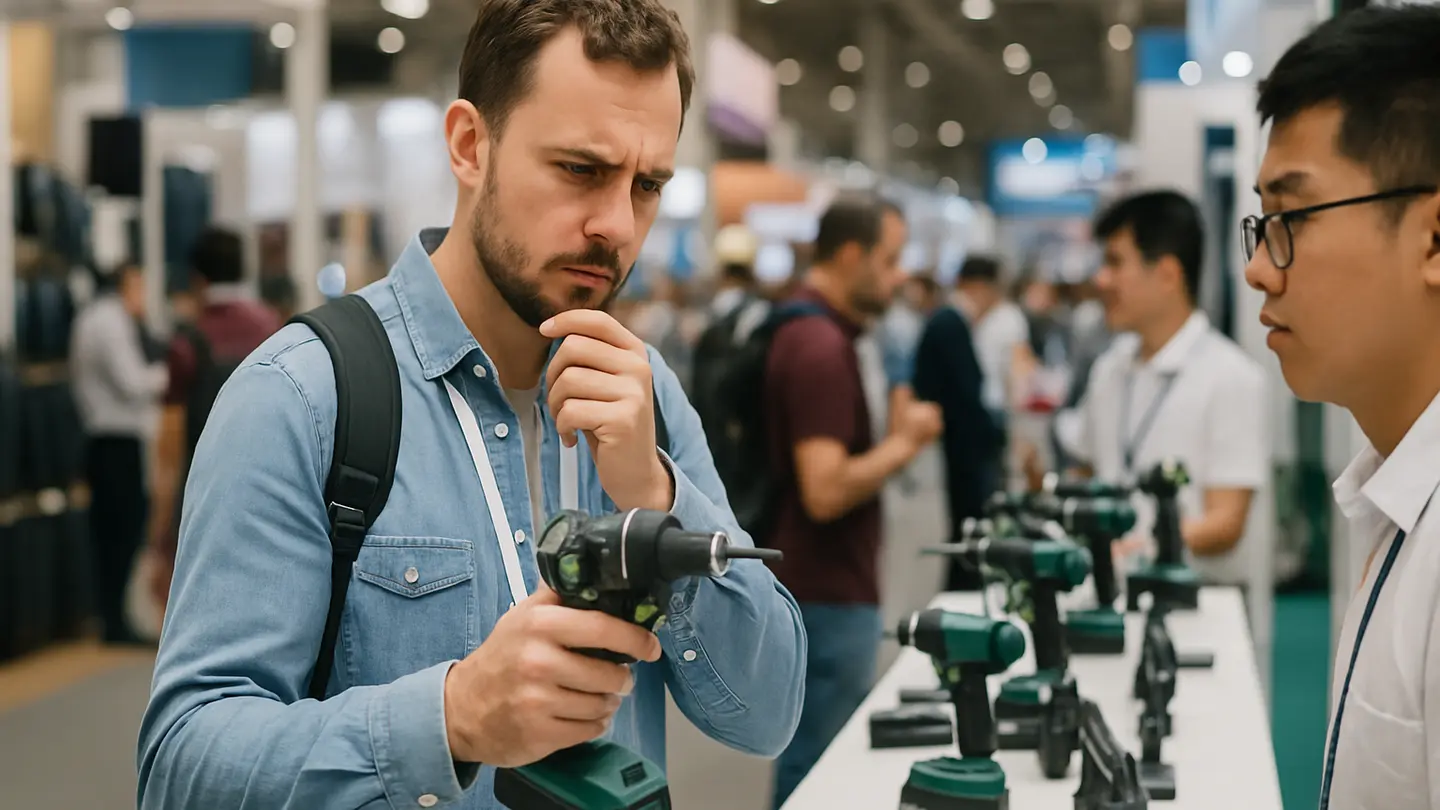
Online B2B marketplaces are useful for discovering suppliers. Made-in-China.com, for example, can be a practical starting point to search for Chinese shower suppliers and compare product categories. Trade fairs can also help buyers inspect samples and negotiate face to face, though they may be less practical for smaller or first-time buyers.
Filter for real category focus. A genuine China shower manufacturer will usually concentrate on a narrower product area, such as shower heads, shower systems, faucets, valves, hoses, bathroom hardware, or sanitary fittings. A company listing shower heads, electronics, apparel, toys, and unrelated products may be a trading company or general exporter. Trading companies are not automatically unsuitable, but you should know whether you are dealing with a factory, exporter, or intermediary.
Communication quality is an early risk signal. Do suppliers answer technical questions with specific material, finish, packaging, and testing details? Can they explain lead times and sample differences? Do documents use a consistent company name? Slow replies, vague answers, and inconsistent files may indicate later production problems.
Shortlist three to five suppliers based on category fit, technical response quality, product range, export experience, initial price reasonableness, and willingness to support audits and inspections.
Step 3: Verify the Supplier’s Legal Identity Before Any Deposit
Do not pay a deposit until the supplier’s legal identity and payment details are verified. A professional online profile, attractive photos, or platform badge is not enough for high-value shower orders. Even on Alibaba, badges or profile claims should be treated as one input, not a substitute for buyer-led due diligence.
Ask for the supplier’s Chinese business license and verify the Chinese company name and Unified Social Credit Code against official registration information where possible. The company name on the proforma invoice, sales contract, export documents, and bank account should match the verified legal entity or a clearly documented authorized export company.
Reject personal bank accounts. Also reject sudden requests to pay an unrelated third-party company unless there is a clear, verified legal and commercial reason reviewed before payment. If the supplier claims another entity must receive payment, pause and verify the relationship in writing.
For higher-risk orders, consider independent verification. Local support can help confirm the business license, registered address, factory location, ownership signals, and whether actual shower production capability exists.
Step 4: Audit the Factory and Approve a Golden Sample
An audit helps confirm whether the supplier can produce the shower products you plan to buy. It may be performed by your team, a third-party inspection company, or a trusted local sourcing partner. It should happen before mass production, not after problems emerge.
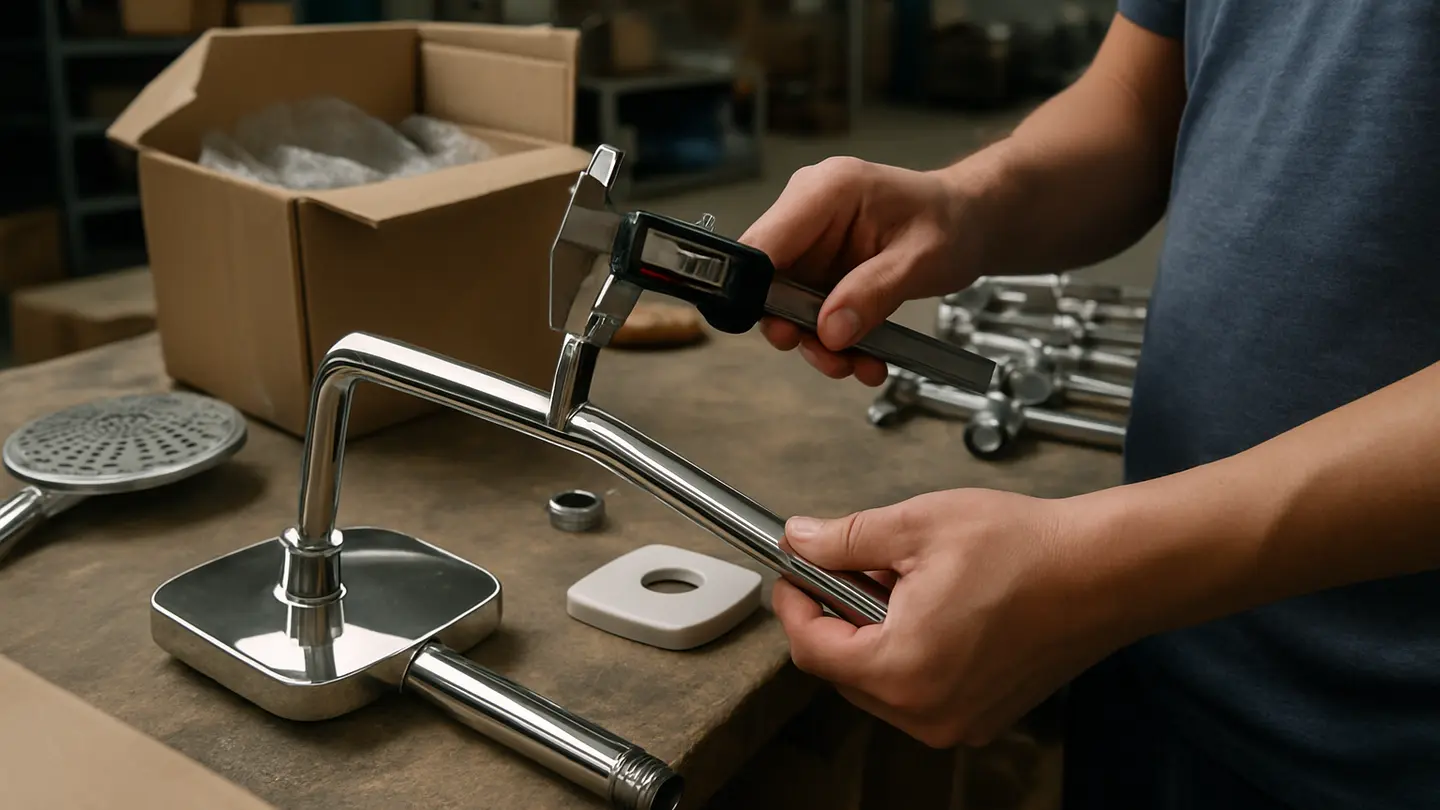
A practical shower factory audit should review legal identity, production capacity, equipment, assembly lines, incoming material control, quality-control procedures, testing capability, packaging area, warehouse conditions, production records, and subcontracting risk. For shower products, pay close attention to material control, surface finishing, leakage testing, cartridge or valve handling, hose and fitting consistency, and packaging accuracy.
The audit should also check process discipline. Does the factory separate approved and rejected materials? Are inspection records maintained? Are workers using defined assembly instructions? Is there relevant testing equipment?
After the audit, require a production-intent sample. This should not be a hand-polished showpiece made only to win the order. It should use the intended materials, components, finish, packaging, labeling, and accessories. Once approved, it becomes the Golden Sample. Confirm in writing that mass production must match it.
Your contract or purchase agreement should cover material substitutions, surface finish changes, defect thresholds, inspection rights, rework obligations, tooling ownership, and private-label restrictions. Sample approval must be paired with production monitoring and shipment inspection.
Step 5: Control Mass Production with Milestones and Inspections
Production risk often increases after the purchase order is issued because the buyer has committed and may have paid a deposit. To preserve control, use a production calendar with clear milestones, named contacts, and escalation procedures.
The calendar should include raw material preparation, component purchasing, tooling or mold confirmation if applicable, pre-production sample approval, assembly start, mid-production status, packaging preparation, final packing, inspection date, document review, and shipment booking. Require weekly updates with photos or videos where useful, but do not rely only on supplier-provided images for critical orders.
Ban unauthorized subcontracting in writing. If the factory faces capacity constraints, it should disclose them before moving production elsewhere. Subcontracting can create quality variation, schedule risk, and traceability problems, especially for custom finishes, branded packaging, or product sets that must match across components.
Use inspections at defined stages. A pre-production check can confirm materials, components, and packaging before full production starts. A during-production inspection can identify defects while there is still time to correct them. A pre-shipment inspection can verify finished goods, packaging accuracy, carton counts, quantities, appearance, dimensions, function, leakage, labeling, and workmanship.
Agree on AQL or another defined quality standard before production. AQL inspection does not guarantee every unit is defect-free, but it provides structured sampling and acceptance criteria. Hold final payment until inspection results meet the agreed standard and serious issues are corrected.
Step 6: Lock Commercial Terms and Ship Only After Document Review
Commercial terms should be detailed enough to prevent avoidable disputes. Confirm MOQ, unit price, tooling cost, sample cost, packaging cost, labeling requirements, spare parts, defect handling, delay responsibility, production lead time, inspection rights, shipment timing, and payment schedule.
A common control structure is a 30 percent deposit and 70 percent balance after passed inspection. This does not fit every transaction, and larger orders may require stronger payment tools, but the principle is important: avoid paying the full amount before product quality and quantity are verified.
FOB terms often give buyers more logistics control than supplier-managed shipping. Under FOB, the buyer can usually appoint the freight forwarder and maintain better visibility over freight cost, routing, and documentation. Supplier-managed shipping may look convenient but can reduce transparency if freight charges, surcharges, or routing decisions are unclear.
Review shipment documents before goods leave. The commercial invoice, packing list, HS code, product description, carton count, gross weight, net weight, dimensions, shipping marks, and consignee details should align. Errors can cause customs delays, warehouse receiving problems, or duty classification questions.
Freight and logistics should also be audited as part of cost control. Surcharges, inefficient routing, rushed shipments, documentation mistakes, and customs issues can damage margins even when the factory price is attractive.
Emergency Playbook for Shower Orders That Start Going Wrong
Even with controls, some orders may start to fail. Preserve leverage through documents, inspection evidence, payment control, and direct escalation. Avoid emotional arguments and focus on written facts: approved sample, contract terms, inspection results, photos, lot details, and payment conditions.
Prevention is stronger than recovery. Clear contracts, verified bank details, approved Golden Samples, staged inspections, and controlled payment timing make it easier to respond when a shower order goes off track.
Bulk Shower Goods Do Not Match the Approved Sample
If bulk goods do not match the signed Golden Sample, hold the remaining payment if your terms allow it. Compare production units against the Golden Sample for material, finish, weight, dimensions, leakage, spray function, hose and fitting quality, packaging, labeling, and accessories.
Document defects with photos, videos, carton numbers, production-lot details, quantities affected, and the inspection report. Separate critical, major, and minor issues where possible so the remedy is proportional and clear.
Use the agreed contract remedies. Depending on the defect, the supplier may need to rework, replace, sort, repack, provide spare parts, discount the order, or remake affected goods before shipment. Do not release final payment based only on a promise that issues will be fixed later.
The Factory Seems Legitimate but Payment Details Suddenly Change
A sudden bank-account change is a serious warning sign. It may be legitimate, but it can also indicate fraud, email compromise, or an internal control problem.
Stop payment immediately if payment details change unexpectedly. Recheck the business license, official registration information, verified company name, and prior payment instructions. The bank account name should match the verified supplier legal entity or a previously approved related export entity.
Move the discussion to secure channels. Confirm through known contacts, not only by replying to the same email thread where the change appeared. If the supplier cannot provide clear, verifiable documentation, do not release funds.
Production Delays Threaten Inventory Availability
When delays threaten inventory, escalate beyond the sales representative. Contact senior factory management and ask for a revised production schedule, current production status, bottleneck explanation, and realistic inspection date.
If some products are ready, consider split shipments to protect availability for urgent SKUs. Prioritize high-margin, best-selling, or promotion-critical shower models if capacity is limited. However, avoid accepting rushed shipment of uninspected goods simply because the delivery date is under pressure.
Tie final payment to a passed inspection, not to the supplier’s promised ship date. If the contract includes delay remedies or penalties, use them to discourage repeated slippage or unauthorized subcontracting.
FAQ
How can buyers verify whether a shower supplier is a real factory?
Check the Chinese business license, Unified Social Credit Code, registered company name, factory address, product-category focus, export documents, and audit evidence. Ask for live production proof, such as factory videos, production records, and inspection access. For higher-value orders, use an independent audit to confirm actual shower production capability.
What MOQ should buyers expect from a China shower manufacturer?
MOQ varies by shower type, material, finish, packaging, tooling, order timing, and factory capacity. Standard catalog shower heads may have lower MOQs than custom-finished shower systems, private-label kits, or products requiring new molds. Ask suppliers to quote MOQ separately for standard models, custom packaging, and custom tooling.
How can private-label shower buyers protect their IP?
Use China-focused NNN agreements where appropriate, register trademarks in the destination market, and clarify ownership of molds, packaging artwork, technical drawings, and custom designs in the contract. Also restrict the supplier from selling your branded packaging or exclusive design to other buyers.
What payment accounts are safest to use?
Pay only verified corporate accounts that match the confirmed supplier legal entity or an approved related export company. Avoid personal accounts and unrelated third-party payment requests. If payment details change, stop and reverify before sending funds.
When should buyers consider stronger payment controls?
Larger transactions, custom tooling, private-label production, or high-risk delivery schedules may justify stronger controls such as letters of credit or other structured payment arrangements. The right method depends on order value, supplier relationship, banking options, and risk tolerance.