An Engineering-Led Approach to China Sourcing
For a shower manufacturer, China sourcing is rarely limited to locating a factory and placing an order. A finished shower enclosure, faucet set, shower column, drain, accessory, or packaged bathroom system depends on many connected decisions: material selection, component tolerances, finish consistency, packaging protection, production scheduling, inspection criteria, and shipment coordination.
When one of those elements fails, the commercial consequences can extend well beyond the affected batch. A scratched glass panel, mismatched electroplated finish, leaking connection, incomplete hardware kit, or carton that does not adequately protect a fragile component can create warranty claims, delayed installations, and damage to the buyer’s reputation. For this reason, a China sourcing company needs to do more than communicate quotations between buyer and supplier. It needs a practical way to identify risks, clarify requirements, and follow problems through to resolution.
Maple Sourcing presents its approach as engineering-led rather than sales-led. The company was founded in 2012 by engineer Aaron Li, whose background includes factory operations, quality control, and product development exposure. This background is relevant because sourcing decisions often involve technical trade-offs that cannot be solved by price negotiation alone.
For example, a buyer may request a lower target cost for a shower enclosure. The apparent saving may result from a change in glass thickness, aluminium profile weight, hardware grade, packaging material, or the number of quality checks performed during production. Each change can have implications for durability, appearance, installation, breakage risk, and customer satisfaction. An engineering-oriented sourcing process should make those trade-offs visible before production begins rather than after goods reach the destination market.
The same principle applies to more complex shower products. A shower system may include metal castings, brass or stainless-steel parts, flexible hoses, ceramic cartridges, silicone seals, diverters, hand showers, mounting brackets, and surface treatments. A sourcing coordinator needs to understand that these are not interchangeable items simply because they have a similar appearance in a catalogue. The specified material, dimensions, thread compatibility, finish, assembly sequence, and test expectations can all affect the final product.
An engineering mindset does not mean that every sourcing issue requires a formal design review. It means approaching questions in a structured way:
- What is the buyer’s intended product specification?
- Which characteristics are critical to function, safety, appearance, and installation?
- Which parts or production stages create the greatest risk?
- How will conformity be checked before shipment?
- If a deviation occurs, what is the likely cause and what corrective action is practical?
This approach is particularly useful when working with products that combine multiple suppliers or processes. A shower manufacturer may source tempered glass from one producer, metal frames from another, rollers and handles from a hardware supplier, and printed packaging from a separate vendor. Even when a final assembler manages the finished product, the buyer still needs confidence that components fit together and that the agreed bill of materials is followed.
In practical terms, technical problem-solving may begin with clearer product documentation. Drawings, approved samples, photographs of acceptable finishes, packaging instructions, and a defined list of included installation hardware reduce room for interpretation. Without them, a supplier may make reasonable assumptions that nevertheless do not match the buyer’s expectations.
For shower products, useful points to define may include:
| Product area | Examples of details that may need clarification |
|---|---|
| Glass components | Dimensions, edge treatment, hole positions, tint or pattern, protective handling requirements |
| Metal frames and hardware | Material designation, profile dimensions, finish reference, handle style, roller movement, fastening hardware |
| Shower fittings | Connection dimensions, hose length, cartridge type, spray settings, included seals and mounting parts |
| Surface appearance | Colour reference, gloss level, uniformity expectations, acceptable visible marks or variation |
| Packaging | Carton strength, internal protection, separation between components, labelling, spare-parts inclusion |
| Assembly and installation | Parts list, instructions, fixing kit, compatibility with wall and plumbing configurations |
The level of detail should reflect the product’s risk profile. A simple branded accessory may require less technical follow-up than a large shower enclosure sold in multiple cartons. However, even a relatively simple item can create costly problems if its finish differs from other products in a bathroom collection or if it is packed in a way that causes damage during transport.
An engineering-informed China sourcing company can also support better communication when production issues arise. A supplier may report that a specified component is unavailable, a finish is difficult to reproduce consistently, or a packaging design does not protect the product adequately. The most useful response is not simply to demand that the original request be met. It is to identify the exact issue, determine whether it affects the approved specification, assess alternatives, and ensure that any change is documented and accepted by the buyer.
This matters because production problems are often interconnected. For instance, increasing the thickness of a protective foam insert may improve glass protection but alter carton dimensions and shipping volume. Changing a metal finish process may affect colour consistency across a larger order. Replacing a fixing screw can improve availability but introduce corrosion or assembly concerns if the substitute material is not appropriate. These decisions require a view of the whole product, not only the individual part.
For overseas buyers, this type of structured support can be especially valuable when they do not have an in-house team close to production. Time-zone differences, language differences, and limited visibility into factory operations can make it difficult to investigate issues quickly. A sourcing partner with local operating capability can help collect information, inspect the situation on site where appropriate, and communicate the practical implications to the buyer.
This does not remove the buyer’s responsibility for product decisions. The buyer remains responsible for defining its market requirements, legal obligations, commercial position, and final approval of changes. However, a technically minded sourcing process can improve the quality of information available for those decisions.
Maple Sourcing’s stated positioning reflects this need for problem-solving throughout the sourcing cycle. Its experience is described in terms of factory operations, quality control, and product development rather than only supplier introduction. For buyers of shower products and related bathroom goods, that distinction can be important. The strongest sourcing outcome is not necessarily the lowest initial quotation. It is the product that can be made consistently, checked effectively, packed safely, and delivered with fewer avoidable surprises.
Aaron Li’s Background in Engineering and Quality Inspection
Maple Sourcing was founded by Aaron Li in 2012. According to the company’s background information, Li earned an engineering degree in 1997 and began his career in quality inspection. This early focus is relevant to the company’s stated sourcing philosophy because inspection work requires close attention to how products are actually made, where variation occurs, and how defects can be identified before shipment.
During his first five years working in the field, Li reportedly visited more than 200 factories in Southern China. Such exposure can provide a broad view of manufacturing conditions, supplier capabilities, management practices, and the differences between a supplier’s stated capacity and its day-to-day production performance.
For a buyer evaluating a China sourcing company, factory familiarity can matter because the purchasing process often involves more than comparing product catalogues. Two suppliers may offer visually similar shower doors, mixer sets, or bathroom accessories while using different materials, subcontractors, quality controls, and packing methods. A quotation alone may not reveal these differences.
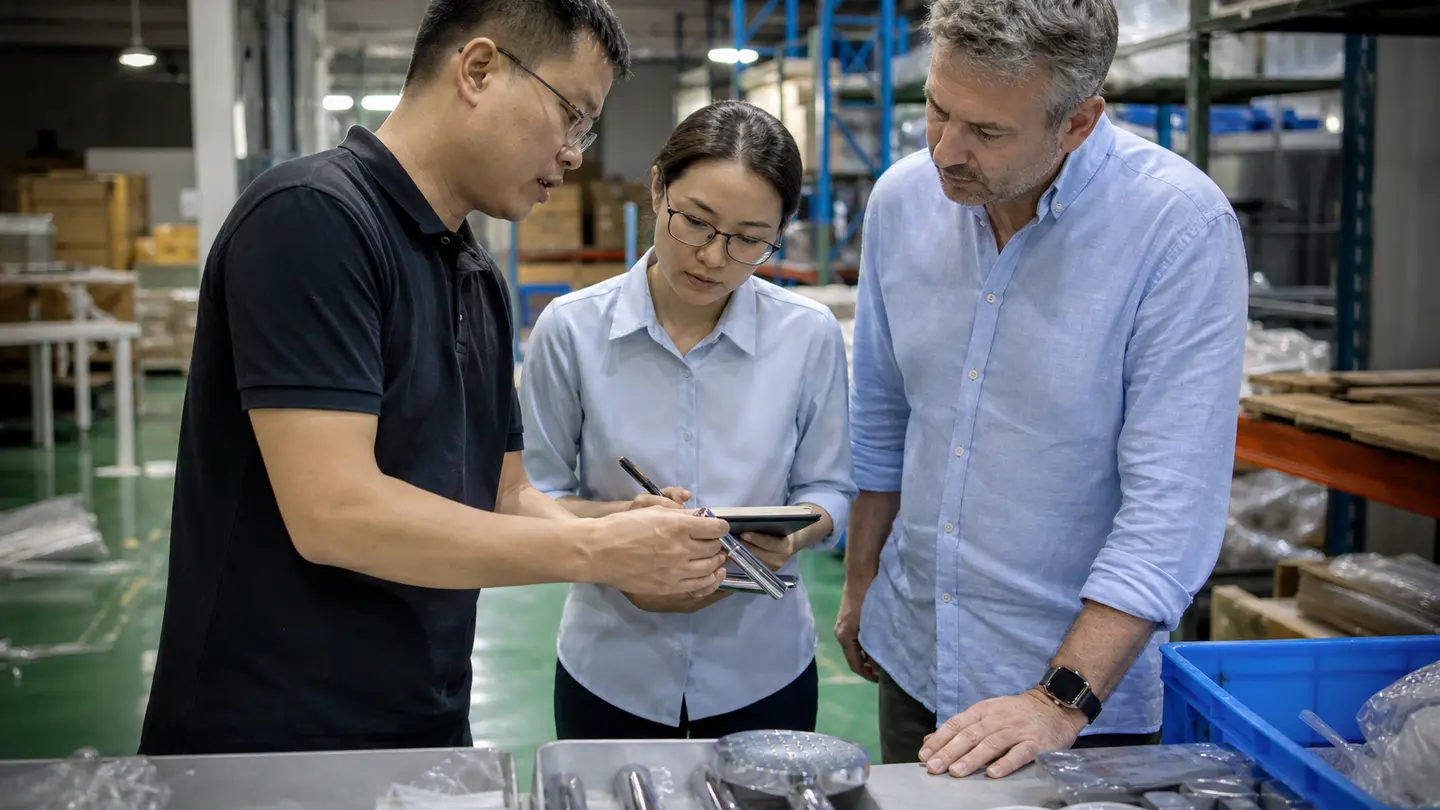
Factory visits are useful when they are connected to specific purchasing questions. Depending on the product, a buyer may need to understand whether a manufacturer has a suitable process for cutting and handling glass, machining metal parts, applying a surface finish, assembling valves, conducting functional checks, or packing heavy and fragile components. The purpose is not to assume that every factory must operate in the same way, but to determine whether its actual capabilities align with the buyer’s requirements.
In 2002, Li joined Shenzhen-based UQS Global as its China Quality Manager. This role reinforces the quality-management dimension of his professional background. Quality management is broader than conducting a final inspection. It involves defining expectations, monitoring production, recognising recurring failure patterns, communicating findings, and helping ensure that corrective actions address the cause of a problem rather than only its visible result.
For shower manufacturers, this distinction is important. A final inspection may identify that an item has surface scratches, loose handles, missing gaskets, or incorrect labels. But preventing the same issue in later orders requires investigating why it happened. The cause could be poor component storage, insufficient protection between finished parts, unclear assembly instructions, an incorrect incoming component, or a mismatch between the approved sample and production reference.
The sourcing process is stronger when quality considerations are introduced early. Before placing an order, buyers can establish product requirements and identify characteristics that deserve special attention. During production, follow-up can focus on whether the approved materials, components, and assembly steps are being used. Before shipment, inspection can help verify whether the finished goods match agreed expectations.
Small and medium-sized overseas buyers may find this difficult to manage independently, particularly when they purchase from China at volumes that do not command the same supplier attention as large multinational accounts. Maple Sourcing was established to help smaller overseas buyers manage manufacturing in China. The underlying challenge remains common across many product categories.
Smaller buyers can face several procurement risks:
- Limited supplier attention: A factory may prioritise larger or more regular customers when capacity is tight.
- Weak visibility: The buyer may receive limited information about material changes, subcontracting, production delays, or quality concerns.
- Inconsistent quality: Product appearance and performance may vary between samples, early production, and later batches.
- Unclear accountability: When several suppliers or service providers are involved, it can be difficult to determine who is responsible for an issue.
- Communication gaps: Product instructions can be interpreted differently when specifications are incomplete or when questions are not escalated promptly.
These risks do not apply to every supplier, and they are not unique to China. They are, however, common reasons why overseas buyers use local sourcing and quality support. The value of such support depends on whether it improves decision-making and provides reliable, timely reporting rather than simply adding another layer of communication.
For a shower manufacturer, clear control of samples and product revisions is especially important. A supplier may produce an initial sample that meets the buyer’s expectations, but production can later differ if the factory changes a component source, surface treatment, packing material, or assembly method. Maintaining an approved reference sample, revision-controlled product documents, and agreed inspection points can reduce the risk of unapproved variation.
The engineering and quality-inspection background associated with Maple Sourcing suggests an emphasis on identifying these practical manufacturing issues. It should not be interpreted as a substitute for a buyer’s own technical, regulatory, or product-liability responsibilities. Instead, it provides a framework for asking more useful questions and managing suppliers with greater discipline.
A buyer considering any China sourcing company should assess whether its team can explain technical concerns in practical terms. Useful questions include whether the sourcing partner can distinguish a cosmetic issue from a functional issue, identify which production stage is likely to have caused a defect, and communicate clearly when a proposed change has commercial or quality implications. These are often more meaningful indicators than general assurances about supplier relationships.
How the Team Supports Projects From Sourcing Through Shipment
Maple Sourcing states that its operating team and factory-visit activities are based in Shenzhen. This location is significant because Shenzhen is a major commercial and manufacturing centre in Southern China, with access to surrounding production regions and supply networks. For overseas buyers, local operational presence can support factory communication, product follow-up, and on-site activities when these are needed.
The company also states that its Hong Kong entity serves as the contracting and international-payment entity. Its listed Hong Kong registered address belongs to an accountancy firm. Buyers should understand this distinction clearly: a registered corporate address and the location of operational work are not necessarily the same. In Maple Sourcing’s described structure, Shenzhen is the operating base for team activities and factory visits, while the Hong Kong entity is used for contracts and international payments.
This arrangement is not unusual in cross-border trade, but clarity is important. Buyers should know which entity will sign the agreement, issue invoices, receive payments, coordinate the project, and communicate with suppliers. Clear contractual and operational roles can reduce confusion if a production issue, payment question, or shipment delay occurs.
According to Maple Sourcing, projects are assigned to experienced team members who support work from sourcing through production follow-up and shipment. A continuous project assignment can be useful because the person managing supplier selection should understand the approved product requirements when production begins, and the person following production should know the decisions made during sourcing.
For a shower-product order, a practical project flow may include the following stages:
Requirement review and supplier sourcing. The buyer defines the product scope, target market, expected quantities, required materials, and critical quality expectations. Potential suppliers are assessed against the needs of the project rather than only price.
Sample and specification alignment. The buyer and supplier clarify drawings, component lists, finish requirements, packaging, branding details where relevant, and acceptable sample references. Any differences between the request and supplier proposal should be identified before mass production.
Production follow-up. The project team follows progress, communicates questions or changes, and monitors whether production timing remains aligned with the agreed schedule. This stage is particularly important for goods with long lead times or multiple components.
Quality and issue management. When an issue is found, the relevant facts should be documented: affected quantity, type of nonconformity, likely production stage, photographs or measurements where applicable, and proposed corrective action. The buyer can then make an informed decision.
Shipment coordination. Before goods move, the buyer needs accurate information about completed quantity, packaging configuration, shipping marks, documents, and delivery readiness. For multi-carton shower products, shipment planning should also account for the need to keep related cartons and installation components correctly grouped.
Continuity across these stages can reduce information loss. If sourcing, quality control, and shipping are handled as entirely separate activities, key details may be missed. For example, the team arranging shipment needs to understand whether cartons contain fragile glass, whether hardware packs must remain with matching panels, and whether products have special loading or handling needs.
At the same time, buyers should avoid assuming that a sourcing company can resolve every issue without their input. Decisions involving product redesign, approved substitutions, delivery compromises, or acceptance of a quality deviation should be documented and approved by the buyer. Effective project management depends on prompt communication in both directions.
For shower manufacturers entering or expanding China sourcing, the central lesson is to treat sourcing as a controlled manufacturing process rather than a one-time purchase transaction. Supplier selection matters, but it is only the first step. Product documentation, sample approval, production follow-up, inspection criteria, packaging review, and shipment coordination all influence the final outcome.
Maple Sourcing’s stated structure combines Shenzhen-based operational activity with a Hong Kong contracting and payment entity, while its project model assigns experienced team members across the sourcing-to-shipment cycle. For buyers, the practical value of this model lies in whether it creates better visibility into manufacturing, clearer accountability for open issues, and more informed decisions when technical or quality questions arise.