Set a Clear Quote Validity Period
A supplier quotation should never be treated as a permanent price list. In China supplier management, one of the first terms to confirm is how long a quoted price remains valid and what happens if the buyer delays approval, deposit payment, or production release.
A proper quotation should state an expiry date, such as “valid for 15 days” or “valid until 30 June.” Without this, both sides may rely on different assumptions. The buyer may expect the price to hold because the quote was recent; the supplier may argue that material costs, exchange rates, or factory capacity have changed.
The quotation should also confirm the currency. Many export quotes are issued in USD, while factory cost assumptions may be based on RMB. If exchange-rate movement affects the supplier, the buyer should know whether the price includes a currency buffer or may be adjusted beyond a defined range.
Buyers should also clarify when the price becomes locked:
- Does the quoted price remain fixed once a purchase order is accepted?
- Is the price locked only after deposit payment?
- Can the supplier revise the price if production has not started before the quote expires?
- Are tooling, sample, packaging, or customization costs covered by the same validity period?
These points should be settled before the purchase order. A common dispute occurs when a buyer approves a quote, waits weeks to pay the deposit, and then receives a revised price. If the quote did not define the lock-in trigger, the buyer may have limited leverage.
For important product lines, it is also useful to maintain at least one qualified alternative supplier. A backup does not mean constantly switching factories, but it reduces dependence on one supplier’s interpretation of pricing.
Define When and How Prices Can Increase
Price increases are not always unreasonable. Raw material costs, labor costs, freight rates, packaging costs, and exchange rates can move. The problem is when changes are vague, sudden, or applied to confirmed orders.
A buyer should define acceptable causes before production begins. The supplier should not be free to raise prices simply because demand improved or because the buyer has become dependent on the product. A disciplined arrangement limits increases to stated causes, such as:
- Documented changes in key raw material costs
- Changes in agreed packaging or product specifications
- Labor cost changes that materially affect production cost
- Freight or logistics changes, if freight is included in the quote
- Currency movement beyond an agreed threshold
- Regulatory or compliance changes affecting production
The supplier should provide written notice before any increase takes effect. The notice should state the reason, affected products, proposed new price, and effective date. Verbal explanations through chat messages are not enough for a serious sourcing program, especially when the buyer has downstream customers, catalogs, or retail pricing to manage.
Evidence matters. If a supplier claims that a stainless steel component, electronic part, carton, or surface finish has increased in cost, the buyer can ask which input changed and by how much. The goal is not to audit every cent of margin, but to separate genuine cost movement from opportunistic repricing.
For most B2B importers, price increases should apply only to future orders, not confirmed purchase orders. Once the buyer has issued a purchase order, the supplier has accepted it, and the deposit has been paid, the commercial terms should be fixed unless both parties agree to a specification change.
The purchase order or supply agreement should also say how decreases will be handled. If material costs fall after a major increase, will the supplier review future pricing? Buyers who accept increases without a review mechanism may find that prices rise quickly but fall slowly.
Establish the Quality Baseline with Specs and Samples
Quality cannot be managed through general wording such as “good quality,” “export standard,” or “same as last order.” Those phrases leave too much room for interpretation. Effective China supplier management requires a written quality baseline supported by approved samples.
The written specification should define the product in measurable terms wherever possible, including:
- Materials and grades
- Dimensions and tolerances
- Weight or thickness
- Color references
- Surface finish requirements
- Functional performance requirements
- Fittings, accessories, and components
- Packaging method and carton strength
- Labeling, barcodes, manuals, and warning marks
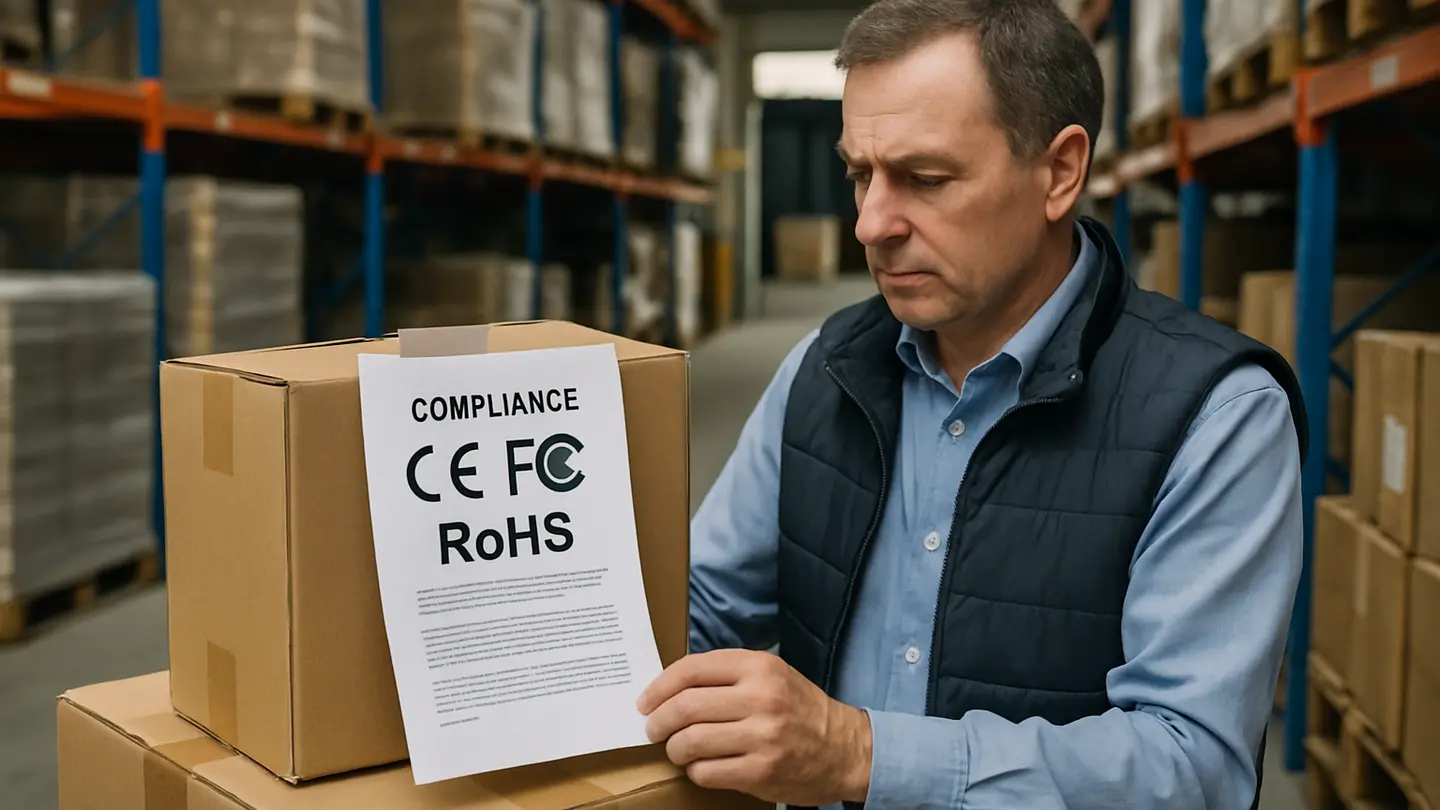
- Compliance requirements for the destination market
For products with visible finish, color, or tactile features, a physical approved sample is often essential. The sample should be signed, dated, photographed, and linked to the purchase order or product code. If multiple samples exist, the buyer should identify the final approved version.
The approved sample becomes a dispute-resolution tool. If the delivered product differs in finish, dimensions, packaging, or component quality, the buyer has a concrete reference. Without it, a supplier can argue that the goods are within normal production standard.
Inspections should match the risk level of the order. Common inspection points include:
- Pre-production checks: confirming materials, components, tooling, labels, and packaging before mass production starts.
- During-production inspections: checking early output to detect defects before the whole order is completed.
- Pre-shipment inspections: checking finished goods before final payment and shipment release.
The earlier a defect is found, the easier it is to correct. A pre-shipment inspection is useful, but it may come too late if the order has already been produced incorrectly. For new suppliers, customized products, tight tolerances, or high-value orders, during-production checks can prevent larger losses.
Buyers should link final payment or shipment approval to inspection results. If the supplier receives full payment before the buyer verifies the goods, leverage decreases sharply. A practical arrangement is to pay a deposit to start production and release the balance only after the goods pass inspection or agreed corrective actions are completed.
Quality control terms should also define what happens if goods fail inspection, including rework, replacement, sorting, reinspection costs, and delay responsibility.
Confirm Who Will Actually Manufacture the Order
The company that sends the quotation is not always the company that makes the product. Some suppliers own the factory. Some are trading companies. Others are sales offices or use multiple subcontractors depending on price, capacity, or product type.
Trading companies are not automatically a problem. A capable trading company can coordinate factories, handle communication, manage documentation, and support smaller buyers. The risk comes from lack of transparency. If the buyer does not know who is producing the order, it becomes harder to manage quality, capacity, compliance, and accountability.
Before production starts, the buyer should ask direct questions:
- Does the supplier own the production facility?
- If not, what is its relationship with the factory?
- Where will the order be manufactured?
- Will any subcontractors be used?
- Can the buyer approve the production site before mass production?
- Can the buyer or third party inspect the factory?
Warning signs include vague factory addresses, reluctance to share production-site information, inconsistent company names on documents, and evasive answers about capacity. A supplier that claims to be a manufacturer but cannot clearly explain its production setup deserves further checking.
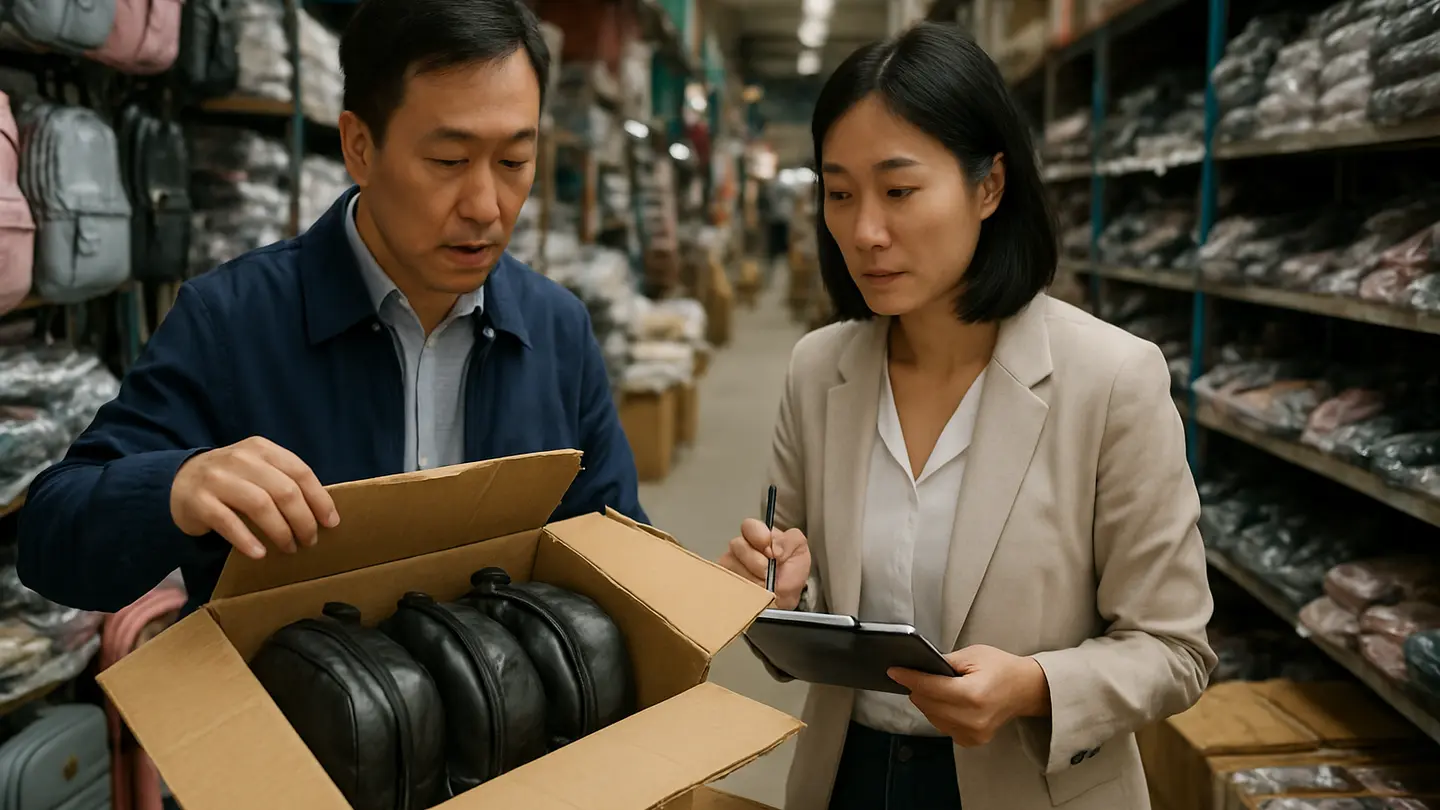
Verification does not always require a complex process. Depending on order value and risk, buyers may use a factory audit, site visit, video walkthrough, business registration check, or third-party verification. For higher-risk products, an audit can review production capacity, quality systems, equipment, material control, and export experience.
The buyer should also restrict unauthorized subcontracting. If the supplier moves production without approval, the approved sample and quality baseline may no longer reflect actual production conditions. A different factory may use different materials, workers, machines, molds, processes, or standards.
Production responsibility should be clear in writing. The supplier that accepts the purchase order should remain responsible for delivery, quality, documentation, and corrective action, even if it uses another production site with the buyer’s approval.
Agree on Communication Rules and Reorder Procedures
Supplier communication often receives attention only after something goes wrong. By then, slow replies, unclear responsibility, and missing updates can turn a manageable issue into a serious delay. Buyers should agree on communication rules before production starts.
The first step is to name a primary contact. Relying only on a shared inbox, rotating sales staff, or informal chat groups can create confusion. The buyer should know who is responsible for quotations, order confirmation, production updates, quality issues, shipping documents, and after-sales problems.
Response-time expectations should be practical and specific. For example, the buyer might expect:
- Quotation responses within two or three business days
- Production status updates once a week during active orders
- Same-day acknowledgment of urgent quality or shipment issues
- Corrective-action proposals within a defined period after defect reports
- Advance notice if production or shipment dates may slip
The point is not to demand instant replies to every message. The point is to avoid silence when the buyer needs information to manage customers, inventory, or logistics.
Reorder procedures are equally important. Many problems appear after the first successful order because both sides become less formal. The buyer assumes the supplier will repeat the same product, price, packaging, and delivery timing. The supplier may assume small changes are acceptable or may use different materials to manage cost.
Every reorder should reconfirm the essentials:
- Current unit price and currency
- Incoterms and delivery terms
- Production lead time
- Approved specification and sample version
- Packaging and labeling requirements
- Any unresolved defects from previous orders
- Inspection requirements
- Shipment schedule and documentation
Past defects should not disappear from the discussion. If the previous order had scratches, color variation, weak cartons, missing labels, incorrect accessories, or late delivery, the reorder should state how those issues will be prevented.
Forecasting can also improve communication. When buyers share expected reorder timing or approximate demand, suppliers can plan materials and capacity more effectively. Forecasts do not need to be binding unless both sides agree.
Locked Down vs. Left Open: What Changes in Practice
Clear supplier terms change the buyer’s position in everyday sourcing situations. They do not eliminate every problem, but they reduce ambiguity and make disputes easier to resolve.
| Supplier term | If locked down early | If left open |
|---|---|---|
| Quote validity | Buyer knows when the price expires and when it becomes fixed | Supplier may revise pricing after the buyer has already planned around the quote |
| Price increase rules | Increases require defined reasons, notice, and evidence | Buyer may face sudden increases with limited ability to challenge them |
| Quality baseline | Specs and approved samples create a shared reference | Disputes become subjective, especially on finish, tolerances, and materials |
| Production responsibility | Buyer knows who makes the goods and who is accountable | Supplier may shift blame to an unknown factory or subcontractor |
| Communication and reorders | Each order follows a repeatable process | Every reorder can become a fresh negotiation with avoidable confusion |
Undefined reorder pricing is a common example. If the first order goes well but no reorder mechanism exists, the buyer may have to renegotiate price, lead time, packaging, and specifications each time. That creates uncertainty for downstream sales planning.
Quality disputes also become harder when the baseline is vague. A signed approved sample helps both sides compare delivered goods against a known reference. Without it, the buyer may say the product is worse than expected, while the supplier says it is normal production variation.
Factory responsibility is another practical issue. If the actual production site is known and approved, the buyer can investigate root causes more effectively. If production was quietly transferred, every issue becomes harder to trace.
Locking down terms is not about mistrusting every supplier. It is about making the relationship easier to manage as order volume, complexity, and pressure increase.
FAQ
Q1: Should I depend on one supplier, or spread orders across a few?
For important products, buyers should usually maintain at least one qualified backup supplier. Depending on a single supplier creates operational risk if that supplier has delays, quality failures, capacity shortages, or communication problems.
This does not mean every order must be split equally. Some buyers keep most volume with the best-performing supplier while qualifying a secondary option for emergencies or seasonal peaks.
Q2: Should I manage suppliers myself or use a sourcing agent?
Direct supplier management can give capable buyers tighter control over pricing, specifications, communication, and long-term relationships. It works best when the buyer has enough time, follow-up discipline, language capability, and order volume to justify close management.
A sourcing agent may be useful for factory verification, production follow-up, inspections, or communication with smaller factories. The key is to define the agent’s role clearly and ensure the buyer still has visibility into supplier identity, pricing structure, quality requirements, and production status.
Q3: What is the most common mistake importers make managing Chinese suppliers?
A common mistake is treating supplier management as a purchase-order process rather than an active relationship. Sending a PO is not enough. Buyers need clear expectations, documented terms, regular contact, and follow-up during production.
Problems should be raised early. If a buyer waits until shipment or customer complaints to address defects, packaging errors, or delays, the options are usually more expensive and time-constrained.
Q4: How often should I contact a supplier between orders?
Light contact between orders is useful, even when there is no immediate purchase order. Buyers can share expected reorder timing, ask about material trends, discuss product updates, or confirm whether previous issues have been addressed.
Long silence followed by an urgent order can reduce supplier responsiveness, especially during busy periods. Regular but purposeful communication keeps the buyer visible and helps the supplier plan capacity, materials, and internal priorities.
Final Checks Before Repeat Orders
Effective China supplier management depends on settling core terms before the relationship becomes routine. The first order often receives the most attention. After that, assumptions can replace formal checks, and small changes may pass unnoticed until they affect quality, cost, or delivery.
Before each repeat order, buyers should compare the new purchase order against the agreed terms:
- Is the price still valid, and has the currency been reconfirmed?
- Are any price changes supported by notice and evidence?
- Is the approved specification still the current version?
- Are samples, packaging, labels, and accessories unchanged?
- Is the same factory or approved production site being used?
- Have past defects been addressed in the new order?
- Are inspection and payment conditions still clear?
- Has the supplier confirmed lead time and shipment schedule?
Buyer leverage can decrease once repeat orders become predictable and switching suppliers becomes inconvenient. That is why the strongest controls should be established early, not after a dispute. Ongoing order management helps catch quiet changes in material, workmanship, packaging, production location, or communication habits before they become larger sourcing problems.