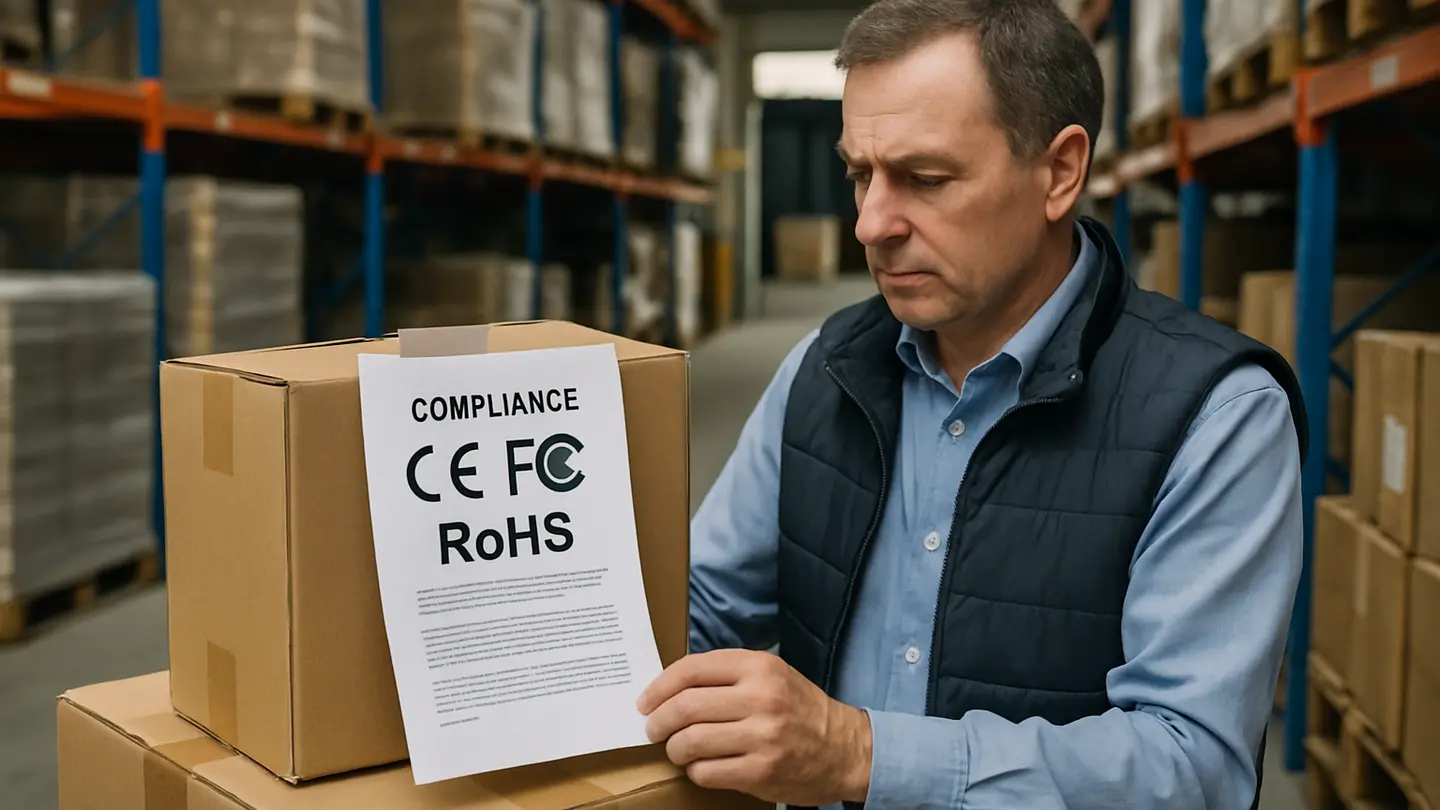
For many importers, the riskiest phrase in a supplier payment schedule is “70% balance before shipment.” It sounds normal, and in China sourcing it often is. The problem is not the percentage. The problem is the event that releases the money.
If the balance becomes due simply because the factory says the goods are packed, the buyer gives up most leverage before confirming whether the shipment is acceptable. Packed cartons do not prove that dimensions, finishes, materials, labeling, packaging, quantities, workmanship, or functional requirements were met. They only prove that something has been boxed.
Good China supplier payment terms separate production funding from product acceptance. A deposit helps the supplier buy materials and start production. A final balance should confirm that the supplier delivered what was agreed.
That means the purchase agreement, proforma invoice, or contract should make payment conditional on objective events: approved samples, packaging approval, pre-shipment inspection, rework completion, or written acceptance. The clearer the trigger, the fewer arguments arise when goods are ready but defects remain unresolved.
Negotiate the Payment Trigger Before the Percentage Split
Buyers often focus first on the payment split: 30/70, 50/50, 30/40/30, or another structure. The split matters, but the trigger matters more. A 30/70 structure can be reasonable if the 70% balance is due after the goods pass inspection. The same structure becomes risky if the balance is due when the supplier announces completion, regardless of quality status.
The central question is not only “how much do we pay?” It is “what must happen before we pay?”
A typical 30/70 T/T arrangement works like this: the buyer pays a 30% deposit before production, the supplier manufactures the order, and the buyer pays the remaining 70% before shipment. This is common in China sourcing, especially for small and medium-sized orders. However, “before shipment” should not mean “before verification.” It should mean “after the agreed inspection and acceptance process, but before the factory releases the goods.”
For more complex or higher-value orders, a staged structure may be better:
| Payment stage | Common purpose | Stronger release trigger |
|---|---|---|
| Deposit | Materials, capacity reservation, production start | Signed order, confirmed specifications, verified bank details |
| Mid-payment | Production progress or tooling/material commitment | Approved sample, first article approval, in-process inspection, packaging proof |
| Final balance | Shipment release | Passed pre-shipment inspection and resolved corrective actions |
Mid-payments can help when the supplier has legitimate cash-flow needs or the order requires custom materials. But they should not be vague. “Production underway” is harder to verify than “approved golden sample signed by both parties” or “first article inspection report accepted by the buyer.”
Payment triggers should align with the written product specifications. If the purchase terms require brushed nickel, retail packaging, compliance documents, or specific test reports, the relevant payment clause should not release money before those items are checked or provided.
The stronger approach is to negotiate the event first, then the percentage. Once both parties agree what must be proven, the payment split becomes easier to discuss.
Make the Balance Due on a Passed Inspection, Not Packed Cartons
A supplier may argue that once the goods are packed, the buyer should pay immediately so shipment can proceed. From the factory’s perspective, production is finished, space is occupied, and cash is needed. From the buyer’s perspective, packed goods are not the same as accepted goods.
Packed cartons do not confirm:
- the correct product was made;
- the quantity matches the order;
- workmanship is within the agreed defect limits;
- labeling, barcodes, and manuals are correct;
- packaging protects the goods during transport;
- accessories and spare parts are included;
- materials and finishes match approved samples;
- functional or dimensional requirements have been met.
A stronger final-balance clause should define the inspection process before production starts. It should not be improvised after the goods are already waiting in the warehouse.
At minimum, the clause should specify:
Inspection timing For example, inspection may occur when 100% of goods are produced and at least 80% are packed, or when the order is fully produced and ready for final random inspection.
Inspector independence The buyer should have the right to appoint a third-party inspection company, internal quality representative, or approved agent. The supplier should not control who evaluates its own production.
Inspection standard The agreement should identify the product specifications, approved sample, drawings, packaging files, acceptable quality limits, functional tests, and order-specific checklist.
Pass/fail result The clause should state what constitutes a pass, fail, or conditional pass. If AQL sampling is used, the inspection level and defect classification should be clear.
Payment deadline after passing Once the inspection is passed and required documents are received, the buyer should pay the final balance within a defined time, such as three to five business days.
A practical clause may read: “Final balance is payable after the goods pass buyer-appointed pre-shipment inspection against the agreed specifications, approved samples, packaging requirements, and purchase order terms. If the inspection fails, supplier shall complete corrective actions and make the goods available for re-inspection before the balance becomes due.”
The goal is not to create unnecessary conflict. The goal is to avoid paying for unresolved defects.
Rejected lots should trigger rework and re-inspection. If the inspection finds incorrect components, poor finishing, missing accessories, weak packaging, mixed SKUs, or excessive cosmetic defects, the supplier should correct the goods before final payment. The buyer should also decide in advance who pays for re-inspection when the first inspection fails because of supplier-caused issues.
Conditional passes require caution. In some cases, minor issues remain: a label needs replacement, a carton mark must be corrected, or a small number of units must be reworked. Payment may be reasonable after the supplier provides clear evidence of correction, such as inspector verification, photos, videos, updated packing lists, or a short follow-up check.
However, a conditional pass should not become a loophole for releasing funds while significant defects remain. If the issue affects safety, installation, leakage, fit, compliance, or customer usability, it should normally be corrected and verified before final payment.
Choose a Payment Method That Fits the Inspection Risk
The payment method should support the inspection strategy. Even well-written China supplier payment terms lose force if the payment channel gives the buyer no practical control once funds are sent.
The most common method is T/T bank transfer. It is simple, widely accepted, and suitable for many supplier relationships. Its weakness is that international wire transfers are difficult to reverse. Once the balance reaches the supplier’s account, the buyer’s leverage usually falls sharply. T/T can work well with inspection-linked release conditions, but it should not be treated as protection by itself.
Letters of credit can be useful for larger transactions where both parties need bank-mediated document control. An L/C can require documents such as a commercial invoice, packing list, bill of lading, certificate of origin, or inspection certificate before payment is released. But an L/C protects document compliance, not automatically product quality. If it requires only shipping documents, the bank will not determine whether the goods are well made.
To make an L/C more quality-sensitive, buyers may require an inspection certificate from an agreed third party as one of the presentation documents. Even then, the wording must be precise. Banks examine documents, not cartons.
Escrow and platform-based payment protections can also help, especially for smaller buyers or first orders. Their value depends on the written transaction terms, evidence required, dispute procedure, and platform rules. Alibaba Trade Assurance, for example, may provide order-related protections, but coverage depends on the specific order terms and applicable platform conditions. Buyers should not assume every quality dispute will be covered unless requirements are clearly documented in the platform transaction.
A practical comparison:
| Method | Strength | Limitation | Best use case |
|---|---|---|---|
| T/T bank transfer | Common, direct, fast | Hard to reverse after payment | Established suppliers with inspection-linked balance terms |
| Letter of credit | Controls document-based payment | Does not automatically verify quality | Larger orders with precise document requirements |
| Escrow/platform payment | May hold funds under defined rules | Protection depends on written terms and platform process | Smaller or first-time transactions where platform terms are clear |
| Agent-managed payment | Can coordinate sourcing and release | Risky if accountability is unclear | Only when agent responsibilities and release rules are written |
The common principle is simple: the payment method should allow time for inspection results and corrective actions before the buyer’s leverage disappears.
Build Better Supplier Terms Through Reliability
Better payment terms are rarely won through pressure alone. Suppliers are more likely to accept inspection-linked balances when the buyer behaves predictably.
Factories also manage risk. They worry about buyers changing specifications, delaying approvals, refusing payment without reason, or canceling orders after materials are purchased. A supplier that has never worked with a buyer may reasonably ask for a deposit and balance before shipment. The buyer’s task is to make the final balance conditional on acceptance, not to ignore the supplier’s cash-flow needs.
Over time, reliable buyers may negotiate better terms, including lower deposits, later balance payments, partial payment after shipment, or 30/40/30 structures where the final portion is paid after receipt and destination inspection. Such terms are easier to request after several successful orders.
Buyer behavior that supports better terms includes:
- approving samples quickly;
- keeping specifications stable after production begins;
- paying agreed amounts on time when conditions are met;
- providing realistic forecasts;
- giving suppliers sufficient production lead time;
- confirming packaging, labeling, and artwork before mass production;
- resolving inspection findings promptly and professionally.
Stable demand also matters. If a supplier sees repeat orders with predictable volumes, it may be more willing to accept payment terms that protect the buyer. If every order is urgent, heavily negotiated, and frequently revised, the supplier may demand earlier payment to offset uncertainty.
At the same time, buyers should watch for warning signs. Repeated requests for earlier balances may indicate cash-flow pressure, rising material costs, financial stress, or a business model dependent on buyer prepayments. One request is not necessarily alarming; a pattern deserves attention.
Buyers should be especially cautious with suppliers that:
- refuse buyer-appointed inspection access;
- claim inspection is unnecessary because the goods are already packed;
- treat written payment terms as flexible after production starts;
- pressure the buyer to pay before sharing production status;
- change bank account details without proper verification;
- resist documenting corrective actions;
- refuse to define defect standards before production.
A good supplier may negotiate firmly, but it should still accept written rules. If a supplier wants payment certainty, the buyer should be able to ask for quality certainty in return.
FAQ
Q1: The supplier refuses to tie the balance to inspection. Is that a dealbreaker?
It is a warning sign, but the reason matters. Some suppliers object because the inspection standard is vague or because they fear the buyer will use minor issues to delay payment unfairly. That can often be solved by defining the checklist, AQL level, defect categories, inspection timing, and payment deadline after passing.
If the supplier refuses independent inspection itself, the risk is much higher. A buyer-appointed inspection is one of the few practical controls available before shipment. Without it, the buyer may discover defects only after arrival, when recovery is harder.
Before production starts, the payment clause should also state what happens after a failed inspection: rework, evidence of correction, re-inspection, responsibility for re-inspection costs, and when the balance becomes due.
Q2: Should I pay the sourcing agent or the factory directly?
It depends on the contractual structure. If the sourcing agent is only a coordinator, paying the contracted supplier directly may be safer and clearer. The buyer then has a direct payment record with the party responsible for production.
If the agent handles funds, the agreement should state when the agent may release money, what inspection documents are required, what happens after a failed inspection, and whether the agent is financially accountable for incorrect release.
An agent can coordinate communication, inspections, documentation, and logistics without controlling the buyer’s funds. If the agent is not financially responsible for supplier performance, avoid giving the agent unrestricted control over payment release.
Q3: Who arranges the inspection, me or the supplier?
The buyer should appoint or pay the inspector whenever possible. Independence is the point. If the factory selects and manages the evaluator, the inspection may be less reliable or may focus on the supplier’s priorities rather than the buyer’s requirements.
The supplier should still cooperate fully. It should provide production status, access to the goods, packing information, product documents, and a realistic inspection date. It should also make staff available to open cartons, operate products, provide test equipment where needed, and answer technical questions.
The supplier should not control who judges whether its own goods are acceptable.
Q4: Who covers the bank fees on the transfer?
Bank-fee responsibility should be agreed before payment is sent. International transfers may involve fees from the sending bank, intermediary banks, and receiving bank. If the agreement is unclear, the supplier may claim the buyer underpaid because deductions occurred during the transfer.
A common practical approach is that each party pays its own bank fees. Another option is for the buyer to send funds with instructions intended to ensure the supplier receives the full invoice amount, though fees can still vary by bank route.
The purchase terms should state whether fees are paid by the sender, the receiver, shared, or handled under a specific bank instruction.
Conclusion: Keep Payment Leverage Until Acceptance Is Documented
The most effective China supplier payment terms are not defined only by percentages. They are defined by the events that release money.
A deposit can reasonably support production. A mid-payment can be tied to a documented milestone. But the final balance should not become due merely because cartons are packed or the supplier says the order is finished. It should become due after the goods pass an agreed inspection process and any required corrective actions are documented.
A passed inspection report is a stronger trigger than packed goods because it connects payment to conformity: product specifications, packaging, labeling, quantity, workmanship, and order requirements. Written clauses matter, but they must be supported by execution. The buyer must appoint the inspector, provide the checklist, review the report, and enforce the agreed corrective-action process.
The practical principle is straightforward: the inspection report should exist before the final balance becomes due.
About the Author
The author is an independent B2B sourcing and supplier-management writer focused on international procurement, quality control, and commercial risk reduction for importers working with overseas manufacturers.