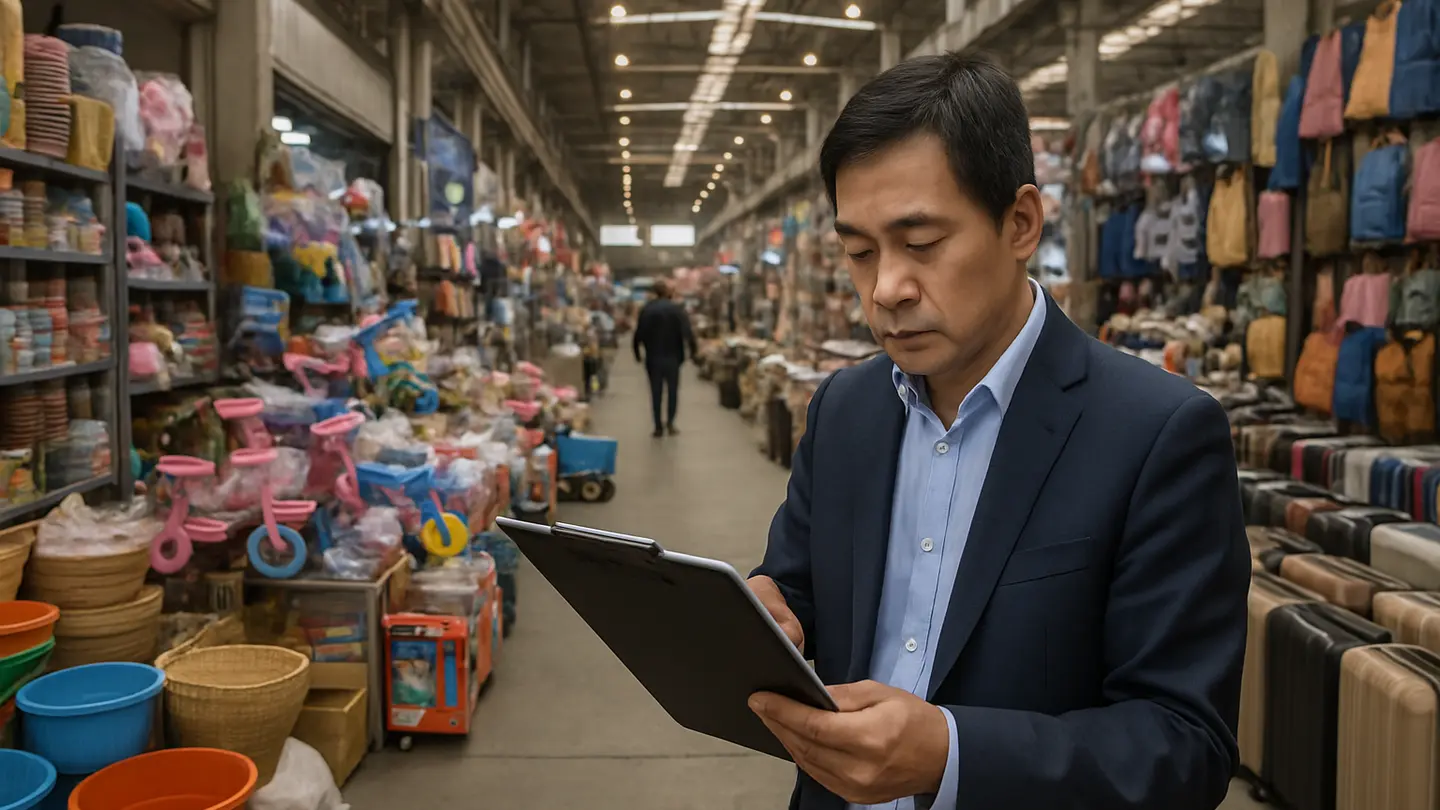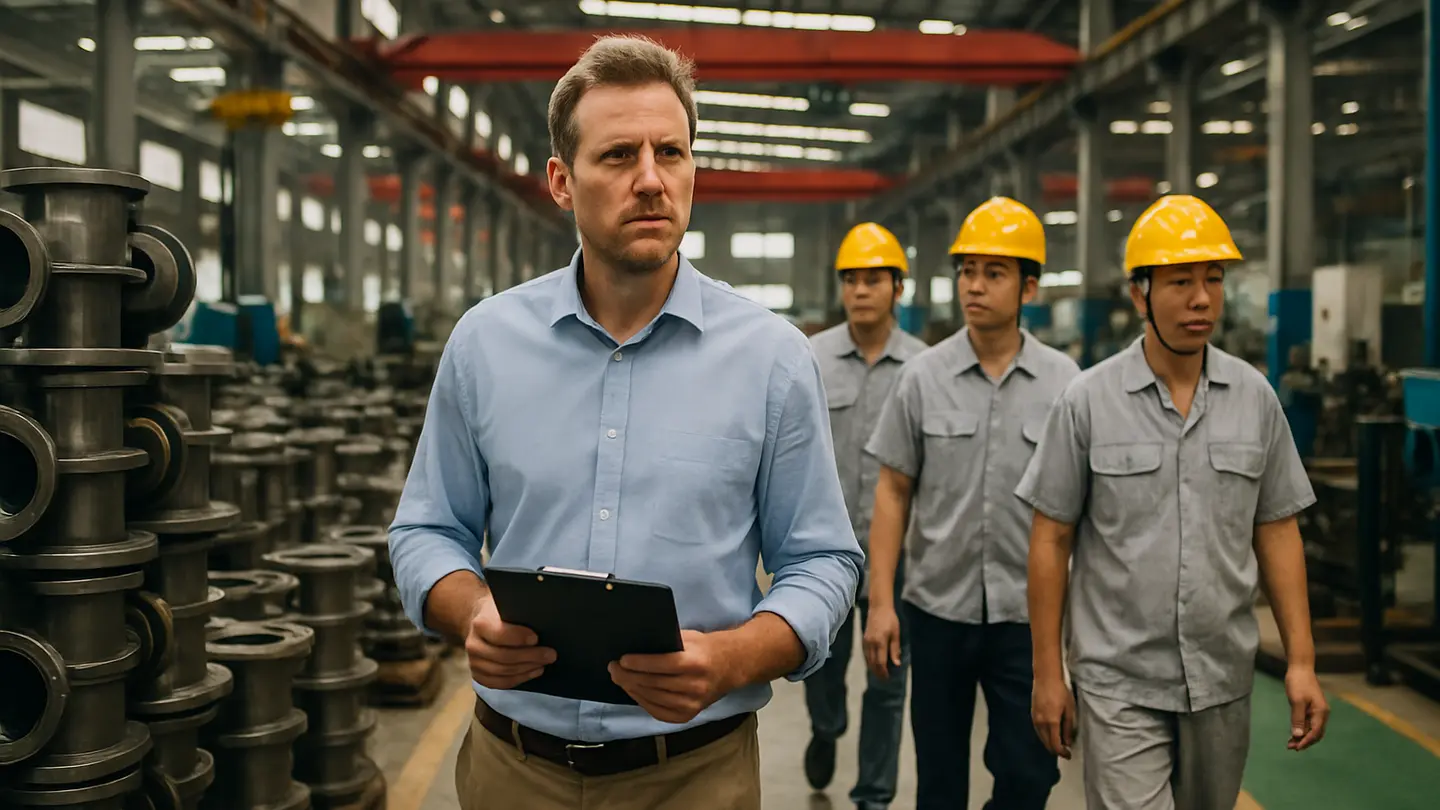
Global buyers have spent years asking whether China can be replaced in their sourcing strategy. The question is understandable. Tariffs, geopolitical risk, rising wages, pandemic-era disruption, and board-level pressure for resilience have all pushed procurement teams to review alternatives. Yet for many categories, replacing China is harder than comparing one factory quote against another.
The China supply chain advantage is not built on cheap labor alone. In fact, that explanation is increasingly outdated. China’s stronger position comes from manufacturing ecosystem density: component suppliers, tooling shops, finishing vendors, packaging providers, freight forwarders, testing resources, and category-specialized factories operating within practical reach of one another.
For B2B buyers, this matters because a product is rarely just one factory’s output. A finished item may require molded parts, metal hardware, surface treatment, electronics, labels, cartons, inserts, compliance documents, engineering revisions, and export coordination. In China’s mature manufacturing regions, many of those needs can often be handled inside the same industrial area or through established nearby partners.
Those ecosystems took decades to build. Alternative markets may offer lower wages or favorable trade treatment, but they may not yet have the same depth of sub-suppliers, technical support, tooling capacity, export infrastructure, or category experience. The right sourcing decision is therefore not “China or not China” in the abstract. It is whether a specific product can be manufactured elsewhere with acceptable landed cost, lead time, quality control, and supply chain risk.
Why Supplier Density Matters More Than Low Wages
China is no longer the lowest-wage manufacturing option for many product categories. Buyers comparing simple sewn goods, basic assembly, or labor-intensive products may find lower direct labor costs in Vietnam, India, Bangladesh, Mexico, or other markets. For some products, those alternatives can be the right choice.
The mistake is treating hourly wage as the main sourcing metric. B2B buyers need to compare the full commercial outcome: landed cost, delivery reliability, engineering support, defect rates, rework risk, payment exposure, inventory requirements, and the cost of managing suppliers across distance and language barriers.
A lower factory labor rate can be offset by several hidden costs:
- imported inputs that must still come from China or another third country;
- longer sample development and production timelines;
- weaker access to tooling, molds, fixtures, and spare parts;
- fewer qualified backup suppliers in the same category;
- higher coordination costs between assemblers and component makers;
- more inventory held as a buffer against unreliable lead times;
- increased risk when a supplier outsources critical work without disclosure.
Supplier density reduces many of these frictions. When a factory can source components locally, obtain packaging quickly, call in a toolmaker, or replace a finishing vendor within the region, the buyer benefits from shorter reaction time and better practical control.
This does not mean every Chinese supplier is capable, honest, or suitable. Factory verification remains essential. A polished website or competitive quotation does not prove that the supplier owns the equipment, controls the production process, or has experience with the buyer’s product type. Before shifting orders—whether into China, out of China, or within China—buyers should use audits, document checks, sample validation, production monitoring, and supplier background verification to confirm actual capability.
What Buyers Gain From Closely Connected Manufacturing Clusters
Manufacturing clusters create value because they compress time. In a mature cluster, factories and support vendors operate close enough that physical distance does not dominate the project schedule. Materials, components, packaging, molds, fixtures, surface treatment, testing, and logistics services may be available within the same city, province, or regional network.
That proximity affects sourcing in practical ways. If a packaging insert is wrong, the supplier may be able to visit the carton vendor quickly. If a molded part does not fit, a toolmaker can inspect the mold and discuss changes with production engineers. If a metal finish fails inspection, an alternative finishing shop may be available nearby. If a sample needs a small design revision, the turnaround may be days rather than weeks.
In fragmented multi-country sourcing, the same issues can become slow and expensive. A component may be produced in one country, assembled in another, and packed in a third. Every design change requires drawings, approvals, shipping, customs clearance, and coordination across separate supplier systems. A minor defect can become a calendar problem because the responsible party is far from the assembler.
For B2B buyers, the benefit is not only speed. It is also visibility into cause and effect. When the tooling shop, component supplier, and final assembler are close to one another, technical discussions can happen more directly. Engineers can compare samples, inspect production parts, and adjust processes with less delay. That can be especially important for products involving water flow, seals, surface finishes, moving parts, fasteners, electrical elements, or tight assembly tolerances.
Nearby toolmakers are a particularly important part of the China supply chain advantage. Tooling is often where product development succeeds or fails. Molds may need polishing, venting changes, dimensional correction, insert replacement, or repair after wear. Fixtures may need adjustment after the first production run. Engineering changes may require small modifications rather than entirely new tools. In a mature cluster, these services are usually easier to access, which can reduce both time and unnecessary tooling cost.
How Automation Helped China Preserve Its Manufacturing Edge
Rising wages did not eliminate China’s manufacturing competitiveness because many factories responded by investing in automation or semi-automation. In coastal manufacturing regions especially, suppliers have used automated cutting, stamping, molding, CNC machining, robotic handling, automatic assembly aids, vision inspection, and improved production planning to reduce dependence on manual labor.
Automation changes the cost equation. A product that appears expensive in a wage comparison may remain competitive when produced on efficient equipment with established processes and reliable upstream inputs. The buyer is not simply purchasing labor hours; the buyer is purchasing repeatable output.
Repeatability matters for quality-critical products. When tolerances are tight, components must fit together consistently across batches. When products include seals, valves, fasteners, glass, electronics, moving parts, or safety-related features, small variations can create field failures, warranty claims, or compliance risk. Automated or semi-automated processes can reduce variation, improve traceability, and support more consistent inspection routines.
This is one reason China can remain competitive after a product becomes more complex than a basic labor-intensive item. A simple product with minimal tooling and few components may move easily to a lower-wage market. A multi-part product requiring molds, metalwork, finishing, assembly precision, packaging design, and compliance documentation may depend far more on supplier ecosystem depth than on direct labor savings.
Automation is not universal, and buyers should not assume every factory has advanced equipment. The practical step is to verify the production line. Ask what processes are automated, which steps remain manual, what inspection equipment is used, how process parameters are controlled, and whether the supplier has produced similar products at comparable volumes. The advantage exists only when the supplier’s real capabilities match the product’s requirements.
Why “Made Elsewhere” May Still Depend on Chinese Inputs
Diversification does not always mean independence from China. Many products assembled outside China still rely on Chinese components, molds, tooling, production equipment, packaging materials, or technical know-how. In some cases, the final assembler in another country is effectively coordinating Chinese inputs and performing limited finishing or assembly.
That may be commercially acceptable, but buyers should understand what they are actually buying. If the sourcing objective is tariff reduction, origin change, supply continuity, or reputational risk management, the details matter.
Buyers should request:
- a bill of materials showing major components and their origin;
- details of where molds, dies, fixtures, and key tooling were made and maintained;
- evidence of in-house production capability at the non-China facility;
- identification of outsourced processes and approved sub-suppliers;
- records showing where meaningful transformation occurs;
- documentation supporting country-of-origin claims.
Country-of-origin treatment depends on the destination market, the product classification, and the processing performed. Final packing, relabeling, minor assembly, or simple finishing may not be enough to create a new origin for customs purposes. Rules vary, and assumptions can be costly if duties, penalties, or shipment delays arise after import.
Procurement teams should therefore separate commercial sourcing claims from customs reality. If a supplier states that a product is “made in” a certain country, ask what operations occur there and whether those operations meet the relevant origin rules for the buyer’s market. Tariff and origin assumptions should be confirmed with customs authorities or licensed customs brokers, not left to a sales representative’s interpretation.
How Buyers Can Turn China’s Supply Chain Depth Into a Practical Advantage
China’s supply chain depth is useful only if buyers manage it deliberately. The first step is matching the product category to the right manufacturing cluster. A region strong in textiles may not be the right place for metal hardware. A strong electronics area may not be ideal for furniture. A bathroom products buyer, for example, may need to distinguish between clusters known for sanitary ware, brass fittings, glass, plastic injection, packaging, or electronics depending on the product line.
After identifying the relevant cluster, buyers should assess each supplier’s real role. Some factories control core processes in-house and outsource only secondary work. Others are assemblers that depend heavily on nearby partners. Both models can work, but the buyer must know which model is being used.
Useful questions include:
- Which processes are performed in-house?
- Which components are purchased from nearby suppliers?
- Who owns or controls the tooling?
- How quickly can a mold repair or engineering change be handled?
- Can corrected samples be produced without restarting the entire sourcing process?
- Which sub-suppliers are approved for critical parts?
- What happens if a key component supplier cannot deliver?
Tooling deserves special attention. Buyers should not automatically accept new tooling charges when a repair, insert change, polishing adjustment, or modification may solve the issue. Ask for photos, mold condition reports, repair options, and technical explanations before approving major charges. If the buyer paid for tooling, ownership and access rights should be clearly documented in the purchase agreement.
Backup planning should also be more nuanced than simply finding a factory in another country. Local backup suppliers within the same Chinese cluster can help manage supplier-specific problems, capacity shortages, quality disputes, or sudden price increases. Geographically separate backups can help manage broader risks such as tariffs, port disruption, natural disasters, or geopolitical constraints. These two types of backup solve different problems, and mature sourcing strategies often require both.
The goal is not blind dependence on China. It is using China’s ecosystem where it provides real advantage while building realistic alternatives where they make commercial sense.
FAQ
Q1: Does this apply if my product is not electronics?
Yes. China’s cluster advantage is often discussed in relation to electronics, but the same logic applies across many product categories. Furniture, textiles, hardware, packaging, sanitary products, plastics, glass, metal components, and consumer goods all have specialized production regions.
The correct sourcing location should change by category. A buyer should not source every product from the same region simply because one product performed well there. However, the underlying principle remains the same: dense supplier networks usually improve speed, flexibility, and problem-solving.
Q2: Which products are better made outside China?
Simple, labor-heavy products are often better candidates for production outside China, especially when tooling requirements are limited and materials are locally available. Basic sewn goods, simple assembly items, or products with low technical complexity may benefit from lower labor costs or trade advantages in other countries.
China’s advantage is usually stronger when the product is multi-part, tooling-heavy, quality-critical, or dependent on a deep base of component suppliers. The right location should be selected according to product requirements, not chosen by default because of habit or political pressure.
Q3: What if my product needs parts from two different clusters?
A final assembler can coordinate inputs from multiple clusters, and this is common in many product categories. However, coordination should be treated as scheduling and supplier management, not as a substitute for buyer control.
The buyer should document the bill of materials, approved specifications, approved sub-suppliers, and ownership of any tooling. Source changes should require written buyer approval, especially for critical parts. Incoming inspection, component traceability, and critical-part documentation help prevent silent substitutions that may affect quality, compliance, or warranty performance.
Q4: Should a growing brand build around one cluster or several?
A growing brand can often start with the cluster best suited to its main product line. This simplifies supplier management, sample development, quality control, and logistics during early growth.
A second cluster makes sense when the brand enters a product category that belongs in a different manufacturing region. That is category-based sourcing expansion. It is different from regional risk diversification, where the goal is to reduce exposure to disruption in one country or area. Both can be valid, but they solve different problems. Resilience planning should happen before disruptions occur, not after orders are already at risk.
Conclusion: Replace China Product by Product, Not by Assumption
China is not irreplaceable for every product, and buyers should not treat it as the automatic answer. At the same time, the China supply chain advantage remains difficult to reproduce quickly because it is based on dense manufacturing ecosystems, experienced sub-suppliers, tooling access, export infrastructure, automation, and category specialization.
Relocation decisions should be made product by product. Buyers should evaluate tooling needs, component availability, quality risk, tariff exposure, logistics, compliance requirements, and supplier capability. A lower quote from another country may be attractive, but it does not prove capacity, equipment ownership, origin compliance, or production maturity.
The strongest sourcing strategies are usually practical rather than ideological. Buyers can continue using China where its supply chain depth creates measurable value while developing backup options in other regions where those options are commercially and operationally realistic. In every case, supplier due diligence remains essential. A shortlisted factory should be verified before the buyer relies on it for production, regardless of the country on the quotation.