Choose the Product Category Before Choosing the City
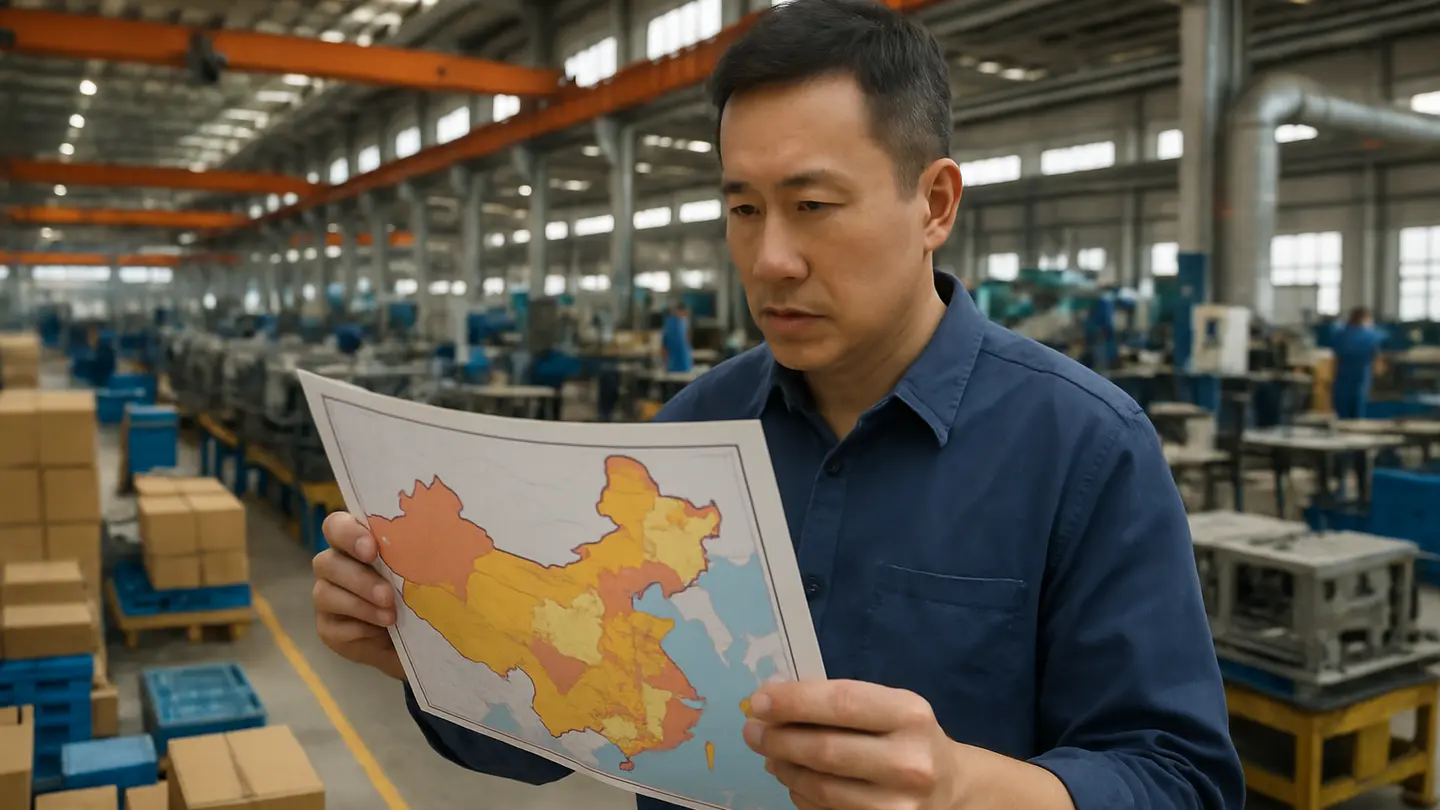
China’s wholesale markets are not interchangeable. Each major hub has developed around particular manufacturing clusters, supply chains, and buyer expectations. Choose the destination based first on what you are buying, then on order quantity, customization needs, target price, quality level, and logistics.
Before booking travel, define whether you need:
- Ready-made products for resale
- Private-label goods with packaging changes
- Custom designs requiring tooling or material development
- Components for your own assembly
- A supplier capable of container-scale production
A market stall may be factory-operated, a trading company, or a hybrid coordinating several factories. Buyers need to understand who controls production.
Before paying a deposit, clarify:
- Which company operates the production facility
- Who owns new molds, dies, or tooling
- Who approves materials and production changes
- Who is responsible for quality failures
- The realistic minimum order quantity (MOQ)
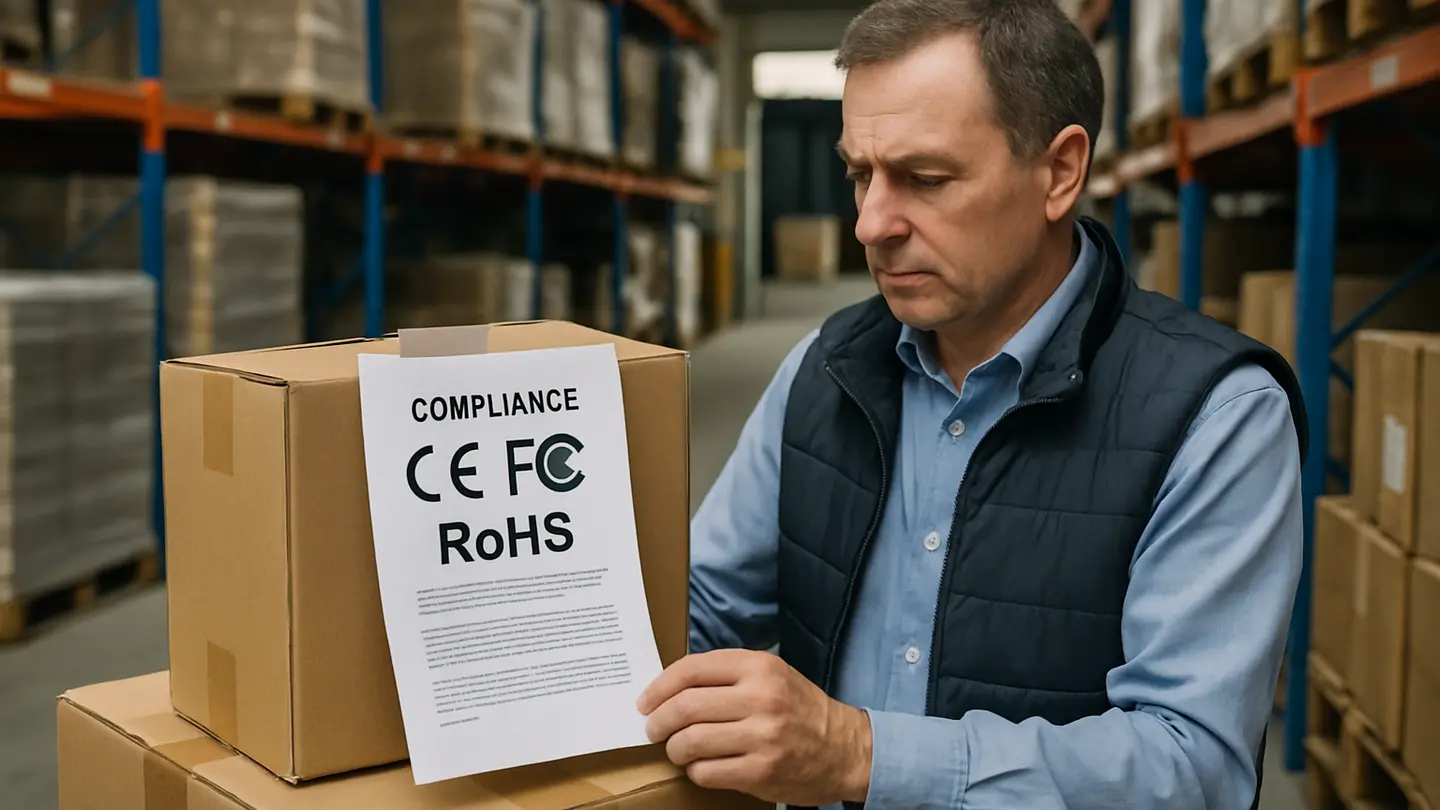
- Whether the supplier can provide necessary export and compliance documents
Small-goods markets may support mixed-carton orders and quick testing. Furniture, appliances, custom electronics, and molded goods often require higher volumes because setup, tooling, and production runs are less flexible.
Yiwu for Small Commodities and Flexible Minimum Orders
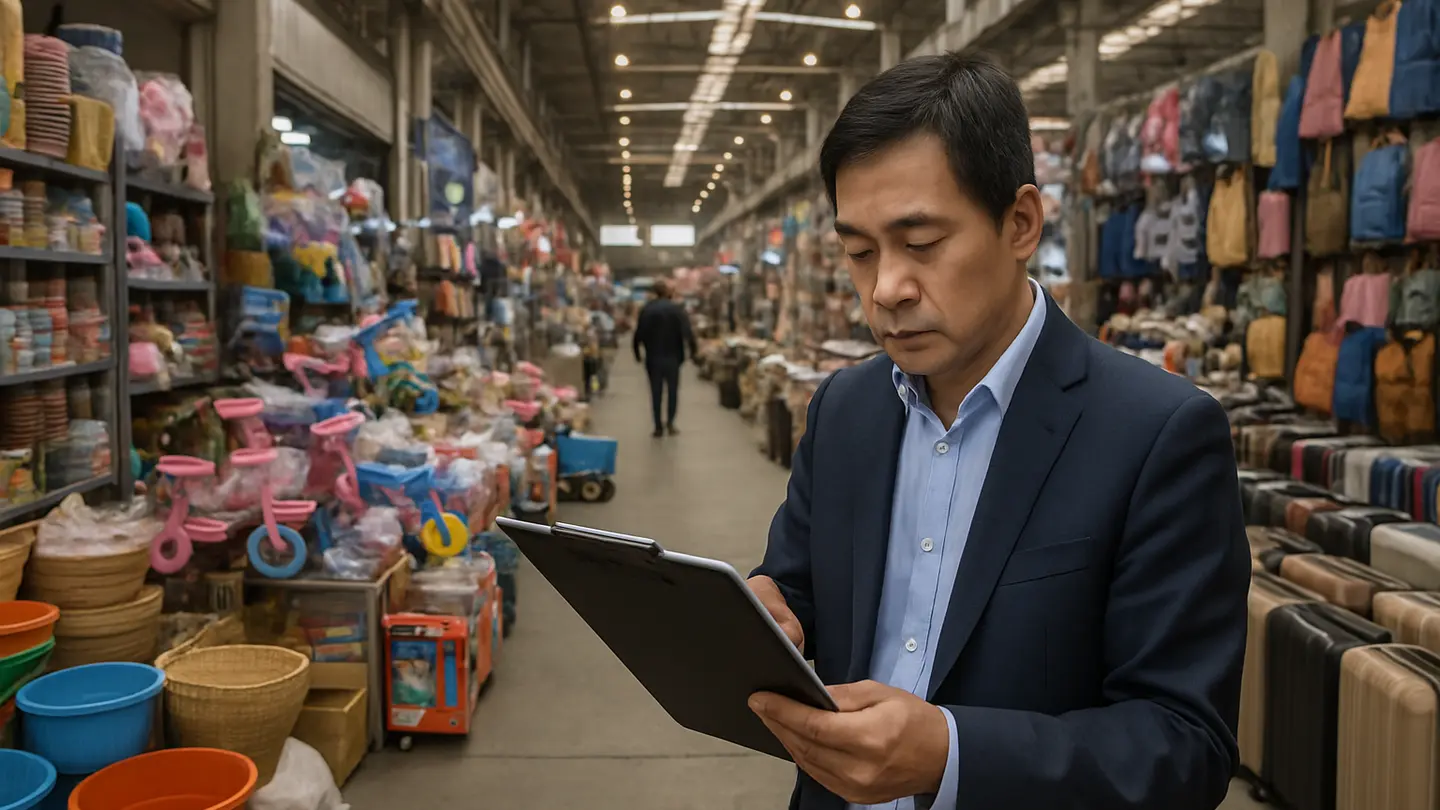
Yiwu is a practical wholesale market for small consumer goods. Its suppliers cover gifts, household items, fashion accessories, stationery, seasonal products, toys, party supplies, jewelry, bags, and other everyday categories.
Its main advantage is supplier density. Buyers can compare similar products, packaging options, and price points in a compact area. This makes Yiwu useful for retailers, distributors, e-commerce sellers, and importers building broad assortments.
Yiwu is particularly suitable when a buyer needs:
- Lower or flexible MOQs
- Multiple product categories from different suppliers
- Fast comparison of similar designs
- Small trial orders
- Shipment consolidation from several vendors
A stall sample is not proof of factory capability. Ask whether the seller is the producer, inspect consistency across samples, and confirm packaging, carton quantities, materials, and lead times in writing.
Yiwu can fit into an eastern-China itinerary. Buyers sourcing womenswear or silk may add Hangzhou, while those needing logistics meetings or export-oriented supplier discussions may combine the trip with Shanghai.
Guangzhou’s District-Based Fashion and Materials Markets
Guangzhou is a major sourcing destination for apparel, textiles, leather goods, footwear-related materials, fashion accessories, trims, and beauty products. Its markets are organized by district and product type, so planning matters.
Rather than treating Guangzhou as one market, map the itinerary around the category required. Different areas specialize in garments, fabrics, buttons and trims, leather goods, cosmetics, and accessories. Opening hours can vary, particularly in fashion markets.
For garment buyers, begin with materials as well as finished clothing. Fabric weight, fiber content, shrinkage, color fastness, trim quality, and stitching standards affect the final product. A showroom sample may be difficult to reproduce consistently without a clear bill of materials.
When assessing apparel suppliers, ask for:
- Fabric composition and supplier details
- Size specifications and grading rules
- Sample and bulk-production lead times
- Color approval procedures
- Labeling and packaging options
- Defect tolerances and rework arrangements
Guangzhou is valuable for trend research and rapid comparison, but suppliers still need individual evaluation. Some vendors are factories; others source from surrounding production areas.
Shenzhen for Electronics Components and Finished Products
Shenzhen is a leading hub for consumer electronics, components, mobile accessories, smart devices, cables, power products, modules, displays, and assembled products. Its value comes from wholesale markets and nearby component suppliers, assembly operations, tooling providers, engineers, and contract manufacturers.
For buyers developing or modifying products, this ecosystem can shorten the path between prototype, sample, and production. It is useful when sourcing components while discussing assembly, enclosures, firmware, packaging, or final testing.
Electronics sourcing requires close technical scrutiny. Model descriptions may be inconsistent, parts can be relabeled, and a sample may use different-grade components from later production.
A serious evaluation should include:
- Written specifications and part numbers where relevant
- Functional testing under normal and stress conditions
- Battery, charger, voltage, and plug requirements
- Firmware version and software-update responsibility
- Component grade and substitution controls
- Reliability testing expectations
- Destination-market safety, EMC, radio, and environmental requirements
Do not rely on appearance or low unit price alone. A cheaper item may omit testing, use downgraded components, or lack documentation needed for legal market access.
Chenghai for Toy Development and Production
Chenghai, in the Shantou area, is a specialist hub for toys and related consumer products. The cluster includes product design, mold making, plastic molding, printing, painting, assembly, packaging, and export preparation.
This concentration can help buyers developing toy lines. When design, tooling, molding, and assembly are available within one regional network, sample revisions and production coordination may move faster.
Chenghai can suit plastic toys, educational products, hobby items, battery-operated products, and gift-oriented toy ranges. Buyers should take particular care because toys are subject to stringent destination-market rules.
Address these points early:
- Intended age grade and foreseeable use
- Small-parts, sharp-edge, and choking-hazard risks
- Chemical and material restrictions
- Battery safety and electrical requirements
- Required warnings, labels, and language versions
- Test reports and conformity documentation
- Traceability marks and batch identification
Compliance cannot be added reliably at the end of production. Design, materials, labels, packaging, and testing plans should align with the destination market before mass production.
Foshan for Furniture, Lighting, Kitchen Fittings, and Appliances
Foshan is a major sourcing center for furniture, lighting, kitchen fittings, sanitary products, home furnishings, and appliances. It is particularly relevant to buyers purchasing for projects, wholesale distribution, hospitality, retail chains, or container-scale import programs.
The region’s showrooms allow quick comparison of styles, materials, and construction. Buyers can review upholstery, wood finishes, metalwork, cabinet hardware, lighting designs, and kitchen or bathroom fittings in person.
Foshan usually suits larger purchasing programs better than small test orders. Freight, packaging, consolidation, and breakage risk can make low-volume imports of bulky products uneconomical.
Verify the business behind the showroom. Some represent manufacturers, while others are traders or aggregators. Ask to visit the factory or request evidence of the manufacturing location, production lines, quality-control process, and export history.
For furniture and fixtures, confirm:
- Materials and surface finishes
- Dimensions and tolerance limits
- Flat-pack or assembled shipping format
- Carton strength and drop-test requirements
- Spare-parts availability
- Installation instructions
- Product testing and destination-market compliance needs
Other Specialist Wholesale Hubs to Consider
Specialist hubs offer the most value when the product closely matches the local industrial cluster.
Wenzhou is associated with footwear, leather goods, eyewear, small hardware, and related accessories. Factory capability and material quality can differ substantially between suppliers.
Xiamen is an important stone sourcing destination, with suppliers of natural stone, engineered stone, slabs, tiles, and fabricated architectural products. Review grading, thickness tolerance, finish consistency, breakage allowances, crate design, and project-specific cutting requirements.
Hangzhou is relevant for womenswear, fashion-oriented apparel, silk, and textile products. It can complement an Yiwu visit when the buyer needs both accessories and fashion-driven garments.
Shanghai and Beijing may suit export-oriented gifts, crafts, cultural products, design-led merchandise, and meetings with trading companies or service providers. They are not necessarily the lowest-cost options, but can support product development and higher-value positioning.
Wholesale Markets, Online Platforms, or the Canton Fair?
Physical markets, online sourcing platforms, and trade fairs serve different purposes. Effective sourcing programs often use more than one channel.
| Channel | Best use | Main limitation |
|---|---|---|
| Wholesale markets | Comparing products, materials, prices, and supplier options in person | Requires travel and does not replace supplier verification |
| Online platforms | Supplier discovery, document exchange, repeat ordering, and quote requests | Product images and supplier claims may not reflect production reality |
| Canton Fair | Comparing export-oriented exhibitors across many categories | Exhibitor status as factory or trader still needs checking |
Markets are especially useful when buyers need to handle products, compare construction, inspect packaging, or evaluate many alternatives quickly.
Online channels help with communication, specifications, repeat orders, and document storage. Request samples and conduct independent checks before committing to meaningful volumes.
The Canton Fair provides broad visibility into export-ready suppliers across sectors, including companies without city-market stalls. Attendance does not confirm manufacturing ownership, quality systems, or compliance capability.
What to Do After Selecting a Sourcing City
Choosing the city is only the first step. Next comes supplier verification and clear written commercial terms.
A purchase order or supply agreement should define the product specification, approved sample, materials, dimensions, color references, packaging, labeling, inspection standard, delivery date, payment schedule, and remedies for non-conforming goods.
Use a staged payment structure where appropriate. Avoid paying the full amount before production and inspection are complete.
Before shipment, arrange an inspection against an agreed quality standard. Verify quantity, workmanship, packaging, labeling, functionality where relevant, and consistency with the approved sample.
Also clarify export responsibilities:
- Which party is the exporter of record
- Who prepares commercial invoices and packing lists
- Whether certificates, test reports, or declarations are needed
- Who books freight and insurance
- Which Incoterms apply
- Who handles customs clearance at destination
How to Plan an Efficient Multi-City Sourcing Trip
Multi-city sourcing trips should follow regional proximity and commercial priorities. Trying to visit too many markets can produce superficial supplier decisions.
For eastern China, group Yiwu, Hangzhou, and Shanghai. This route can suit buyers combining small goods, apparel, silk, accessories, and service-provider meetings.
For southern China, group Guangzhou, Shenzhen, Foshan, and Chenghai. This route supports sourcing across fashion, electronics, furniture, fittings, appliances, and toys. Chenghai requires additional travel time and should be included only when toys are important.
Build time into the schedule for:
- Pre-arranged factory meetings
- Sample review
- Product comparison
- Supplier follow-up
- Interpreter support where necessary
- Travel delays and market operating hours
Do not assume markets and factories operate normally during Chinese New Year. Closures may extend beyond the public holiday, and production schedules can remain congested afterward. Canton Fair periods can also increase hotel prices and transport demand in southern China.
Budgeting for a China Wholesale Market Visit
A sourcing trip costs more than airfare and accommodation. Include local transport, interpretation, samples, courier shipments, factory visits, product photography, storage, inspection fees, and sample revisions.
Measure an in-person visit against the cost of choosing the wrong supplier. Travel can be justified when order value is substantial, quality is difficult to assess remotely, customization is required, or the relationship is expected to continue.
Remote sourcing may be more cost-effective for standardized products, low order values, or buyers with a trusted inspection partner. Video calls, samples, third-party factory checks, and pre-shipment inspections may provide sufficient control.
For customized products, furniture, electronics, or products with regulatory exposure, visiting in person can provide a clearer view of materials, production control, and supplier responsiveness.
Common Mistakes to Avoid When Visiting Chinese Markets
A common problem is arriving without a clear buying brief. Suppliers can quote accurately only when they understand the product, expected quality, quantity, packaging, target market, and desired delivery date.
Bring or prepare:
- A written product specification
- Reference samples or clear images
- Target price range
- Expected order quantity
- Packaging and labeling requirements
- Compliance requirements for the destination market
- A list of questions for each supplier
Do not commit to the first acceptable offer. Compare suppliers and look beyond unit price. Materials, carton quality, lead times, payment expectations, and quality consistency may matter more than a small price difference.
Showroom and market samples may not represent mass production. Document the approved sample, production specification, and inspection standard. Post-order quality control remains necessary.
FAQ
Q1: What if my product line spans two markets?
Choose the primary destination based on the category with the greatest expected order value, highest risk, or most important customization requirement. Add a second city when the commercial benefit outweighs additional travel time and cost.
If products ship from several suppliers, a consolidation warehouse can combine cartons or pallets into one export shipment. Confirm fees, storage limits, labeling requirements, and responsibility for checking quantities before loading.
Q2: Which markets work for very small orders?
Yiwu and similar small-goods markets are generally more flexible for low-volume purchases, mixed orders, and product testing. Some suppliers may accept carton-level quantities or smaller initial commitments.
Furniture, appliances, and custom-tooled products usually require larger orders because setup, materials, scheduling, and freight costs are higher.
Q3: Can I get factory prices at a wholesale market?
Sometimes. Some stalls are operated by manufacturers, while others belong to trading companies or agents. A trader’s price may be higher, but the margin can cover communication, quality coordination, mixed-order handling, and shipment consolidation.
For repeat-volume purchasing, compare direct-buying savings with the practical value of intermediary support. The lowest quote is not always the lowest total sourcing cost.
Q4: Which market is easiest for a first-time buyer?
Yiwu is often accessible for first-time buyers because it offers broad product selection, dense supplier concentration, and comparatively flexible order quantities.
Shenzhen can be more demanding because electronics require detailed specification checks, performance testing, and careful supplier verification. Chenghai also requires preparation because toy buyers must address testing, labeling, and conformity obligations early.
Final Takeaway: Match the Market to the Product and Verify Every Supplier
China wholesale markets work best when buyers select them for product fit rather than convenience alone. Yiwu is strong for small goods and flexible orders; Guangzhou for fashion and materials; Shenzhen for electronics; Chenghai for toys; and Foshan for furniture, lighting, fittings, and appliances.
A productive trip requires clear specifications, a realistic order plan, time to compare suppliers, and disciplined verification. Confirm whether a supplier is a manufacturer or trader, who controls production, who owns tooling, and how quality will be managed.
The right market can accelerate supplier discovery. It cannot replace due diligence, written agreements, samples, inspections, and compliance planning.
About the Author
This article was prepared by the editorial team at Shower Manufacturer, which covers B2B procurement, supplier discovery, manufacturing practices, quality management, and international sourcing considerations for professional buyers.