Choose the Right Wholesale Market for Your Product Category
Chinese wholesale markets can be an efficient route to product discovery, ready-stock purchasing, and small-batch sourcing. Buyers can compare many sellers in one place, review physical samples, and build a broad view of current product ranges quickly.
However, market selection should begin with product category, not travel convenience. A market known for one type of product may have limited choice, inconsistent quality, or mainly trader-operated stalls for another. Before booking a trip, identify the product family, target price range, expected order quantity, required compliance documents, and level of customization.
Common examples include:
| Market area | Typical sourcing strengths | Suitable buying situations |
|---|---|---|
| Yiwu | Small consumer goods, gifts, seasonal items, accessories, mixed assortments | Product testing, low-MOQ buying, broad variety, ready stock |
| Shenzhen | Electronics, components, accessories, boards, and finished electronic products | Electronics sourcing where technical specifications and compatibility matter |
| Guangzhou | Fabrics, textiles, garments, and related materials | Apparel, soft furnishings, textile components, and fabric purchasing |
For bathroom-product buyers, a wholesale market may be useful for identifying complementary items such as shower accessories, storage products, packaging concepts, hardware, or retail-display ideas. Yet products involving water connections, safety requirements, complex materials, or custom branding often require deeper factory verification.
Category availability can change by district, season, and seller mix. Contact potential sellers or local sourcing partners before travelling to confirm that the relevant category is currently available and that suppliers can support your expected quantity.
Verify Whether You Are Buying From a Trader or a Manufacturer
Many sellers in Chinese wholesale markets are traders rather than manufacturers. This is not automatically a problem. A capable trader may offer access to multiple factories, ready inventory, smaller order quantities, and convenient product consolidation.
Traders can be particularly useful when you need standard products, mixed cartons, quick replenishment, or a low-volume trial order. They may also help buyers source several related categories without placing separate factory orders.
The limitation is control. A trader may not directly manage production, raw materials, component selection, quality systems, or production scheduling. This can make customization, repeat-order consistency, corrective action, and technical traceability more difficult.
Before placing an order, request and reconcile the following information:
- Registered company name
- Business license details
- Name and location of the production source
- Export history relevant to your product category
- Product photos, samples, and model references
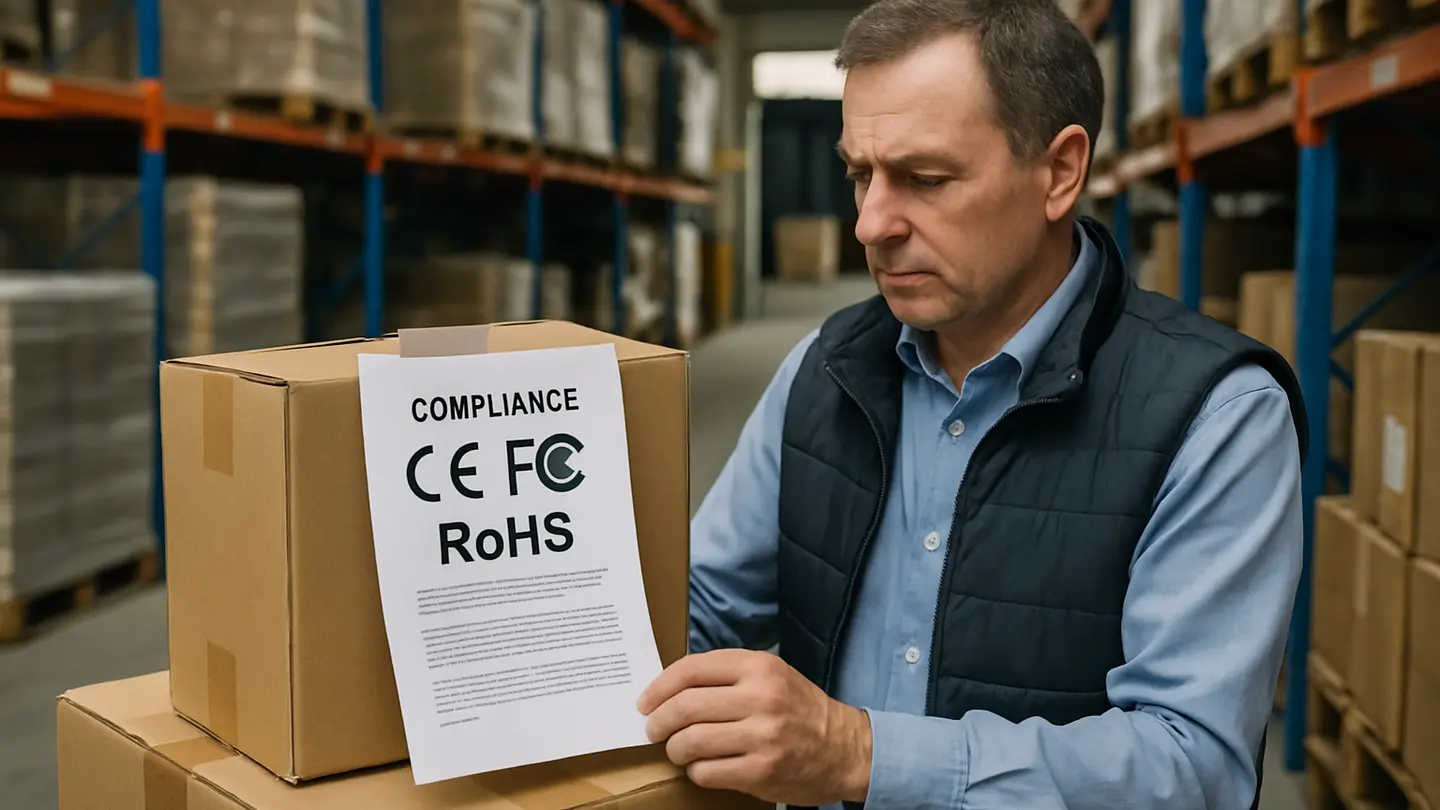
- Model-specific certificates or test documentation where applicable
- Invoice issuer name
- Receiving bank account holder name
The business license, invoice issuer, and bank account should make commercial sense together. A mismatch is not always evidence of wrongdoing, but it should be explained before funds are transferred. For example, a seller may operate through an affiliated export company, but the relationship and documentation process should be clear.
For shower products and bathroom fittings, ask who actually manufactures the item and whether the seller can identify the material, finish, component source, and production version. A product that looks identical at a market stall may come from different factories with different internal parts, coating quality, packaging, or durability.
Be cautious with unusually low prices. A low quotation may reflect lower-grade materials, thinner components, reduced packaging protection, inconsistent production, or limited seller control over the factory.
Negotiate Purchase Terms, Not Only Unit Price
A low unit price is only one part of the landed-cost calculation. Price-only negotiation can encourage changes that are not visible in a simple quotation, including substitutions in materials, components, finishes, packaging, or workmanship.
Instead of asking only, “What is your best price?”, request quotations at several quantities. This reveals volume breakpoints and helps you compare offers on a more realistic basis. For example, pricing may differ substantially between a sample order, carton quantity, mixed-container order, and repeat order.
Confirm whether minimum order quantities apply to:
- Each model
- Each color
- Each size
- Each finish
- Each packaging format
- A combined assortment across several SKUs
This is especially important when sourcing products with visual variants. A supplier may accept a low total quantity but require higher minimums for each color or style.
Every agreed order should be documented in writing. At minimum, include:
| Order item | What to confirm |
|---|---|
| Product specification | Model, dimensions, materials, finish, function, and approved sample reference |
| Quantity | Units by SKU, color, size, and carton configuration |
| Packaging | Inner packaging, outer cartons, protection requirements, labels, and barcode needs |
| Carton marks | Buyer reference, destination, carton number, SKU markings, and handling instructions |
| Delivery date | Ready date, collection date, and any agreed production milestones |
| Quality requirements | Inspection criteria, acceptable defects, and sample approval requirements |
| Remedies | Process for shortages, incorrect goods, visible damage, or nonconforming products |
Both buyer and seller should retain the same version of the purchase order. If an order changes, issue a revised document rather than relying on chat messages or verbal agreement.
For products such as shower enclosures, faucets, shower systems, or bathroom hardware, the written specification should be detailed enough to distinguish one version from another. “Chrome shower set” or “glass shower door” is not a complete specification. Materials, dimensions, glass type, hardware finish, installation orientation, included accessories, and packaging requirements may all affect the final product.
Structure Payments to Maintain Buyer Leverage
Payment timing should match your ability to verify the goods. The earlier you release payment, the less leverage you retain if the goods are delayed, incomplete, damaged, or different from the agreed specification.
For small purchases of ready stock that you have physically inspected and collected, payment at collection may be practical. This is common when buying a few cartons from established market sellers.
For made-to-order goods, first-time suppliers, or larger orders, staged payments are generally safer than paying the full amount in advance. A staged structure allows the buyer to confirm progress and inspect the goods before releasing the final balance where practical.
The specific payment structure depends on the supplier relationship, product type, order value, and commercial risk. Regardless of the arrangement, keep clear records of:
- Quotation and final purchase order
- Supplier identity and contact details
- Payment amount and date
- Invoice or payment request
- Bank account details
- Inspection reports
- Shipping and export documents
- Written approval for any order changes
Changed bank details deserve special attention. Do not rely only on an email, chat message, or updated invoice. Confirm the change independently through an established contact method before transferring funds. This helps reduce the risk of payment diversion or internal communication errors.
Inspect Goods Before They Leave China
Market purchases are not automatically inspected for export readiness. A stall may sell you products in good faith, but there is no guarantee that consolidated cartons will contain the right models, quantities, packaging, or quality level unless someone checks them.
Inspection should happen before final payment and international shipment whenever possible. Once goods have left China, correcting shortages or defects may be slower, more expensive, and harder to negotiate.
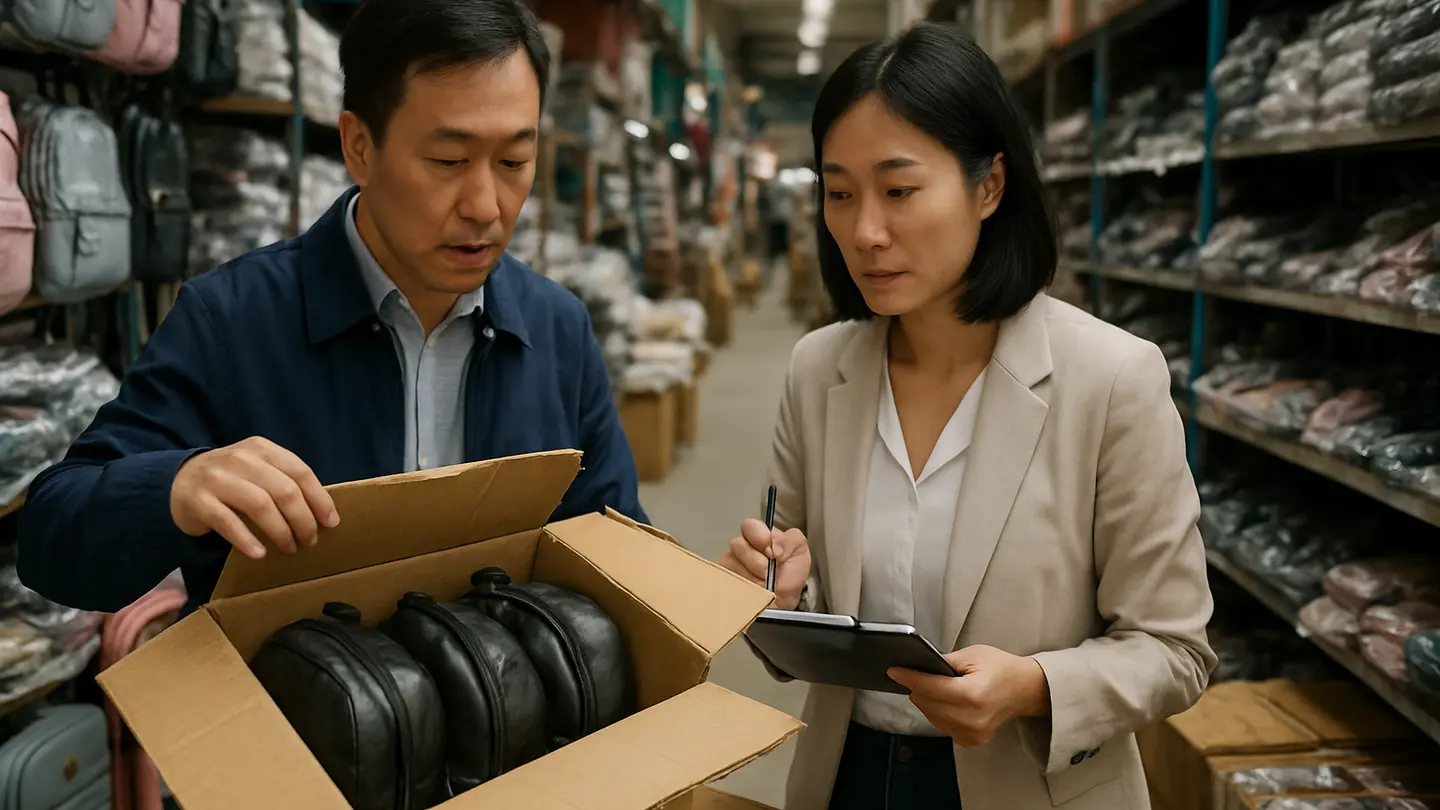
For purchases consolidated from multiple stalls, the inspection should confirm:
- Ordered quantity versus actual quantity
- Correct models, colors, sizes, and variants
- Correct supplier and purchase reference
- Visible damage or missing parts
- Packaging condition
- Carton count and carton markings
- Mixed-SKU carton accuracy
- Consistency with approved samples or written specifications
Use written inspection criteria instead of informal expectations. The criteria should reflect what matters commercially for the product. For example, a buyer of bathroom hardware may need to check visible finish defects, missing installation parts, incorrect dimensions, loose fittings, packaging protection, and model labeling. A buyer of textiles may focus more heavily on color consistency, fabric composition, stitching, labeling, and roll or carton quantity.
Inspection is not only about finding defects. It also prevents logistical mistakes. A shipment can be commercially unusable even if the products themselves are acceptable but the cartons are incorrectly marked, mixed, incomplete, or packed without adequate protection.
Consolidate Purchases and Arrange Export Shipping
Warehouse consolidation combines purchases from multiple market stalls into one shipment. Instead of arranging separate international shipments for each seller, goods are delivered to a warehouse, checked, grouped, and packed for export.
Consolidation can provide several benefits:
- Fewer international shipments to manage
- Potentially lower freight cost per unit
- Easier carton reconciliation
- Centralized inspection opportunities
- More consistent shipping labels and carton marks
- Simplified communication with the freight provider
However, consolidation requires good purchase tracking. Every order should carry a unique reference number from the time of purchase through warehouse receipt and final shipment. Without a reference system, cartons from different stalls can be confused, especially when similar products are purchased from multiple suppliers.
Some market stalls cannot export under their own company name. They may issue a domestic receipt but not provide export-ready commercial documentation. In these cases, a separate exporter of record may be needed.
The exporter of record is responsible for supporting or approving the commercial documentation used for export. This role is different from a freight forwarder.
A freight forwarder generally coordinates transportation, booking, cargo movement, and related shipping services. An exporter of record is connected to the export transaction and documentation. One company may offer both services, but buyers should not assume that every freight forwarder can act as exporter of record or that every market seller can issue appropriate export documents.
Confirm early who will provide or approve the commercial invoice, packing list, and other documents required for your import process. Your own customs broker or importer-of-record requirements in the destination country should also be considered before goods are shipped.
Wholesale Market or Factory Direct: Which Sourcing Route Fits?
Wholesale markets and direct factories serve different procurement needs. Neither route is universally better; the right choice depends on product complexity, order size, required control, and purchasing frequency.
| Sourcing route | Main advantages | Main limitations |
|---|---|---|
| Wholesale market | Fast product discovery, broad comparison, ready stock, mixed orders, lower entry quantities | Often less production transparency, limited customization, variable consistency |
| Factory direct | Greater customization potential, stronger repeat-order control, clearer production traceability, better fit for higher volumes | Higher MOQs may apply, supplier qualification takes longer, less convenient for broad mixed-SKU buying |
Markets are often appropriate when you are testing a category, building an initial assortment, buying ready stock, or comparing a large number of similar products in person. They can also be useful when you need small mixed orders across several product types.
Factory-direct sourcing is often more suitable for repeat orders, private-label packaging, product development, material control, customized dimensions, and higher-volume purchasing. It is also generally the stronger route when product consistency and long-term traceability matter.
Many importers use both. They may begin in Chinese wholesale markets to understand available products and price positioning, then move successful items to direct factory relationships as sales volumes and specification requirements become clearer.
FAQ
Q1: Should I contact stalls before I travel, or just turn up?
Contact identifiable sellers before travelling when possible. Send product specifications, photos, target quantities, and any essential technical requirements. Advance quotations can help you prioritize which stalls to visit and make in-person discussions more efficient.
Walk-in sourcing is still possible, particularly in markets with many ready-stock sellers. However, it can take more time and may make it harder to compare offers on a consistent basis.
Q2: Can I buy just a few pieces, or do stalls have minimums?
Minimum order quantities vary by market, product, and seller. Stock sellers may accept individual pieces, small bundles, or carton-level orders. This can be useful for samples, assortment testing, or urgent replenishment.
Customized, branded, or factory-linked orders usually require larger volumes. Minimums may also apply separately by model, color, size, finish, or packaging format.
Q3: How do I keep track of purchases from twenty different stalls?
Assign every purchase a unique reference number. Photograph the seller identification, purchased products, cartons, and receipt together where practical. Record the reference number on the purchase order, delivery instructions, warehouse receipt, and shipping list.
When goods arrive at the consolidation warehouse, reconcile each carton against the reference number, supplier name, ordered SKU, and expected quantity. This creates a traceable link between the market purchase and the exported shipment.
Q4: Will a stall give me an invoice I can use for import?
Some sellers can provide commercial documentation, while others may issue only domestic receipts. Do not assume that a market receipt will be sufficient for customs clearance or import accounting.
Confirm the exporter of record early in the buying process. That party must be able to support or approve the commercial documentation required for export. Check destination-country requirements with your customs broker or importer-of-record before shipment.
Conclusion: Apply Factory-Order Discipline to Market Sourcing
Chinese wholesale markets can be economical and highly practical when buyers combine market speed with disciplined procurement controls. The main risks are rarely limited to the purchase price. They arise when supplier identity is unclear, specifications are informal, payments are released too early, cartons are not inspected, or export responsibilities are assumed rather than confirmed.
Select the market according to your product category. Verify whether you are dealing with a trader or manufacturer, and identify the actual production source when product consistency matters. Document specifications, quantities, packaging, carton marks, delivery dates, and remedies in writing.
Use payment stages that preserve reasonable buyer leverage, inspect goods while they are still in China, and maintain a clear reference system for consolidated purchases. Where certificates or product claims are important, validate the supplier identity, production source, and documentation independently.
Market sourcing works best when it is managed with the same care as a factory order.
About the Author
The author writes about B2B supplier discovery, procurement controls, product sourcing, quality inspection, and international trade processes. Their work focuses on practical methods that help importers compare suppliers, reduce purchasing risk, and manage cross-border orders with clearer documentation and accountability.