For many buyers, hesitation around bidets is shaped less by product performance than by old assumptions. The traditional image of a standalone ceramic bidet next to the toilet still influences how people think about cost, space, plumbing, and daily use. In reality, modern bidet products include simple under-seat attachments, replacement bidet seats, handheld sprayers, and toilet-integrated models with advanced comfort features.
Understanding the common misconceptions about bidets is useful for homeowners, hospitality buyers, multifamily property managers, healthcare-adjacent facilities, and distributors evaluating bathroom upgrade options. The decision is not only about hygiene. It also involves user comfort, toilet paper reduction, installation requirements, maintenance, feature selection, and the likely adoption barriers among end users.
Why Bidet Myths Still Influence Buying Decisions
Bidets are becoming more familiar in many markets, but misconceptions remain strong where toilet paper has long been the default. Most concerns come from unfamiliarity with how modern bidet systems work: where the water comes from, how the nozzle is protected, whether installation requires renovation, and how users dry afterward.
For B2B buyers, these questions matter because the product must be acceptable to a broad user base. A bidet that is technically well designed may still face resistance if users believe it is unsanitary, complicated, or intended only for certain groups. The following myth-by-myth guide addresses practical buying considerations rather than treating bidets as a novelty.
Myth 1: Bidets Are Unsanitary
Modern bidets do not use toilet bowl water. They connect to the household or building’s clean water supply, typically through the same supply line that feeds the toilet tank. The water is directed through a nozzle or sprayer toward the user, not drawn from the bowl.
Many electric bidet seats also include retractable or self-cleaning nozzles. These nozzles remain protected when not in use and extend only during the wash cycle. Some models run a rinse cycle before or after use, which can help address hygiene concerns for shared bathrooms.
From a cleaning standpoint, water can remove residue more thoroughly than dry toilet paper alone. This is why bidets may be especially useful for people with hemorrhoids, skin sensitivity, limited mobility, or difficulty wiping effectively. For buyers serving hospitality, senior living, healthcare-adjacent, or accessibility-focused environments, this hygiene and comfort benefit can be a meaningful product advantage.
Myth 2: A Bidet Means No Toilet Paper at All
A bidet does not automatically eliminate toilet paper for every user. Many people use a small amount of paper for drying or for a final check after washing. Others switch to reusable towels in private bathrooms, while shared or commercial settings usually continue to provide paper.
Warm air dryers, available on many electric bidet seats and integrated toilets, can reduce paper dependence further. However, drying performance varies by model, user expectation, and time spent drying. Buyers should avoid presenting paper elimination as guaranteed unless the selected product and use environment support that claim.
The realistic benefit is reduction. Lower toilet paper use can reduce household or facility supply costs and may also support sustainability goals. The exact savings depend on usage patterns, occupancy, and whether users adopt the bidet consistently.
Myth 3: Bidets Are Difficult to Install
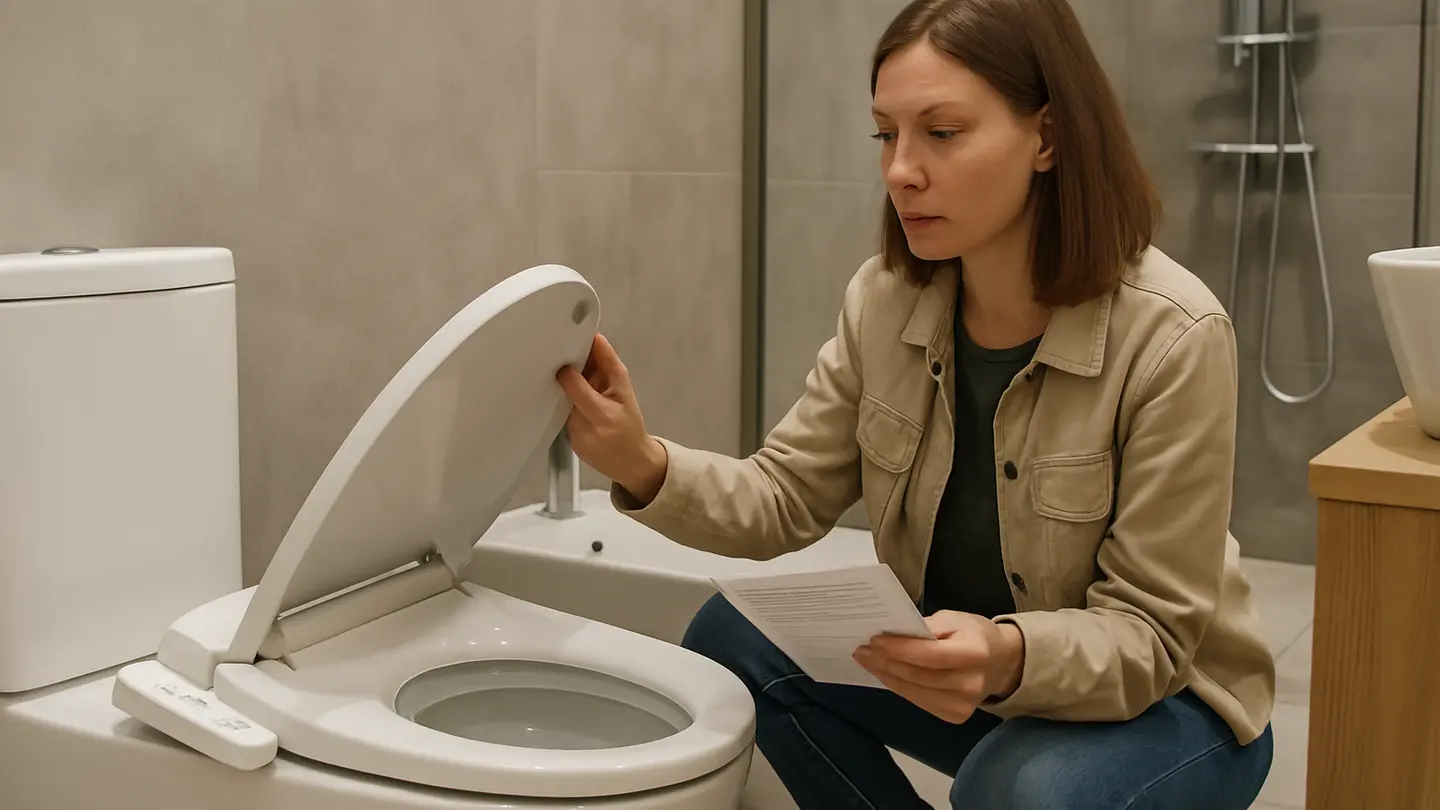
Some bidets require planning, but many do not require major bathroom changes. Basic under-seat attachments and many bidet seats are designed for straightforward installation on existing toilets. A typical installation involves removing the toilet seat, mounting the bidet attachment or seat, connecting a T-valve to the water supply, and reconnecting the water line.
Non-electric attachments generally do not require wiring. They use household water pressure and manual controls, making them suitable for bathrooms without a nearby outlet. Handheld sprayers are also common in markets where simple, pressure-based washing is preferred.
Electric bidet seats add features such as heated water, heated seats, air drying, deodorizers, and remote controls. These models may require a properly located electrical outlet. In older bathrooms or commercial retrofits, electrical access can be the main installation constraint. Buyers should verify toilet shape, seat mounting dimensions, water pressure, and outlet availability before selecting a model.
Myth 4: Bidets Are Only for Women
Bidets are often associated with feminine hygiene, but their core function is broader: water-based cleaning after toilet use. Men can benefit from bidet washing after bowel movements just as much as women. The product category should be evaluated as a general hygiene upgrade, not as a gender-specific fixture.
Other user groups may also find bidets useful. Children can learn cleaner bathroom habits with supervision. Older adults may reduce the reaching and twisting required for wiping. Athletes and people who work in physically demanding environments may appreciate improved freshness. Users with mobility limitations may gain more independence in the bathroom.
Adjustable pressure, nozzle position, water temperature, and spray pattern options help accommodate different preferences. For B2B buyers, these controls matter because shared-use products need to work for a wide range of users.
Myth 5: Bidets Spread Germs or Bacteria
A properly designed bidet directs water in a controlled stream. The water comes from the clean supply line, not from the toilet bowl. This distinction is central to addressing concerns about germs.
Some people worry that spraying water could spread bacteria. In practice, modern bidet products are designed to direct the stream toward the intended cleaning area and away from the water source. Many models include self-cleaning nozzles, nozzle covers, or automatic rinse functions that help reduce contamination concerns.
There is also a hand hygiene consideration. Dry wiping can require more paper handling and repeated contact near soiled areas. By reducing the amount of wiping required, a bidet may reduce opportunities for hand contamination, provided users still wash their hands properly afterward.
Myth 6: Bidet Nozzles Are Easily Contaminated
Nozzle contamination is a reasonable question, especially in shared bathrooms. Modern bidet design addresses this in several ways. Retractable nozzles remain housed behind a guard or within the seat body when not in use, limiting exposure to toilet bowl splash. The nozzle extends only during operation and is positioned to avoid direct contact with waste.
Spray angle and outward water pressure also matter. Water flows out from the nozzle rather than back into it, reducing backflow concerns. Many models include one-way valves or similar plumbing protections to help maintain separation between the water supply and the toilet environment.
Higher-feature models may add self-cleaning cycles that rinse the nozzle before or after use. For commercial or multi-user applications, buyers should look closely at nozzle material, cleaning access, automatic rinse functions, and maintenance instructions. Good design does not eliminate the need for cleaning, but it can make hygiene easier to manage.
Myth 7: Bidets Have No Medical or Comfort Benefits
Bidets are not medical devices in the usual consumer bathroom context, and buyers should be careful not to overstate health claims. However, gentle water cleaning may provide comfort benefits for certain users. Some medical professionals recommend bidet use for people dealing with anorectal irritation, hemorrhoids, fissures, digestive conditions that require frequent bathroom visits, or post-surgical sensitivity.
Water washing can reduce friction compared with repeated wiping. This may be valuable for users with inflamed skin, tenderness, or sensitivity during pregnancy and postpartum recovery. Bidets can also help users who struggle with reaching, twisting, or wiping due to age, injury, disability, or temporary mobility limitations.
For facilities and distributors, the important point is positioning. Bidets should be described as supportive hygiene and comfort products, not as substitutes for medical treatment. Users with specific conditions should follow professional medical advice.
Myth 8: Bidets Are Always Expensive
Bidets are available across a wide price range. A simple non-electric attachment is usually the lowest-cost option and can provide the core function: water cleaning. Handheld sprayers are also relatively simple products, although installation quality and valve reliability are important.
Mid-range models may add adjustable pressure, dual nozzles, warm water through a hot-water connection, or improved controls. Electric bidet seats are more expensive but can include heated water, heated seats, warm air drying, deodorizing, night lights, remote controls, and user presets. Integrated smart toilets are usually the premium end of the category.
For buying decisions, the question is not whether bidets are expensive in general. The question is which feature level fits the use case. A property manager may prioritize durability and simple controls. A hospitality buyer may prioritize comfort features and perceived luxury. A household buyer may compare upfront cost with reduced toilet paper use over time.
Myth 9: Bidets Are Only Common in Certain Countries
Bidets are often associated with Europe or Japan, but their use is broader than that. France is frequently cited as an early origin point for the traditional bidet, while modern electronic bidet seats became especially prominent in Japan. However, water-based toilet hygiene is also common in parts of Asia, South America, the Middle East, and other regions.
North American interest has increased in recent years, particularly after toilet paper shortages drew attention to alternatives. This shift matters for buyers because user expectations are changing. A product once seen as unfamiliar may now be viewed as a practical bathroom upgrade.
For manufacturers, distributors, and project buyers, regional familiarity still affects adoption. Marketing, installation instructions, packaging, and after-sales support may need to address first-time-user concerns more directly in markets where bidets are less established.
Myth 10: Bidets Waste Too Much Water
A bidet uses water during each wash, but usually in a controlled and limited amount. The volume depends on water pressure, spray duration, and product type. Electronic bidets can use precise delivery systems, adjustable pressure, and timed functions that help manage water use.
The environmental comparison should not stop at the water used during one bathroom visit. Toilet paper manufacturing also requires water, energy, pulp, packaging, and transportation. If a bidet significantly reduces toilet paper consumption, the broader resource impact may be favorable, even though the bidet itself uses water.
For B2B buyers evaluating sustainability claims, the safest approach is to compare the full use case: expected wash duration, toilet paper reduction, product lifespan, maintenance needs, and user adoption. Avoid relying on a single metric without considering the entire bathroom supply chain.
Myth 11: Every Bidet Needs Electricity
Many bidets operate without electricity. Non-electric attachments, manual bidet seats, and handheld sprayers use household water pressure and mechanical controls. These products can provide effective cleaning without outlets, wiring, heated seats, or electronic control panels.
Electricity is mainly required for comfort and convenience features. Heated water, warm air drying, heated seats, night lights, deodorizers, remote controls, and user presets generally require power. These features can improve user satisfaction, but they are not necessary for basic washing.
This distinction is important in retrofit projects. Bathrooms without accessible outlets may still be good candidates for non-electric bidets. Where electrical work is practical, electric models may offer a more premium experience and stronger differentiation.
Myth 12: Bidets Offer Only Limited Options
The bidet category is more varied than many first-time buyers expect. Product formats include handheld sprayers, under-seat attachments, non-electric bidet seats, electric bidet seats, and fully integrated bidet toilets. Each format has different implications for price, installation, maintenance, user comfort, and visual design.
Common features include adjustable water pressure, nozzle position control, front and rear wash modes, temperature control, and different spray patterns. Many modern models also include self-cleaning nozzles, which can be important for user confidence.
Advanced options may include heated seats, warm air dryers, night lights, deodorizers, remote controls, automatic lids, user presets, and memory settings. Buyers should define must-have features before comparing products. Otherwise, it is easy to overbuy premium features or under-spec a product for a demanding use environment.
Another Way to Build a China Supplier Shortlist
For buyers comparing bidet attachments, bidet seats, sprayers, or related bathroom components, supplier discovery is often as important as product selection. Made-in-China.com is a B2B sourcing platform that can help buyers build an initial China supplier shortlist; it is not a manufacturer or product supplier itself.
One practical starting point is Supplier Discovery, which provides ways to find and narrow supplier options, including Audited Suppliers and regional supplier channels. For early-stage due diligence, Audited Supplier information and Audit Reports can help buyers review structured supplier details before moving into samples, negotiations, or factory-level verification. According to the platform’s official information, Audit Reports may cover areas such as general information, export trade, manufacturing capacity, quality control, and R&D capability.
Buyers who want to compare responses efficiently can also use Easy Sourcing to submit one sourcing request, receive multiple quotations from matched suppliers, compare quotes, and request samples. This can reduce the manual work of contacting suppliers one by one during the first quotation round.
FAQ
Are bidets actually more hygienic than toilet paper?
Bidets can provide more thorough cleaning than dry toilet paper alone because water helps remove residue rather than simply moving it across the skin. This is the main hygiene argument in favor of bidets. They still require normal handwashing afterward, but they can reduce the amount of wiping needed.
Can a bidet cause any health problems?
Bidets are generally safe for most users when used correctly. The main issue is excessive water pressure, which may cause irritation for sensitive users. Start with low pressure and increase gradually. People recovering from surgery, managing skin sensitivity, or dealing with specific medical conditions should ask a healthcare professional for guidance.
Do bidets work for people with disabilities or limited mobility?
Yes, bidets can be useful for people with limited mobility because water cleaning reduces the reaching, twisting, and repeated wiping required after toilet use. This may support greater bathroom independence for elderly users, disabled users, or people recovering from injury, depending on the bathroom layout and product controls.
Is a bidet attachment as good as a full bidet toilet seat?
A basic bidet attachment can provide the core hygiene benefit: water cleaning. A full bidet toilet seat usually adds comfort features such as warm water, heated seating, air drying, adjustable nozzle settings, or remote control operation. Both can improve hygiene compared with toilet paper alone. The better choice depends on budget, installation conditions, comfort expectations, and required features.