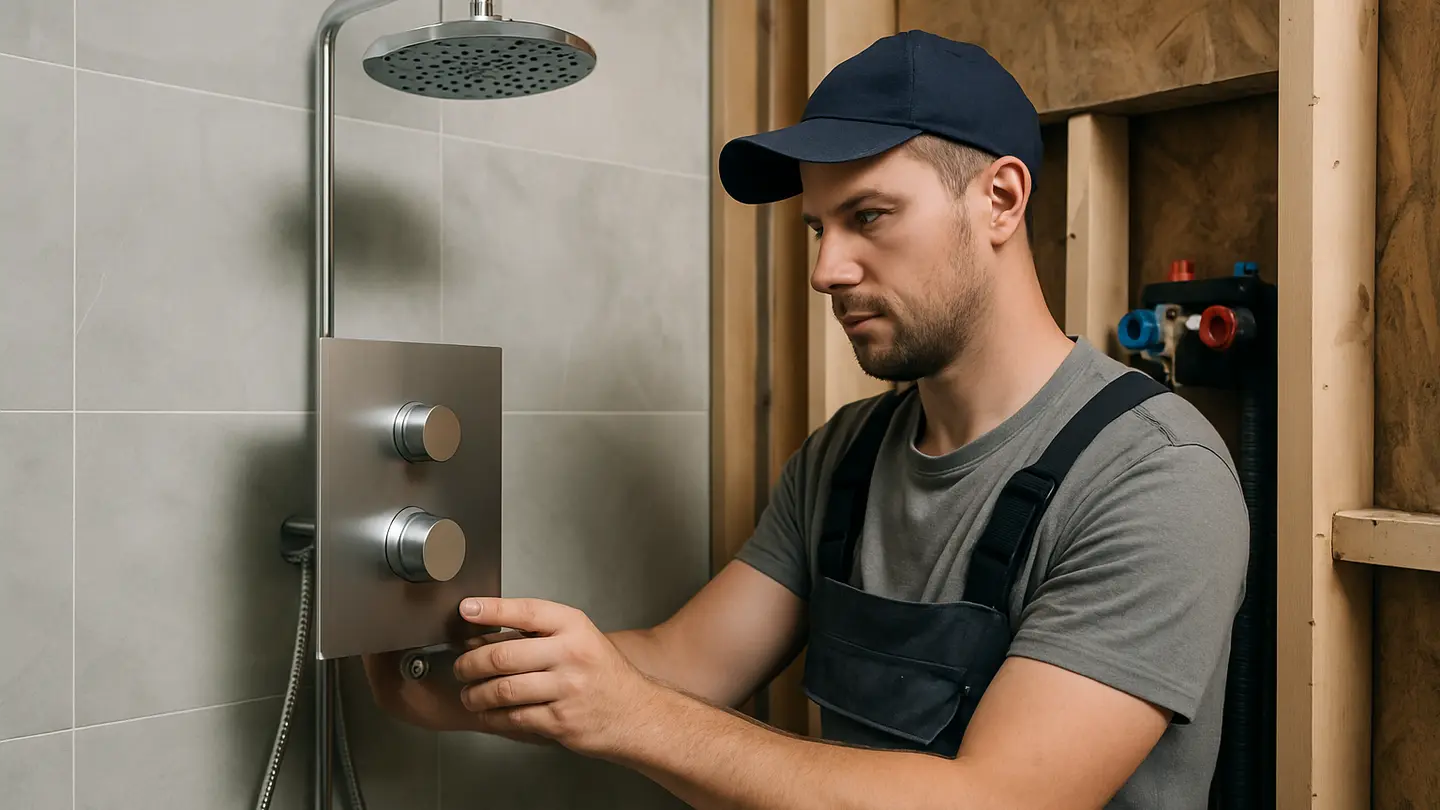
Concealed thermostatic shower systems are common in residential developments, hotels, serviced apartments and higher-end renovations. By placing the valve body and pipework inside the wall or ceiling, they leave only the showerhead, control trim and selected accessories visible.
For contractors, the result is a cleaner finish, more usable shower space and better support for rainfall heads, handheld sprays and multi-outlet layouts. The trade-off is that rough-in accuracy, waterproofing, product compatibility and service planning matter more than with exposed shower sets.
How Concealed Shower Systems Work
A concealed shower system hides the main plumbing components inside the building fabric. Hot and cold supplies feed a mixer or thermostatic valve behind the finished wall, then water is directed to one or more outlets, such as an overhead shower, handheld shower or body spray.
After tiling or wall finishing, the user usually sees only the handles, trim plate, shower outlet and accessories. This clean appearance depends on decisions made before the wall is closed.
Basic Definition and Rough-In Principles
A concealed shower places the mixing valve and most pipework behind the wall or above the ceiling rather than exposed in the shower area. Visible parts are usually limited to the showerhead, control trim, diverter trim, hand-shower outlet and mounting hardware.
The system is usually divided into:
- Hidden rough-in components: valve body, supply connections, outlet pipework, mounting brackets and in-wall fittings.
- Visible trim components: handles, faceplates, escutcheons, showerheads, hand showers, hoses and sliding bars.
The rough-in stage is critical. Valve depth, level, supply orientation and outlet positions must match the manufacturer’s template. If the valve is too deep, too shallow or off-level, the trim may not seal or align properly after tiling.
Planning Requirements Behind the Finished Wall
Concealed systems must be specified before tiles, waterproof boards, stone slabs or wall panels are installed. Contractors should confirm:
- available wall depth;
- stud or masonry fixing conditions;
- supply pipe size and pressure;
- outlet locations and finished wall thickness;
- service access requirements;
- compatibility between rough-in valve and trim kit.
Thermostatic valves are often selected because they help maintain the chosen temperature when pressure or supply temperature changes occur elsewhere. Smart controls, phone-adjustable settings or remote digital interfaces also require planning for power, control modules and access.
Where Concealed Systems Differ from Exposed Showers
Compared with exposed showers, concealed systems reduce visible hardware inside the enclosure. This can make smaller showers feel less crowded and help designers achieve a minimalist finish.
They also allow more flexible outlet choices. Ceiling rainfall heads are common in premium bathrooms, while a concealed valve can be paired with a separate handheld spray for cleaning and accessibility.
However, concealed systems are not ideal for every project. They require precise rough-in work, coordination with finishes and a future service strategy. In budget refurbishments, or where walls cannot easily be opened, an exposed system may be more practical.
Main Types of Concealed Shower Systems
Contractors can categorize concealed shower systems by control method, outlet configuration and technology level. These choices affect installation complexity, user experience, sourcing cost and maintenance.
Thermostatic Controls vs. Manual Mixer Controls
Thermostatic controls use a cartridge or valve mechanism to help maintain a selected water temperature. If another fixture is used and pressure changes, the valve adjusts the mix to reduce sudden temperature swings. This suits family bathrooms, hotels, multi-residential projects and applications where comfort and temperature stability matter.
Manual mixer controls are simpler. The user blends hot and cold water by hand until the desired temperature is reached. They are generally less expensive and may suit projects with stable water pressure and fewer comfort expectations.
The decision is not price alone. Thermostatic systems may reduce complaints about temperature fluctuation, while manual systems can reduce upfront cost and simplify maintenance in some installations.
Single-Outlet and Multi-Outlet Layouts
A single-outlet concealed system serves one outlet, such as one fixed showerhead. It is suitable for smaller bathrooms, rental units, basic en-suites and cost-controlled projects.
Multi-outlet systems serve two or more outlets, such as:
- ceiling rain head;
- wall-mounted overhead shower;
- handheld shower;
- body jets;
- bath filler or tub spout, where applicable.
These layouts usually require diverter valves or integrated diverter controls. They also need more careful pipe routing, more wall or ceiling penetrations, and closer attention to pressure and flow rate. If outlets can run at the same time, confirm the supply system can support the combined demand.
Key Components Contractors Should Specify
A concealed shower system is only as reliable as the compatibility of its components. A typical specification may include:
- concealed thermostatic or manual valve body;
- trim plate and control handles;
- diverter valve or diverter trim;
- showerhead and arm or ceiling drop;
- hand-shower outlet, hose and handset;
- sliding bar or wall bracket;
- seals, mounting hardware and installation kit;
- optional digital display or control module.
Before ordering, confirm whether the rough-in valve and trim are sold together or separately. In many product ranges, trims are not interchangeable across valve generations.
Overhead Showerhead Choices
Rain showerheads are popular in concealed systems because they provide a broad, gentle spray pattern. They are often specified as large round or square heads and can be ceiling- or wall-mounted.
Ceiling-mounted heads create a clean vertical rainfall effect, but they require pipe routing through the ceiling void or structure above. This is easier in new construction than in refurbishments with limited ceiling access.
Wall-mounted overhead heads can be easier where ceiling access is unavailable. Some models also offer adjustable spray patterns, such as rain, massage or concentrated spray modes.
Hand Showers, Diverters and User Accessories
A hand shower improves flexibility for rinsing, cleaning the enclosure, assisting children or supporting users who prefer a seated shower.
Sliding bars suit bathrooms used by people of different heights. Wall brackets are simpler and less visually dominant but provide less adjustability. Useful handset features include multiple spray options, easy-grip handles and cleanable nozzles.
Diverter valves control which outlet receives water. A basic diverter may switch between overhead and handheld outlets, while advanced arrangements may allow multiple outlet combinations. Check whether the diverter is integrated into the thermostatic valve or supplied as a separate rough-in component.
Digital Displays and LED Control Interfaces
Some concealed thermostatic shower systems include digital displays that show water temperature, helping users identify when water is too hot before stepping fully into the shower.
LED screens may improve readability in humid bathrooms, especially where lighting is low. Some systems also offer touch controls, saved temperature presets or start-stop functions.
These features add specification points. Confirm power requirements, cable routing, waterproof ratings, serviceability and whether replacement electronic components will be available during the warranty period.
Professional Installation Considerations
Concealed shower installation should be planned before the finished wall is built. Contractors must coordinate plumbing, framing, waterproofing, tiling and, where required, electrical work.
Key issues include wall depth, secure fixing, service access and waterproofing around every penetration. Installations must also comply with applicable plumbing requirements, including local rules for valve placement, backflow prevention and safe water temperature control.
Typical Installation Sequence
A typical professional sequence includes:
- Shut off the water supply. Isolate hot and cold supplies and confirm the lines are safe to work on.
- Mark the layout. Use the manufacturer’s rough-in template to mark valve height, outlet positions and finished wall depth.
- Open or prepare the wall cavity. Allow enough room for the valve and pipe bends.
- Secure the valve body level. Fix it to blocking or a mounting bracket so it cannot move when trim is installed.
- Connect supply lines. Connect hot and cold supplies to the correct inlets, following orientation and pipe-size requirements.
- Pipe to outlets. Route lines to the overhead head, hand-shower outlet or diverter ports.
- Pressure test before closure. Test all connections before the wall cavity is closed or sealed.
- Complete waterproofing and wall finishing. Coordinate with the finishing trade to protect penetrations.
- Install trim and shower components. Fit the control trim, showerhead, hand shower and accessories.
- Commission the system. Check flow, temperature control, diverter function and thermostatic calibration if required.
Skipping the pressure test before wall closure is one of the most expensive mistakes in concealed shower work.
Frequent Site Problems and Practical Fixes
Low pressure at the outlet may come from kinked flexible lines, undersized supply pipework, blocked filters or partially closed shutoff valves. Check simple causes before assuming the valve is defective.
Leaks at threaded connections may require tightening, resealing or replacement of damaged seals. With compression or push-fit fittings, the pipe must be cut cleanly and inserted to the correct depth.
Inconsistent temperature control can indicate reversed hot and cold supplies, debris in filters, pressure imbalance or the need to recalibrate the thermostatic valve. Follow the manufacturer’s instructions, especially for cartridge removal or temperature stop adjustment.
Code, Safety and Waterproofing Checks
Bathroom plumbing must satisfy local code requirements. Depending on jurisdiction, this may cover anti-scald performance, maximum outlet temperature, backflow prevention, accessible isolation valves and approved pipe materials.
Waterproofing is equally important. Concealed installations involve penetrations for controls, outlets, arms and brackets. Membranes, collars or sealant systems should protect these openings according to the wall-board and membrane manufacturer’s instructions.
Poor waterproofing can cause hidden water damage before a visible leak appears. Responsibility between plumbing and waterproofing trades should be agreed before wall closure.
Maintenance, Service Support and Warranty Planning
Maintenance helps preserve performance and reduce avoidable service calls. Because concealed components are harder to access, contractors should brief clients on routine upkeep and keep accurate installation records.
Warranty terms should be reviewed before purchase. Valve cartridges, electronic controls, finishes and accessories may carry different coverage periods or conditions.
Routine Cleaning and Preventive Upkeep
Clients should clean visible components with gentle, non-abrasive methods. Harsh chemicals, scouring pads and acidic cleaners may damage plated finishes, painted surfaces, LED panels or control markings.
Limescale on shower nozzles can reduce spray performance. Where the showerhead has flexible nozzles, users can often rub them gently to dislodge deposits. In hard-water areas, follow the manufacturer’s cleaning guidance.
Routine checks should include seals, control panels, hose connections and wall brackets. Looseness around trim or outlets should be corrected before water can enter the wall assembly.
Troubleshooting Flow, Leaks and Temperature Issues
Reduced flow often comes from limescale, debris in filters or blocked nozzles. If only one outlet is affected, check the head, hose or diverter. If all outlets are affected, check valve filters, supply pressure and isolation valves.
Leaks and temperature issues may require manufacturer-specific guidance. Contractors should use approved resources rather than improvising with concealed valve components, especially where warranty coverage may depend on service procedures.
Documentation, Returns and Warranty Claims
Contractors should document purchases, model numbers, batch numbers and installation dates. Photos taken before wall closure can help if a warranty claim or service visit is required later.
Valve cores, cartridges, trim finishes and digital modules may have separate warranty terms. Return windows and defect policies vary by supplier, distributor and retailer. Before bulk ordering, confirm how defective parts are handled, whether replacements are stocked locally and what documentation is required.
Buying Tips for Contractors
Buying concealed thermostatic shower systems should be based on total value rather than headline price. A low-cost package can become expensive if it omits the rough-in valve, uses incompatible trim or lacks spare parts support.
Contractors should also monitor promotions and new releases, as updated models may create better sourcing opportunities or improve technical performance.
Compare Package Value, Not Only Sale Price
A discounted system is not automatically the best value. When comparing packages, check exactly what is included.
| Package item | Why it matters |
|---|---|
| Concealed valve body | Required for rough-in; must match trim |
| Trim kit | Determines visible finish and control layout |
| Showerhead and arm | Affects spray type, installation route and pressure needs |
| Hand shower and hose | Adds flexibility and may require a separate outlet |
| Diverter | Needed for multi-outlet systems |
| Installation kit | Can reduce site delays if seals, brackets and fittings are included |
| Spare cartridge availability | Important for long-term service support |
Compare suppliers like for like. One package may include the thermostatic valve and diverter, while another may show only the visible trim.
Watch New Product Releases and Specification Updates
New product launches may include introductory pricing, updated finishes, improved valve cores, redesigned cartridges or more intuitive trim layouts.
Retailer email alerts, supplier bulletins and distributor updates can help contractors track releases. Before switching specification mid-project, confirm rough-in compatibility, spare parts availability, warranty terms and whether the new trim fits the valve already installed on site.
Another Way to Build and Check a Supplier Shortlist
For contractors and purchasing teams comparing concealed shower options, Made-in-China.com can be used as a B2B sourcing platform to discover potential suppliers and organize early-stage comparisons.
Supplier Discovery can help buyers build and narrow a shortlist before direct contact. When evaluating unfamiliar suppliers, the Audited Supplier feature and related Audit Reports provide structured information for review. According to the platform’s official materials, Audited Suppliers are subject to third-party verification and on-site audit, with Audit Reports available for buyer review. These reports can cover general information, export trade, manufacturing capacity, quality control and R&D capability.
For quotation work, Easy Sourcing lets buyers submit one sourcing request, receive multiple quotations from matched suppliers, compare quotes and request samples. This does not replace technical due diligence, product testing or local code review, but it can reduce the manual work of contacting suppliers one by one.
FAQ
How should we guide clients with different budgets to choose between manual and thermostatic control systems?
Manual systems can suit budget-focused projects where water pressure is stable and users are comfortable adjusting temperature by hand. Thermostatic systems are better where steadier comfort and improved protection against sudden temperature shifts are priorities. Match the control type to budget, pressure conditions, user expectations and applicable safety requirements.
What should you know about the water pressure requirements for a concealed shower system?
Check water pressure before selecting the system. Insufficient pressure can cause weak flow, especially with large rainfall heads or multi-outlet layouts. Ceiling-mounted heads may need stronger pressure than smaller wall-mounted fixtures. Where pressure is inadequate, possible remedies include a suitable booster pump, smaller showerhead, lower-flow outlet or revised configuration, subject to local rules and manufacturer guidance.
What key spare parts should we recommend contractors or clients keep in stock to ensure post-sales customer satisfaction?
Useful spare parts include replacement valve cartridges, common seals, screws and nozzle-cleaning tools. Cartridges are especially valuable for service calls involving temperature control or flow issues. Small hardware and seals help complete minor repairs quickly and reduce disruption for clients.
What advice should we provide when customers inquire about installation qualifications?
Concealed shower systems should be installed by qualified professionals. Accurate rough-in work is essential because the valve and pipework will be hidden after wall finishing. Installation must comply with local plumbing codes, waterproofing requirements and manufacturer instructions. Improper installation can affect performance, create hidden leak risks and may limit warranty coverage.
More Articles for Shower Professionals
- Buying considerations for exposed vs. concealed shower valves
- How to specify shower systems for hotels and multi-unit developments
- Practical checklist for shower waterproofing and wall penetrations
- Selecting showerheads for low-pressure and high-pressure installations