Finalize the Product Brief Before Requesting Quotations
Effective consumer goods sourcing in China starts with a product brief that every prospective supplier can quote against consistently. Without a controlled brief, buyers may receive apparently low prices that exclude different materials, packaging, testing, accessories, or compliance work. The result is not a meaningful comparison.
A practical brief should define:
- Destination market and intended users
- Product dimensions, materials, colors, finishes, and variants
- Required performance characteristics and marketing claims
- Applicable power specifications, plugs, batteries, or wireless functions
- Sales channel requirements, such as retail-ready packaging or e-commerce protection
- Required labels, warnings, manuals, and packaging format
- Expected order quantities and forecasted reorder volumes
It is also important to establish whether the quoting business is the actual manufacturer or a trading company. A trading company can be useful in some supply arrangements, but the buyer should still identify the facility that will produce the goods, its key subcontractors, and who controls component sourcing and quality decisions.
Before comparing unit prices, confirm that suppliers are quoting the same specification, commercial terms, packaging level, and compliance responsibilities.
Sourcing Toys and Children’s Products
Toys and children’s products require particularly careful risk assessment because intended age grading affects safety expectations, product design, labeling, and test scope. A product suitable for an older child may create small-parts concerns when marketed to a younger age group.
The product brief should clearly state the target age range, intended play pattern, materials, and packaging claims. Buyers should review potential hazards such as detachable components, accessible fasteners, sharp edges, cords, magnets, batteries, and soft plastic parts.
Material controls are equally important. Paints, coatings, inks, soft plastics, textiles, and adhesives may need review according to the destination market and product type. A supplier’s general material declaration is not necessarily sufficient for every finished product configuration. Testing and documentation should correspond to the final item, including its relevant coatings, colors, and components.
Variants can create additional cost and inventory exposure. Different colors, printed graphics, materials, or included accessories may require separate evaluation, packaging changes, or expanded testing coverage. Seasonal products create further risk because a delayed test, packaging revision, or failed inspection can leave the buyer with inventory that misses its sales window.
Quality Controls for Bags, Sunglasses, and Jewelry
Accessories may look simple, but quality often depends on small construction details that become visible during use.
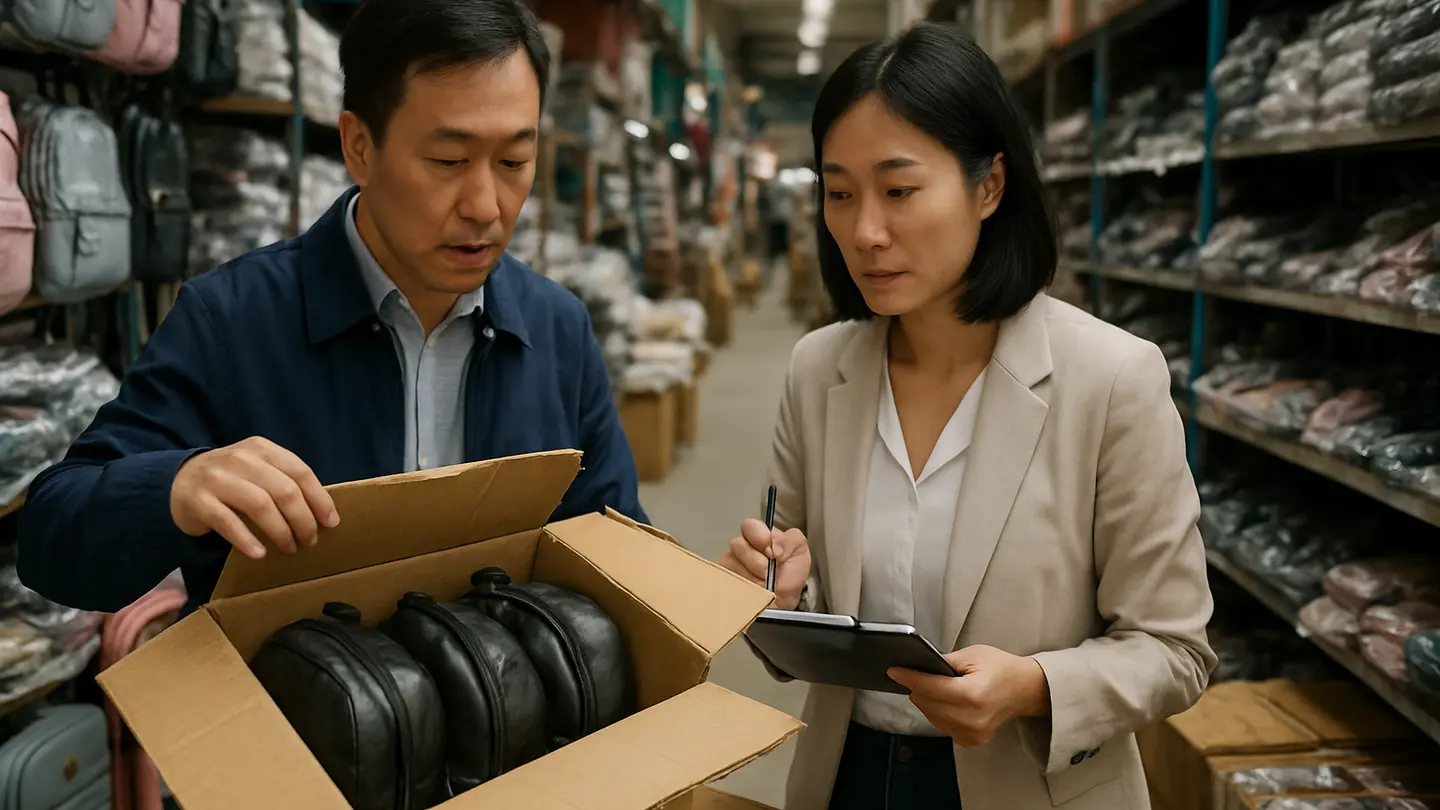
For bags, inspection plans should address seam strength, stitching consistency, strap attachment, zipper operation, hardware alignment, buckle function, lining quality, and surface finish. Buyers should define expected load conditions where applicable and assess whether handles, shoulder straps, and attachment points can withstand normal use. Metal hardware should be checked for defects such as scratches, inconsistent color, poor plating coverage, and weak fastening.
Sunglasses require additional care when performance claims are made. Lens characteristics, coatings, and stated protective features should be supported by suitable lens testing rather than assumed from appearance. The final product specification should also control lens tint, frame material, hinge function, logo placement, and packaging so that the sampled product matches the delivered model.
For jewelry, the specification should identify the base alloy, plating type, finish, stones or decorative components, and any restricted-substance considerations relevant to the destination market. Plating durability and color consistency can vary between batches if factories change processes or materials. Style variation can also raise minimum order quantities because each design, color, finish, or packaging combination may require separate production setup and inventory.
Kitchenware, Household Goods, and Outdoor Product Requirements
Kitchenware, household items, and outdoor goods should be assessed according to their use environment. A decorative storage product, a food-contact container, a bathroom organizer, and an outdoor folding item may all have different material, durability, and performance priorities.
For food-contact products, buyers should determine whether the destination market requires particular material documentation or migration testing. The product specification should describe the intended contact materials, temperature conditions, and expected use. A product intended for hot liquids, repeated washing, or food storage may require different evaluation from an item used only for dry goods.
Quality checks for household products often include:
- Dimensions, wall thickness, and assembly fit
- Coating coverage, adhesion, and surface consistency
- Resistance to cracking, deformation, corrosion, or leakage
- Load capacity for shelves, hooks, stools, or storage products
- Function of lids, locks, hinges, and moving parts
Outdoor goods need claims that can be supported by evidence. Waterproofing, weather resistance, UV resistance, load capacity, or corrosion resistance should not be added to packaging simply because the product is intended for outdoor use. Buyers should define test conditions and acceptance criteria before production, particularly for products exposed to rain, sunlight, weight, or repeated folding.
Beauty Tools and Personal-Care Appliances
Unpowered beauty tools and powered personal-care appliances should not be managed through the same control plan.
For unpowered tools, buyers should focus on physical quality, hygiene-related design, materials, and durability. Examples include brush shedding, bristle retention, closure security, handle strength, water resistance where relevant, and finish durability. A cosmetic bag, facial brush, manicure tool, or applicator may also require review of seams, adhesives, plating, and cleanability.
Material claims need similar attention. If products contain animal hair, latex, plated metal, or are marketed with antibacterial properties, the buyer should obtain documentation and evidence appropriate to the claim. Packaging language should remain consistent with the actual product materials.
Powered personal-care products require additional model-specific review. Electrical construction, charging method, voltage, plug configuration, battery type, heat generation, water exposure, and operating performance can all affect sourcing risk. A compliance file for one appliance model should not automatically be treated as coverage for another model with different electronics, a different charger, revised housing, or changed power rating.
Consumer Electronics and Electric Toothbrush Sourcing
For consumer electronics, approvals and technical assessments generally apply to a particular model and configuration. Small changes to a plug, battery, wireless module, charger, firmware, or housing can affect the final product’s documentation and market suitability.
The product brief should state the required voltage range, plug type, charging method, battery configuration, wireless features, operating language, and user-interface requirements. Buyers should also specify included accessories, manuals, cables, adapters, and replacement components.
For connected devices, production-batch checks should include wireless pairing, app behavior, charging performance, button function, display behavior, and firmware consistency. A product that performs correctly during pre-production sampling can still create customer-support issues if later batches use a different component or software version.
Electric toothbrush sourcing also requires planning beyond the handle unit. Buyers should verify replacement-head compatibility, bristle consistency, attachment strength, and continuity of supply for replacement heads and chargers. A low-cost toothbrush can become commercially difficult if customers cannot purchase compatible consumables or if the supplier changes the connection design without notice.
Regional manufacturing clusters may affect component access and supplier capability, but location alone should not replace factory verification. Buyers should assess the actual production facility, its component controls, and its ability to maintain the same configuration across reorders.
Health and Wellness Devices: Align Claims With Evidence
Health and wellness products should be reviewed not only for their physical design but also for the claims used to market them. The language on packaging, listings, instructions, and promotional materials can influence regulatory obligations and the level of evidence required.
For example, positioning a product around relaxation, comfort, or general wellness may create a different risk profile from stating that it relieves pain, treats a condition, or produces a specific health outcome. Buyers should avoid allowing suppliers, designers, or sales teams to introduce stronger claims after product development has been completed.
Each stated benefit should have evidence appropriate to the claim. This does not mean every wellness item requires the same assessment, but buyers should ensure that packaging and promotional statements can be supported and are consistent with the product’s intended use.
Finalize packaging language before locking specifications and artwork. Late claim changes can affect labels, manuals, testing requirements, and the commercial viability of finished inventory.
How Variants Increase MOQ, Testing, and Inventory Risk
Variants can multiply complexity faster than buyers expect. Colors, sizes, finishes, plug types, languages, bundles, and packaging versions may each create separate minimum order quantities or component requirements.
Before placing an order, ask suppliers which variants can share production quantities and which require independent minimums. A color change may be relatively simple in one product but require separate materials, plating runs, printed packaging, or testing in another. Different plugs or language versions may also require separate labels, manuals, documentation, and cartons.
A controlled launch often starts with one lead variant. This approach allows the buyer to validate quality, sell-through, packaging performance, and reorder reliability before expanding the range. Broad initial assortments can tie up capital in slow-moving inventory and make quality control more difficult.
Keep Samples, Test Reports, and Production Batches Aligned
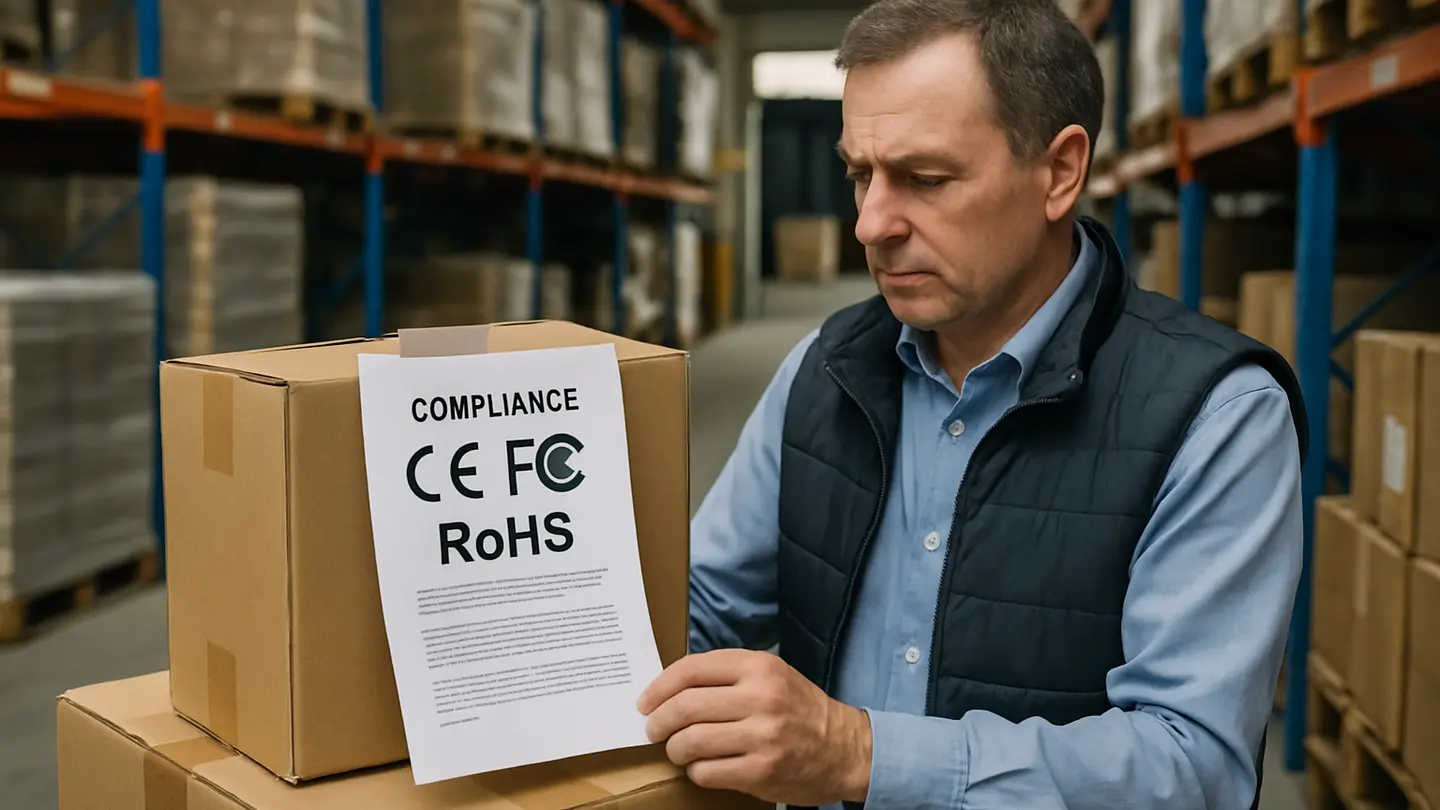
The approved sample, test reports, production specification, labels, manuals, and retail packaging should all describe the same final product. Misalignment between these items is a common sourcing risk.
For example, a report may refer to one material composition while the factory uses another in production. A sample may use one charger or zipper, while the final batch uses a substituted component. Packaging may show a claim or warning that no longer reflects the final product.
Buyers should establish written change-control procedures covering material, component, supplier, factory, process, software, and packaging changes. The supplier should not make substitutions without approval, even when the replacement seems equivalent.
Factory audits and production inspections can help reveal whether the supplier has a functioning change-control system. Inspectors should compare the batch against approved samples and controlled references, not just perform a general visual review.
Make Packaging Part of the Product Specification
Packaging protects the product, communicates required information, and shapes the customer experience. It should be developed as part of the product specification rather than treated as a final artwork task.
Fragile products may need internal supports, protective inserts, or stronger outer cartons. Soft products may require compression control, moisture protection, or clear folding instructions. Multi-component items need packaging that prevents missing accessories, mixed parts, and movement during transit.
Packaging should also accurately display applicable warnings, age markings, material statements, operating instructions, and product identifiers. Any artwork change should trigger a review of regulatory and product information, not only a graphic approval.
Both single-unit and loaded-carton transport tests can be useful because they address different risks. A retail box may protect a product during parcel delivery but fail when stacked in a full export carton. Conversely, a strong master carton does not guarantee that individual units will remain protected after e-commerce fulfillment.
Plan Reorders Before Placing the First Purchase Order
A first order should include a reorder strategy. Components may be discontinued, raw materials may change, and suppliers may later request higher minimum quantities. These issues are especially important for products with consumables, replacement heads, chargers, filters, batteries, or accessories.
Buyers should agree on:
- Expected supply period for key products and replacement parts
- Reorder minimum quantities and pricing principles
- Control of molds, tooling, and product files where relevant
- Retained approved samples for future comparison
- Supplier obligations to provide advance notice of changes
- Availability of compatible accessories and consumables
Reorder planning reduces the risk of launching a product that cannot be maintained after initial sales. It also gives the buyer a clearer basis for calculating lifetime customer-support costs.
Calculate Total Sourcing Cost Before Committing
Factory price is only one part of the commercial decision. Total sourcing cost should include tooling, samples, testing, packaging, inspections, freight, import expenses, storage, returns, replacement parts, and customer-support requirements.
Category-specific cost exposure matters. Fragile products may generate breakage claims. Bulky products can create high volumetric shipping costs. Battery-powered goods may involve additional logistics complexity. Products requiring extensive test coverage may have higher upfront compliance costs. A range with many variants can also create slow-moving inventory and separate packaging commitments.
When comparing suppliers, use the same cost model for each quotation. A higher unit price may still be preferable if it includes stronger packaging, more stable components, lower defect exposure, or better continuity for spare parts. The objective is not simply the lowest factory quote, but a sustainable margin after quality and lifecycle costs are included.
FAQ
Q1: How many categories should I run at once?
Each added category creates more supplier-management, testing, inspection, packaging, and reorder work. A controlled approach is usually more practical: establish stable sourcing and reorder processes in one category before expanding into several unrelated product groups.
Q2: Can one factory handle several of my categories?
Possibly, but broad category claims should be verified. A supplier may coordinate products from multiple facilities or rely on subcontractors for items outside its main capability. Identify the actual manufacturing location for each product and determine whether subcontracted production falls within your audit and quality-control process.
Q3: Should every category use the same inspection standard?
No. Inspection plans should reflect the consequences of failure for the product category. A generic checklist may miss critical concerns such as incorrect electrical configuration, weak bag straps, missing toy warnings, or incompatible replacement parts. Define category-specific defect priorities and acceptance criteria.
Q4: How should I organize paperwork across several categories?
Organize documents by model rather than only by supplier. Each model file should include specifications, approved samples, test reports, certificates where applicable, labels, packaging artwork, inspection records, component information, and change history. This structure supports future compliance reviews, supplier changes, and reorders.
Conclusion: Build Controls Around Category-Specific Risks
Consumer goods sourcing in China is more manageable when controls reflect the product category’s most significant failure risks. Toys, accessories, food-contact goods, electrical appliances, and wellness products require different supplier questions, documentation, inspections, and claims review.
The most reliable process links the approved sample, product specification, test documentation, packaging, and production batch. Buyers should treat unauthorized substitutions, unverified marketing claims, and uncontrolled variants as commercial risks rather than minor administrative issues.
By evaluating total cost, reorder continuity, packaging performance, and category-specific compliance before committing, buyers can make more informed sourcing decisions and reduce avoidable problems after launch.
About the Author
The author is a B2B sourcing and product-quality writer focused on supplier evaluation, product specifications, quality-control planning, and compliance documentation for consumer-goods procurement. Their work emphasizes practical risk management across product development, manufacturing, packaging, and repeat-order operations.