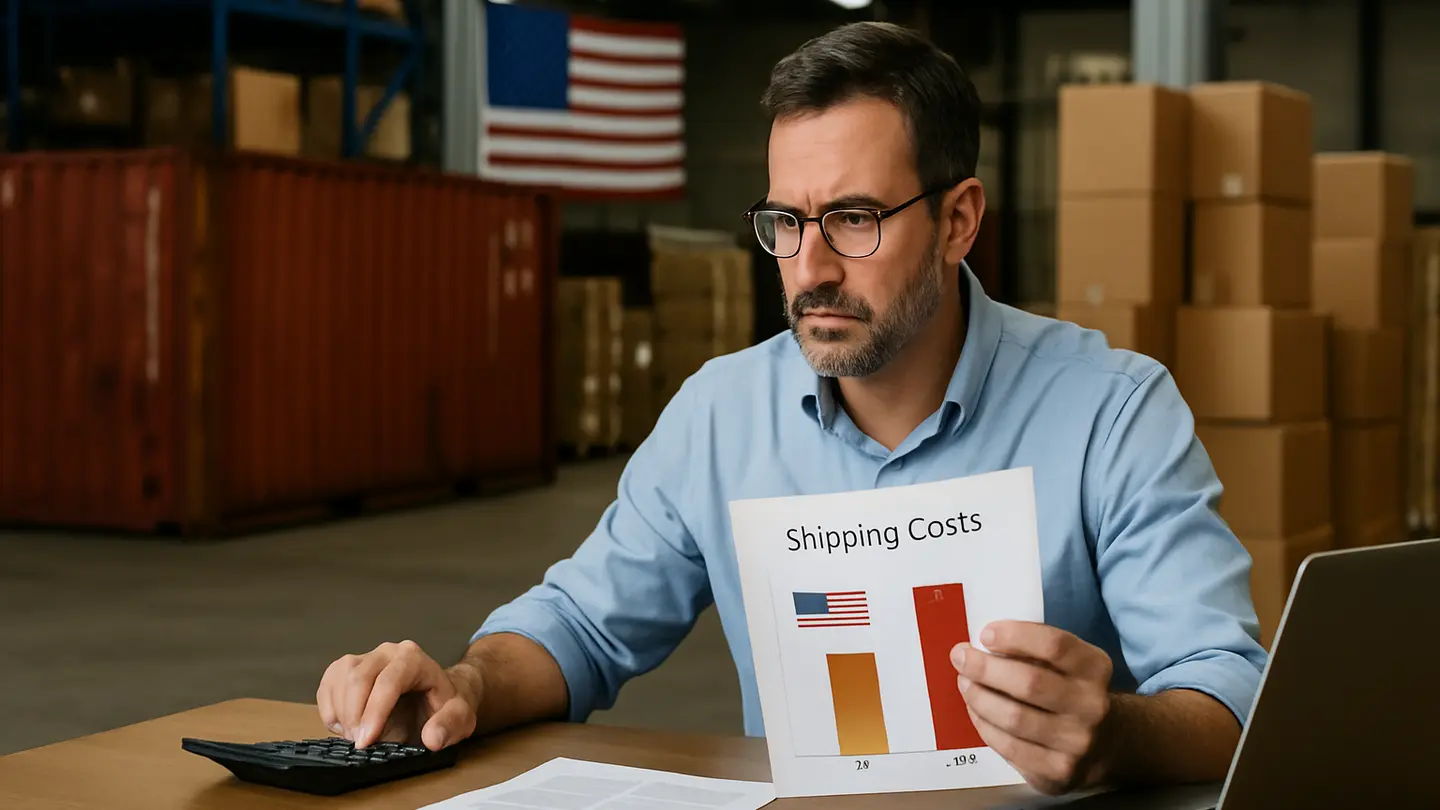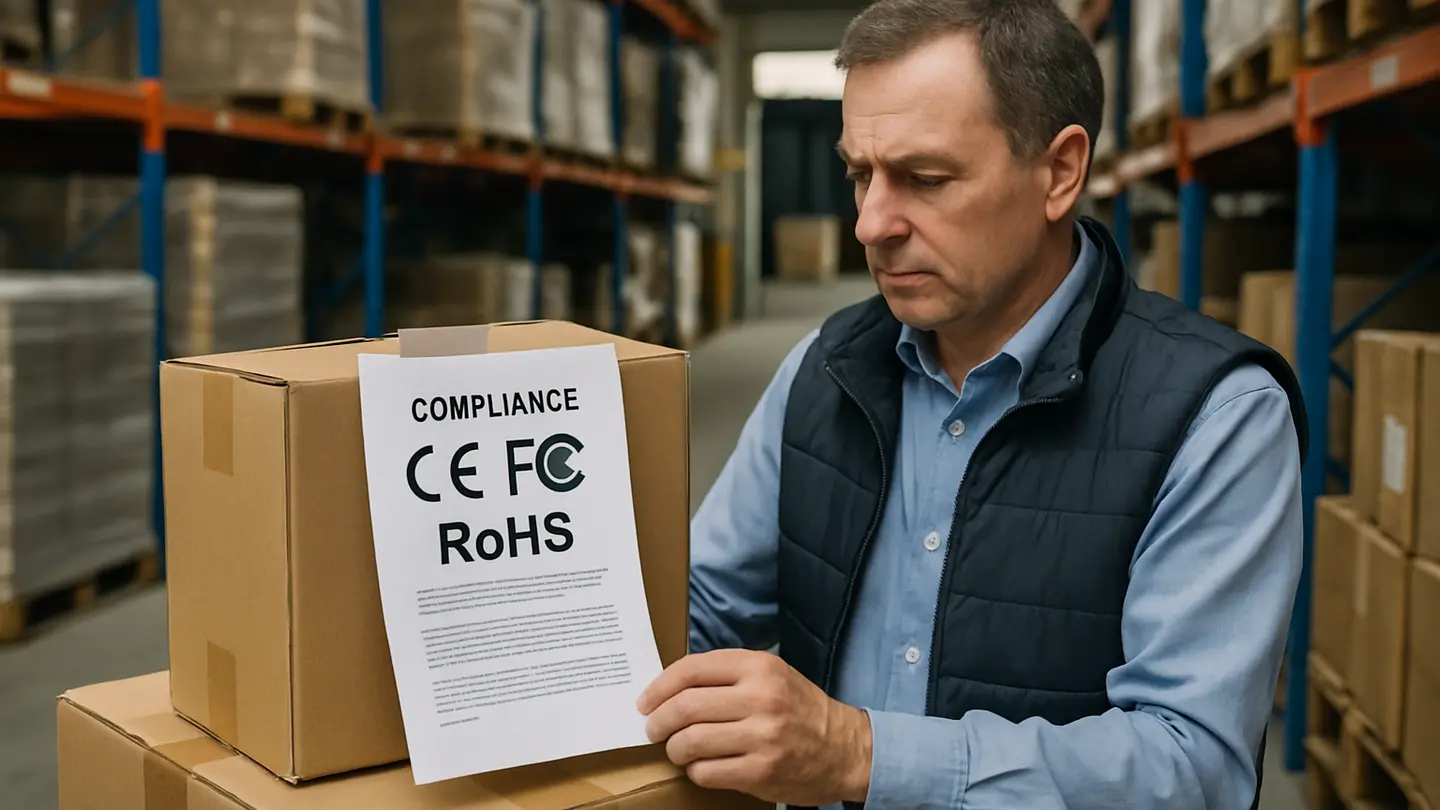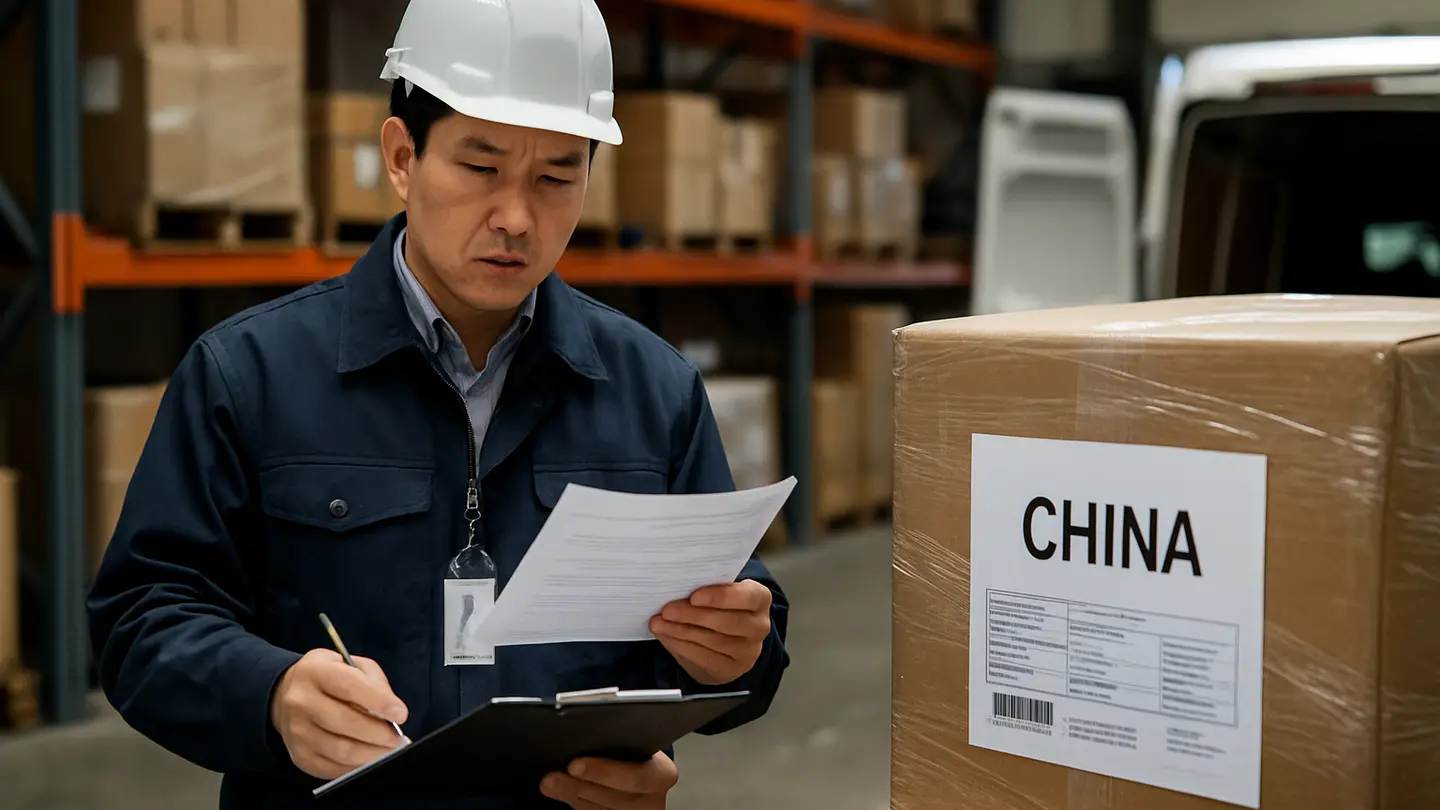
Customs issues rarely come from one mysterious port problem. For importers buying from China, most delays and surprise bills begin earlier: HS classification, declared value, delivery terms, product compliance, or the party acting as importer.
For B2B buyers, customs clearance from China is not just a final shipping formality. The documents, descriptions, payment records, and compliance evidence prepared before dispatch often decide whether a shipment clears smoothly or sits in storage.
Start by Confirming the Importer of Record
The importer of record is legally responsible for the customs entry. This usually includes making sure the declaration is accurate, paying duties and taxes, keeping records, and answering customs questions later.
This role is often misunderstood. A buyer may think the supplier is “handling shipping,” while the supplier expects the buyer to handle import compliance. Incoterms define delivery responsibilities and risk transfer, but they do not automatically decide who appears as importer of record.
| Arrangement | Common misunderstanding | What to confirm |
|---|---|---|
| FOB China port | Buyer assumes supplier handles export and import | Supplier usually handles export clearance; buyer usually controls main freight and destination import |
| CIF or CFR destination port | Buyer assumes import is included | Ocean freight may be included, but destination customs clearance may still be the buyer’s responsibility |
| DAP buyer’s address | Buyer assumes everything is included | Supplier may deliver to destination, but import duties and taxes may still fall to the buyer |
| DDP buyer’s address | Buyer assumes there is no compliance risk | Supplier or its agent may appear on the declaration, which can affect documentation and tax recovery |
Import VAT recovery is another reason to clarify this early. In many markets, reclaiming import VAT depends on whether the importer owns the goods, has the correct tax registration, and receives valid import evidence. If a supplier’s logistics agent appears as importer, the buyer may receive the goods but not the documentation needed for accounting or VAT recovery.
Before placing the order, confirm in writing:
- who will be importer of record;
- whose tax or registration number will appear on the entry;
- who will pay duties, VAT, brokerage, and destination fees;
- who will receive the customs entry documents;
- who will respond if customs requests clarification.
This is especially important for recurring B2B imports, where one unclear setup can repeat across future orders.
What Customs Clearance Costs Usually Include
Customs clearance costs are broader than duty alone. Importers often budget for product cost and international freight, then discover several destination charges after arrival.
Typical import-related costs may include:
- customs duty;
- import VAT, GST, or sales-type taxes;
- customs brokerage fees;
- carrier handling fees;
- terminal handling charges;
- document fees;
- warehouse or storage charges;
- inspection or examination fees;
- duty-advance or disbursement fees;
- demurrage or detention if cargo is not released on time.
Duty is normally driven by tariff classification, not the supplier’s commercial product name. A “bathroom accessory,” “metal bracket,” or “shower component” may fall under different HS codes depending on material, function, and design. Small differences can change the duty rate, whether trade remedies apply, and whether supporting certificates are needed.
Taxable value also varies by destination market. Some jurisdictions calculate duty or import taxes on a value that includes product cost, freight, insurance, assists, royalties, or other additions. Others apply different rules for customs value and VAT value.
The United States, United Kingdom, and European Union all use tariff classification and customs valuation principles, but they do not apply identical duty rates, VAT rules, or procedures. Importers selling into multiple countries should avoid assuming one broker’s answer applies worldwide.
For planning, ask your broker or forwarder for a landed-cost estimate before shipment. A useful estimate separates duty, import tax, brokerage, port or airport fees, and possible storage exposure. If everything is bundled into a vague “customs charge,” ask for a breakdown.
Why Customs May Use a Value Beyond the Invoice Total
Customs authorities do not always accept the invoice total as the final customs value. They may ask whether the invoice reflects the true transaction value and whether other payments or benefits are connected to the shipment.
This matters in China sourcing because purchase structures can include separate payments for:
- tooling or mold charges;
- design or engineering fees;
- logo setup or packaging development;
- buyer-supplied components;
- free accessories included with the goods;
- spare parts shipped at no charge;
- samples later connected to a commercial order;
- royalties or license fees tied to imported products.
Some of these costs may need customs valuation review. The answer depends on the destination country’s rules and the relationship between the payment and the imported goods.
Undervaluation can cause delays, payment-proof requests, reassessed duty, penalties, interest, seizure in severe cases, or later audits. Even if the shipment clears, the delay can create storage costs and disrupt customer deliveries.
If the purchase structure is not straightforward, involve a customs broker before shipment. Give the broker the invoice, purchase order, contract, payment schedule, and details of tooling, assists, or no-charge items. It is easier to declare correctly at the start than to repair inconsistent values after a challenge.
Documents to Check Before the Shipment Leaves China
Customs decisions rely heavily on documents. A shipment may be physically correct but delayed because paperwork is vague, inconsistent, or not credible.
Before dispatch from the factory or consolidation warehouse, review:
- commercial invoice;
- packing list;
- bill of lading or airway bill draft;
- delivery address and consignee details;
- importer of record details;
- HS classification;
- country of origin information;
- permits or licenses if required;
- test reports or conformity documents;
- product labels and packaging marks;
- insurance documents where relevant;
- certificates required by the destination market.
The commercial invoice should describe the product clearly. Avoid generic terms such as “parts,” “accessories,” “samples,” “hardware,” or “bathroom goods.” A better description explains what the item is, what it is made of, and what it does. For example, “stainless steel shower hose, 1.5 m, for bathroom sanitary fittings” is more useful than “hose accessory.”
Check that quantities, unit prices, total values, weights, carton counts, and descriptions match across the invoice, packing list, booking data, and carrier documents. The consignee, importer name, tax number, and delivery address should also be correct. Name mismatches are common, especially when a trading name differs from the registered legal entity.
Labels matter too. Some products require country-of-origin marking, safety labels, energy labels, chemical warnings, or market-specific compliance marks. Fixing missing labels at destination can be slow and expensive.
The best time for document review is before dispatch. Once goods are loaded, corrections may require amended invoices, revised bills of lading, carrier approval, broker intervention, and extra fees.
How Product Type Changes Clearance Difficulty
The difficulty of customs clearance from China depends heavily on the product category. Two shipments with the same value and origin can face very different clearance paths if one is a low-risk household item and the other is regulated.
For relatively simple household or bathroom goods, customs may focus on:
- HS classification;
- material composition;
- declared value;
- country of origin;
- packaging and labeling;
- whether the description supports the declared tariff code.
For regulated products, customs may look beyond the invoice. Electronics can involve battery rules, radio equipment approval, electrical safety, energy efficiency, or certification requirements. Products with lithium batteries often require careful transport documentation as well as import compliance review.
Food, cosmetics, and medical-related goods may require registrations, permits, ingredient documentation, health certificates, or importer licenses. Items that seem non-medical can become sensitive if they make health, hygiene, antimicrobial, or therapeutic claims.
Some categories may also face anti-dumping, countervailing, safeguard, or additional trade remedy duties. These measures can apply to goods such as some metal products, solar-related goods, furniture, bicycles, and similar categories, depending on the importing country and exact product scope.
Importers should not wait for arrival to check this. Product compliance should be reviewed during sourcing, especially when buying a new item, changing materials, switching factories, or selling into a new market.
Common Reasons Shipments Get Stuck and Who Should Act
A customs delay is not always a crisis, but it does require diagnosis. The right response depends on the type of hold and who controls the missing or incorrect information.
| Delay type | What it often means | Who usually needs to act |
|---|---|---|
| Routine customs review | Customs is checking the entry or risk profile | Broker monitors and confirms status |
| Document mismatch | Invoice, packing list, bill of lading, or entry data conflict | Supplier, buyer, forwarder, or broker corrects the relevant document |
| Compliance hold | Customs wants certificates, test reports, permits, or product details | Buyer and supplier provide evidence; broker submits |
| Inspection hold | Goods are selected for physical or non-intrusive examination | Carrier, terminal, broker, and importer coordinate |
| Permit issue | Required license, registration, or approval is missing | Importer resolves with regulator or broker |
| Name mismatch | Consignee, importer, or tax details do not align | Buyer, carrier, and broker amend records |
| Payment hold | Duties, taxes, or fees have not been paid | Importer, courier, broker, or forwarder arranges payment |
Routine review may only require monitoring. Document or compliance holds usually need active correction. The importer should quickly identify whether the problem sits with the buyer, supplier, forwarder, broker, or carrier.
Speed matters because storage, demurrage, detention, and warehouse charges can accumulate. For ocean freight, charges may begin after free time expires. For air or express shipments, fees can build quickly if the importer does not respond.
When a hold appears, ask the broker or forwarder:
- What exactly is customs requesting?
- Which document or data field is causing the issue?
- What is the deadline or cost exposure if we do not respond today?
Clear answers prevent wasted time and irrelevant document submissions.
When an Express Courier Handles the Brokerage
Many small and mid-sized shipments from China move by express courier. In these cases, the courier often files the customs declaration through its own clearance or brokerage team.
This is convenient, but it can create communication gaps. Standard delivery support may only see a tracking message such as “customs clearance delay” or “clearance event.” Importers should escalate to the courier’s customs clearance or brokerage department, not only the general parcel support team.
Courier-related charges may include:
- customs clearance fees;
- brokerage fees;
- duty-advance or disbursement fees;
- handling fees;
- document correction fees;
- import duties and taxes billed after delivery.
Customs may request corrected invoices, payment proof, product descriptions, tax numbers, photos, model numbers, specifications, or certificates. Respond with complete information. If the product description is vague, provide a revised description, photos, materials, intended use, and technical data where appropriate.
For recurring courier shipments, give suppliers a document template. Many express delays start because the factory used a simplified invoice description or declared a value that does not match payment records.
FAQ
Q1: Is it normal for a factory to use one invoice for me and another for its export declaration?
It can happen, but the records must reconcile. A supplier may prepare one commercial invoice for the buyer and separate documentation for China export declaration procedures. That does not make inconsistent values or descriptions acceptable at destination.
Quantities, currency, product descriptions, purchase orders, contracts, and payment records should support the figures declared for import. If the buyer paid separately for goods, tooling, accessories, or connected charges, those records may also matter for customs valuation.
If there is uncertainty, ask your customs broker to review the full transaction before shipment. Do not rely only on the supplier’s statement that “this is normal” if the declared value cannot be supported.
Q2: Can I change the delivery name once the goods are on the water?
Sometimes, yes. A delivery-name change may be possible before arrival if the carrier, forwarder, and broker agree and if the change does not conflict with customs or security filing requirements.
Amended documents may be required, such as a revised bill of lading, delivery order, commercial invoice, packing list, or broker instruction.
After arrival, corrections tend to become slower and more expensive. If the mismatch affects the importer of record, tax number, consignee, or delivery party, it may require more than a simple address update. Check legal names, consignee details, and delivery addresses before booking or dispatch.
Q3: Can another importer’s problem hold my cargo when we share a container?
Yes. With LCL freight or other shared-container arrangements, another importer’s cargo can delay the entire container if customs or another authority places a hold on the container as a whole.
Your paperwork may be clean, but the goods may still be unavailable until the container is examined, released, unloaded, or separated. This is one trade-off of LCL shipping compared with full-container loads.
Ask the forwarder whether the hold applies to your shipment specifically or to the container generally. Also ask whether your cargo can be separated after examination and whether storage charges are expected.
Q4: What should I send when customs calls my product description too vague?
Send a description that helps customs understand and classify the goods. A useful description should state:
- what the item is;
- what it is made of;
- what it is used for;
- what is included in the package;
- model numbers, sizes, or specifications where relevant.
Avoid generic terms such as “accessories,” “parts,” “samples,” or “gift items” without detail. These descriptions do not explain function or material.
Photos, catalog pages, model numbers, technical sheets, payment records, and purchase orders can support the clarification. Use plain language. Customs needs enough information to classify the goods and assess duty, tax, and compliance requirements.
Key Takeaways for Reducing Clearance Risk
Customs outcomes depend on accurate declarations and consistent supporting documents. Many problems are preventable before goods leave the factory, but harder to fix once the shipment is moving.
For importers sourcing from China, the practical controls are:
- confirm who is importer of record;
- understand how Incoterms affect cost and control, without assuming they decide importer identity;
- review HS classification before shipment;
- check whether customs value should include more than the invoice total;
- align the commercial invoice, packing list, carrier data, and delivery details;
- prepare permits, test reports, labels, and certificates for regulated products;
- respond quickly when customs, the courier, broker, or forwarder requests information.
Good customs planning is not only about avoiding penalties. It protects delivery schedules, landed-cost accuracy, customer commitments, and tax documentation.