DDP shipping from China is attractive because it turns a complex import process into one door-delivered price. Instead of arranging freight, customs brokerage, duties, taxes, and domestic delivery separately, the buyer receives one quote and waits for delivery at the named destination.
That convenience is valuable for first-time importers, small brands, and companies testing suppliers or product lines. If your team has never managed customs clearance, import tax records, or final-mile delivery, DDP can reduce workload and make landed-cost planning easier.
But DDP is rarely the cheapest option. The real question is whether the premium buys useful predictability, administrative relief, and risk transfer—or hides weak documentation, unclear fees, and poor accountability.
What DDP Shipping from China Usually Covers
DDP stands for Delivered Duty Paid. Under a DDP arrangement, the seller is generally responsible for moving the goods from China to the buyer’s named destination, clearing export and import customs, paying duties and taxes, and arranging final delivery.
In practice, DDP shipping from China usually bundles these services:
| Cost or task | Usually handled under DDP |
|---|---|
| Pickup or export-side handling | Seller or logistics provider |
| International freight | Seller or logistics provider |
| Export customs clearance | Seller or logistics provider |
| Import customs clearance | Seller or appointed party |
| Duties and import taxes | Included in DDP price, if properly quoted |
| Inland delivery | Included to the named destination |
| Buyer coordination | Reduced, but not eliminated |
Compared with FOB, EXW, or DAP, DDP is more hands-off for the buyer. The buyer usually does not appoint a freight forwarder, select a customs broker, pay import duties on arrival, or arrange domestic delivery.
However, DDP does not mean the buyer has no role. The buyer may still need to provide company information, tax details, product specifications, compliance documents, end-use information, or warehouse delivery instructions. For regulated goods, customs authorities may ask questions only the buyer can answer.
Before accepting a DDP quote, confirm in writing:
- Who will act as the importer for customs purposes
- Whose tax number or company registration appears on import documents
- Who responds to customs questions
- Who pays if customs delays the shipment
- Who covers extra costs if documentation is rejected
- Whether duties, import VAT, GST, sales tax, or other local taxes are included
This is especially important for commercial quantities of shower systems, bathroom hardware, plumbing fittings, glass panels, sanitary accessories, and other building materials, where classification and compliance requirements can affect clearance.
When DDP Makes Sense for Smaller or New Importers
DDP is most valuable when it replaces logistics work the buyer cannot manage efficiently.
A new importer may underestimate how many parties are involved in a China shipment. Even a simple order can require coordination among the factory, export agent, freight forwarder, carrier, customs broker, destination agent, warehouse, and final delivery provider.
For a small buyer, that coordination can consume more time than expected. The buyer may need to learn shipping terms, compare freight quotes, classify products, understand duty rates, prepare import records, and monitor cargo handoffs. Mistakes can lead to storage charges, customs delays, or missed delivery appointments.
DDP can be useful in situations such as:
- First trial orders from a new supplier
- Sample shipments that need simple door delivery
- Small commercial orders where the buyer lacks import experience
- Urgent replenishment where one point of contact is preferable
- Early-stage product launches where landed-cost certainty matters
- Buyers without an established freight forwarder or customs broker
- Companies that do not import often enough to build internal logistics processes
For these buyers, an all-in door-delivered price can simplify budgeting. Instead of estimating freight, brokerage, duties, taxes, port charges, and domestic delivery separately, the buyer can compare the DDP price against the expected resale price or project budget.
This helps early sourcing decisions. If a buyer is testing whether a shower enclosure, faucet line, drain component, or bathroom accessory is commercially viable, the priority may be knowing the total landed cost, not optimizing every freight charge.
Still, DDP shifts customs handling responsibility; it does not remove customs exposure. If the product description is inaccurate, the declared value is wrong, or the HS code is unsuitable, the shipment can still be delayed or challenged. The buyer may also face problems later if import records are incomplete.
When DDP May Not Be the Best Deal
DDP usually costs more because someone is taking on extra work and risk. The seller or logistics provider must coordinate transport legs, customs processes, duty exposure, tax payments, documents, and delays.
That extra cost may be reasonable for an inexperienced buyer. It may be unnecessary for an importer with a reliable freight forwarder, customs broker, import bond or tax registration, warehouse process, and landed-cost system. In that case, DDP may duplicate services your team already manages more transparently.
Bundled DDP quotes can also hide important details. A single price may not reveal:
- Which carrier or forwarder is being used
- Whether the shipment moves by express, air, rail, sea, or a mixed route
- Whether the goods are consolidated with other shipments
- How customs value is being declared
- Which HS code is being used
- Which duties and taxes are assumed
- Whether import VAT or GST is recoverable
- How much seller margin is built into the quote
- What happens if customs applies a different duty rate
This does not make DDP automatically bad. It means buyers should request a breakdown before accepting a bundled offer, especially for repeat orders or higher-value shipments.
A practical approach is to compare three landed-cost scenarios:
| Scenario | Buyer controls | Useful when |
|---|---|---|
| DDP | Minimal logistics control; seller handles most steps | New importers, samples, trial orders, low internal logistics capacity |
| FOB plus buyer’s forwarder | International freight, import clearance, duties, final delivery | Buyers with established logistics partners |
| DAP or similar delivered terms | Freight to destination, but buyer handles import clearance and duties | Buyers wanting delivery support but customs control |
If DDP is only slightly more expensive than your own managed route, the convenience may be worth it. If the difference is large and the quote lacks transparency, review it carefully.
What a Reliable DDP Quote Should Include
A reliable DDP quote should be specific enough that both parties understand what is being delivered, where it is being delivered, and who pays if something goes wrong.
The quote should name the exact delivery address, not just the destination country or city. “DDP Los Angeles” is not the same as delivery to a warehouse in Ontario, California, a construction site in downtown Los Angeles, or an Amazon fulfillment center with strict appointment rules. Final-mile costs vary depending on access, unloading, and appointment conditions.
A strong DDP quote should include:
- Full delivery address and contact details
- Transport mode, such as express, air freight, sea freight, rail, or truck
- Estimated door-to-door delivery window
- Product description used for customs declaration
- HS code or proposed tariff classification
- Declared customs value
- Included duties
- Included import taxes, VAT, GST, or sales taxes where applicable
- Packaging details, weight, volume, and carton count
- Whether insurance is included
- Who handles customs questions
- Who pays for customs inspection, storage, demurrage, detention, or re-delivery
- What happens if delivery fails
- Responsibility for returns, abandonment, or destruction if the shipment cannot be cleared
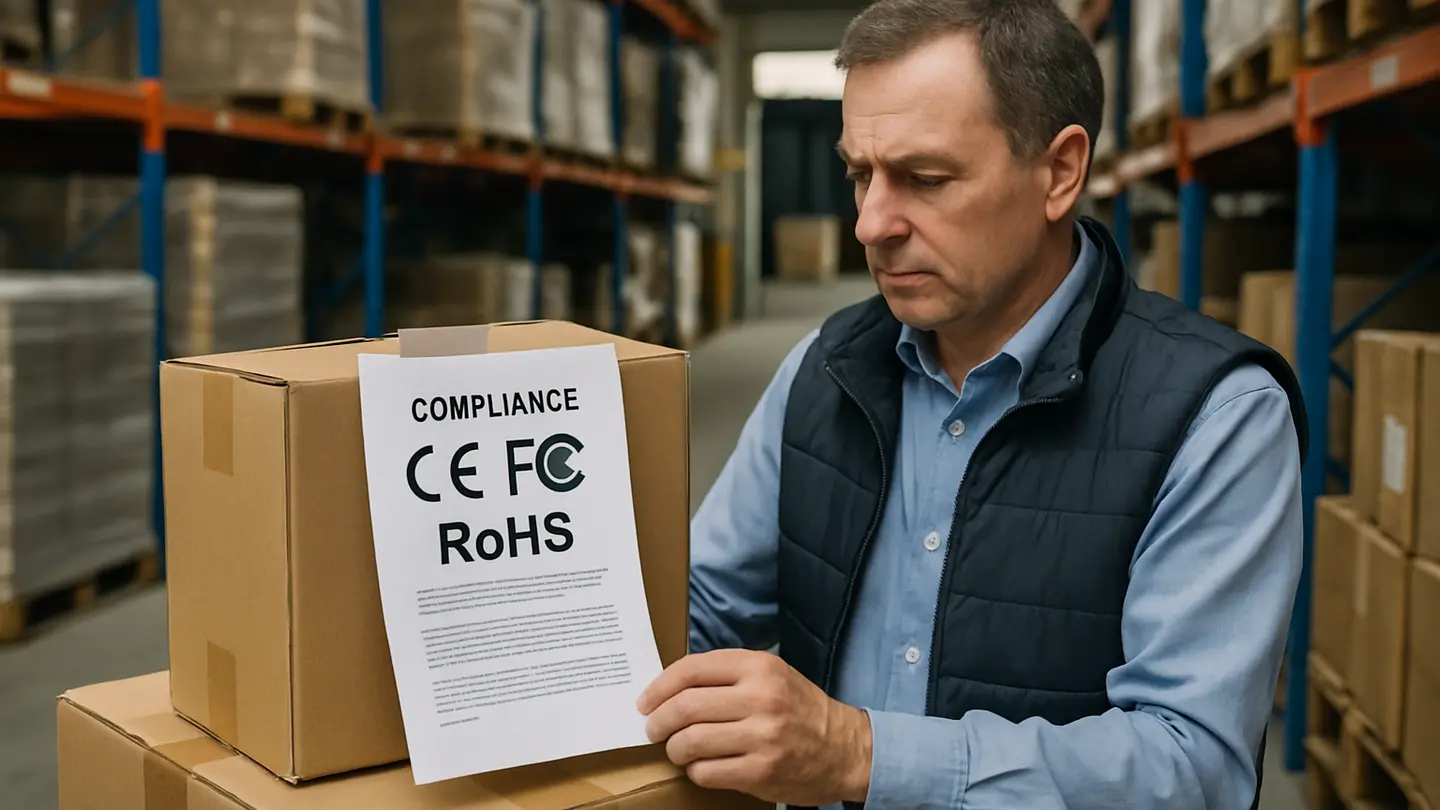
For B2B buyers, the HS code and declared value are especially important. A low DDP quote may look attractive, but if it relies on an unrealistic customs value or vague product description, the buyer could face delays, penalties, or recordkeeping problems.
After customs release, request key documents, such as the commercial invoice, packing list, import declaration, duty/tax receipt where available, and delivery proof. These records support accounting, tax review, compliance audits, and future shipment planning.
Confirm Who Acts as the Importer of Record
The importer of record is the party legally responsible for the import entry. Customs authorities typically look to the importer of record for accurate classification, valuation, tax treatment, admissibility, and recordkeeping.
In some DDP arrangements, the seller clears the goods through its own local entity or logistics partner. In others, the seller or forwarder may use the buyer’s company name, tax number, importer registration, or business details for the customs entry.
Both models can create issues if not clarified upfront.
If the seller or logistics provider is the importer of record, ask whether you will receive the documents needed for your records. Also confirm whether import VAT or GST is recoverable by your business, if that matters in your market. Taxes paid by another party may not be easily claimed by the buyer.
If your company is listed as the importer of record, you may carry legal responsibility even though the seller arranged the shipment. That means you need to approve the HS code, declared value, product description, and tax treatment before the goods leave China.
Before shipment, confirm in writing:
- Whose legal name appears on the customs entry
- Whose tax ID, VAT number, GST number, EORI number, EIN, or importer number is used
- Who keeps official import records
- Who answers post-entry customs inquiries
- Who pays if customs reassesses duties or taxes later
- Whether the buyer can access all clearance documents
Complete this step before the shipment leaves the factory, not after the goods are already in transit.
DDP Risks Importers Often Overlook
DDP can reduce logistics work, but it does not eliminate import risk. Many problems arise because buyers treat DDP as a complete shield from customs and transport issues.
One common risk is incorrect documentation. If the commercial invoice is incomplete, the packing list does not match the cargo, or the product description is too vague, customs may delay the shipment. “Bathroom parts” may not be specific enough; customs may need to know whether the goods are valves, shower heads, glass panels, metal fittings, plastic accessories, hoses, or electrical components.
Another risk is tariff reclassification. Customs authorities may reject the HS code used in the DDP quote and apply a different classification with a higher duty rate. The agreement should state who pays additional duties, taxes, penalties, storage, and administrative fees.
A third risk is undervaluation. Unusually cheap DDP offers may be based on declaring a lower customs value than the actual transaction value, using vague product descriptions, or relying on unclear clearance channels. This can create serious exposure, especially if the buyer’s company information appears on customs records.
Weak logistics coordination is another practical problem. Some DDP providers offer limited tracking, vague status updates, or no clear escalation path when a shipment stalls. The buyer may not know whether the goods are waiting for export, in transit, under customs review, at a destination warehouse, or delayed by final-mile delivery.
Before choosing DDP, ask direct questions:
- Will I receive tracking for each major shipment stage?
- Who is my contact if customs requests more information?
- What documents will I receive after clearance?
- What costs are not included in the DDP price?
- What happens if customs changes the duty rate?
- What happens if the delivery address refuses the shipment?
- Who pays storage if the delay is caused by missing or incorrect paperwork?
The goal is to prevent a “simple” quote from turning into an unclear dispute when something goes wrong.
FAQ
Q1: Does DDP take longer than shipping I arrange myself?
Not automatically. DDP changes responsibility for cost, clearance, duties, taxes, and delivery. It does not guarantee faster or slower transit.
Shipment speed depends on transport mode, routing, carrier performance, customs clearance, consolidation schedules, and final-mile delivery. A DDP air shipment may be much faster than a buyer-arranged sea shipment. A poorly managed DDP sea shipment may be slower than a buyer’s established forwarder.
Ask for a realistic door-to-door delivery window in writing. The quote should also explain what happens if the delivery window slips, including whether storage charges or re-delivery fees may apply.
Q2: Can I use DDP to send goods straight to Amazon or another warehouse?
Yes, DDP can work for marketplace or third-party warehouse delivery if the receiving rules are met. The issue is not only customs clearance; it is whether the provider can satisfy the warehouse’s delivery requirements.
Warehouses may require carton labels, pallet labels, advance shipping notices, delivery appointments, booking references, pallet dimensions, carton weight limits, or specific carrier procedures. A provider used to offices, retail stores, or private addresses may not be prepared for strict warehouse receiving rules.
Before shipping, confirm that the supplier or logistics provider has delivered to the same type of destination. Provide all labels, booking instructions, and warehouse requirements before the goods leave China.
Q3: Can I still choose air or sea under DDP?
Yes. DDP can be quoted using different transport modes, including express, air freight, sea freight, rail, truck, or combined services, depending on the destination and shipment size.
Air freight is usually better for samples, urgent replenishment, small high-value shipments, and deadline-sensitive products. Sea freight is generally better for heavier, larger, or recurring shipments where cost per unit matters more than speed.
Compare all-in DDP quotes across available modes. Do not compare only the international freight charge, because the DDP price may include duties, taxes, customs handling, documentation, and final delivery.
Q4: Should I take my supplier’s DDP offer or use an independent provider?
The better option depends on who can control the shipment more reliably and transparently.
If the supplier has a strong logistics process, clear documentation, reliable tracking, and experience shipping to your destination, its DDP offer may be convenient. But ask whether the supplier manages logistics directly or simply passes the shipment to a forwarder.
An independent provider may be better if you want more control over carrier choice, customs documentation, import records, and delivery planning. Choose the party that can answer customs-related questions, provide tracking updates, and accept responsibility if the shipment stalls.
The provider should also give you a clear escalation path, not just a generic promise that the goods will arrive.
Bottom Line: Use DDP for Predictability, Not the Cheapest Freight
DDP shipping from China is worthwhile when it saves time, reduces workload, and manages risks your company is not yet prepared to handle. For first-time importers, trial orders, samples, and early-stage sourcing, a clear all-in door-delivered quote can be valuable.
But DDP should not be treated as the cheapest shipping method. The convenience usually comes with a premium, and bundled pricing can hide routing, carrier choice, duty assumptions, tax treatment, and seller margin.
Before accepting a DDP quote, check the exact delivery address, transport mode, HS code, declared value, included duties, included taxes, and responsibility for unexpected costs. Confirm who acts as the importer of record and request customs documentation after clearance.
The best DDP arrangement is not simply the lowest all-in number. It is the one that gives you predictable landed cost, clean documentation, clear accountability, and a realistic delivery plan before the goods leave the factory.