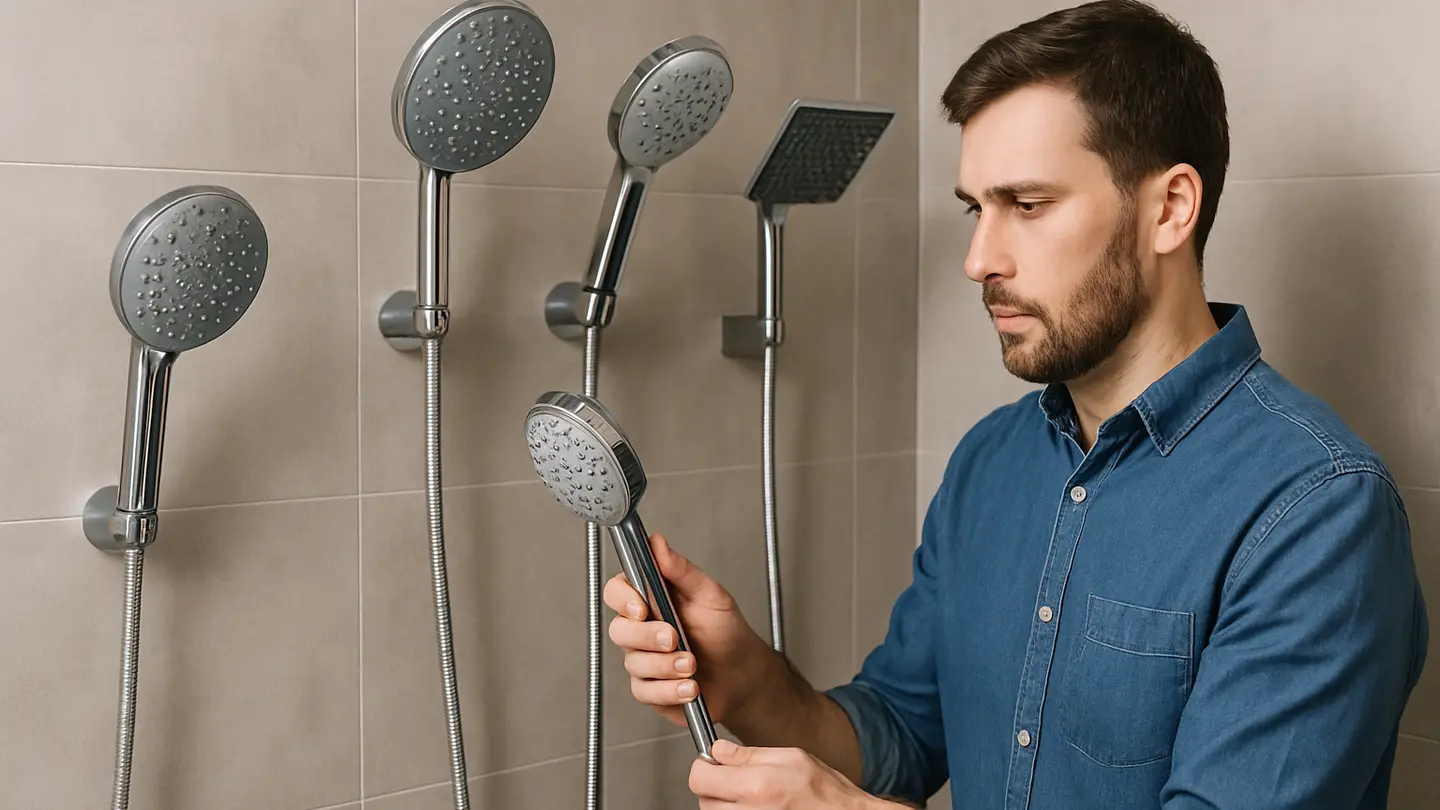
Selecting among the different types of shower heads affects spray feel, bathing comfort, water use, cleaning convenience, accessibility, and installation scope. For residential developers, hospitality buyers, distributors, and renovation professionals, the right choice can also influence customer satisfaction, after-sales questions, and compatibility with local plumbing conditions.
A standard bathroom may only need a basic wall-mounted head. A family bathroom may benefit from a handheld or dual model. A spa-style suite may call for an overhead rain shower. Water-sensitive markets may prioritize low-flow or WaterSense-labeled products, while hard-water regions may justify filtered models.
Fixed Shower Heads
Fixed shower heads attach to a wall-mounted or ceiling-mounted shower arm and remain in one position during use. In many replacement projects, a fixed wall-mounted model can be installed by removing the old head, applying thread seal tape if needed, and attaching the new unit to the existing arm.
Their advantages are simplicity, availability, and cost control. Because there is no hose, docking mechanism, slide rail, speaker, or electronic component, fixed shower heads tend to have fewer parts that can wear out. They are also easy to specify across multiple bathrooms when a consistent shower experience is required.
The limitation is flexibility. A stationary head provides one spray angle and height, which may not suit every user. It is less convenient for rinsing shower walls, bathing children, washing pets, or assisting users with limited mobility.
Fixed shower heads suit standard bathrooms, rental units, budget-conscious projects, and buyers who want a reliable fixture with minimal complexity.
Rain Shower Heads
Rain shower heads create a broad, gentle spray that resembles rainfall. They are usually larger than standard fixed heads and focus on even coverage rather than concentrated pressure, creating a softer shower feel often associated with spa-style bathrooms.
These models are commonly installed overhead from the ceiling or high on the wall using an extended shower arm. Ceiling-mounted rain showers deliver the most natural rainfall effect because water falls vertically. High wall-mounted models can be easier to retrofit, depending on existing plumbing.
The main benefit is comfort. A wide spray face can cover more of the body at once, making rain shower heads popular for hotels, premium apartments, master bathrooms, and wellness-focused interiors.
Buyers should consider installation and water performance. Ceiling installation may require new plumbing, ceiling access, and professional labor. Larger spray faces may also feel weak if pressure or flow rate is too low. Where users expect a powerful rinse, rain shower heads may need to be paired with a handheld component or multifunction system.
Handheld Shower Heads
Handheld shower heads connect to the water outlet through a flexible hose, allowing users to direct the spray where needed. Most models dock into a wall bracket, cradle, or slide bar so they can function like a fixed head when not being held.
This flexibility makes handheld units practical for family and shared bathrooms. They simplify hair rinsing, shower cleaning, child bathing, pet washing, and assisted washing. In healthcare, senior living, and accessibility-focused bathrooms, handheld models are especially useful because water can be directed while the user is seated or supported.
Key buying considerations include hose length, hose material, connector quality, and docking stability. A hose that is too short limits the design’s benefit, while a hose that kinks easily or has weak fittings can create maintenance complaints. For commercial or multi-unit projects, buyers should also consider how well the bracket holds the head after repeated use.
Handheld shower heads are a strong fit for households with varied needs, accessible bathrooms, and projects where practical cleaning and rinsing are priorities.
Filtered Shower Heads
Filtered shower heads incorporate filter media intended to reduce selected substances in shower water. Depending on the design, the filter may target chlorine, sediment, certain metals, or other impurities. They are often considered in areas with hard water, older pipework, or heavily treated municipal water.
For some users, filtered shower water may feel cleaner or less harsh on skin and hair. This can be a selling point in consumer retail, wellness-oriented hospitality, and premium residential bathrooms. However, results vary by local water chemistry, filter media, contact time, and replacement discipline. A filtered shower head should not be treated as a universal solution for every water-quality issue.
The main trade-off is maintenance. Filters must be replaced periodically, and replacement intervals depend on water quality and usage volume. Buyers should evaluate cartridge availability, replacement cost, and how easy the filter is to change. For property managers, ongoing filter replacement can become an operational consideration rather than a one-time purchase.
Filtered models generally cost more than basic unfiltered heads, but they may be justified where water quality is a known user concern.
Dual Shower Heads
Dual shower heads typically combine a fixed shower head with a handheld component. Some systems allow users to switch between the fixed head and handheld head; others allow both outlets to operate at the same time, depending on the diverter and local flow conditions.
The appeal is versatility. One user may prefer the fixed head for a simple daily shower, while another may use the handheld for targeted rinsing. Families benefit from easier child bathing, hair rinsing, and shower enclosure cleaning. In larger showers, dual systems can also improve body coverage.
The trade-offs are cost, installation complexity, and water performance. Dual systems include more components, such as hoses, diverters, brackets, and sometimes separate controls. When both heads operate simultaneously, water consumption may increase and each outlet may feel weaker if the plumbing cannot support the combined demand. In regions with strict water-use rules, buyers should verify flow-rate compliance.
Dual shower heads suit shared bathrooms, upgraded residential projects, hotels, and buyers who want to satisfy multiple user preferences with one fixture package.
High-Pressure Shower Heads
High-pressure shower heads are designed to improve the perceived strength of the spray. They may use pressure chambers, narrower nozzles, flow-control geometry, or concentrated spray patterns to create a more forceful water feel.
These models are often selected where users complain about weak shower performance. They can improve the experience when existing pressure is modest, but they cannot fully overcome severe plumbing limitations. If the building has low supply pressure, clogged pipes, or undersized lines, the shower head alone may not solve the root cause.
For many users, a strong spray feels invigorating and efficient, especially for rinsing shampoo or soap quickly. This makes high-pressure models attractive in markets where users associate shower quality with forceful water delivery.
There are cautions. Strong spray patterns may feel harsh for users with sensitive skin. Some models may use more water unless designed within efficient flow limits. Buyers should distinguish between true high-flow products and models that create stronger perceived pressure while still meeting applicable flow regulations.
Low-Flow Shower Heads
Low-flow shower heads are designed to reduce water consumption by limiting flow rate. They are important in water-conscious markets, green building projects, hotels seeking utility savings, and multi-unit housing where water and water-heating costs add up across many bathrooms.
Two common design approaches are aerating and laminar-flow. Aerating shower heads mix air with water to maintain a fuller spray feel while using less water. Laminar-flow designs create distinct, non-aerated streams that can feel consistent and may reduce steam generation in humid environments.
The primary benefit is operating efficiency. Lower water use can also reduce the energy required to heat water, which matters for household bills and commercial operating costs.
The trade-off is perceived flow. Some users notice that low-flow models feel less forceful than standard heads, especially if they are used to high-volume showers. Buyers should compare spray pattern, nozzle quality, and user expectations rather than selecting only on rated flow. A well-designed low-flow shower head can feel comfortable, but poor designs may create dissatisfaction.
Sliding Bar Shower Heads
Sliding bar shower heads use a mounted vertical bar that allows the shower head holder to move up and down. Many are paired with a handheld shower head, giving users both height adjustment and flexible spray direction.
The main advantage is adaptability. Children, adults, guests, and users of different heights can position the shower head where it is most comfortable. For aging-in-place and accessible bathrooms, a slide bar can also make seated showering easier when paired with the right hose length and controls.
Sliding bar systems offer a practical balance: the head can remain docked for everyday use, then be removed for targeted rinsing or cleaning. This makes them suitable for family homes, hotels, senior living environments, and bathrooms designed for long-term usability.
Installation is more involved than replacing a basic shower head. The bar must be securely mounted to the wall, and installers need to consider wall material, waterproofing, anchor strength, and placement. For B2B projects, specification should include bar length, mounting hardware, finish, hose length, and bracket adjustability.
Massage and Multifunction Shower Heads
Massage and multifunction shower heads provide several spray modes in one fixture. Common settings include wide spray, concentrated stream, pulsating massage, mist, rinse mode, and combinations of these patterns.
The benefit is personalization. One user may want a gentle full-coverage spray, while another wants a stronger setting for rinsing or muscle relaxation. In hospitality and residential retail, multifunction models can make a shower feel more premium without major plumbing changes.
These fixtures are useful where the same bathroom serves different needs. A wider spray may be comfortable for daily bathing, a focused stream may help rinse thick hair, and a pulsating pattern may offer a more invigorating experience. Handheld multifunction models add value because the selected spray can be directed where needed.
The main drawback is complexity. More settings generally mean more internal mechanisms, moving parts, and buttons or rotating faces. These parts can be affected by mineral buildup, especially in hard-water areas. Buyers should assess how easily nozzles can be cleaned, whether spray selectors feel durable, and whether the mechanism remains smooth after repeated use.
LED and Music Shower Heads
LED shower heads add lighting effects to the water stream or shower head face. Some models are powered by water flow, while others may use batteries or electrical components. Certain LED designs change color according to water temperature, which can provide visual feedback and appeal to children.
Music shower heads may include Bluetooth speakers for audio playback. These products are usually selected for lifestyle-oriented bathrooms, family use, smart-home concepts, or projects aiming for a modern, novelty-driven feature set.
Lighting and audio can make the shower more engaging and help differentiate contemporary apartments or showrooms. However, buyers should be cautious. Electronic components add cost and possible failure points. Water exposure, battery access, speaker quality, and long-term replacement support matter. For commercial environments, electronic features may increase maintenance demands and may not suit every user demographic. These models are best treated as feature-led upgrades rather than default specifications.
Specialty Shower Heads
Specialty shower heads address needs beyond the standard categories. Eco-focused models may use air infusion, flow control, optimized nozzles, or other technologies to reduce water use while maintaining acceptable shower comfort.
In the United States, WaterSense labeling can help buyers identify shower heads that meet EPA water-efficiency criteria. For B2B procurement, such labeling can support sustainability targets, green building documentation, and utility-conscious product selection. Buyers should still compare spray quality, finish durability, and user feedback alongside efficiency claims.
Smart shower heads are another specialty category. Depending on the model, they may offer temperature control, programmable flow, water-use tracking, or app-connected settings. Some can integrate with apps, voice assistants, or home automation systems. These features may appeal to premium residential projects, connected homes, and hospitality concepts focused on personalization.
Specialty models should be evaluated against the project’s real use case. A smart shower head may be attractive in a luxury suite but unnecessary in a cost-sensitive rental project. An eco model may be valuable in a drought-prone region but must still deliver a shower experience that users accept.
What to Consider Before Choosing a Shower Head
The best shower head depends on the bathroom, the users, and the procurement priorities. Before selecting a model, buyers should compare several practical factors.
| Buying factor | Why it matters | Practical guidance |
|---|---|---|
| Water pressure | Affects spray strength and user satisfaction | Match the shower head design to the building’s actual pressure and flow conditions |
| Water efficiency | Influences water and water-heating costs | Consider low-flow or WaterSense-labeled options where efficiency is a priority |
| Installation type | Determines labor cost and retrofit complexity | Wall-mounted replacements are often simpler; ceiling rain showers or slide bars may need professional work |
| User needs | Impacts comfort, accessibility, and daily convenience | Families, older users, and shared bathrooms often benefit from handheld, dual, or slide bar systems |
| Spray settings | Shapes the shower experience | Multifunction heads suit varied preferences; simple fixed heads suit standardization |
| Water quality | Can affect comfort and maintenance | Filtered models may help in some locations, but filter replacement must be planned |
| Design and finish | Supports bathroom aesthetics and fixture coordination | Coordinate finish, shape, and style with faucets, valves, towel bars, and other visible hardware |
For B2B buyers, standardization can be as important as product features. A hotel, apartment project, or retail program may need consistent finishes, spare parts availability, packaging, and documentation. It is also worth checking compliance with local flow-rate regulations, connection standards, and warranty terms before placing larger orders.
In general, choose fixed models for simplicity, rain heads for comfort, handheld models for flexibility, dual systems for shared-use versatility, low-flow models for efficiency, and specialty products where the feature set clearly matches the project.
Another Way to Build a China Supplier Shortlist
Once buyers have defined the required shower head type, finish, flow rate, installation method, and target price range, the next step is supplier screening. Made-in-China.com can support that early sourcing stage for buyers comparing China-based suppliers.
Supplier Discovery offers a way to find and narrow potential suppliers, including channels for Audited Suppliers. For early evaluation, Audited Supplier information and Audit Reports can provide third-party verification and structured supplier details. Audit Reports may cover general information, export trade, manufacturing capacity, quality control, and R&D capability.
Easy Sourcing is another practical option when buyers want to reduce manual outreach. Buyers can submit one sourcing request, receive multiple quotations from matched suppliers, compare quotes, and request samples. For shower head procurement, that can help teams benchmark pricing, minimum order quantities, lead times, and sample availability before technical review and negotiation.
Related Reading
For a complete bathroom specification, shower heads should be reviewed alongside valves, hoses, wall elbows, slide bars, drains, enclosures, and finish-matched accessories. Buyers may also benefit from separate guides on bathroom faucet finishes, shower valve selection, water-saving sanitaryware, and supplier evaluation for plumbing fixtures.