Direct sourcing from China means buying from a manufacturer or production supplier without relying on a wholesaler, trading company, or sourcing intermediary to manage the transaction. It can reduce intermediary markups and give buyers more control over specifications, packaging, lead times, and supplier selection.
That control also transfers responsibility. The buyer must evaluate suppliers, define requirements, approve samples, manage quality control, arrange freight, and meet import obligations in the destination market. A low unit price is not a successful outcome if the shipment arrives late, fails compliance checks, or creates costly returns.
A disciplined process helps B2B buyers manage those risks. From selecting a viable product through building a long-term factory relationship, the goal is to turn direct sourcing from China into a repeatable procurement process rather than a one-off purchase.
What Direct Sourcing Requires From the Buyer
An intermediary may handle supplier search, factory communication, specification clarification, consolidation, quality checks, and logistics coordination. When buying directly, those activities become the buyer’s responsibility or must be assigned to independent service providers.
Before committing to direct sourcing, assess whether the business can reliably manage:
- Supplier identification and verification
- Product specifications and technical documentation
- Sample review and approval
- Purchase-order terms and payment milestones
- Third-party inspections and corrective actions
- Freight forwarding, customs documentation, and import compliance
- Ongoing supplier performance management
Direct purchasing tends to make more sense when order volume is sufficient to justify the effort, the product has clear specifications, and the buyer has internal procurement, quality, and import capabilities. It may be less suitable for highly fragmented purchases, very small volumes, or complex products that require extensive engineering support.
Compare direct buying with other options, including distributors, trading companies, sourcing agents, and local manufacturers. The right model is not always the one with the lowest quoted factory price; it is the one that delivers a reliable landed cost, acceptable risk, and workable level of operational control.
Step 1: Select a Product You Can Manage and Sell
Start with a product your business can assess, market, support, and stand behind. Do not rely entirely on a supplier’s catalogue description or assurances that an item is “high quality.” Buyers should understand the product’s critical features, likely failure modes, applicable regulations, and customer expectations.
For products used in demanding environments, such as bathroom fittings, valves, shower components, electrical items, or load-bearing hardware, that may mean defining material grades, coating performance, pressure ratings, corrosion resistance, dimensions, and installation requirements. The more specific the product risk, the more detailed the buying specification needs to be.
Evaluate the total landed cost, not simply the ex-factory unit price. A practical calculation should include:
| Cost element | Why it matters |
|---|---|
| Factory price | Starting point, but not the final acquisition cost |
| Packaging and labeling | Can affect freight volume, retail readiness, and damage rates |
| Tooling or development fees | May apply to customized products or molds |
| Inspection and testing | Helps prevent defective bulk shipments |
| Inland transport and export handling | May be excluded from an initial quotation |
| International freight | Varies by mode, route, volume, and season |
| Customs duties and taxes | Depend on classification, origin, and destination market |
| Warehousing and delivery | Needed to reach the final distribution point |
| Returns, warranty, and scrap | Essential for realistic margin planning |
Validate demand before placing an import order. Review expected selling price, competitor positioning, minimum order quantities, inventory carrying costs, and the financial impact of slow-moving stock. Products with narrow margins or high return rates leave little room for a sourcing mistake.
Step 2: Identify Manufacturers Instead of Resellers
Supplier discovery usually begins with B2B marketplaces, trade fairs, industry directories, professional referrals, and existing supply-chain contacts. Each channel has a role.
Online platforms can quickly reveal suppliers active in a product category, their stated export markets, broad product range, and approximate minimum order requirements. Trade shows offer a different advantage: buyers can compare samples in person, discuss specifications directly, and see whether a supplier appears specialized in the relevant product category.
A referral from a trusted buyer, inspector, freight forwarder, or industry contact can also be useful. However, referrals should not replace due diligence. A supplier that works well for one buyer may not be suited to another buyer’s product, quality level, volume, or delivery requirements.
When screening candidates, look beyond the lowest quotation. Compare:
- Product specialization and technical knowledge
- Years of operating history and consistency of company details
- Ability to explain materials, processes, and tolerances
- Responsiveness and clarity during technical discussions
- Willingness to provide samples and supporting documents
- Stated capacity, production lead time, and minimum order quantity
- Export experience for the intended market
- Communication quality, including whether questions are answered directly
A trading company is not automatically a poor choice. Some offer valuable supplier coordination or product consolidation. The important point is to know whether the company is the actual producer, a reseller, or an intermediary, then price and manage the relationship accordingly.
Step 3: Verify Suppliers Before Sharing Money or Sensitive Files
Verification should happen before a buyer sends a deposit, detailed design package, proprietary drawings, customer information, or technical files that would be difficult to control once disclosed.
Request the supplier’s business registration information and compare it with available official company records. Check whether the legal entity name, registered address, and business scope match the company presenting itself in quotations and emails. Confirm the bank-account beneficiary name and investigate material discrepancies before making payment.
Ask direct questions about the supply chain:
- Does the company manufacture the quoted product itself?
- Which production processes are performed in-house?
- Which components, finishes, or assemblies are outsourced?
- Can the supplier identify the production site responsible for the order?
- Who will control quality during production?
Document review establishes identity, but it does not prove that a company has the machinery, skilled labor, quality system, or production discipline needed for the order. For higher-value, customized, or regulated products, consider an independent factory audit or an in-person visit.
Protect sensitive information in stages. Use a confidentiality agreement where appropriate, provide only the information required for an initial quotation, and avoid releasing complete proprietary designs until the supplier has passed basic verification. Contractual protections are useful, but they are not substitutes for sensible information control.
Step 4: Approve a Sample Before Bulk Production
A sample is the first meaningful test of whether a supplier can turn written requirements into a physical product. It should be treated as a controlled approval stage, not as a formality.
Provide a clear specification sheet. Depending on the product, it may include:
- Material and grade requirements
- Drawings, dimensions, and allowable tolerances
- Surface finish, color, plating, or coating standards
- Component requirements and approved alternatives
- Functional and performance requirements
- Branding, labeling, instructions, and barcode placement
- Inner and outer packaging specifications
- Required testing, certifications, or destination-market markings
Evaluate the sample under realistic conditions. A visual review may be enough for a simple promotional item, but it is insufficient for products exposed to water, pressure, heat, wear, or repeated installation. Test the characteristics that matter to the eventual customer, including fit, function, durability, finish consistency, and packaging protection.
Record the approval decision and retain the approved sample. Label it with the supplier name, model, revision, date, and key specifications. This “golden sample,” together with the purchase order and inspection checklist, becomes the benchmark for bulk production. If the supplier changes a material, component, finish, or process, require written approval before mass production proceeds.
Step 5: Start With a Trial Order and Inspect It
A trial order is a risk-control tool. Rather than committing immediately to the largest possible quantity, use an initial shipment to test product consistency, lead-time performance, communication, packaging, and the supplier’s response when something goes wrong.
The purchase order should be specific enough that an independent party can determine whether the goods meet requirements. Include the product specification, approved sample reference, quantity, unit price, packaging requirements, delivery date, shipping terms, payment schedule, and inspection standard. It should also state the remedy if goods fail inspection or arrive materially different from the approved sample.
For many direct-import transactions, an independent pre-shipment inspection is appropriate before final payment is released. The inspection provider can check quantities, workmanship, dimensions, labeling, packaging, and functional requirements against the approved documentation. The buyer should decide in advance what acceptance level applies and what defects are critical, major, or minor.
If goods fail inspection, do not leave the next steps to informal discussion. Define whether the supplier must rework, replace, sort, or remake affected goods, and require a follow-up inspection where warranted. Shipping uncorrected goods simply to preserve a delivery date can transfer a factory problem into a costly customer-service problem.
Step 6: Manage Freight, Customs, and Import Compliance
Freight choices affect cost, delivery reliability, and inventory planning. Air freight can suit urgent, lighter, compact, or higher-value goods, although its cost is generally much higher. Sea freight is often better suited to bulky or high-volume shipments, but buyers must allow for port handling, sailing schedules, customs clearance, and inland delivery.
Select Incoterms carefully. They determine how costs, transport arrangements, and risk transfer are allocated between buyer and supplier. A buyer should understand exactly what is included in the agreed term rather than assuming that terms such as FOB, CIF, or DDP remove all operational responsibility.
Before shipment, confirm:
- The product’s tariff classification in the destination market
- The declared customs value and supporting commercial documentation
- Country-of-origin rules and marking requirements
- Applicable duties, taxes, trade remedies, or restrictions
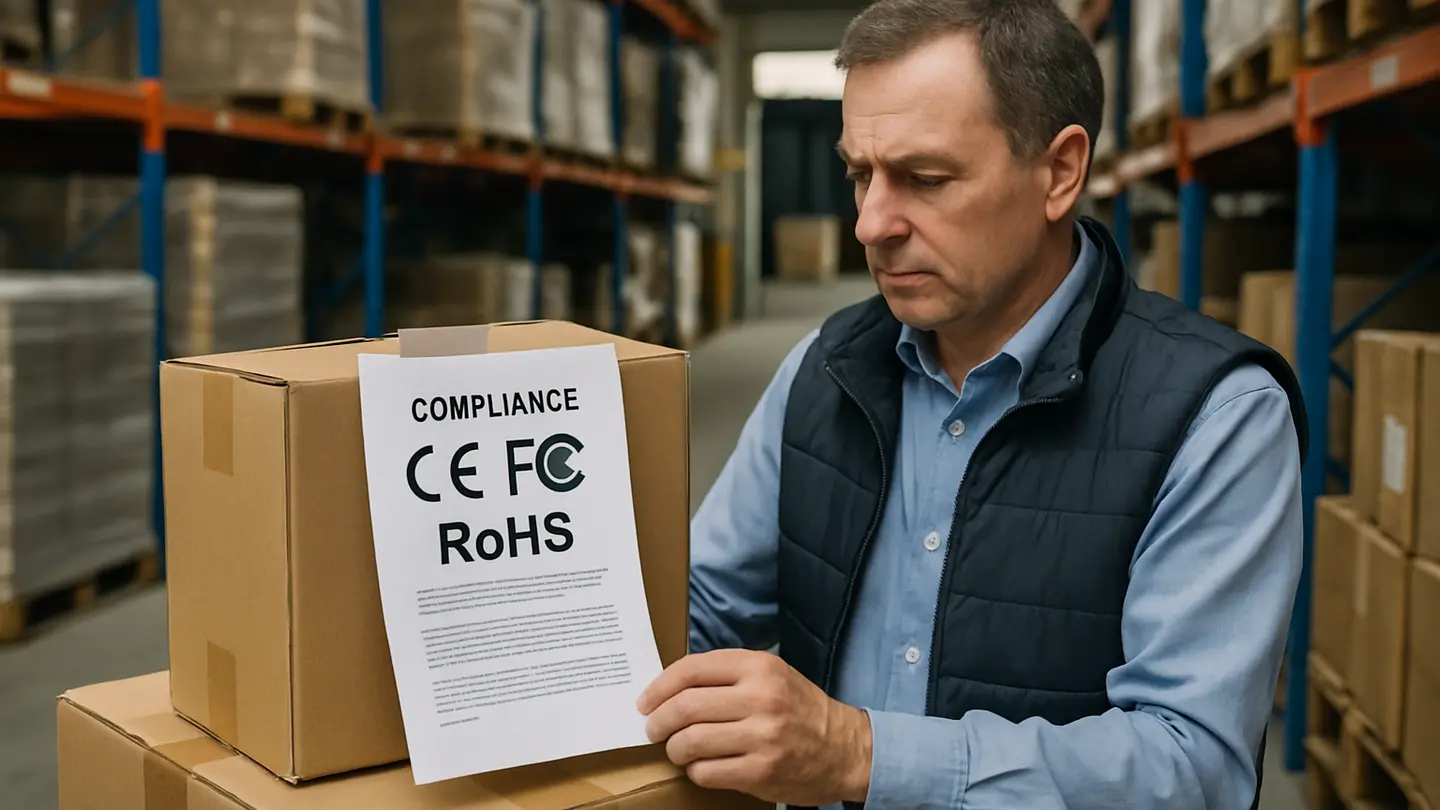
- Product safety, labeling, environmental, and technical requirements
- Whether testing, registration, or conformity documentation is required
- Insurance needs and the party responsible for arranging it
Review the commercial invoice and packing list for accuracy. Where preferential tariff treatment may be available, determine whether an origin declaration or certificate is required and whether the product actually qualifies under the relevant trade agreement.
Import compliance obligations generally remain with the importer in the destination market. A supplier’s assurance that it has exported similar goods before does not eliminate the buyer’s responsibility to verify requirements with a customs broker, qualified compliance adviser, or relevant authority.
Step 7: Build a Productive Long-Term Supplier Relationship
A reliable supplier relationship can improve planning, communication, pricing stability, and production priority over time. It should not depend on vague goodwill; it should be supported by clear expectations and consistent business conduct.
Provide accurate forecasts where possible, issue purchase orders with enough lead time, and pay according to agreed terms. After each shipment, give structured feedback on quality, delivery, documentation, packaging, and communication. Suppliers can correct problems more effectively when feedback identifies the issue, the affected lot, the likely cause, and the required corrective action.
For recurring defects or process failures, request a documented corrective-action response. The supplier should explain containment steps, root cause, corrective measures, and how it will prevent recurrence. Track whether those actions work on subsequent orders.
Factory visits can reveal information that emails and video calls may not: production flow, housekeeping, incoming-material control, calibration practices, packaging operations, worker training, and whether the actual facility matches the supplier’s claims. Visits are particularly valuable before major tooling commitments or when an existing supplier’s performance begins to decline.
Should You Tell Suppliers That You Are New to Importing?
There is no need to volunteer inexperience. Buyers should be transparent about legitimate requirements, but they do not need to frame themselves as unfamiliar with importing procedures.
Credibility comes from asking specific, informed questions: What is the material grade? Which test method applies? What does the quoted Incoterm include? How will production changes be approved? What is the re-inspection process after a failed quality check?
Avoid making unsupported claims about future order volumes. A realistic forecast and a well-prepared specification are more useful to a supplier than exaggerated promises.
How Long Does a First Direct Import Order Take?
A first direct import order commonly takes months rather than weeks from supplier search to delivery. The timeline can include supplier screening, quotation revisions, sample production, sample adjustments, order confirmation, bulk production, inspection, freight booking, transit, customs clearance, and final delivery.
Customized products and sea freight generally require more contingency time. Production schedules can also be affected by raw-material availability, factory capacity, public holidays, and shipment congestion.
Do not promise your own customers a delivery date based solely on the supplier’s initial production estimate. Build time buffers into launch plans, especially for a first order or a new product design.
Is a Factory’s Product Certification Claim Sufficient?
No. A certification claim does not automatically prove that the exact product being imported meets the requirements of the destination market.
Request the underlying test reports or certificates and check the details: product model, revision, material configuration, testing standard, issuing organization, date, and named applicant or manufacturer. A report covering a different model or an earlier version may not support the product now being ordered.
The importer remains responsible for confirming applicable rules in the target market. Certification documentation should be treated as evidence to review, not as a substitute for compliance assessment.
Should Payments and Quotes Be in US Dollars or RMB?
Many export-oriented Chinese suppliers quote in US dollars, while suppliers focused more heavily on the domestic market may prefer RMB. Either can be workable if the transaction currency is stated clearly in the quotation, purchase order, and payment instructions.
The contract should also state who bears exchange-rate risk. Currency movements between order confirmation and later payment stages can change the buyer’s actual landed cost and affect margin.
Consider the timing of deposits and final balances, the currency of customer sales, bank conversion costs, and whether freight or duty expenses will be paid in another currency. Treat currency exposure as part of the total sourcing cost, not as an afterthought.
Key Takeaways for Direct Sourcing From China
Direct sourcing from China can offer greater control and lower intermediary costs, but it requires disciplined execution. The most important controls are supplier verification before payment or sensitive disclosure, detailed product documentation, sample approval, and independent inspection before final payment.
Buyers should evaluate products on total landed cost and commercial viability, not factory price alone. They should also confirm shipping responsibilities, customs requirements, tariff exposure, and destination-market compliance before goods leave the factory.
The first direct import order often carries the greatest learning and operational risk. Each completed order, however, can strengthen internal procedures, improve supplier communication, and establish a more reliable basis for future purchasing.
About the Author
The author is a B2B sourcing and supply-chain writer covering procurement, supplier qualification, manufacturing quality control, freight planning, and international trade operations. Their work focuses on practical decision-making for buyers managing cross-border supplier relationships and import programs.