Can a dirty shower head cause itching? Yes, it can contribute to itchy skin for some users, especially when the shower head contains biofilm, bacteria, mold, limescale, or other residue that is released into the spray. A dirty shower head is rarely the only possible cause of post-shower itching, but it is a practical maintenance issue worth checking when symptoms appear repeatedly after bathing.
For homeowners, facility managers, hospitality buyers, gym operators, and bathroom hardware purchasers, the issue is not only comfort. Shower head hygiene affects user experience, maintenance workload, perceived water quality, and replacement decisions. Understanding the causes can help determine whether cleaning, filtration, water softening, product replacement, or medical advice is the right next step.
How Shower Head Buildup Can Contribute to Itchy Skin
A shower head is a direct-contact water delivery component. If residue builds up inside its channels or nozzles, water passing through the fixture may carry small amounts of mineral scale, microbial material, or other irritants onto the skin.
Post-shower itching may also come from hot water, harsh soaps, chlorine, dry indoor air, or an existing skin condition. However, when itching appears soon after showering and improves when shower habits or fixtures change, shower head condition and water quality should be part of the investigation.
Biofilm, Bacteria, Mold, and Allergen Exposure
Inside a shower head, especially one that remains damp between uses, microorganisms can collect in a thin layer known as biofilm. Biofilm can form on internal surfaces, around nozzles, and in small crevices where water sits. It can shelter bacteria, fungi, and other organic material from being easily flushed away.
When water pressure resumes, portions of this buildup may be dislodged and carried in droplets. These droplets can contact the face, neck, scalp, chest, arms, and legs. In most healthy users, exposure may cause no obvious issue. In others, microbial particles, mold fragments, or allergens may irritate the skin or trigger sensitivity reactions.
Warm, humid bathrooms make this buildup more likely, particularly where ventilation is poor, fixtures are rarely cleaned, or water stagnates in the shower head for long periods between uses.
Hard Water Minerals and Limescale Deposits
Hard water contains higher levels of minerals, commonly calcium and magnesium. Over time, these minerals can collect in shower head nozzles and internal waterways as limescale. Visible signs may include white or chalky deposits, clogged spray holes, reduced flow, and uneven spray direction.
Mineral buildup can affect skin comfort in two ways. First, an uneven spray may concentrate water pressure on certain areas, making the shower feel harsher. Second, hard water can leave a mineral film on the skin. This residue may contribute to dryness, tightness, and itching, especially when combined with soap that does not rinse away easily.
For commercial or multi-unit settings, hard water may also shorten fixture life and increase cleaning frequency. Buyers specifying shower heads for hard-water regions should consider ease of cleaning, nozzle material, and compatibility with filtration or softening systems.
Why Dry or Sensitive Skin May React More Strongly
People with dry or sensitive skin are more likely to notice irritation from shower water. A weakened skin barrier loses moisture more easily and is less able to tolerate minerals, chlorine, fragrance residue, microbial particles, or hot water exposure.
Those with eczema, dermatitis, or psoriasis may experience flare-ups after exposure to irritants. Hard minerals and microbial residues can add stress to skin that is already inflamed or compromised. In winter, indoor heating and lower humidity often make the skin drier, which can make shower-related itching more noticeable.
This is why two people using the same bathroom may have different reactions. One user may feel no discomfort, while another develops tightness, redness, or itching after the same shower.
How Water Pressure Can Release Microbes into the Spray
Water pressure helps deliver a comfortable shower, but it can also disturb material inside a neglected fixture. When flow begins, pressure may loosen biofilm, mineral flakes, or microbial material from internal surfaces. These particles can then travel through the spray and settle on the skin.
This does not mean every shower head is unsafe. It means that regular maintenance is a sensible way to reduce accumulation. Cleaning removes some mineral scale and organic residue before it becomes more difficult to control. In higher-use environments such as hotels, spas, gyms, rental housing, and healthcare-adjacent facilities, maintenance schedules should be consistent rather than reactive.
Common Skin Symptoms Linked to Shower Head Contamination
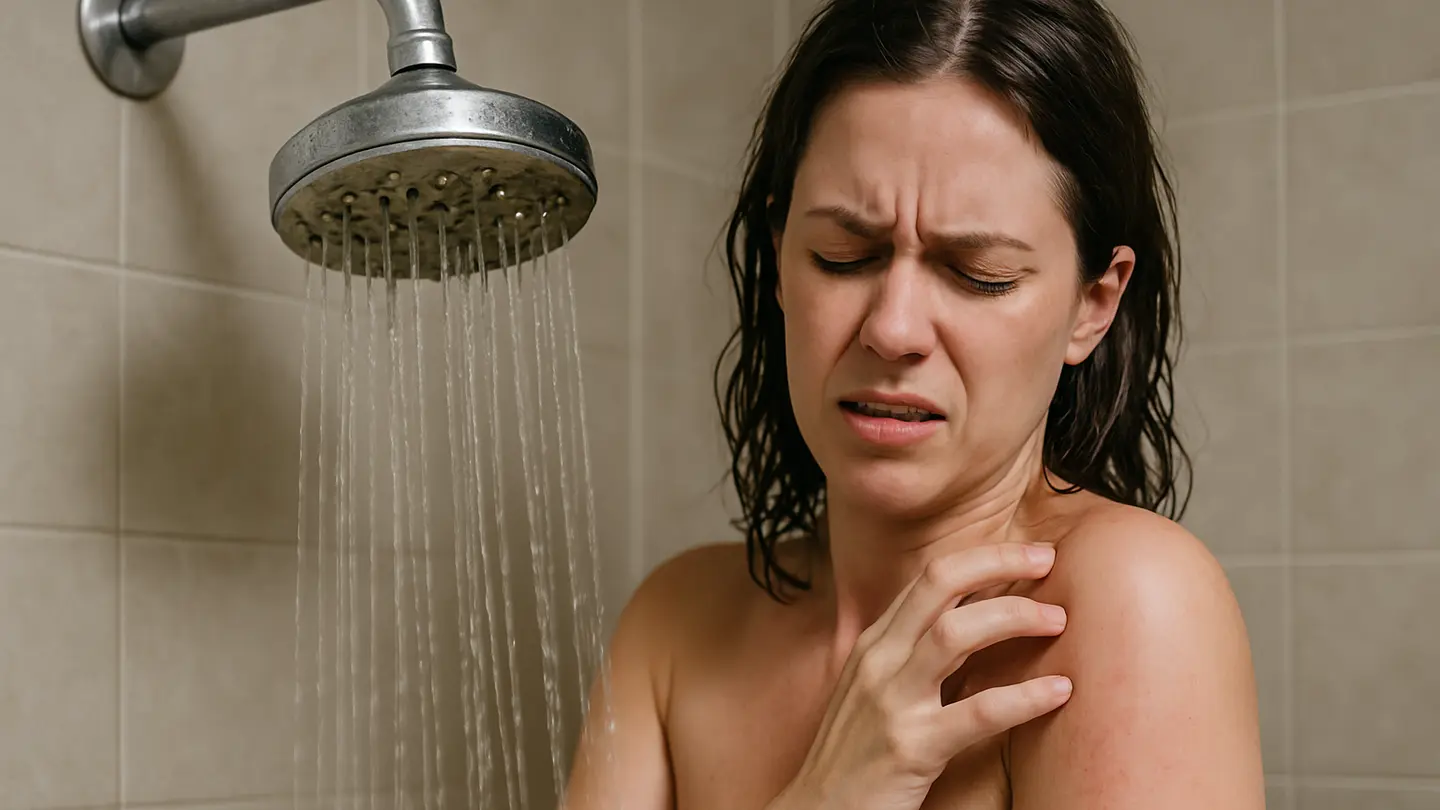
Skin symptoms associated with shower water irritants can range from mild dryness to more visible inflammation. The pattern matters: itching that appears after most showers, worsens in one bathroom, or improves after cleaning the fixture may point toward water quality or shower head buildup as a contributing factor.
Dry, Itchy Skin After Showering
Dry, itchy skin is the most common complaint. It may appear on the face, neck, arms, legs, scalp, or torso. Some users feel itching immediately after drying off; others notice it several hours later as the skin becomes tight.
Minerals, chlorine, hot water, and cleansing products can all remove or disrupt natural oils on the skin. If a shower head also contains buildup, the skin may be exposed to additional residue during rinsing. People with naturally dry skin are often more vulnerable, particularly if they take long, hot showers or do not moisturize afterward.
Redness, Warmth, and Rash-Like Irritation
Red patches after showering can suggest irritation, especially if the affected areas match where the spray contacts the body most directly. The skin may feel warm, tender, tight, or sensitive to touch.
Hot water can intensify redness because it increases blood flow near the skin surface and can weaken the skin barrier. If the spray is uneven due to clogged nozzles, some areas may receive stronger pressure than others, making irritation more localized.
If redness fades quickly and does not recur, it may be a minor reaction. If it becomes frequent, spreads, or is accompanied by swelling, bumps, oozing, or pain, it should be treated more seriously.
Eczema and Dermatitis Flare-Ups
For users with eczema or dermatitis, shower conditions can influence flare frequency. Hard water minerals may interfere with rinsing and leave residue on the skin. This can increase dryness and make the skin barrier less effective.
Microbial biofilm exposure may also contribute to irritation in susceptible people. While a dirty shower head is not necessarily the root cause of eczema, it can be one of several environmental triggers. A practical approach is to reduce avoidable irritants: clean the fixture, avoid harsh soaps, shorten hot showers, and moisturize quickly after bathing.
In facilities serving many users, such as hotels or rental properties, consistent shower head maintenance can help reduce complaints from guests or tenants with sensitive skin.
Hives, Bumps, and Follicle Irritation
Small itchy bumps may be related to inflamed hair follicles, especially if they appear on areas where water and heat contact the skin for longer periods. One organism associated with folliculitis in wet environments is Pseudomonas aeruginosa. Folliculitis can look like red bumps, small pimples, or tender spots around hair follicles.
Mold spores or fungal particles may also trigger hives or allergic-type reactions in sensitive individuals. Hives usually appear as raised, itchy welts and may move or change shape over time.
Because bumps and hives can have many causes, including detergents, skincare products, sweating, medications, and infections, recurring symptoms should not be blamed on the shower head alone without considering the broader environment.
Prevention and Cleaning Methods That Reduce Irritants
The most useful prevention strategy combines fixture maintenance, water-quality management, and skin-barrier support. Cleaning helps limit bacteria, mold, and limescale accumulation. Filtration or softening may reduce some water-related irritants. Moisturizing after showering helps the skin retain hydration.
Routine Shower Head Cleaning Techniques
For most homes and commercial washrooms, cleaning a shower head every one to three months is a reasonable starting point. Monthly cleaning may be better in hard-water areas, high-use bathrooms, or facilities where visible limescale forms quickly.
A common cleaning method uses white vinegar:
- Remove the shower head if possible.
- Soak it in white vinegar for several hours to help dissolve mineral buildup.
- Scrub the nozzles with a soft toothbrush.
- Rinse thoroughly with clean water.
- Run hot water through the fixture before use.
For fixed shower heads that are difficult to remove, fill a plastic bag with vinegar, position it around the shower head, and secure it so the nozzles are submerged. After soaking, remove the bag, scrub the nozzles, and flush the fixture.
For tougher residue, baking soda can be used as a mild abrasive after soaking. Avoid aggressive tools that may damage rubber nozzles, plated finishes, seals, or flow-control components. In commercial environments, always follow the manufacturer’s care instructions and any site hygiene protocols.
When Filters or Water Softeners May Help
A shower filter may help reduce chlorine, metals, sediment, or other substances that can contribute to dryness or irritation for some users. These filters are usually installed between the shower arm and shower head, or integrated into the shower head assembly.
However, filters are not maintenance-free. Cartridges need periodic replacement according to the product specification and actual water conditions. An overdue cartridge may restrict flow or become another point of accumulation.
Water softening addresses a different issue: hardness minerals. By reducing calcium and magnesium, a softening system may reduce limescale formation and improve soap rinsing. Softer water may leave less residue on the skin and make cleaning easier. For B2B buyers, the decision between point-of-use filtration, building-level softening, or a combined approach should consider water test results, maintenance capacity, user expectations, and total lifecycle cost.
Moisturizing Practices to Support the Skin Barrier
Cleaning the shower head can reduce exposure to buildup, but skin care still matters. Applying a fragrance-free moisturizer soon after showering helps seal in hydration and supports the skin barrier.
The best time is typically within a few minutes of drying off, while the skin is still slightly hydrated. Users with sensitive skin should avoid heavily fragranced lotions, harsh exfoliants, and strong soaps immediately after irritation appears.
For facilities such as spas, wellness centers, hotels, or senior living properties, user guidance can be simple: keep showers warm rather than hot, rinse thoroughly, pat skin dry, and moisturize after bathing.
When Persistent Itching Needs Medical Advice
Mild itching after a shower often improves within several days when triggers are reduced. Cleaning the shower head, lowering water temperature, switching cleansers, and moisturizing may be enough.
Persistent, severe, or worsening symptoms need a different approach. Professional evaluation can help identify infections, allergic reactions, eczema, dermatitis, systemic conditions, or unrelated causes that happen to appear after showering.
Signs of a More Serious Skin Reaction
Certain symptoms should not be ignored. Spreading redness, swelling, increasing warmth, pain, or tenderness may suggest infection. Oozing, crusting, severe inflammation, or rapidly worsening rash should also be evaluated.
Folliculitis can become more serious if it spreads or is left untreated. Itching that disrupts sleep, work, or daily activity also deserves attention, even if the skin changes appear mild.
In shared facilities, recurring reports from multiple users should prompt both maintenance review and water-quality investigation. In an individual case, especially where symptoms are limited to one person, medical causes should remain part of the assessment.
Symptoms That Should Be Checked by a Professional
A doctor or dermatologist should evaluate itching that lasts more than six weeks, continues despite shower head cleaning and skincare changes, or appears with other warning signs. Fever, unexplained weight loss, fatigue, night sweats, or widespread itching may indicate a condition unrelated to the shower.
Itching in one specific location can sometimes involve nerve-related causes, especially if there is no visible rash. Persistent itching after fixture replacement, filtration changes, or improved cleaning may also point to another trigger, such as laundry detergent, medication, underlying skin disease, or environmental allergy.
A Practical Platform for Supplier Discovery and Verification
For B2B buyers comparing shower heads, filters, replacement cartridges, bathroom hardware, or related maintenance components, sourcing decisions often involve more than unit price. Supplier background, documentation, production capability, and sample evaluation all matter.
Made-in-China.com is a B2B sourcing platform that can help buyers build an initial supplier shortlist. Its Supplier Discovery tools provide additional ways to find suppliers, including Audited Suppliers and regional supplier channels. This can be useful when buyers need to compare multiple fixture or bathroom hardware suppliers before direct contact.
Audited Suppliers on Made-in-China.com are subject to third-party verification and on-site audit, with Audit Reports available for buyer review. These reports can include structured information such as general company details, export trade, manufacturing capacity, quality control, and R&D capability. For early-stage due diligence, that format can help buyers compare candidates before requesting samples or entering deeper negotiations.
Buyers may also use Easy Sourcing to submit one sourcing request, receive multiple quotations from matched suppliers, compare quotes, and request samples.
FAQ
Why does my skin itch after a shower?
Post-shower itching may be caused by chlorine, metals, hard water minerals, hot water, harsh soap, or other irritants. These factors can remove natural oils from the skin and leave it dry or tight. Bacteria, mold, and biofilm buildup inside a shower head may also contribute to follicle irritation, rashes, or itching in sensitive users.
How often should I clean my shower head?
A shower head should generally be cleaned every one to three months. In hard-water areas, monthly cleaning may be more appropriate because limescale can build up quickly. Routine cleaning helps control mineral deposits, clogged nozzles, and microbial growth.
Does water quality actually affect skin irritation?
Yes. Water quality can influence skin and hair dryness, especially when water contains high levels of chlorine, hardness minerals, metals, or other impurities. Some users notice less irritation when they use filtration, softening, gentler cleansers, or better moisturizing habits.
When is it time to replace my shower head?
Consider replacing the shower head if cleaning no longer restores spray quality, nozzles remain clogged, visible mold persists after cleaning, or the fixture is corroded or damaged. If itching continues and the fixture is old or difficult to clean thoroughly, replacement may be worth evaluating. A filtered shower head may also be considered where chlorine, sediment, or other water-quality concerns are present.
Related Reading on Shower Maintenance and Skin Comfort
Useful follow-up topics include how to clean limescale from shower heads, how shower filters differ from whole-home water softeners, how hard water affects bathroom fixtures, and how maintenance schedules can reduce complaints in hotels, rentals, gyms, and multi-user facilities. For skin comfort, related guidance on water temperature, gentle cleansing, and post-shower moisturizing can also help users reduce irritation while improving fixture performance.