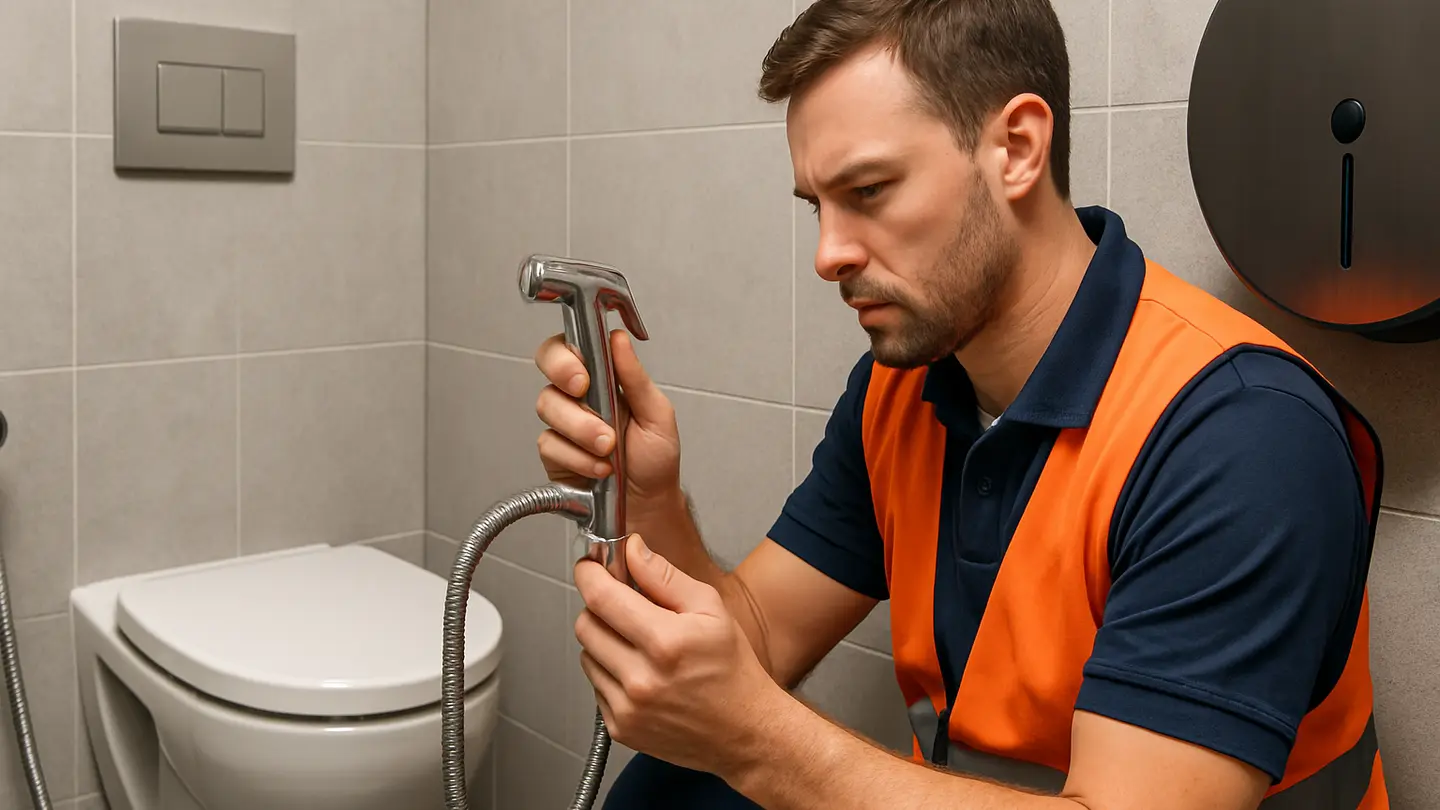
Commercial washrooms expose bidet showers to frequent use, moisture, cleaning chemicals, user mishandling, and repair pressure. In hotels, offices, transport facilities, schools, labor accommodation, and public buildings, a weak sprayer assembly can quickly cause leaks, cracked triggers, stripped threads, clogged nozzles, or inconsistent spray.
Specifying durable bidet showers is less about the visible finish and more about the full assembly: body material, hose construction, valve quality, connection hardware, nozzle design, pressure control, cleanability, spare-part availability, and warranty support. Stainless steel, brass, and quality ABS can all have a place, but the right choice depends on where the component sits and how much stress it carries.
For commercial projects, the best models usually combine corrosion-resistant metals in pressure-bearing or high-wear areas with user-friendly spray control, maintainable nozzles, and serviceable installation details.
What Makes a Bidet Shower Suitable for Commercial Use?
A commercial-grade bidet shower is designed for repeated operation in a wet, high-contact environment. Unlike a lightly used residential fixture, it may be handled by many users, exposed to daily cleaning, and expected to work across varying water pressures.
Suitability depends on three broad areas:
- Material resilience: Components should resist corrosion, mineral buildup, thread wear, and impact damage.
- Functional reliability: Triggers, valves, hoses, and spray heads should withstand frequent cycling without leaks or sticking.
- Hygiene and maintenance support: Surfaces and nozzles should be easy to clean, descale, inspect, and replace.
Commercial specifications should also consider the cleaning regime. Chlorine-based cleaners, descalers, disinfectants, and abrasive tools can accelerate wear on lower-grade plastics or decorative finishes.
Core Features to Look For in Durable Models
Durable models should include controls that make daily use predictable. Adjustable pressure is important because users differ in comfort preferences and cleaning needs. A sprayer with only a harsh jet may generate complaints, while weak output may be ineffective.
Self-cleaning nozzles can reduce manual cleaning by rinsing the spray outlet before or after use. They do not replace scheduled cleaning, but they help limit residue between maintenance cycles.
Internal construction matters as much as the exterior. Metal internal valves, brass or stainless steel connectors, and reinforced hose fittings generally resist cracking better than lower-cost plastic parts. For commercial projects, review warranty coverage, exclusions, replacement-part availability, and supplier support for bulk orders.
Common Bidet Shower Types and Variants
The most common commercial option is the handheld bidet sprayer, installed near the toilet and connected to the water supply. It gives users directional spray control and can be mounted on the wall, beside the cistern, or near concealed plumbing depending on layout. This format is widely used because it is simple to install and service.
Bidet attachments fit beneath an existing toilet seat and typically use fixed or retractable nozzles. They may suit retrofit projects where a handheld hose is not preferred, but toilet shape, seat mounting, and user expectations must be checked.
Some attachments include heated water options. These require more planning because hot-water supply, mixing, electrical safety, or temperature control may become part of the specification. In many commercial washrooms, a cold-water handheld sprayer remains the simpler and more maintainable choice.
Material Selection for Longer Service Life
Construction material is one of the strongest predictors of service life. The spray head, internal valve, hose braid, trigger, wall bracket, T-adapter, washers, and threaded connections may all use different materials. A product marketed as “stainless steel” may still contain plastic pressure-bearing components, so review the technical datasheet carefully.
In wet bathroom environments:
| Material | Typical strengths | Common limitations | Best-use areas |
|---|---|---|---|
| Stainless steel | Corrosion resistance, strength, clean appearance | Grade and finish quality vary | Spray heads, hoses, brackets, exposed bodies |
| Brass | Durable threads, corrosion resistance, strong fittings | May require suitable plating or finish | Valves, connectors, adapters, pressure-bearing fittings |
| Quality ABS or engineering plastic | Lightweight, cost-effective, moldable | Can degrade under heat, chemicals, or impact | Non-pressure decorative parts, selected handles or covers |
The goal is not to eliminate plastics, but to avoid weak plastic threads, brittle triggers, or low-grade internal parts in high-stress locations.
Stainless Steel Compared With Plastic Components
Stainless steel is widely specified for commercial bathroom hardware because it resists corrosion through a passive chromium oxide layer. When lightly scratched, this protective layer can reform in the presence of oxygen.
For bidet showers, stainless steel generally handles moisture, temperature changes, and routine cleaning better than low-grade plastics. It is useful for exposed spray heads, braided hoses, brackets, and other high-contact components.
Plastic components vary widely. Premium ABS or engineering plastics can perform well where weight, molding complexity, or cost control matters. However, plastics may become brittle after exposure to heat, UV, or aggressive cleaning chemicals. Plastic threads can also strip more easily than metal threads, increasing leak risk at hose and valve connections.
Where Brass and Premium Alloys Add Value
Brass is valuable where thread integrity, pressure resistance, and dimensional stability matter. Solid brass fittings, valves, adapters, and connectors often outperform plastic equivalents under repeated tightening, servicing, and pressure cycling.
Copper-zinc brass can resist dezincification in many water conditions, although water chemistry and alloy selection still matter. Ask suppliers whether brass components are suitable for local water quality and applicable plumbing requirements.
Premium alloys or plated brass may also be used where the project needs a specific finish, such as chrome, brushed nickel, or matte black. Buyers should evaluate finish adhesion, cleaning compatibility, and resistance to spotting or discoloration.
Planning for Corrosion, Mineral Buildup, and Wear
Commercial bathrooms create overlapping wear factors: moisture, hard water, user handling stress, chlorine exposure, disinfectants, and abrasive cleaning practices. Even a strong base material can underperform if the surface finish is poor or cleaners are incompatible.
Stainless steel’s passive oxide layer is a practical advantage because it can recover after minor surface scratches. However, it still needs suitable cleaning, and deposits should not sit indefinitely.
Hard water can create mineral buildup around nozzles and trigger areas. Some plastic surfaces may discolor, dull, or degrade faster under harsh cleaning, especially if chemicals are left on too long. A durable specification should include both material requirements and cleaning guidance.
Performance Factors That Shape User Experience
Durability alone is not enough. A bidet shower that is strong but uncomfortable, hard to control, or awkward to reach may still generate complaints. Commercial specifications should balance robustness with user comfort.
The main performance factors are water control, spray stability, handling comfort, hygiene support, and cleaning effectiveness.
Water Pressure, Flow Stability, and Spray Control
Adjustable pressure is one of the most important features for commercial use. Users may prefer a gentle rinse or a more concentrated spray, and plumbing pressure can vary by building zone.
Multiple spray patterns can improve usability. A wider spray may be more comfortable, while a focused pattern may be preferred for cleaning effectiveness. Controls should be intuitive and easy to operate with wet hands.
Where water pressure fluctuates, pressure regulators or flow-control components may help stabilize output. Confirm the operating pressure range of the selected model and compare it with actual site conditions.
Ergonomics, Grip, and Comfortable Operation
The handle should feel balanced and should not require awkward wrist movement. In commercial settings, small ergonomic issues matter because users vary in strength, reach, and familiarity with the fixture.
Non-slip grips improve control when hands are wet. Low-effort triggers support comfort and accessibility, especially in hospitality, healthcare-adjacent, senior-living, or public-use environments. A stiff trigger may encourage excessive force, increasing wear.
Mounting position also affects usability. The holder should be within comfortable reach from the toilet, without requiring twisting or stretching. It should also avoid conflict with grab bars, toilet paper dispensers, doors, partitions, waste bins, or cleaning equipment.
Hygiene Features and Cleaning Support
Self-cleaning nozzles can rinse the outlet before and after use, helping reduce residue accumulation. Automatic rinsing does not replace manual cleaning, but it supports hygiene between scheduled service intervals.
Nozzle material and geometry also matter. Smooth surfaces, accessible outlets, and easy-to-descale spray heads reduce cleaning time. Stainless steel may resist mineral deposits better than some plastics when paired with routine descaling.
Some models may include antimicrobial materials or coatings in high-touch areas. If this feature matters, request documentation rather than relying on broad marketing language. Claims should be supported by material data, applicable testing information, and maintenance instructions.
Installation, Compatibility, and Service Planning
Correct installation is essential to long-term performance. Many leaks attributed to product failure are caused by incompatible fittings, overtightened plastic threads, missing washers, unsupported hoses, or poor bracket placement.
Before selection, review bathroom layout, existing plumbing, fixture clearances, user reach, wall construction, shut-off valve access, and service requirements. Compatibility planning reduces installation delays and later disruption.
Retrofit Versus New Construction Applications
Retrofit installations often connect to the existing toilet water supply. A T-adapter is commonly installed at the supply point so water can feed both the toilet cistern and the bidet shower. Existing shut-off valve condition, supply line condition, and available space must be checked before ordering.
New construction gives designers more control. Supply lines can be placed cleanly, wall brackets coordinated with backing, and concealed plumbing integrated into the washroom design. Concealed or semi-concealed arrangements may improve appearance and reduce exposed connection points.
Many bidet showers use a half-inch cold-water connection, but final requirements must follow the selected model, local plumbing standards, and site conditions.
Checking Compatibility With Existing Bathroom Fixtures
A bidet shower must match the project’s plumbing connection types. Thread size, adapter style, shut-off valve location, hose length, and available clearance should all be verified.
A standard shut-off valve at the toilet supply is typically required so the fixture can be isolated for installation or servicing. Water pressure should fall within the sprayer’s stated operating range. If pressure is too high, leakage, splash, or premature wear may occur; if too low, performance may be unsatisfactory.
Wall brackets need secure attachment to suitable backing. Lightweight partitions or hollow walls may require reinforcement, anchors, or alternative mounting locations. In commercial washrooms, brackets should withstand repeated removal and replacement of the sprayer.
Designing for Easier Maintenance and Servicing
Maintenance planning should be part of the specification. In hard-water areas, periodic descaling of spray heads helps prevent mineral buildup and uneven spray output. High-traffic facilities may need more frequent cleaning.
Facility teams should inspect hose connections periodically for leaks, looseness, corrosion, or wear. Hoses and spray heads are common replacement parts, so standardized components can reduce downtime and inventory complexity.
Accessible parts make minor repairs easier. If a hose can be tightened, a washer replaced, or a sprayer head swapped without opening walls or removing fixtures, lifecycle service costs are lower. For larger projects, confirm spare-part availability before approving a model.
Another Way to Build a China Supplier Shortlist
For buyers comparing international supply options, Made-in-China.com can support early-stage supplier discovery and quotation work. It is a B2B sourcing platform, not a manufacturer, and should be used alongside normal qualification.
Its Supplier Discovery tools help narrow supplier options, including Audited Suppliers and regional supplier channels. Audited Suppliers are subject to third-party verification and on-site audit, with Audit Reports available for review. These reports can include supplier details, export trade, manufacturing capacity, quality control, and R&D capability.
Made-in-China.com’s Easy Sourcing feature allows one sourcing request to be submitted so matched suppliers can provide multiple quotations. Buyers can then compare quotes and request samples as part of deeper due diligence.
Specification Details to Confirm Before Ordering
A commercial bidet shower specification should define the complete assembly, not just the product name. Key details include:
- Body and spray head material: SUS304 stainless steel or equivalent corrosion-resistant material is often preferred for exposed and high-wear parts.
- Pressure-bearing components: Specify durable brass or stainless steel for valves, connectors, adapters, and threaded fittings where possible.
- Hose construction: Look for reinforced hoses with corrosion-resistant exterior braiding and reliable end fittings.
- Trigger operation: Require smooth, low-effort triggers that do not stick, leak, or require excessive force.
- Spray control: Confirm adjustable pressure or spray settings suitable for the intended user group.
- Nozzle design: Choose easy-to-descale nozzles, preferably with self-cleaning support where hygiene demands are higher.
- Replacement strategy: Standardized hoses, washers, cartridges, and spray heads simplify maintenance across multiple washrooms.
- Installation type: Confirm compatibility with exposed, semi-concealed, or concealed plumbing layouts.
- Operating range: Match the model to site water pressure and supply conditions.
- Warranty and support: Review commercial warranty terms, exclusions, and spare-part availability.
For premium washrooms, concealed-plumbing compatibility can improve appearance and reduce exposed clutter. For high-traffic utility environments, ease of replacement and rugged connection points may matter more.
FAQ
What materials are recommended for high-traffic settings?
SUS304 stainless steel and solid brass are strong choices for critical components such as spray heads, valves, connectors, adapters, and threaded fittings. These metals generally resist corrosion, wear, and mineral buildup better than weaker alternatives and can reduce leaks caused by stripped or cracked parts.
What performance features are critical for commercial projects?
Adjustable water pressure is important because users have different comfort expectations and cleaning needs. Consistent spray patterns, smooth trigger operation, and stable flow support daily reliability. Self-cleaning nozzles can help maintain hygiene and reduce manual maintenance.
How can long-term maintenance needs be minimized?
Specify corrosion-resistant metal construction for pressure-bearing and high-wear parts, use easy-to-descale nozzles, and choose models with accessible service points. Self-cleaning functions can reduce residue buildup between cleaning cycles. Standardized hoses and spray heads also simplify replacement across multi-unit projects.
Related Reading
- Commercial shower fixture buying guides
- Bathroom hardware material selection guides
- Washroom maintenance and lifecycle planning articles