For EU buyers sourcing from China, EU import duty from China is not one single border cost. Customs duty is harmonized across the European Union, but import VAT is not. The same shower enclosure, brass valve, glass panel, drain component, or bathroom accessory should face the same EU customs tariff if correctly classified, while the VAT rate at import can differ by member state.
That distinction matters. Customs duty is normally a permanent cost. Import VAT may be recoverable by a VAT-registered business if the import is structured correctly and the buyer is the proper importer of record. If VAT is paid under the wrong party’s name, or the buyer is not registered where required, a recoverable tax can become a cash-flow problem or a real cost.
Port choice is only one part of landed-cost planning. A lower VAT country does not automatically mean a lower final cost. Classification, customs value, freight, insurance, Incoterms, importer identity, clearance location, and VAT recovery all matter.
What Importers Actually Pay at the Border
A China-to-EU import budget should separate the main cost layers instead of treating them as one “duty” line.
| Cost element | What it means | Usually recoverable? |
|---|---|---|
| Goods value | The commercial value of the products purchased from the supplier | No, this is the product cost |
| International freight and insurance | Transport and insurance costs relevant to the customs value | No, this is a logistics cost |
| Customs duty | Tariff charged according to product classification, origin, and customs value | Usually no |
| Import VAT | VAT charged at import in the country of release into free circulation | Potentially yes, if properly structured |
| Clearance and local handling fees | Broker fees, terminal charges, documentation, storage, inspections, delivery handling | Usually no |
Customs value normally starts with the invoice value and includes relevant transport, insurance, and other costs required under EU customs valuation rules. Customs duty is then calculated on that customs value.
Import VAT is often calculated on a broader taxable base. It can include the customs value, customs duty, and certain transport or incidental costs connected with bringing the goods to their destination. VAT is therefore not always “invoice value × VAT rate.”
For example, when importing bathroom fittings from China, the taxable base may include the factory invoice, ocean freight, insurance, customs duty, and some clearance-related charges. Estimating VAT only on the supplier’s product price can understate landed cost.
The key distinction is between cash paid at the border and cost retained after accounting recovery. Customs duty, freight, handling, testing, and storage charges generally remain costs. Import VAT may be reclaimed or offset by eligible businesses, but only if the declaration and VAT documentation support the buyer’s deduction.
This is why two importers can pay similar amounts at clearance but end with different economic costs. One may recover or defer import VAT. Another may lose the deduction because the shipment was cleared under a freight forwarder, marketplace seller, or overseas supplier’s importer details.
The Customs Duty Rate Does Not Change by EU Port
For ordinary imports, the EU customs tariff is common across member states. If a finished product is correctly classified under the Combined Nomenclature or TARIC, the duty rate should be the same whether the goods enter through Rotterdam, Hamburg, Antwerp, Valencia, Gdańsk, Le Havre, or another EU port.
Port selection can still affect:
- terminal handling charges;
- customs broker fees;
- inspection costs;
- demurrage and storage exposure;
- inland transport distance;
- clearance speed;
- documentation practice;
- cash-flow timing.
But those are logistics and service differences, not changes in the EU customs tariff itself.
The real duty question is classification. Shower-sector products can include glass panels, aluminum profiles, plastic seals, stainless steel screws, brass cartridges, thermostatic valves, shower hoses, trays, drains, electronic controls, or complete shower cabins. A finished product classification may differ from the classification of its components. Material, function, assembly level, and product presentation can all matter.
Buyers should confirm the HS code, CN code, or TARIC classification before production or shipment. A supplier’s suggested HS code is only a starting point. Chinese export codes and EU import classifications may not align, and vague invoice descriptions such as “bathroom accessories” or “hardware parts” can create clearance problems.
A practical pre-shipment file should include a specific product description, material breakdown, intended function, photos or drawings, commercial invoice, packing list, and relevant technical data sheets. Precise descriptions make duty estimates more reliable.
Why 27 VAT Rates Do Not Automatically Mean Lower Final Cost
EU member states set their own VAT rates. Import VAT is usually charged in the country where goods are released into free circulation. The duty rate may be the same, but the VAT rate may differ.
Routing through a lower-VAT country can look attractive, especially for high-value shipments. However, the benefit is often cash-flow timing rather than final-cost saving.
For a VAT-registered business entitled to deduct import VAT, the key questions are:
- Is the buyer registered for VAT where required?
- Is the buyer named as importer of record?
- Does the customs declaration match the buyer’s accounting records?
- Can the import VAT be reclaimed, deferred, or offset?
- Are the goods used for taxable business activities?
- Is the documentation sufficient to support deduction?
If these conditions are met, import VAT may be recoverable through the relevant VAT system. Timing still matters. Paying 21% or 23% VAT at the border and reclaiming it later can create a working-capital burden, especially for repeat container imports. Some countries offer import VAT deferment or postponed accounting mechanisms, but eligibility and procedures differ.
Problems arise when the importer of record is not the buyer. In some delivered-duty-paid or platform-based arrangements, the supplier, freight forwarder, customs agent, or another intermediary may appear as importer. The buyer receives the goods but may not have the legal VAT evidence needed to reclaim import VAT.
For B2B buyers, low-VAT routing should be evaluated carefully. A lower rate can help cash flow if the structure is compliant and reclaimable. It does not automatically reduce final landed cost, especially if the route adds freight, handling, storage, or administrative expense.
How the End of the €150 Parcel Exemption Changes Small Shipments
The low-value parcel environment is changing. Under the reform described for July 1, 2026, parcels under €150 are no longer treated as duty-free in the same way, and a flat €3 duty is described for each distinct product type in a parcel.
This mainly affects direct-to-customer parcel shipping, e-commerce sellers, sample parcels, and small consignments shipped by courier or postal networks. It is especially relevant where multiple product types are packed into one parcel. If each distinct product type attracts a separate flat charge, small mixed parcels can become more expensive.
For B2B importers, the effect depends on the sourcing model. A company importing full pallets, LCL shipments, or containers of shower doors, bathroom fixtures, or replacement parts above the low-value threshold was already operating under ordinary duty and VAT rules. The end of the parcel exemption does not fundamentally change standard commercial imports above €150.
However, it can affect the economics of:
- sending low-value samples to distributors or customers;
- shipping spare parts directly from China to end users;
- fulfilling online orders from non-EU stock;
- splitting consignments into many small parcels;
- testing new product lines through courier shipments.
Small parcels may also carry clearance charges that are disproportionate to the goods value. Even if VAT can theoretically be recovered, parcel handling fees, courier disbursement charges, and administrative costs are usually real costs.
Bulk B2B buyers should not confuse parcel rules with container-import rules. Production stock moving by sea freight, air freight, or road after EU arrival should be costed under normal customs classification, customs value, duty, VAT, and clearance procedures.
Checks to Complete Before Placing the Order
Import planning should begin before the purchase order is signed. Once production is complete and goods are on the water, correcting documents, changing importer identity, or revising classification becomes harder.
Before ordering from a Chinese supplier, buyers should confirm the following points.
1. Product description and classification
The commercial invoice should describe the finished goods accurately. Avoid generic descriptions such as “shower parts,” “bathroom goods,” or “metal accessories” if classification depends on specific function and material. Confirm the HS, CN, or TARIC classification based on the actual product, including material, use, assembly state, and packaging.
2. Customs duty rate
Once classification and origin are confirmed, check the EU tariff rate and any additional measures. The basic customs duty rate should not vary by member state, but anti-dumping, safeguard, quota, or licensing measures may apply.
3. Country of origin
Origin is generally based on where the goods are manufactured or substantially transformed, not merely where they are shipped from. Chinese-made goods moving through a third-country warehouse do not automatically become third-country-origin goods.
4. Commercial value
Invoice values must be realistic and consistent with the transaction. Understated values can cause delays, reassessments, penalties, and tax issues. The invoice should match payment records, purchase contracts, and packing documents.
5. Incoterms
Incoterms influence who arranges transport, who bears risk, and who pays certain costs. They also affect control over customs clearance. Under EXW or FOB, the buyer may have more visibility over freight and import clearance. Under DDP, the seller may handle importation, but the buyer may not be importer of record and may not be able to recover import VAT.
6. Freight and insurance
Freight is part of landed-cost planning and may be part of the customs value or VAT taxable base. Use actual freight quotes rather than rough estimates, especially when comparing air freight, LCL, FCL, rail, or multimodal routes.
7. Clearance country
Decide where the goods will be released into free circulation. This determines the import VAT rate and may affect VAT deferment options, broker costs, inland transport, and delivery timing.
8. Importer of record
The importer of record is legally responsible for the customs declaration, duty, VAT, and compliance. This identity should be agreed before shipment. If the buyer expects to reclaim VAT, the declaration and VAT documentation must support that position.
9. Documentation consistency
The commercial invoice, packing list, bill of lading or air waybill, purchase order, certificate of origin if used, product descriptions, and payment records should align. Inconsistent documentation increases customs risk.
10. Product compliance
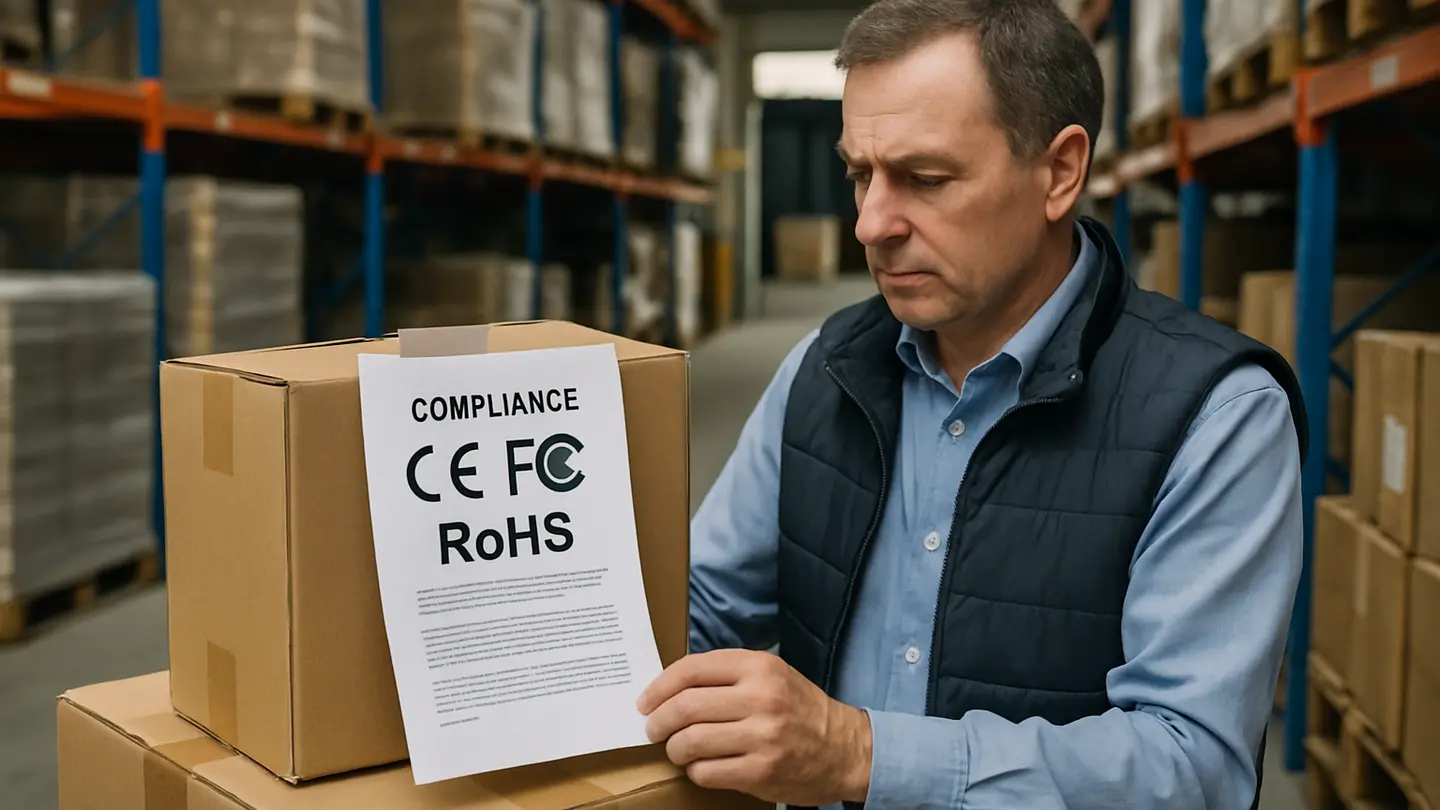
Customs duty is only one border issue. Depending on the product, EU compliance may involve CE marking, construction product rules, sanitary or drinking-water-contact requirements, chemical restrictions, packaging obligations, labeling, or market surveillance expectations. These issues should be reviewed separately from tariff cost.
FAQ
Q1: Is there a China-EU trade deal that lowers the duty?
Chinese goods generally pay the standard EU duty rate that applies to their product classification and origin. For ordinary imports, there is no general China-EU duty discount that importers can simply claim.
If a logistics provider or supplier quotes a much lower duty rate, verify why. The explanation may be a different classification, a different declared origin, a special tariff measure, or an error. A lower rate must be supported by correct classification and origin evidence.
Q2: Can I import into the EU without a company there?
It may be possible in some cases, but it is not always simple. Non-EU businesses often need local representation, a customs representative, or an agent. Some may be able to obtain a customs or identification number for import purposes, depending on the member state and structure.
The practical challenge is responsibility. The importer of record carries legal obligations for the customs declaration, duties, VAT, and compliance. Finding an agent willing to accept that role can be difficult if product compliance, valuation, or tax recovery is unclear. Non-EU sellers should resolve importer status before quoting DDP or marketplace fulfillment terms.
Q3: Could my product carry an extra anti-dumping duty?
Yes. Some China-origin products are subject to EU anti-dumping duties or other trade defense measures in addition to ordinary customs duty. These measures can be much higher than the standard tariff rate.
Anti-dumping exposure should be checked before confirming production, pricing, or routing. It is not enough to know the basic HS code and VAT rate. Buyers should review TARIC measures, origin, manufacturer details where applicable, and product-specific scope descriptions. Routing through another country will not remove the duty if the origin remains China.
Q4: My goods are made in China but ship from a warehouse in Malaysia. Does that change the duty?
Usually, no. Customs origin is generally based on where the goods were manufactured or substantially transformed, not where they were stored before export to the EU. If China-made products are moved to a Malaysian warehouse and then shipped onward without sufficient processing to change origin, they remain China-origin goods.
Routing through another country can be legitimate for inventory, consolidation, or logistics reasons. But using transshipment to disguise origin or avoid duties creates serious compliance risk. Customs authorities may request origin evidence, manufacturing records, supplier information, and transport documents. Unsupported origin claims can lead to reassessment, penalties, delays, or loss of trust.
Conclusion: Settle Classification, VAT Recovery, and Importer Status First
Apparent differences in EU import duty from China should not be attributed to the entry country alone. The customs tariff is harmonized across the EU, so a correctly classified product should carry the same duty rate in any member state. What changes by country is import VAT, local procedures, cash-flow options, broker costs, port handling, and logistics timing.
Before production begins, buyers should confirm classification, duty rate, origin, freight basis, clearance country, importer-of-record identity, and VAT recovery position. These fundamentals determine whether a quoted “landed cost” is reliable.
Port selection comes after that. Once classification and tax structure are clear, buyers can compare routes on transit time, inland delivery, broker capability, VAT cash flow, storage risk, and service cost. The cheapest-looking route is not always the lowest-risk route, and the lowest VAT rate is not automatically the lowest final cost.
About the Author
The author is a B2B sourcing and trade content specialist focused on international procurement, supplier documentation, landed-cost planning, and customs-related decision-making for importers. This article is general editorial guidance for professional buyers evaluating China-to-EU sourcing structures, not a substitute for advice from a customs broker, tax adviser, or legal professional.