For importers, express shipping from China is the fastest mainstream parcel option for moving small commercial shipments door to door. When the shipment is suitable, premium couriers such as DHL, FedEx, and UPS can often deliver to major business destinations in roughly two to five business days.
That speed comes at a price. Express courier services are usually far more expensive per kilogram than air freight or ocean freight, and the bill is shaped by both scale weight and carton dimensions. A bulky lightweight box can cost more than expected because couriers charge by the greater of actual weight and volumetric weight.
For B2B buyers sourcing samples, replacement parts, urgent restocks, or compact high-value goods, express can be practical. For heavier cartons, low-value products, or non-urgent replenishment, budget parcel lines, standard air freight, or sea freight may be more economical.
How Express Courier Shipping Works
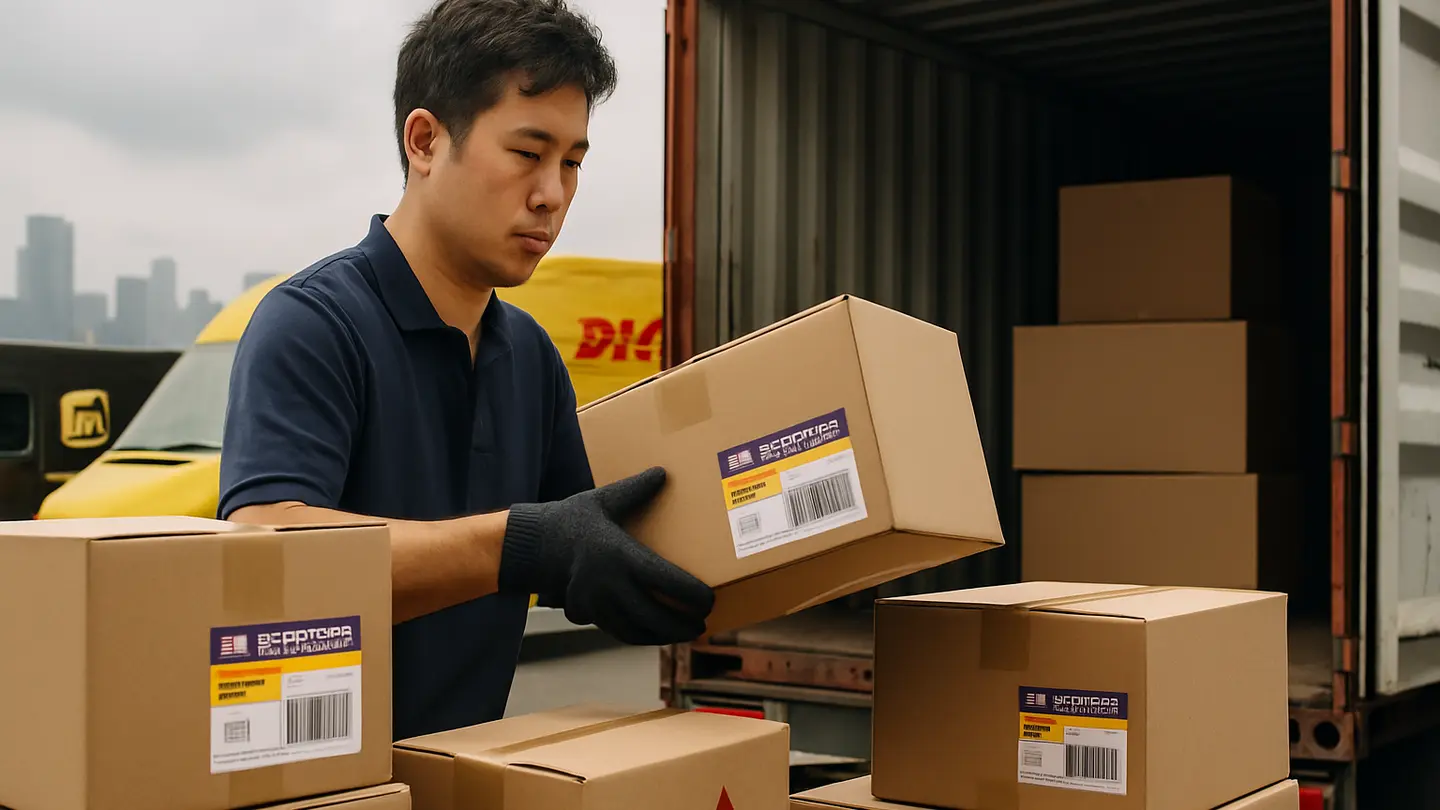
Express courier shipping is fast because the courier controls most of the transport chain. In a typical door-to-door movement, one carrier or its network partners handle pickup from the supplier, export processing in China, air transport, import customs brokerage, and final delivery.
That integrated model reduces handovers. A more fragmented freight movement may involve a local trucker, export forwarder, airline terminal, destination forwarder, customs broker, and final-mile carrier. Each handoff can add waiting time or coordination risk.
Common B2B uses for express include:
- Product samples for approval before production
- Replacement components for machinery, displays, or fixtures
- Urgent restocks of compact goods
- Documents and certificates
- Small trial orders before bulk freight
- High-value parcels where speed and tracking matter
Couriers also offer different speed tiers. A premium service may target the fastest window, while an economy express option may take slightly longer at a lower cost. The key is to match service level to business need. Paying for the fastest option rarely makes sense if the goods will sit in a warehouse after arrival.
DHL, FedEx, and UPS: Comparing the Main Express Couriers
DHL, FedEx, and UPS are the main premium courier options for express shipments from China. All three operate large international networks and can provide similar delivery speeds on major lanes. In practice, the best carrier depends on destination, postcode, shipment profile, service level, and account pricing.
A simplified comparison looks like this:
| Courier | Common strengths | Points to check |
|---|---|---|
| DHL | Often strong on Europe lanes and lighter international parcels | Remote-area coverage, fuel surcharge, account rate |
| FedEx | Often competitive on selected North American commercial lanes | Service tier, customs brokerage handling, surcharge structure |
| UPS | Strong business delivery network in many markets, especially commercial addresses | Lane performance, pickup cut-off, dimensional pricing |
These are general tendencies, not fixed rules. A courier that is fastest or cheapest to Germany may not be best for Canada, Australia, the Middle East, or a remote delivery postcode.
Buyers should compare live quotes using the exact shipment details:
- Carton dimensions
- Actual gross weight
- Commodity description
- Declared value
- Destination country and postcode
- Delivery address type
- Required delivery speed
- Account or billing arrangement
Brand reputation is useful, but it should not replace shipment-specific comparison. A surcharge-inclusive quote for the actual box is more reliable than a general estimate.
What Express Shipping Costs and What Drives the Price
Express courier pricing is based on chargeable weight. This is the greater of:
- Actual weight — what the parcel weighs on a scale
- Volumetric weight — the space the parcel occupies in the courier network
Volumetric weight is calculated using a dimensional-weight formula. The exact divisor depends on the courier, service, and rate card, but the principle is the same: large boxes consume aircraft and van space, even when light.
For example, a carton of lightweight plastic bathroom accessories may weigh 8 kg, but if the box is large, the courier may rate it as 15 kg or more. A compact carton of metal fittings with the same scale weight may be charged much closer to actual weight.
Typical cost drivers include:
- Destination country and postcode
- Actual and volumetric weight
- Number of cartons
- Courier and service level
- Fuel surcharge
- Remote-area surcharge
- Peak-season surcharge
- Oversize or non-standard handling charges
- Declared value and insurance requirements
- Duties, taxes, and brokerage-related charges
This is why two shipments with the same product value can produce very different courier bills. A compact carton of brass valves may be economical by express, while a large carton of lightweight shower panels or display materials may become expensive quickly.
Importers should also separate transport cost from landed cost. Duties, VAT/GST, customs fees, and destination charges can affect the final amount paid before delivery.
Ways to Reduce Express Shipping Costs
The most effective way to reduce express cost is to control chargeable weight. In practical terms, that means reducing unnecessary carton volume.
Useful steps include:
- Ask the supplier to use right-sized export cartons
- Avoid shipping half-empty boxes
- Remove unnecessary retail display packaging where appropriate
- Confirm carton dimensions before booking
- Combine compatible items into fewer cartons when safe
- Avoid oversize carton lengths that trigger handling surcharges
Consolidation can also help. If a supplier sends three small parcels separately, each may carry its own minimum charge or fixed fees. Combining them into one shipment can spread those fixed costs, although it is not always cheaper if it creates an oversized carton or too much volumetric weight.
Negotiated courier accounts can be much cheaper than walk-up retail pricing. Larger importers may secure better rates directly with couriers. Smaller buyers may access discounted express rates through freight forwarders, sourcing agents, or logistics providers.
When comparing quotes, ask for an all-in breakdown that separates:
- Base freight
- Fuel surcharge
- Remote-area surcharge
- Peak surcharge
- Customs brokerage or advancement fees, if applicable
- Duties and taxes, if included
- Insurance or declared-value charges
A low headline rate is not useful if surcharges appear later. The relevant number is the total expected cost to deliver the parcel to the receiving address.
Typical Transit Times by Destination
Transit time for express shipments depends on destination country, route, service level, pickup time, customs clearance, and final delivery postcode. On major international lanes, DHL, FedEx, and UPS commonly deliver premium express parcels in about two to five business days, but that should be treated as a planning estimate rather than a guarantee.
Door-to-door transit includes several stages:
| Stage | What happens | Possible delay points |
|---|---|---|
| Pickup | Courier collects from supplier or warehouse in China | Missed cut-off, incomplete booking, late packing |
| Export handling | Parcel enters courier network and clears export process | Documentation issues, restricted goods review |
| Air movement | Shipment moves through international air network | Flight capacity, weather, peak congestion |
| Import clearance | Courier broker submits customs data | Incorrect invoice, duty/tax query, product classification issue |
| Final delivery | Parcel moves to local depot and consignee | Remote postcode, failed delivery, address error |
Carrier transit estimates often exclude customs holds and remote-address delays. A parcel may move from Shenzhen or Shanghai to a destination country quickly, then sit in clearance while customs requests more information.
Seasonality matters. Chinese New Year can disrupt production, pickup availability, and export capacity. Year-end peak periods can also affect courier networks as e-commerce volumes rise. Buyers should avoid promising customers the carrier’s best-case delivery date unless there is buffer in the schedule.
For urgent commercial goods, build in contingency. If a sample must arrive before a trade show, installation, or approval meeting, booking one or two days earlier can prevent a small delay from becoming a business problem.
Lower-Cost Parcel Lines for Lightweight Orders
Premium express is not the only parcel option from China. Lower-cost parcel lines can suit lightweight, low-value, non-urgent shipments, especially e-commerce orders or small accessories where price matters more than speed.
Examples include cross-border parcel networks such as 4PX and YunExpress. These services often combine collection in China, line-haul transport, customs processing, and local delivery through postal or regional delivery partners.
The trade-off is straightforward:
| Option | Best suited for | Typical trade-off |
|---|---|---|
| Premium express courier | Urgent samples, business-critical parcels, high-value compact goods | Higher cost |
| Budget parcel line | Lightweight, low-value, non-urgent orders | Slower delivery and less detailed tracking |
| Postal or economy service | Very small parcels where cost is the priority | Longer and less predictable transit |
Budget parcel delivery may take one to three weeks, depending on destination and service. Tracking may show only major milestones, such as export departure, arrival in destination country, customs clearance, and final delivery.
Shippers should understand normal tracking gaps before raising claims. Some services have defined claim windows, proof requirements, and exclusions. If the shipment has meaningful commercial value or a tight deadline, premium express may still be safer.
Customs, Duties, and Hidden Delay Risks
Express transit estimates assume smooth customs clearance. The courier’s brokerage team can move many routine shipments quickly, but customs still has authority to inspect, question, or hold goods.
Common causes of customs delay include:
- Commercial invoice values that do not match order records
- Vague product descriptions such as “parts,” “sample,” or “gift”
- Incorrect HS codes or inconsistent classification
- Missing consignee tax ID or importer registration information
- Underdeclared value
- Unclear country of origin
- Regulated products without required documents
- Mismatch between packing list, invoice, and airway bill
For B2B shipments, descriptions should be specific. “Stainless steel shower hose samples,” “brass mixer valve cartridge,” or “plastic wall bracket for bathroom fixture” is more useful than “hardware” or “accessory.”
Duty and tax responsibility should be agreed before shipping. Depending on the commercial terms and courier billing setup, charges may be billed to the shipper, receiver, or a third-party account.
Some third-party billing arrangements require prior approval. If the supplier plans to ship freight collect using the buyer’s courier account, confirm that the account allows imports from China and that the supplier has the correct details. Mistakes can cause booking rejection, billing disputes, or delivery delays.
Products That May Be Restricted or Require Special Handling
Not every product can move through standard express services. Some goods are restricted, prohibited, or accepted only under specific conditions.
Common categories requiring attention include:
- Lithium batteries
- Products containing batteries
- Liquids
- Powders
- Magnets
- Aerosols
- Chemicals
- Adhesives
- Perfumes or scented products
- Items with pressurized containers
- Certain electronic devices
- Goods requiring certification in the destination market
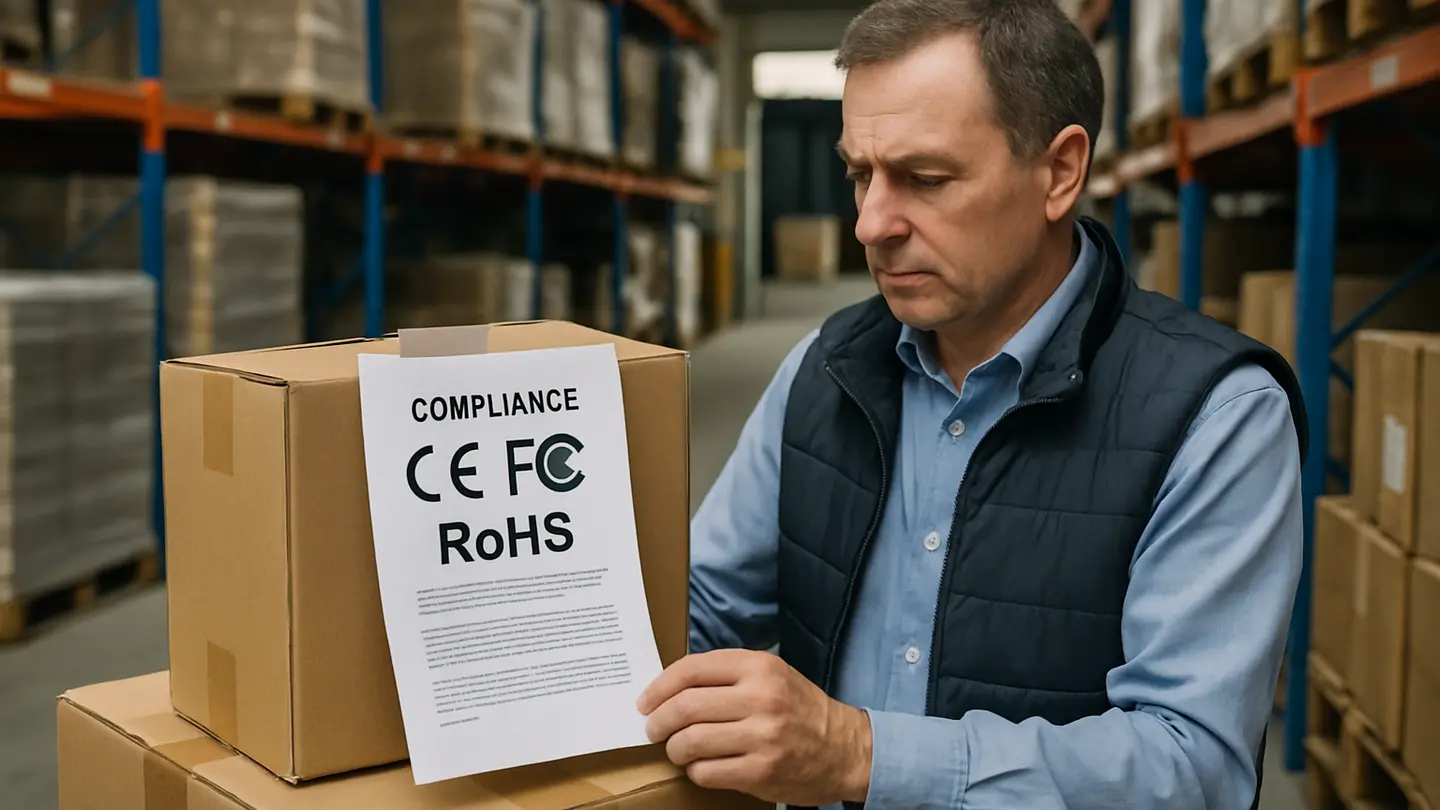
Requirements may include special packaging, hazard labels, safety data sheets, UN38.3 test summaries for lithium batteries, dangerous-goods declarations, or use of a specific courier service. Acceptance can vary by courier, destination country, product type, and packing method.
For example, a product with a lithium battery installed in equipment may be treated differently from loose spare batteries. A small magnet inside an assembly may have different handling requirements from a carton of strong industrial magnets.
Incorrect declarations are risky. If restricted goods are shipped as ordinary cargo, the parcel may be rejected, returned, delayed, confiscated, or subject to penalties. For regulated products, confirm acceptance before booking and make sure the supplier prepares the correct documentation.
When Express Shipping Is Not the Best Choice
Express shipping works best for small, urgent, or high-value shipments. It becomes less attractive when cartons are heavy, bulky, low-value, or not time-sensitive.
As chargeable weight rises, freight options often become more economical. There is no universal break-even weight because the best method depends on route, dimensions, commodity, urgency, and available rates. A compact 80 kg shipment may price differently from a bulky 80 kg shipment.
When express costs feel high, compare:
- Premium courier express
- Economy express
- Standard air freight
- Air freight with courier final delivery
- Less-than-container-load ocean freight
- Full-container ocean freight for larger orders
Split shipments can also work well. A buyer may send urgent samples or a small quantity of saleable units by express while the bulk order moves by air freight or sea freight. This keeps the business moving without paying premium courier rates for the entire shipment.
Express Courier Service Versus Standard Air Freight
Express courier service is an integrated door-to-door parcel service. The courier manages pickup, air transport, customs brokerage, and delivery under one network or coordinated system.
Standard air freight is usually arranged through a freight forwarder. It often involves separate pickup, export handling, airline cargo movement, import customs clearance, and destination delivery. The process can take longer to coordinate, but it can be more economical as shipment size increases.
For a single sample carton, express is usually simpler. For multiple cartons or heavier commercial shipments, standard air freight may offer a better balance between speed and cost.
Lithium Battery Shipments by Express
Some lithium battery shipments can move by express, but acceptance depends on the details. The courier will consider battery type, watt-hour rating or lithium content, whether batteries are packed alone or with equipment, packaging, documentation, origin, destination, and service availability.
Before booking, confirm battery shipments with the courier or logistics provider. Do not rely only on the supplier’s assurance that “batteries are okay.” Rules can differ by lane and service.
Undeclared batteries can cause rejection, return, delay, or penalties. They can also create safety risks in air transport. If the product contains batteries, declare them clearly and prepare the required documents before pickup.
Choosing Among DHL, FedEx, and UPS
Choose among DHL, FedEx, and UPS based on the lane and shipment rather than brand reputation alone. Carrier strengths differ by route, weight band, service level, account terms, and destination postcode.
For a fair comparison, use the same:
- Carton dimensions
- Actual weight
- Chargeable weight
- Pickup city in China
- Destination address
- Declared value
- Commodity description
- Required delivery date
Ask for surcharge-inclusive prices. A headline rate without fuel, remote-area, or peak-season charges may not reflect the final bill.
Booking Directly With a Courier Versus Through a Forwarder
Booking directly with a courier can be simple for a single urgent parcel. The buyer or supplier can arrange pickup, generate labels, and track the shipment through the courier’s system. Direct booking can also be competitive when speed, control, and simplicity are priorities.
A freight forwarder may be cheaper for regular shipments or heavier volume. Forwarders often access discounted courier and freight rates through aggregated volume. They may also help compare express, economy air, and standard air freight options rather than quoting only one courier service.
For importers shipping frequently from China, it is worth testing both routes. Use direct courier accounts where they perform well, and use forwarders when they provide better pricing, consolidation, or routing flexibility.
Key Takeaways for Importers
Express shipping from China is strongest for light, urgent, or valuable parcels where speed and tracking justify the premium. DHL, FedEx, and UPS can often deliver quickly on major lanes, but the best choice depends on the exact shipment and destination.
Budget parcel lines are better suited to small online orders where low cost matters more than fast delivery. Freight becomes more attractive as shipment size, carton volume, and chargeable weight increase.
Before booking, check carton dimensions, service level, surcharges, customs paperwork, and product restrictions. Packing, documentation, and pickup planning can affect both cost and delivery time as much as the carrier name on the label.
About the Author
The author is an independent B2B sourcing and logistics writer covering supplier management, import planning, freight options, and practical purchasing decisions for companies buying from overseas manufacturers.