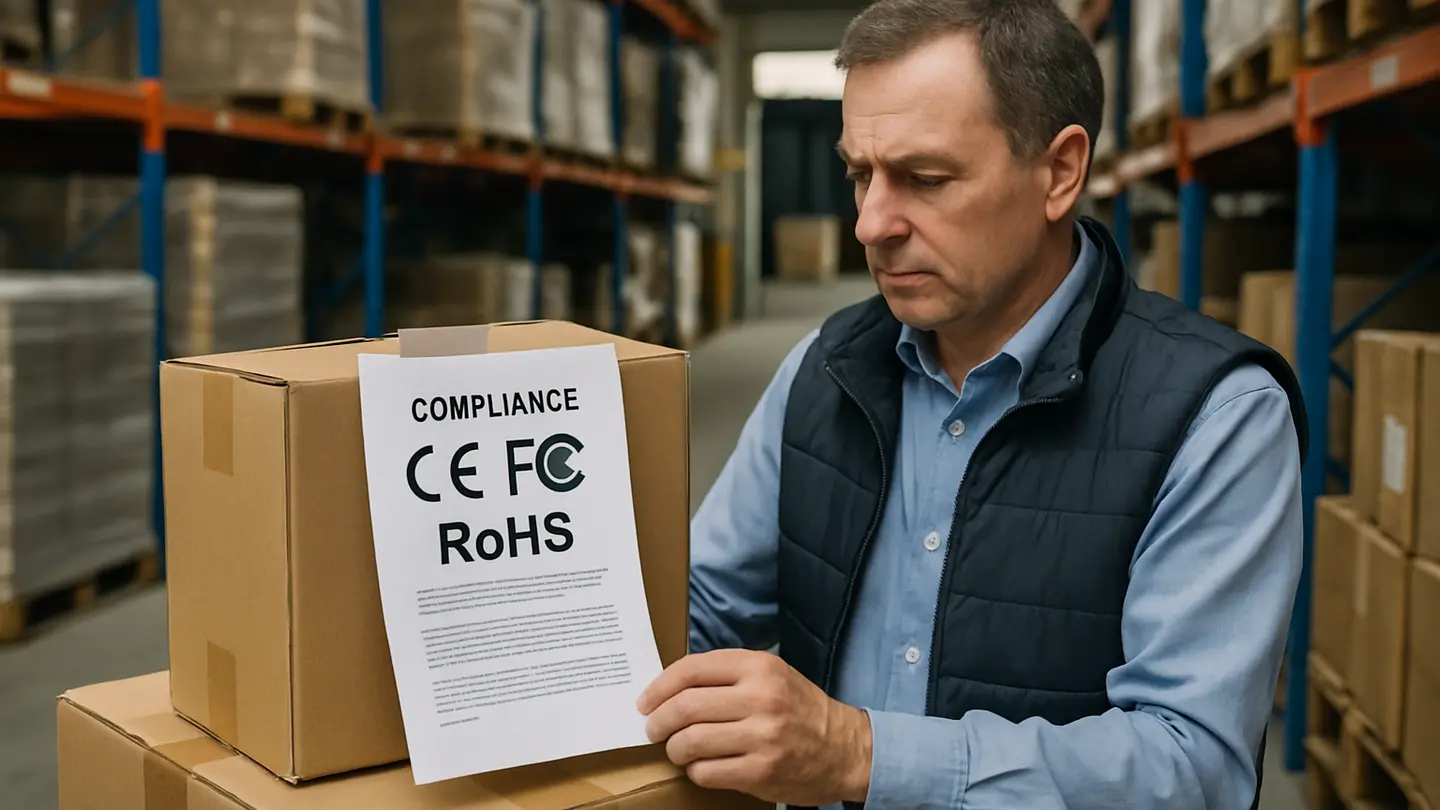
Factory audit vs product inspection is not an either-or decision in every sourcing project. The two methods answer different questions: Can this supplier produce responsibly and consistently? and Does this specific shipment meet the agreed requirements?
A factory audit is normally completed before you sign a contract or pay a deposit. A pre-shipment inspection takes place when most of your order is finished, before final payment or loading. An audit can miss production changes made months later, while an inspection may not reveal false production capacity or unauthorized subcontracting. For high-risk shower, bathroom, and plumbing orders, using both can provide more complete control.
How Factory Audits and Product Inspections Address Different Risks
A factory audit examines the supplier as an operating business. It may review legal documents, production facilities, equipment, staffing, quality procedures, material controls, workplace conditions, and subcontracting arrangements.
A product inspection examines the physical goods made for your order. Inspectors compare samples from the finished batch with your specifications, approved samples, drawings, packaging instructions, labeling requirements, and testing criteria.
The distinction is important because supplier risk and shipment risk are not the same. A supplier may have a legitimate facility but still produce a defective batch. Conversely, a shipment may look acceptable while the supplier lacks the manufacturing capacity or traceability it claimed.
Capability Risk and Shipment Risk
A factory audit primarily addresses capability risk. Before committing a deposit, you want to know whether the supplier:
- Exists at the stated address
- Holds the relevant business and operating documents
- Has suitable production lines and equipment
- Employs enough personnel for the proposed order
- Maintains usable quality-control procedures
- Controls raw materials and work-in-process goods
- Has the capacity to meet your volume and delivery requirements
- Uses subcontractors, and whether those arrangements are disclosed
An on-site visit can distinguish a real manufacturer from a trading company presenting itself as a factory. It may also show whether the supplier’s claimed machinery, assembly areas, warehouse, and testing resources are actually available.
For a shower manufacturer, the review might include metal-forming or machining equipment, surface-finishing arrangements, assembly lines, packing areas, incoming material controls, and inspection records. The exact scope should reflect the products being sourced rather than relying on a generic checklist.
A pre-shipment inspection addresses shipment risk. Its purpose is to determine whether the goods made for your purchase order are sufficiently complete and conform to the agreed requirements before you release the balance or allow loading.
An inspector may check:
- Product appearance and workmanship
- Dimensions and critical tolerances
- Finish, color, plating, or coating consistency
- Assembly and operating functions
- Water-flow or leakage-related checks where specified
- Thread, connection, or component compatibility
- Strength or other product-specific tests
- Labels, barcodes, manuals, and markings
- Carton quantity and packaging protection
- Shipping marks and carton condition
A factory audit helps answer whether a supplier is suitable for a commercial relationship. A pre-shipment inspection helps support the decision to accept, correct, rework, or hold a particular order.
When Each Check Belongs in the Sourcing Process
Factory audits normally belong near the beginning of the sourcing cycle. Complete one before signing a long-term agreement, placing a substantial order, or transferring a deposit. The earlier the findings are available, the more choices you have. You can request corrective action, negotiate additional controls, compare another supplier, or stop the project before production begins.
A pre-shipment inspection belongs near the end of production. It is usually scheduled when most units are complete and packed or nearly ready for packing. Inspecting too early may provide useful process information but cannot confirm the final shipment. Inspecting too late may leave little time for sorting, repair, replacement, or additional production before the vessel or truck is scheduled.
Inspection timing and frequency depend on several practical factors:
- Order value
- Product complexity
- Supplier history
- Shipping deadline
- Defect consequences
- Available quality-control budget
- Whether the order contains customized or private-label components
For a simple, repeat item from a supplier with a strong record, one final inspection may be proportionate. For a complex shower system with several components, finishes, installation parts, and packaging configurations, you may also consider an inspection during production or a targeted test before everything is packed.
Smaller orders require a cost-based strategy. A full factory audit may not be economical for a small prototype, while an inspection can still identify obvious defects before shipment. However, a low order value does not automatically mean low risk. A failed shipment can still cause launch delays, customer complaints, installation problems, or expensive returns.
Inspection requirements should be written into the purchase contract or purchase order. Define the approved reference sample, drawings, materials, dimensions, performance requirements, packaging, defect classifications, sampling method, and acceptance limits. Also state what happens if the inspection fails. Without agreed criteria, a report may identify problems without providing a clear commercial remedy.
Compliance, Documentation, and Traceability
A finished-product inspection offers limited visibility into how the goods were made. It may show that a faucet or shower set has the correct appearance and packaging, but it generally cannot establish whether workers were paid correctly, whether chemicals were stored responsibly, or whether the claimed raw material was used throughout production.
A factory audit can review upstream evidence such as:
- Business registrations and operating licenses
- Payroll or workforce records, where relevant to the audit scope
- Health and safety procedures
- Chemical storage and handling
- Waste-management practices
- Purchasing invoices and material records
- Supplier approval procedures
- Certification records and their validity
- Production and quality-control documentation
- Subcontracting and outsourcing records
The depth of this review varies by audit type and buyer requirements. A basic capacity audit is not the same as a social-compliance, environmental, or ethical-sourcing audit. Buyers should therefore define the purpose before commissioning the visit.
Material claims should be matched with supporting evidence. If a product is described as using a particular grade of stainless steel, brass, recycled content, or another specified material, ask how the supplier identifies, purchases, stores, and verifies it. A product inspection may include material or composition testing, but documentation and process controls provide additional traceability.
This matters particularly for ESG-sensitive brands, regulated sales channels, and buyers making public claims about labor, environmental performance, or responsible sourcing. A visually acceptable shipment does not by itself prove responsible production. When upstream compliance is commercially important, an audit and document review should be part of the sourcing plan.
AQL Sampling and Finished-Product Testing
A pre-shipment inspection compares finished goods with defined specifications using an agreed sampling plan. One commonly used approach is acceptance sampling based on an AQL level, such as AQL 2.5 for certain defect categories. The selected level, sample size, and acceptance numbers must be agreed in advance; “AQL 2.5” alone is not a complete inspection instruction.
Defects are often classified as:
- Critical defects: Conditions that may create a safety hazard, violate a mandatory requirement, or make the product unacceptable for its intended use
- Major defects: Problems that materially affect function, installation, durability, appearance, or saleability
- Minor defects: Smaller deviations that do not normally prevent use but fall outside the agreed standard
For shower products, the inspection plan might cover finish consistency, visible scratches, incorrect components, loose assemblies, damaged threads, missing seals, incorrect dimensions, leakage, operation of valves or diverters, packaging protection, and installation instructions. The actual checks should be based on the product specification and intended market.
Testing protocols should define:
- The test method
- Equipment or fixtures required
- Number of samples
- Test duration
- Acceptance limit
- Environmental or operating conditions
- Who records and approves the result
Visual inspection and functional testing are not substitutes for every form of laboratory or certification review. If the product requires specialized testing, regulatory evidence, or material verification, those requirements should be handled separately or incorporated into the inspection program where technically appropriate.
Sampling also has limits. Inspectors do not normally examine every unit in the order. A sample can provide a reasonable basis for judging the batch under the selected plan, but it cannot guarantee that every carton is perfect. The report should therefore be read as a controlled assessment of the shipment, not an absolute statement about every individual item.
Inspection findings can support a batch decision: accept, accept subject to correction, re-inspect, or reject. They also create leverage before final payment and loading. If defects are found while the goods remain at the supplier’s facility, corrective action is generally more practical than after the cargo reaches your warehouse or customers.
The Blind Spots of Audits and Inspections
An audit is a point-in-time view of supplier capability. A factory may pass an assessment and later experience changes in management, staffing, equipment, raw materials, production volume, or subcontracting. Quality procedures documented during the visit may not be followed consistently during a rushed production run.
An audit also does not prove that a later batch meets your product specifications. The factory may have suitable equipment and an established quality system while still using the wrong component, missing a packaging instruction, or allowing unacceptable cosmetic and functional defects into a specific order.
The audit has limited value if it is performed only after production is complete. At that point, it cannot protect the original supplier-selection decision or prevent a deposit from being placed with an unsuitable source.
A product inspection has the opposite blind spot. It may confirm that the packed goods meet visible and functional requirements without proving where they were manufactured. A trading company could send production to an undisclosed subcontractor while presenting finished goods for inspection at a warehouse or another facility.
Unauthorized subcontracting can matter because the undisclosed site may use different materials, equipment, workers, quality procedures, or environmental controls. An inspector focused only on finished products may not discover that change.
The two services reduce these complementary blind spots when used together. The audit verifies the declared supplier and its operating capability at the start. The inspection checks the specific shipment at the end. For larger or higher-risk orders, buyers may add production monitoring, laboratory testing, or a follow-up audit when there has been a significant operational change.
A Practical Framework for Choosing One or Both Services
Use the following questions to decide what fits your order:
Is the supplier new to you? A new supplier generally justifies an upfront factory audit, especially when the order involves a substantial deposit or a long-term relationship.
Is the order already ready to ship? If production is complete and payment is due, a pre-shipment inspection is usually the more immediately relevant control.
How costly would failure be? Consider not only the invoice value but also tooling, freight, installation claims, product recalls, retailer penalties, lost launch dates, and reputational damage.
Is the product customized or regulated? Private-label shower systems, special finishes, integrated components, and products subject to market-specific requirements may justify both an audit and shipment inspection.
How complex is the supply chain? Multiple production sites, imported components, outsourced finishing, or unclear material sources increase the value of upstream verification.
How familiar are you with the supplier? A repeat commodity supplier with stable ownership and consistent inspection results may need less frequent auditing. A change in ownership, facility, equipment, product range, or subcontractor should trigger a fresh review.
What can your budget support? A small prototype may use supplier research and a targeted inspection. A larger commercial launch may justify an audit, pre-production review, and final inspection.
For many buyers, the practical sequence is:
- Audit the supplier before the first substantial commitment
- Approve specifications and reference samples
- Monitor production when complexity or risk warrants it
- Inspect the finished order before final payment and loading
- Reassess the supplier after major operational changes
What Actually Protects Your Order: Supplier Review or Shipment Check?
Factory audits primarily protect against supplier capability, legitimacy, compliance, and operational risks. Product inspections primarily protect against quality and conformity risks in a specific shipment.
Neither service alone verifies both supplier integrity and batch conformity. A passed audit is not a guarantee of shipment quality, and a passed shipment inspection is not proof that the supplier owns the facility or controls every stage of production.
What a Factory Audit Can Verify—and What It Cannot
A properly scoped audit can help verify:
- The facility exists and is operating
- Business and operating documents are available for review
- The equipment is suitable for the proposed products
- Production lines and staffing are consistent with the supplier’s claims
- Quality procedures and records exist
- Materials and work-in-process goods are managed
- Subcontracting arrangements are disclosed
- Safety, environmental, or social controls meet the selected audit criteria
A floor visit may reveal that the supplier has limited manufacturing capacity or intends to outsource an important process. That information can affect whether you proceed, request controls, or select another source.
However, an audit does not certify every future production batch. It is a snapshot, not continuous supervision. Conditions may change after approval, and a supplier can fail to follow its own documented procedures. For this reason, audit approval should not replace final shipment inspection.
What a Product Inspection Can Confirm—and What It Cannot
A pre-shipment inspection gives you evidence about the order that is nearly ready to leave the supplier. It can compare finished goods with approved specifications and sampling requirements, identify defects, verify quantities, and check whether packaging is ready for transport or retail distribution.
Depending on the agreed protocol, inspectors may review:
- Product dimensions and appearance
- Assembly and operation
- Finish and workmanship
- Component completeness
- Labels, barcodes, and manuals
- Individual packaging
- Carton markings and quantities
- Carton condition and loading readiness
The inspection also creates a decision point before final payment and loading. If the result is unsatisfactory, you may be able to require sorting, rework, replacement, or a repeat inspection while the goods remain under the supplier’s control.
It is important to remember that sampling does not examine every unit. The result depends on the sample size, selection method, inspection competence, and accuracy of the agreed criteria. An inspection also may not establish supplier ownership, manufacturing origin, labor conditions, or the identity of every subcontractor involved.
FAQ
Do I need both a factory audit and a product inspection?
Not always, but both are appropriate for many high-risk orders.
When evaluating a brand-new supplier, start with a factory audit before signing a major contract or paying a substantial deposit. When goods are ready and final payment is due, use a pre-shipment inspection to assess that specific batch.
For high-value, customized, private-label, regulated, or technically complex products, combining the services provides broader coverage. The audit examines whether the supplier is capable and legitimate; the inspection checks whether the finished order is acceptable.
A repeat commodity supplier with stable ownership, consistent performance, and a strong inspection history may only need shipment inspection. Reconsider that approach if the supplier moves facilities, changes ownership, adds a subcontractor, introduces a new product, or shows declining quality.
How should I allocate my quality control budget?
If the budget is limited and goods are already ready to ship, prioritize a pre-shipment inspection. It directly addresses the immediate decision about whether to release payment and load the order.
With a medium budget, consider an initial factory audit for a new supplier, particularly when the order value or deposit is significant. This can prevent you from committing funds to a supplier that lacks the claimed equipment, staffing, documentation, or production controls.
A comprehensive program may combine:
- Initial factory audit
- Specification and sample approval
- During-production monitoring where justified
- Pre-shipment inspection
- Certification or laboratory document review
- Follow-up audit after major supplier changes
Allocate the budget according to order value, product risk, supplier familiarity, supply-chain complexity, and the cost of correcting a failure. The cheapest quality-control plan is not necessarily the one with the lowest total cost. For a shower manufacturer or buyer, preventing a shipment of leaking, incorrectly finished, incomplete, or poorly packaged products may be substantially less expensive than resolving those issues after delivery.