For B2B buyers, supplier approval should never depend on a single “yes, we can make it.” The real question is whether a factory has both the available volume and the technical ability to deliver the product as specified.
That is the core distinction in factory capacity vs capability.
Capacity is the factory’s ability to produce the required number of units within the required timeline. It involves production volume, labor availability, scheduling, material flow, and lead time.
Capability is the factory’s ability to manufacture the specific product correctly and consistently. It involves product know-how, process control, equipment suitability, quality systems, technical standards, and repeatability.
Capacity problems usually become late shipments, partial deliveries, missed selling seasons, or last-minute subcontracting. Capability problems usually become defective, inconsistent, or nonconforming goods. In shower and bathroom product categories, this can mean poor plating adhesion, leaking assemblies, inaccurate dimensions, weak packaging, or failure to meet market-specific compliance requirements.
A reliable sourcing decision has to test both sides before the deposit is paid.
One Supplier Approval, Two Separate Questions
Many buyers verify only one side of the equation. They see a large facility, multiple lines, or a busy warehouse and assume the supplier must be capable. Or they approve an impressive sample and assume the factory can scale the order on time.
Both assumptions can be wrong.
A large factory may have enough workers and floor space but lack experience with the buyer’s exact product. A factory that makes simple plastic bathroom accessories may not be ready to manufacture a thermostatic shower mixer, a multi-function shower column, or a product requiring tight surface finishing control.
The opposite problem is also common. A factory may be technically strong and already producing similar shower products for export markets, but its schedule may be full for the next two months. If production must start immediately, capability alone is not enough.
Supplier approval should therefore answer two separate questions:
| Question | What it tests | Common failure if ignored |
|---|---|---|
| Can the factory produce enough units on time? | Capacity | Late shipment, partial delivery, missed launch window |
| Can the factory make this exact product correctly? | Capability | Defects, nonconforming goods, failed inspection |
A sensible first filter is to shortlist factories already producing the relevant product category. A manufacturer with current experience in shower heads, shower sets, brass fittings, valves, hoses, enclosures, or related bathroom hardware is usually safer than a general factory offering unrelated items.
How to Assess Real Production Capacity
Capacity should be checked with evidence, not accepted as a sales claim. When a supplier says it can produce 30,000 units per month, ask whether that number reflects total factory output or only the relevant product line, and how much is already committed.
Useful capacity questions include:
- What is the current monthly output for this product category?
- How many active customers use the same production lines?
- What orders are already scheduled during the proposed production window?
- What is the earliest realistic start date after deposit, artwork approval, and material confirmation?
- How many units can be completed per day or week under normal conditions?
- Which production stages are internal, and which are outsourced?
- What happens if a larger customer changes its schedule?
Recent production records are more useful than unsupported numbers. Buyers can request non-confidential evidence such as masked production schedules, recent output summaries, inspection records, line capacity calculations, or shipping records for similar goods.
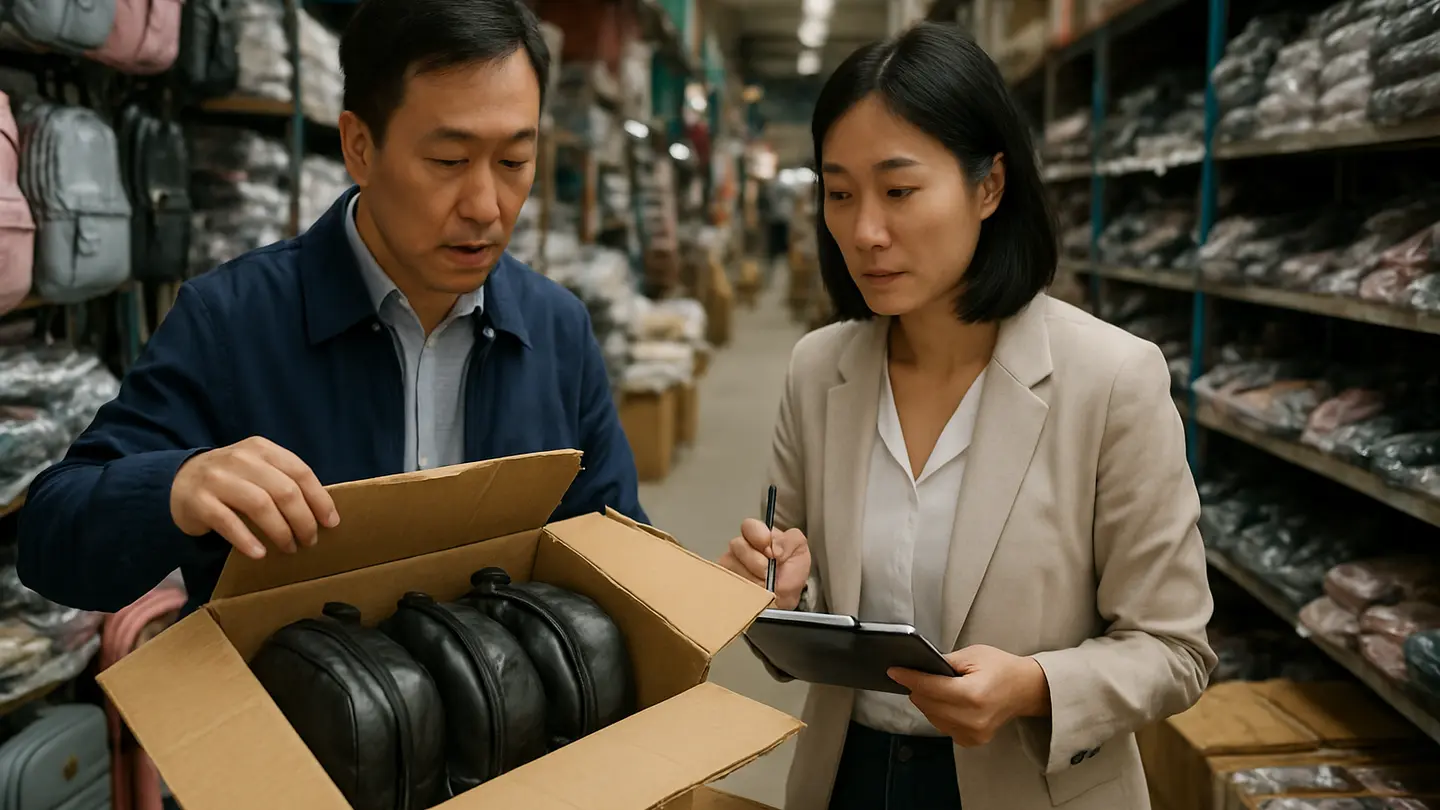
A factory visit is valuable, but it has limits. Walking the floor can show the number of lines, equipment condition, workforce level, inventory flow, and visible work in process. It does not prove that capacity will be available when the buyer’s order is ready. A clean, busy factory may already be fully booked. An empty area may mean available capacity, weak demand, or a product category the factory no longer handles regularly.
Compare visible floor activity with the order book. If the supplier claims heavy production but the lines are quiet, ask why. If it claims immediate availability but every production area is full, ask where the new order will fit.
Seasonality also matters. Bathroom and shower product factories may face demand peaks before trade seasons, retail promotions, construction cycles, or year-end shipment deadlines. Confirm capacity close to order placement, not only during early supplier research.
How to Evaluate Product-Specific Capability
Capability is not proven by machine count, floor size, or general factory activity. A factory may own many machines and still be unable to manufacture a particular shower product to the buyer’s required standard.
Start with product history. Ask what similar products the factory has produced, for which markets, and under what specifications. A buyer sourcing shower mixers should ask about materials, cartridges, pressure requirements, surface finishes, thread standards, testing procedures, and packaging expectations. A buyer sourcing shower enclosures should ask about glass processing, hardware tolerances, waterproofing details, frame alignment, installation instructions, and breakage control.
Capability questions should be specific:
- Have you produced this type of product before?
- Which materials and components did you use?
- Which markets were those products shipped to?
- What standards or customer specifications applied?
- Which process steps are most difficult to control?
- What defects occur most often, and how are they prevented?
- Can your technical team explain the production flow from incoming material to final packing?
An on-site audit should look beyond the showroom. Useful checks include equipment condition, tool maintenance, testing stations, work instructions, incoming material inspection, in-process quality control, final inspection, traceability, storage conditions, and handling of rejected goods. Buyers should verify whether the procedures shown during the audit are actually used in daily production.
Certificates and approvals can support the evaluation, but they should match the specific production site, product scope, and market requirements. A certificate for one product family, one material, one address, or one management system does not automatically cover every item in the catalog.
Samples are useful, but not conclusive. A paid sample proves the factory can produce one successful attempt, often under special attention. It does not prove the same result can be repeated across 5,000, 20,000, or 100,000 units. For higher-risk products, connect sample approval with process approval: confirm the materials, tooling, testing method, finishing process, packaging specification, and quality acceptance criteria for mass production.
When Capacity and Capability Fail in Different Ways
Capacity and capability can fail independently, even when the supplier sounds confident at quotation stage.
One scenario is the high-volume factory without relevant technical experience. It may have a large workforce, available machines, and a persuasive sales team, but it has never produced the buyer’s critical specification before. In shower manufacturing, this could involve a finish needing better surface preparation, a valve assembly that must pass pressure testing, or a design with tight dimensional requirements. High capacity cannot compensate for missing product know-how.
The better question is not only “Can you make this?” but “Have you already made this critical requirement before, repeatedly, at commercial volume?” If not, expect higher development risk, longer sampling time, and closer engineering review.
The second scenario is the capable factory without available production space. This supplier knows the product, has suitable equipment, and may already supply comparable markets. But if its order book is full, the buyer’s project becomes a scheduling problem.
Overload can create quality issues as well as delays. A factory under pressure may rush incoming material checks, shorten curing or testing time, move less experienced workers onto the line, delay corrective actions, or compress final inspection.
A balanced evaluation asks both questions together. A factory with strong capability but limited capacity may be acceptable if the buyer can reserve a realistic production slot. A factory with strong capacity but uncertain capability may be acceptable for simple, low-risk items after validation. For technical or brand-sensitive products, missing capability is rarely worth the risk.
Warning Signs During Supplier Evaluation
Several warning signs can appear before any money changes hands.
The first is missing capacity evidence. If a supplier gives large monthly capacity numbers but cannot explain current client load, line allocation, or recent production history, the promise is difficult to verify.
A second warning sign is an overly broad or unrelated product catalog. A supplier offering shower heads, kitchen utensils, electronics, pet products, furniture, and packaging materials under one profile may be a trading company, a subcontractor network, or a factory with weak specialization. Trading companies can be legitimate, but the buyer still needs to assess the actual production site.
Slow sample handling is another signal. Delayed samples may indicate a busy factory, low buyer priority, unclear internal coordination, or lack of real production access. A single delay is not decisive, but repeated missed sample deadlines should raise concern.
Unusually low pricing should also be examined. A low quote may reflect efficient production, but it may also create pressure for later material substitution, thinner components, weaker packaging, reduced finishing control, or skipped process steps.
Technical communication is especially revealing. Sales staff may be quick to say yes, but technical staff should explain the process in operational detail. If nobody can clearly describe tooling, materials, tolerances, testing, defect prevention, production constraints, and quality checkpoints, capability remains unproven.
Where Capacity and Capability Checks Fit in the Sourcing Process
Capacity and capability checks should come after basic company verification and before deposit payment or final supplier approval.
First, confirm who the buyer is dealing with. Is the company legally registered? Is it a manufacturer, trading company, group company, or export agent? Does the business address match the production site? If the company’s identity is unclear, pay closer attention to the actual factory that will make the goods.
The RFQ stage can provide early indicators. A factory with genuine product experience usually asks practical questions about material grade, finish standard, testing requirement, packaging method, target market, certification needs, annual forecast, and acceptable tolerance. A weak or generic response may indicate that the supplier is quoting without fully understanding the product.
Technical-question handling is another useful filter. Ask questions that require production knowledge rather than price negotiation. For example, ask how the supplier prevents leakage, controls plating defects, checks hose pressure, avoids glass damage, or verifies thread compatibility. The quality of the answer often reveals whether the supplier has real experience.
Pre-shipment inspection is important, but it is not a substitute for earlier verification. A final inspection checks sampled finished goods against approved requirements. It can identify visible defects, quantity shortages, packaging errors, labeling problems, and some functional failures. But once goods are finished, the buyer may have limited options if the factory never had enough capacity or capability.
Does a Larger Factory Always Offer More Reliable Capacity?
Not necessarily. A bigger factory is not automatically safer for small or mid-sized buyers.
Large plants often have more equipment, workers, and systems, but they may prioritize long-term accounts or high-volume customers. A modest order may receive less attention, a later production slot, or limited engineering support.
A right-sized factory may offer more accessible capacity. It may value the buyer’s order more, provide clearer line allocation, and respond faster to changes. The key is whether the factory has available, controllable capacity for the specific order.
Do Big-Client Logos Prove Current Capacity?
Client logos can be useful conversation starters, but they do not prove current available capacity.
A logo may show a past association, a sample project, an indirect relationship, or an old customer that no longer orders from the factory. Even when the relationship is genuine, it may say little about the supplier’s present schedule.
Ask practical follow-up questions: What product was made for that client? What was the approximate order volume? When was the most recent production run? Was the work completed at the same factory site? Which production line was used?
What Capacity Utilization Level Should Buyers Look For?
There is no universal “healthy” capacity utilization percentage that applies to every factory.
A custom-job factory may operate with uneven peaks and gaps because each order requires different tooling, materials, finishes, and setup time. A continuous-production factory may run at high utilization because it produces standardized goods with predictable processes. The same percentage can mean different things.
Instead of relying on one number, focus on buffer capacity and schedule flexibility. Ask how many days or weeks of open production time remain during the proposed window. Ask which stages are bottlenecks and whether skilled workers, testing equipment, finishing lines, or packaging teams limit output.
The most important question is how schedule changes from larger customers could affect the buyer’s planned run. If one major account can displace the order, that risk must be managed before the deposit is paid.
What If the Factory Is Capable but Already Too Busy?
A capable factory that admits it is too busy should not be rejected automatically. In some cases, that honesty is a positive sign. A supplier that acknowledges limits may be safer than one that accepts every order.
Ask whether a production slot can be reserved and documented. The agreed schedule should include milestones such as material purchase, tooling or sample confirmation, production start, in-process inspection, completion, packing, and shipment readiness. A longer but realistic lead time may be better than a short lead time the factory cannot meet.
Partial early production or phased delivery can also reduce pressure. A buyer may approve an initial batch for urgent demand and schedule the balance later. This is not always possible, but it can help when capacity is tight and quality risk must be controlled.
The main rule is to confirm the real lead time before placing the order. Once the deposit is paid, the buyer has less leverage and fewer alternatives.
Final Takeaway: Verify Both Before the Deposit
Capacity and capability checks cost time, but they are cheaper than late shipments, defective goods, rejected inspections, chargebacks, or a missed selling season.
Do not rely only on an impressive factory tour, polished presentation, client logos, or confident sales promises. Ask operational questions: What is currently being produced? What orders are scheduled? What similar products have been made? Which steps are difficult? How is quality controlled? Who will manage the line? What happens if the schedule changes?
Video calls can help with early screening, but they cannot reliably prove actual production load or future availability. For important orders, an on-site assessment gives a clearer view of equipment, procedures, workforce, inventory, quality controls, and factory conditions.
It is also useful to speak with line managers, production managers, quality engineers, or technical staff rather than relying only on sales representatives. Operational staff often give more realistic answers about bottlenecks, process risks, and schedule constraints.
The strongest sourcing decisions combine pre-order verification with production follow-up. Confirm capacity and capability before the deposit, then monitor progress during manufacturing. That discipline reduces the two most common factory approval mistakes: choosing a supplier that cannot make enough, and choosing one that cannot make it correctly.