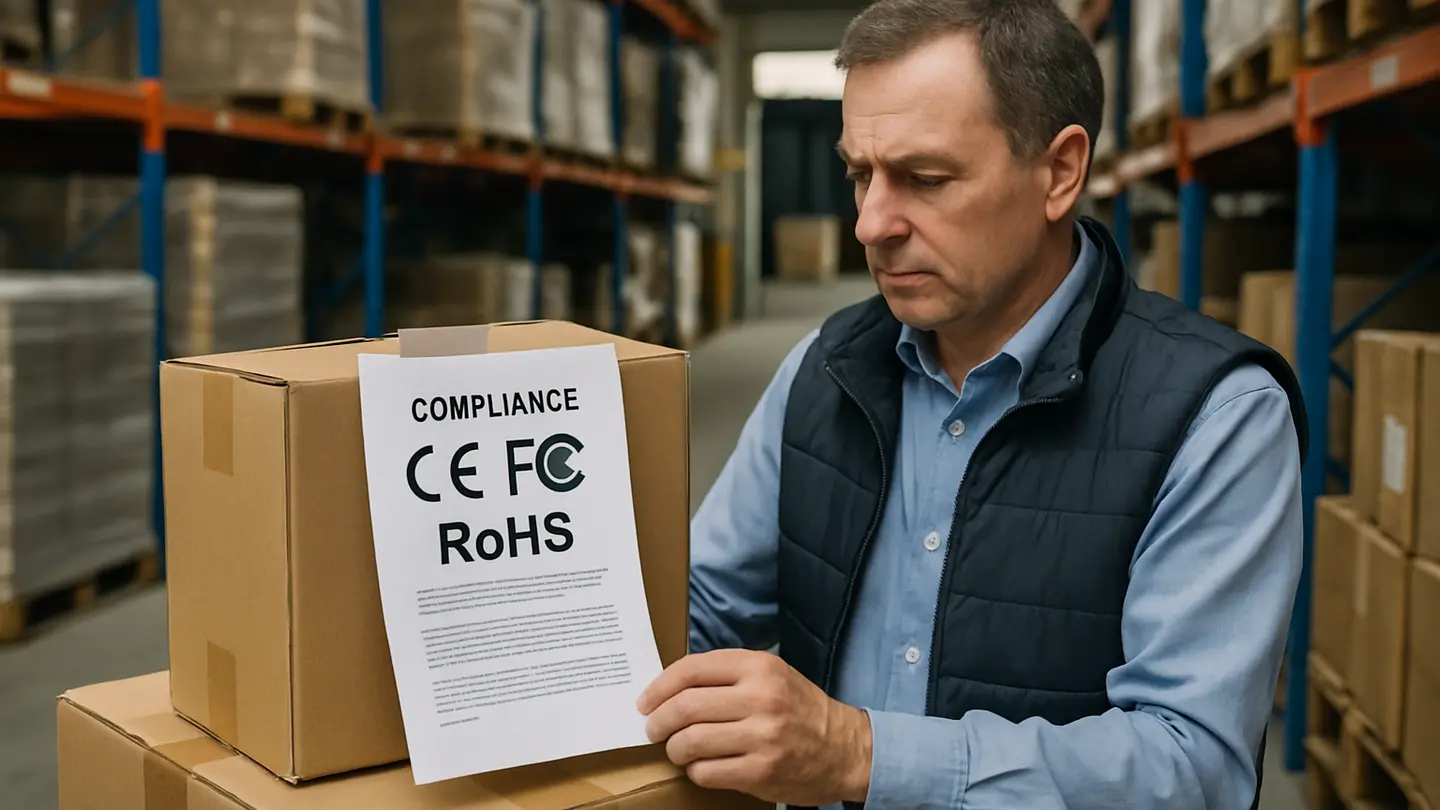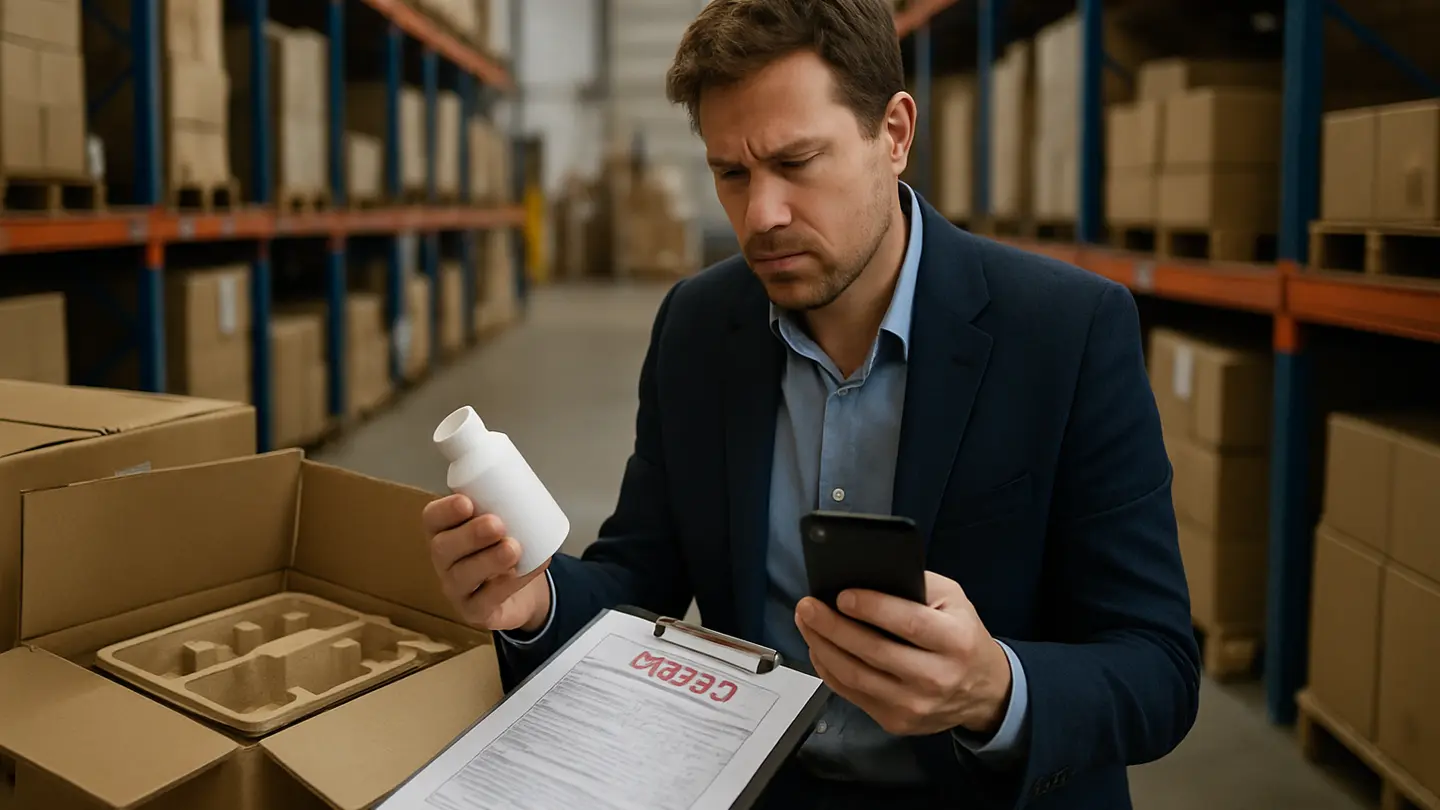
A failed inspection in China is not automatically the end of an order. It is a commercial decision point. The buyer’s job is to determine whether the goods can be corrected, whether the risk can be priced into a negotiated acceptance, or whether the batch should be rejected before more money and logistics costs are committed.
The key is timing. Before the final balance is paid and before the goods leave the factory, the buyer still has leverage. After payment and shipment, the same defect report becomes much harder to act on. Freight has been booked, cartons may be in transit, and the supplier has less financial pressure to prioritize correction.
Different defects also require different responses. Incorrect carton marks may be fixed quickly. A missing installation part may require sorting and repacking. A leaking shower valve, unstable wall bracket, non-compliant material, or dimensional mismatch may require deeper investigation, isolation, or rejection. The right response depends on evidence, not frustration.
The First Hour: Collect Evidence Before Debating the Result
The first mistake many buyers make after receiving a failed report is to enter a debate with the supplier before reviewing the data. The factory may say the inspector was too strict, the defect is normal, or the sample was unrepresentative. Those comments may or may not be relevant. What matters first is the inspection file.
Ask for the complete report package, including:
- Inspection date, location, and product details
- Order quantity, finished quantity, and packed quantity
- Sampling plan and sample size
- AQL level or other agreed acceptance criteria
- Defect counts by classification
- Photos and, where useful, videos
- Carton numbers or unit identifiers
- Measurements, test results, and inspector comments
- Timestamps or sequence notes where available
Then compare the findings against the documents that govern the order: purchase order, approved sample, technical drawings, bill of materials, packaging artwork, inspection checklist, test method, and agreed defect classifications. The supplier’s informal opinion should not replace the agreed standard.
Each defect should be mapped to the relevant requirement. For example, if a thermostatic shower mixer fails a temperature stability check, identify the specification and test method. If cartons carry the wrong barcode, compare the printed code with the approved packaging file. If a surface defect is recorded as major, confirm whether the checklist defines that defect and whether its location or visibility supports the classification.
Notify the supplier quickly and in writing that payment is paused pending review and corrective action. The tone should be firm but factual. A useful message says: the inspection did not meet the agreed acceptance standard; the balance will not be released until a written corrective action plan is approved and verified; the supplier should respond with cause, scope, repair method, timing, and re-inspection arrangements.
That written pause prevents misunderstandings. It also keeps the discussion focused on correction rather than blame.
Decide Whether the Batch Can Be Corrected
Not every failed inspection deserves the same remedy. The practical question is not only whether defects are minor, major, or critical. It is whether they can be corrected reliably and verified before shipment.
Some issues are often reworkable when the factory has enough time and control:
- Wrong or missing labels
- Incorrect carton marks
- Missing instruction sheets or warranty cards
- Loose accessories
- Surface dust, fingerprints, or packaging dirt
- Poorly sealed polybags
- Mixed color variants in cartons
- Minor cosmetic marks within a defined repair process
These problems still require verification, but the correction path is usually clear: sort, clean, relabel, repack, or replace missing inserts.
Functional, dimensional, assembly, and performance problems are different. If a shower hose connector does not fit the specified thread, the supplier must show whether the error comes from one component batch or the entire order. If a sliding rail is drilled off-center, the buyer needs to know whether repair is possible without weakening the product or damaging the finish. If a pump, valve, diverter, seal, or cartridge fails during function testing, replacement may require access to internal parts and proof that repaired units are as reliable as newly produced units.
For safety or material-compliance issues, the threshold should be higher. If a material is not as specified, a coating fails a required test, or a component substitution creates regulatory exposure, the affected stock should be isolated. The supplier should identify the material batch, production dates, cartons, and any mixed inventory. Compliant replacement materials must be verified before release.
Root-cause evidence is central. A defect limited to one packing line on one day may be addressed through targeted sorting if records are reliable. A defect caused by an incorrect drawing, wrong tooling, or unapproved material substitution may affect the whole lot. Without traceability, assume the problem is wider than the sampled units.
Rework, Discount, or Reject: What Each Option Really Costs
After a failed inspection, buyers normally face three options: rework and re-inspection, negotiated acceptance with a discount, or rejection. Each has a different cost profile.
| Option | When it may work | Main risk |
|---|---|---|
| Rework and re-inspection | Defects are correctable, the factory can control the fix, and the schedule allows verification | Poor rework may create new defects or delay shipment |
| Discounted acceptance | Defects are commercially tolerable and the product can still be sold truthfully and safely | Downstream claims, returns, and reputational damage may exceed the discount |
| Rejection | Defects are severe, hidden, unsafe, repeated, or make the goods unsellable | Lost time, supplier dispute, and need for replacement production |
Rework is usually the best outcome when the defect can be fixed at the factory and confirmed through a re-check. The corrective plan should specify whether the factory will sort all units, replace parts, clean surfaces, repack cartons, or remake goods. It should also define who pays for the re-inspection and any resulting delay.
Discounted acceptance is more delicate. It may be reasonable for a cosmetic blemish on a non-premium product sold through a channel that can tolerate it. It is not reasonable if the defect makes the product unsafe, misdescribed, non-compliant, or inconsistent with customer-facing claims.
A discount does not erase legal and commercial obligations. Goods still need to match listings, labels, packaging claims, installation instructions, regulatory duties, and buyer expectations. If a shower enclosure is advertised as a specific glass thickness, a discount cannot fix a mismatch. If packaging claims a finish, certification, or accessory set that the product does not have, accepting the shipment may create problems with distributors, retailers, or regulators.
Rejection is appropriate when the risk cannot be controlled. Severe leaks, repeated function failures, wrong materials, hidden defects, or defects that only appear after installation can be far more expensive than a delayed shipment. Buyers should consider not only unit cost but also freight, duty, warehousing, handling, returns, field replacement, warranty claims, customer complaints, and damage to account relationships.
The cheapest decision at the factory gate is not always the cheapest decision after the goods reach the market.
Why the Unpaid Balance Is Your Strongest Leverage
Inspection has the greatest value before final payment and before shipment. At that point, the supplier still has a direct financial reason to correct the problem. Once the balance is released, the buyer is often left relying on goodwill, future credits, or promises attached to the next order.
Leverage depends on the contract and order documents. Stronger buyers usually have:
- Clear specifications
- Approved samples and drawings
- A written inspection checklist
- Defined AQL or acceptance criteria
- Payment terms tied to passing inspection
- Defect classifications agreed before production
- A remedy process for failed inspection
- Shipment release linked to written approval
If these terms are vague, disputes become harder. The supplier may argue that the defect is acceptable, that the sample was only a reference, or that the buyer changed expectations after production. Clear documents reduce that room for argument.
Do not pay based only on verbal promises. “We will fix it later,” “we will compensate next time,” or “the customer will not notice” are not adequate remedies. If the goods have failed inspection, require a written corrective action plan before shipment.
That plan should define:
- Defect scope and affected quantities
- Root cause, if known
- Corrective method
- Person or team responsible
- Deadline
- Carton or unit identification method
- Re-inspection standard
- Pass condition
- Responsibility for re-inspection cost
- Consequence if the batch fails again
Payment should be tied to verified correction, not intention. The unpaid balance is not a punishment; it is the buyer’s main control mechanism.
Common Factory Objections and How to Answer Them
Factory objections are common after a failed report. The best response is calm, documented, and tied to the agreed standard.
“The inspection standard is too strict.” Return to the purchase order, checklist, approved sample, and AQL plan. If the standard was agreed before production, it is not new simply because the result is unfavorable. If a requirement was unclear, separate that issue from defects that plainly violate written specifications.
“Most units are fine.” That may be true, but sampling plans are designed to make batch-level decisions from a defined sample. A batch can fail even when many inspected units look acceptable, because the number or severity of defects exceeds the agreed limit. The buyer does not need to prove every unit is defective to justify a failed inspection result under the agreed sampling plan.
“This was the same as the approved sample.” An approved sample does not excuse defects that were not present, not visible, or not approved. If the sample had a known and accepted feature, the buyer should acknowledge it. But if production units show new defects, tolerance drift, missing components, or performance failures, the sample does not override the actual requirement.
“This is normal in our industry.” Industry norms do not override the purchase order, buyer specifications, safety obligations, or compliance limits. A factory may be used to supplying a lower-tolerance market, but that does not make the goods acceptable for a buyer with different requirements.
Keep the discussion evidence-based. Ask the supplier to identify which finding they dispute, which document supports their position, and what corrective action they propose. Avoid broad arguments over whether the factory is “good” or the inspector is “wrong.” The immediate issue is whether the batch meets the agreed acceptance condition.
How to Prevent the Next Failed Inspection
A single failed inspection can happen even with a capable supplier. Repeated failures with the same cause suggest a deeper capability or process-control problem.
Start by tracing the origin of the defect. Did it come from incoming materials, component substitution, machining, molding, plating, assembly, function testing, finishing, packing, or weak internal QC? For shower-related products, recurring issues may involve seals, cartridges, glass dimensions, coatings, hose fittings, water-pressure tests, or incomplete accessory packs. Each source requires a different control.
If defects are found only at final inspection, consider moving some checks earlier. A during-production inspection can catch drift before the entire order is complete. Incoming material checks can prevent wrong components from entering assembly. First-article approval can confirm that the production line matches the sample before mass production accelerates.
Buyers should also revise the inspection checklist after a failure. If the defect was not clearly defined, add photos, tolerances, test methods, and classification rules. If the supplier misunderstood packaging requirements, provide locked artwork and carton mark examples. If a function test was too general, define equipment, duration, pressure, temperature, load, or pass/fail criteria.
When failures persist, a supplier quality audit may be necessary. The issue may not be willingness; it may be capability. The factory may lack process controls, trained inspectors, calibrated gauges, reliable subcontractor management, or effective corrective action systems. If the same failure continues after documented correction attempts, buyers should consider reducing order volume, adding stricter controls, or qualifying an alternative supplier.
Prevention is usually cheaper than repeated end-of-line disputes.
FAQ
Q1: Can I bring in a second inspection company to verify the fail?
Yes, a second inspection can be useful if the original report is unclear, incomplete, disputed, or close to the rejection threshold. It can also help when the defect requires a specialist test or when buyer and supplier need an independent basis for settlement.
However, do not use a second inspector simply to search for a passing result after a valid failed inspection in China. That creates confusion and weakens the buyer’s position. Before the second inspection, define the scope, sampling plan, checklist, defect classifications, and whether it is a full re-inspection or a targeted verification.
Q2: Should the factory sort the whole lot or just the failed cartons?
Full-lot sorting is usually safer because the inspected sample indicates risk beyond the exact cartons opened. If the factory only fixes the cartons where defects were found, similar defects may remain in unopened cartons.
Partial sorting may be acceptable only when production records reliably trace the defect to a specific run, date, machine, operator, material batch, or carton range. If traceability is weak, full sorting and re-inspection provide stronger protection.
Q3: Should the re-check look only at the failed defects?
No. The re-inspection should verify the repaired defects and also confirm that previously passing checks remain acceptable. Rework can introduce new problems: missing accessories after repacking, dirty surfaces after handling, mixed quantities, wrong labels, damaged cartons, or new functional issues after part replacement.
A narrow re-check may miss problems created during correction. The re-inspection scope should reflect the original failure and the rework process.
Q4: How do I know the factory actually fixed it?
Supplier photos are helpful but not enough. Ask for corrected quantities, affected carton numbers, records of pulled or repaired units, replacement material evidence where relevant, and a description of how the factory prevented recurrence.
The safest approach is to release shipment only after re-inspection confirms the agreed fix. If the defect involved safety, function, dimensions, or compliance, verification should be especially strict.
Conclusion: Control the Fix Before the Goods Ship
Rushing after a failed inspection can turn a factory-level problem into a freight, returns, warranty, or reputation problem. The buyer should not release funds, approve shipment, or rely on verbal assurances before understanding the defect data and controlling the remedy.
The practical sequence is straightforward: collect the full inspection evidence, compare it with the agreed standard, pause payment in writing, require a corrective action plan, and verify the result before shipment. If the batch can be corrected, rework and re-inspection may protect the order. If the defect is tolerable and truthful sale remains possible, a negotiated acceptance may work. If the defect is severe, hidden, unsafe, repeated, or commercially unsellable, rejection may be the least costly option.
For future orders, move quality checks earlier when the risk is known. Final inspection should not be the first time a buyer learns that production has drifted. A written, verified correction process before final payment is always stronger than negotiating after the balance is paid.
About the Author
The author is a B2B sourcing and supplier-management writer focused on practical quality-control decisions for importers, distributors, and product teams working with overseas manufacturers. Their editorial work covers inspection planning, supplier communication, production risk, and commercial remedies for quality disputes.