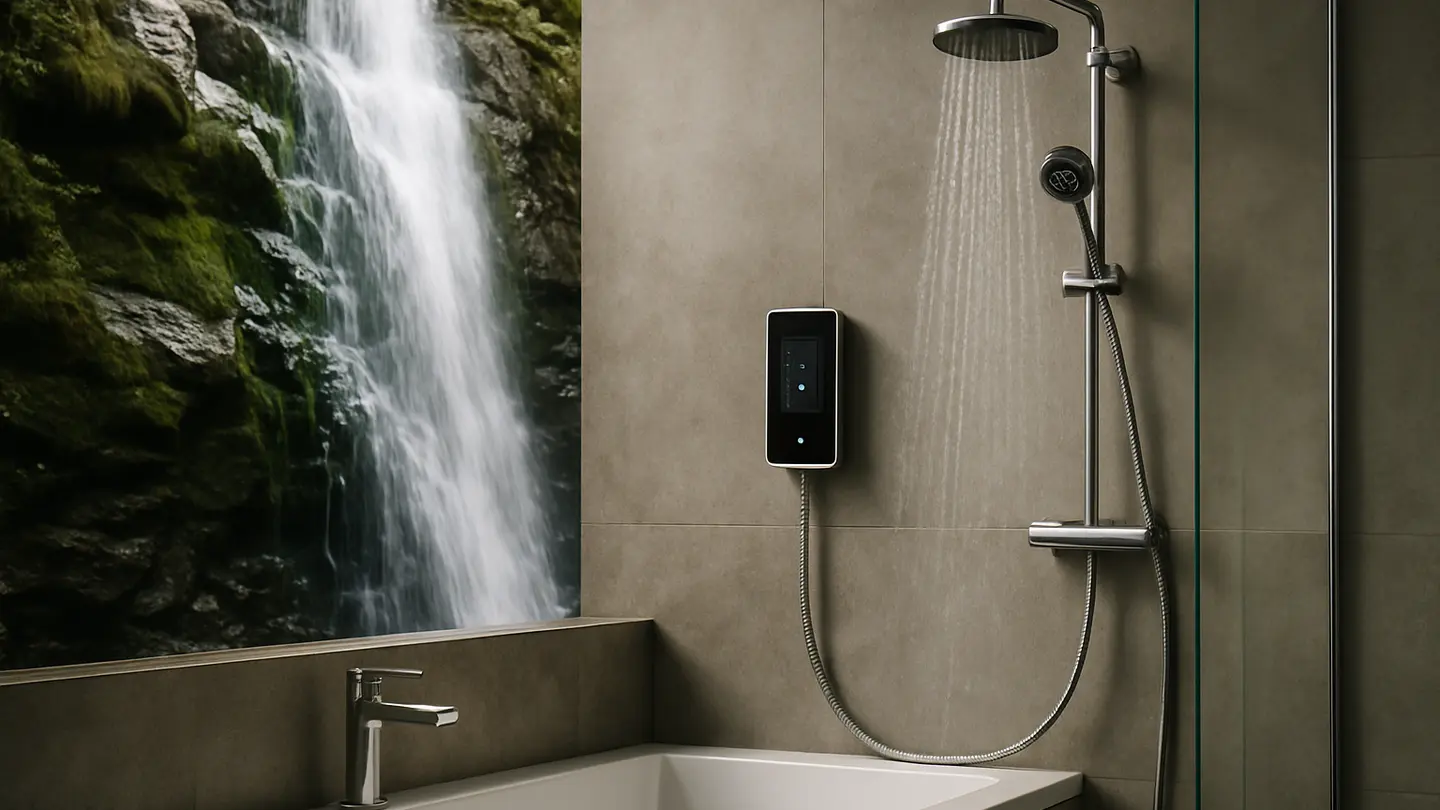
The Evolution of Faucet and Shower Design
Showers are now familiar fixtures in residential, hospitality, healthcare, workplace, and leisure environments. For users, turning a handle, pressing a button, or activating a sensor is routine. For buyers and specifiers, modern faucet and shower design reflects a long progression in water delivery, comfort, sanitation, material engineering, and user experience.
Today’s market includes mixer taps, thermostatic valves, rainfall heads, handheld sets, digital controls, framed and frameless enclosures, metallic finishes, matte colors, and water-saving technologies. Specification is no longer only about moving water from pipe to outlet. It also involves appearance, installation complexity, maintenance, safety, accessibility, durability, and operating cost.
A historical view shows how each stage answered a practical need: access to falling water, indoor washing, shared sanitation, controlled temperature, decorative appeal, instant hot water, and programmable or sensor-based performance. For B2B buyers, distributors, developers, and project teams, that history provides useful context for present-day decisions.
Natural Waterfalls as the Earliest Shower Experience
Long before engineered plumbing, people depended on rivers, springs, lakes, and waterfalls for cooking, cleaning, washing, and basic sanitation. Waterfalls are the clearest natural predecessor to the modern shower because they delivered water from above, over the body, without pipework or mechanical control.
This was not a product in the modern sense, but it established the experience shower systems still reproduce: overhead flow, rinsing action, and drainage away from the body. People may have traveled to suitable flowing-water locations when local sources were not available or when stronger water movement was needed.
For design professionals, the waterfall analogy remains relevant. Rainfall heads, ceiling-mounted showers, and wide-pattern outlets all recreate a controlled version of falling water. Contemporary systems, however, must also regulate pressure, temperature, flow rate, splash control, user safety, and water consumption.
Ancient Egyptian Pouring Methods and Early Man-Made Showering
Ancient Egyptian bathing practices introduced one of the earliest human-made shower-like methods. Instead of standing beneath a natural cascade, water could be poured over the body using ceramic jugs. This brought falling-water bathing into built spaces.
These were not piped showers, and the process depended on manual labor. In elite Egyptian settings, dedicated washing rooms and attendants supported the practice, linking it to wealth, status, and household resources.
This stage matters because it separated the showering experience from the natural landscape. The function of falling water was brought indoors through a simple object: the jug. In modern terms, it was an early example of water-delivery design responding to convenience, privacy, and social expectation.
The principle remains visible in hand showers, bucket-fill fixtures, portable rinsing systems, and spa-style accessories, all of which preserve the value of directed, manually controlled water flow.
Greek Piping Systems and the Move Toward Shared Bathing
Ancient Greek water systems advanced bathing by moving water through pipes. This was a major step beyond manual pouring because it allowed water to enter and leave bathing spaces more efficiently. Piped delivery made repeated use in shared environments more practical and helped bathing become accessible beyond private elite settings.
Communal bathing areas played an important role. Once water could be conveyed into a facility and drained away, bathing became part of civic and social life. Shower-like washing no longer depended only on waterfalls or servants pouring water from vessels.
For today’s commercial projects, the lesson is clear. Many specifications still address the same basic challenge: deliver water reliably to multiple users, remove wastewater efficiently, and maintain sanitation under repeated use. Gymnasiums, schools, factories, hotels, dormitories, spas, and public facilities all depend on that infrastructure logic.
Greek developments also underline that fixtures are only one part of the system. Even the best shower head or faucet performs poorly if pipe sizing, drainage, pressure, and layout are not properly planned.
Roman Plumbing, Public Baths, and Hygiene Infrastructure
Roman plumbing expanded the relationship between bathing and public health. Aqueducts, drainage channels, and wastewater systems supported large-scale urban sanitation. Public bathhouses became prominent features of Roman life and reflected a cultural emphasis on hygiene, social interaction, and civic infrastructure.
These baths required water supply, heating, drainage, maintenance, and user circulation. Although they were not identical to modern shower rooms, they demonstrated how water systems could support large populations and regular cleaning routines.
Wastewater management was especially important. Delivering clean water is only half the challenge; removing used water safely is equally critical. That remains true for modern bathrooms, wet rooms, and commercial shower blocks. Drain placement, fall, waterproofing, ventilation, and cleaning access all influence long-term performance.
After the Greek and Roman imperial periods, shower technology changed relatively little for many centuries. Major mechanical developments accelerated later, when pumps, tanks, pressurized systems, indoor plumbing, and hot-water technology became more common.
The 1767 Patent and the Start of the Modern Shower
A key moment came in 1767, when a London stove maker received a shower-related patent. The design is often treated as an early step toward the modern shower because it used a mechanical system to circulate water over the bather.
The system relied on a hand pump. Water moved from a lower basin or reservoir back upward and was released again over the user. Compared with repeated manual pouring, this could reduce the amount of water needed because the same water circulated during washing.
By contemporary standards, recirculating bath water raises hygiene concerns and does not match modern plumbing codes or user expectations. Its importance lies in the shift toward an engineered apparatus rather than a natural feature or household task.
For B2B readers, the 1767 patent also shows a recurring theme: innovation often begins by solving a resource problem. Then the issue was water volume and delivery effort. Today, similar pressures appear in low-flow outlets, thermostatic control, leak prevention, sensor activation, and discussions of greywater or heat recovery.
Designer Showers and the Decorative Regency Influence
The English Regency Shower introduced a more decorative approach. Unlike earlier purely functional arrangements, it treated the shower as an object with visual style. Its metal frame was painted to resemble bamboo, showing that early shower products could reflect interior fashion and material imitation.
Functionally, the Regency-style shower still depended on a hand pump that moved water through a tank. It was transitional: more elaborate and design-conscious than earlier devices, but not yet integrated with the pressurized plumbing systems that later made showers easier to use.
The decorative element foreshadows today’s bathroom market. Modern faucets and showers are selected for technical performance and design fit. A shower column, exposed mixer, basin faucet, or enclosure frame can support luxury hospitality, compact urban housing, healthcare practicality, or durable public use.
As indoor plumbing and running water became more common, fixed shower installations became more practical. Once supply and drainage improved, design attention could expand from basic delivery to comfort, proportion, finish, and integration with the bathroom environment.
Electric Showers and Instant Hot-Water Supply
Tankless water heating changed shower use significantly. Instead of relying entirely on stored hot water, tankless systems could heat water as needed. Electric showers became especially established in the United Kingdom, where they offered hot water directly at the point of use.
The appeal was straightforward: users could access hot water without drawing from a large stored tank. For some buildings, this reduced dependence on central storage capacity and improved convenience where layouts or usage patterns made stored hot water less practical.
Electric showers also shifted part of the design discussion from the visible fixture to the service system behind it. Electrical load, water pressure, installation standards, maintenance access, and safety controls became part of specification. In B2B contexts, those factors remain critical. A product that appears simple to the user may require coordination among plumbing, electrical, and construction teams.
Instant hot-water supply also changed expectations. Users increasingly expected showers to be ready quickly, operate predictably, and maintain comfortable temperature, helping drive thermostatic valves, pressure-balancing controls, anti-scald features, and digital interfaces.
Modern Shower Advancements: Heads, Enclosures, Lighting, and Digital Controls
Modern shower design covers a wide range of products and project requirements. Shower heads include fixed, handheld, rainfall, multi-function, body spray, and ceiling-mounted options. Enclosures may be framed, semi-frameless, frameless, sliding, pivoting, bi-fold, walk-in, or quadrant. Lighting, niche storage, linear drainage, textured trays, seating, grab bars, and coordinated finishes expand the choices.
These options suit different price points, installation conditions, and users. A budget apartment development may prioritize durable components, efficient installation, and easy replacement. A hotel may focus on guest comfort, brand consistency, water control, and perceived quality. A healthcare or assisted-living project may require accessibility, slip resistance, thermostatic safety, and cleanability.
Digital shower technology represents a newer phase. Digital systems can allow more precise control of temperature, flow, presets, warm-up functions, and sometimes remote or app-based operation. These features improve convenience but add specification issues: power supply, compatibility, service access, user training, and long-term parts availability.
Future designs will keep adapting to lifestyle, comfort, water-use, and space requirements. Smaller urban bathrooms, aging populations, sustainability goals, and rising expectations for personalization will continue to influence faucet and shower categories.
What Design History Means for B2B Faucet and Shower Specification
The history of water-delivery design shows that successful products balance function, comfort, efficiency, and context. In current B2B specification, that balance usually involves appearance, durability, hygiene, accessibility, and operating cost.
Material selection is a good example. Brass and stainless steel are widely used for commercial faucet applications because they can support durability and long service life when manufactured and finished properly. Stainless steel is valued for corrosion resistance and ease of cleaning, while brass remains common for robust faucet bodies and traditional valve construction.
Touchless faucets can suit offices, airports, healthcare-adjacent spaces, schools, and other high-traffic settings where hygiene perception and controlled water use matter. They are not automatically best for every project because they introduce sensor components, power requirements, and maintenance needs. Correctly specified, they can reduce unnecessary running time and limit hand contact with fixture surfaces.
Finish selection also affects perception and maintenance. In hard-water environments, visible spotting varies by finish. Mirror-polished chrome and matte black may show mineral marks more quickly under strong lighting, while brushed nickel or brushed stainless appearances can soften light spotting. Buyers should match finish, water conditions, cleaning schedule, and customer expectations before standardizing a range.
How to Choose the Right Shower Enclosure
Historical development explains how showers became more comfortable and sophisticated, but practical buying depends on matching the enclosure to the project. Shower enclosures vary by space, budget, design intent, glass specification, door movement, frame style, installation complexity, and maintenance requirements.
For B2B buyers, the enclosure should not be a decorative afterthought. It affects waterproofing, cleaning labor, accessibility, user safety, transport, installation time, and replacement cost. Before purchase, project teams should review layout, user profile, product quality, spare parts, and total cost of ownership.
Space and Layout Requirements
Accurate measurement is the first requirement. Buyers should confirm the shower area, wall conditions, tray or floor dimensions, ceiling height, door clearance, and the position of toilets, vanities, radiators, towel rails, or structural obstacles.
An enclosure should be proportionate. If it is too large, it may restrict movement or interfere with other bathroom functions. If it is too small, it can feel uncomfortable, increase splash issues, and reduce perceived quality.
In compact layouts, sliding, bi-fold, and quadrant enclosures can preserve usability. Sliding doors avoid the swing radius of hinged doors. Bi-fold doors can work where entry clearance is limited. Quadrant enclosures are useful in corners where a curved front saves floor area.
For commercial and multi-unit projects, consistency matters as much as individual fit. Standardized sizes can simplify procurement and installation, but only if the layout supports them. Where dimensions vary, a limited range of adaptable sizes may reduce site problems.
Suitability for Daily Use and User Needs
The enclosure and shower set should match actual use. A guest bathroom, hotel room, student residence, family apartment, gym shower, and assisted-living unit all place different demands on the product.
Frequent-use bathrooms require configurations that support convenience and comfort. Door hardware should be easy to operate. Glass and profiles should be cleanable. Seals should be replaceable. Handles, shelves, and accessories should not create unnecessary snagging or cleaning problems.
Buyers should consider who will use the shower and how often. A high-end residential project may justify frameless glass and concealed fittings if the maintenance model supports them. A rental or public-use environment may benefit from robust framing, simpler replacement parts, and finishes that tolerate regular cleaning.
Access expectations are also important. Step height, entry width, grab-bar compatibility, anti-slip flooring, thermostatic control, and reachable shower controls can affect usability. Even where full accessibility standards do not apply, inclusive design can improve comfort and reduce complaints.
Cost, Quality, and Long-Term Value
Budget is always important when choosing a shower set or enclosure, but the lowest purchase price is not always the lowest project cost. Low-quality components may require earlier replacement, create installation difficulties, or increase maintenance calls.
Buyers should weigh material quality, glass thickness, hardware durability, seal design, coating options, valve reliability, and spare-part availability against upfront price. In commercial settings, replacement disruption can be more expensive than the component itself, especially in hotels, rentals, healthcare facilities, or high-traffic washrooms.
Operating cost should also be considered. Water-efficient outlets, thermostatic control, and appropriate flow management can influence consumption. In suitable projects, solar thermal panels may help reduce long-term electricity or energy costs for water heating, although value depends on climate, building design, usage profile, and system integration.
The strongest specification is usually not the most elaborate one. It is the one that balances needs, space, budget, durability, maintenance, and operating expectations for the intended environment.
Recent Posts and Related Buying Resources
For teams continuing the specification process, useful next-step buying-guide topics may include:
- Comparing shower valve types for commercial and residential projects
- Selecting faucet finishes for hard-water regions
- Choosing between framed, semi-frameless, and frameless enclosures
- Evaluating touchless faucets for public and workplace washrooms
- Coordinating shower trays, drainage, waterproofing, and enclosure dimensions
- Building a faucet and shower specification checklist for multi-unit projects