Faucet Supply Line Sizes: What Buyers Need to Know Before Choosing
Choosing faucet supply lines looks simple until the connection will not fit, the hose is under tension, or the installation develops a slow drip. For B2B buyers specifying plumbing components for residential projects, hospitality renovations, multifamily units, or replacement inventory, diameter, length, material, end connections, and installation tolerance all affect performance.
The phrase faucet supply line sizes usually refers to two specifications: nominal connection size and overall hose length. In many residential faucet installations, 3/8-inch connections are common, especially at the shut-off valve side. However, the correct product depends on the faucet inlet, angle stop or shut-off valve, thread type, and fitting design. A line that is “almost right” may still leak, restrict flow, or strain the faucet and valve.
This guide explains how to evaluate faucet supply line diameter, length, materials, and fit before purchasing.
What Faucet Supply Lines Do
A faucet supply line connects the shut-off valve to the faucet inlet, faucet shank, or tailpiece. Most sink installations use two supply lines: one for hot water and one for cold water. These lines carry water from the building’s plumbing system to the fixture while allowing the faucet to be installed, serviced, or replaced without disturbing the entire pipe run.
Supply lines also help maintain a reliable connection between fixed plumbing and the faucet body. When properly sized and installed, they support steady water delivery and reduce leak risk at transition points.
Flexible faucet supply lines are common under sinks because cabinet space is limited and plumbing layouts vary. A flexible line can route around a drain trap, disposal unit, cabinet wall, or offset shut-off valve more easily than rigid tubing. For buyers managing multiple installation sites, that flexibility can reduce installation time and special-case parts.
Main Faucet Supply Line Materials
Faucet supply lines are available in several materials, each with different implications for cost, durability, appearance, and installation labor. The main options include braided stainless steel, PEX, solid copper, PVC, and vinyl.
For most sourcing decisions, choose material based on the installation environment rather than price alone. A line hidden inside a vanity, a line exposed in a premium restroom, and a line used in a high-turnover rental unit may require different priorities.
| Material | Main Advantages | Main Limitations | Typical Fit |
|---|---|---|---|
| Braided stainless steel | Flexible, durable, kink-resistant | Quality varies; hardware may corrode in poor conditions | General residential and light commercial faucet connections |
| PEX | Corrosion-resistant, affordable, flexible | Less protected from puncture or pest damage | Cost-sensitive installations and compatible plumbing systems |
| Solid copper | Long service life, clean exposed appearance | Rigid; requires skill to cut and bend | Exposed plumbing or specification-driven projects |
| PVC/vinyl | Low cost, widely available | Less durable; higher kink or crack risk | Temporary, low-cost, or limited-use applications |
Braided Stainless Steel Lines
Braided stainless steel faucet supply lines typically use a flexible inner tube reinforced by an outer metal braid. The braid helps protect the inner tube from abrasion, kinking, and physical damage. Compared with many basic plastic options, a good braided line is generally more resistant to bursting and deformation.
The main benefit is installation flexibility. Under a sink, the shut-off valve and faucet inlet rarely align perfectly. A braided stainless steel line can form a controlled curve without field bending or precision cutting, making it common in tight cabinets, small vanities, and retrofit applications.
Buyers should still compare quality. Lower-quality braided lines may use inferior ferrules, nuts, or connection hardware that can corrode, especially in humid cabinets or locations with aggressive cleaning chemicals. For multi-unit projects, evaluate the full assembly, not only the visible braid.
PEX Supply Lines
PEX, or cross-linked polyethylene, is a flexible plastic plumbing material used in many water distribution systems and some faucet supply applications. It resists corrosion and is often less expensive than braided stainless steel alternatives.
PEX lines are lightweight and easy to route. Red and blue color coding is commonly used to identify hot and cold water lines, which can simplify installation checks and maintenance. Where PEX plumbing is already specified throughout a building, compatible PEX supply connections may be attractive from a procurement and training standpoint.
The tradeoff is physical protection. PEX can be more vulnerable to puncture, abrasion, or pest damage than a metal-braided line. It may not be preferred where hoses face repeated movement, storage impacts, or rough maintenance conditions.
Solid Copper Supply Lines
Solid copper supply lines are rigid rather than flexible. They require accurate measuring, cutting, bending, and fitting. When installed correctly, copper can provide long service life and a neat appearance, especially where plumbing remains visible.
Copper is often selected for exposed installations where aesthetics and rigidity matter. In some commercial or hospitality restrooms, a straight copper line may look more intentional than a looped flexible hose. It can also suit projects that specify metal tubing.
However, copper installation generally requires more skill than flexible lines. Poor bending or misalignment can create fitting stress. Copper also tends to cost more than basic flexible options and may be affected by certain water conditions over time. For large projects, include added labor in the total installed cost.
PVC and Vinyl Supply Lines
PVC and vinyl faucet supply lines are inexpensive and widely available. They may suit basic replacement needs, temporary use, or low-cost applications where durability requirements are modest.
For long-term residential faucet connections, these materials are generally less durable than braided stainless steel or copper. Plastic lines may kink during installation, crack with age, or become more vulnerable under pressure fluctuations. Once kinked, a line can restrict flow or become a future failure point.
For buyers focused on reducing callbacks and water damage risk, braided stainless steel is often preferred over basic PVC or vinyl for standard under-sink faucet connections.
Standard Faucet Supply Line Sizes: Diameter and Length
Faucet supply line size includes both diameter and length. Diameter affects water delivery and compatibility with valve and faucet connections. Length determines whether the line can reach without tension, sharp bends, or excess looping.
Incorrect sizing can cause:
- reduced flow if the line or fitting is too restrictive;
- installation strain if the hose is too short;
- leaks from mismatched fittings or cross-threaded connections;
- kinking or tangling if the hose is excessively long;
- added labor when installers need adapters or replacement parts.
For B2B buyers, standardizing too aggressively can create problems. A single line size may not suit every sink layout, valve position, or faucet design across a project.
Common Supply Line Diameters
Line diameter influences water-carrying capacity, but connection size is just as important. In residential faucet installations, 3/8-inch and 1/2-inch are among the common sizes associated with individual fixture connections. A 3/8-inch compression connection is frequently found at the shut-off valve side. Some faucet-side connections may be 1/2-inch or may use manufacturer-specific inlets.
Larger diameters are more typical for high-flow fixtures, main supply lines, or certain commercial plumbing requirements. They are not automatically better for a faucet if the faucet inlet and valve are designed around smaller connections.
When replacing an existing line, check markings on the old connector, nut, or packaging if available. If site conditions are uncertain, bring the old part to the supplier or compare it directly with the replacement.
Connection Types to Confirm Before Purchase
Nominal diameter is not the only specification. A supply line must match the connection type at both ends: the shut-off valve side and the faucet side.
Common configurations include a 3/8-inch compression connection at the shut-off valve and a faucet-side connection that varies by fixture design. Some faucets use threaded shanks, some use integrated flexible hoses, and others require specific adapters or quick-connect components.
Before ordering, confirm:
- shut-off valve outlet size and fitting type;
- faucet inlet size and thread type;
- whether the connection is compression, IPS, NPT, ballcock-style, quick-connect, or proprietary;
- whether washers, gaskets, or cone seals are included;
- manufacturer specifications for the faucet model;
- local code or project specification requirements.
Avoid assuming that two fittings with similar measured diameters are interchangeable. Pipe thread, compression thread, and fixture thread may look similar but seal differently. Using the wrong type can damage threads or produce a leak even if the nut appears to tighten.
Common Lengths: 12, 16, 20, 24, and 30 Inches
Supply line length should match the distance between the shut-off valve and the faucet inlet. Common faucet supply line lengths include 12, 16, 20, 24, and 30 inches. Some suppliers offer additional lengths for special layouts, but these sizes cover many residential and light commercial sink installations.
Shorter lines may work where the shut-off valve is close to the faucet shank and the path is direct. Longer lines may be needed when valves are mounted low, cabinets are taller than usual, faucets are offset, or drain components force the line around obstacles.
A slightly longer line is often better than one that is too short, provided it can form a gentle loop without kinking. The goal is a smooth path with no pull on the connection points.
How to Measure the Correct Length
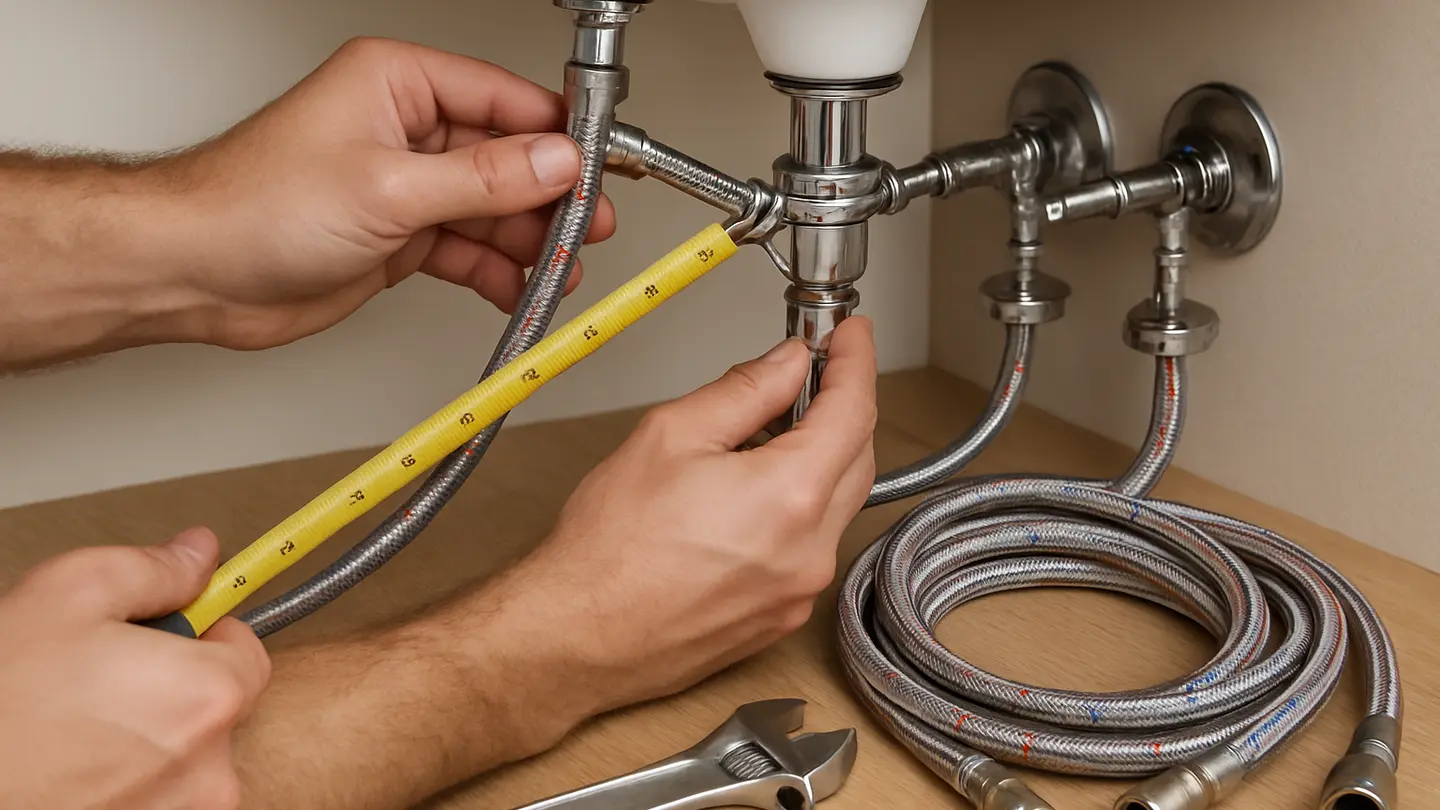
Measure from the shut-off valve outlet to the faucet tailpiece or inlet connection. Follow the expected routing path rather than measuring only a straight vertical distance. Under-sink plumbing often requires the line to curve around the drain assembly or other components.
Add a few inches so the supply line can form a smooth, low-stress curve. A line that is too short can place constant tension on the valve or faucet fitting, increasing the chance of loosening, seal distortion, or leakage.
Excess length can also create problems if poorly routed. A hose that loops sharply, tangles with the drain trap, or presses against cabinet contents may kink or restrict flow. For project purchasing, it is often useful to stock two or three common lengths rather than relying on one universal option.
Basic Installation Steps for Faucet Supply Lines
Faucet supply line installation is essentially a fit-and-seal process: select the correct line, connect it without damaging fittings, and test carefully. The work is straightforward for experienced installers, but damaged valves, unfamiliar fittings, corroded parts, or commercial installations may require professional plumbing support.
The most important installation rule is compatibility. No amount of tightening can compensate for the wrong thread, wrong seal type, or misaligned connection.
Tools and Materials to Prepare
Before starting, prepare the correct parts and basic water-control materials. A typical setup includes:
- correctly sized replacement faucet supply lines;
- adjustable wrench or basin wrench;
- bucket or shallow pan;
- towels or absorbent pads;
- flashlight or work light;
- replacement washers or seals if required by the fitting;
- plumber’s tape only where appropriate.
Plumber’s tape is not universal. Many faucet supply connections seal with compression rings, rubber washers, or integrated gaskets rather than tapered pipe threads. Applying tape to the wrong fitting can interfere with proper seating. Always follow the fitting and faucet manufacturer’s instructions.
Quick Installation Sequence
Shut off the hot and cold water at the shut-off valves. Open the faucet to relieve pressure and confirm the water is off. Place a bucket or towel under the connections before removing the existing lines.
Disconnect the old supply lines carefully. If fittings are corroded or the valve begins to twist, stop and stabilize the valve or seek professional assistance. Damaging an old shut-off valve can turn a simple replacement into a larger repair.
Install the new line by starting each connection by hand to prevent cross-threading. Once hand-tight, use a wrench for final tightening, but avoid overtightening. Excessive force can crush washers, deform compression fittings, or crack components.
After both hot and cold lines are connected, restore water slowly. Inspect each connection while the faucet is off, then run the faucet and inspect again under flow. Wipe connections dry and recheck for moisture after several minutes. For commercial or multi-unit work, a documented leak check can help reduce post-installation issues.
When Faucet Supply Lines Should Be Replaced
Faucet supply lines should be replaced when they show visible damage or when age and uncertainty create unacceptable leak risk. Warning signs include rust, corrosion, bulging, bubbling, cracked outer jackets, frayed braid, or damaged hoses.
Persistent drips at fittings may indicate worn seals, improper installation, or a failing supply line. Tightening may temporarily slow a leak, but it does not solve deterioration or incompatibility. If the hose, nut, ferrule, washer, or valve outlet is damaged, replacement is usually safer.
Old supply lines can deteriorate internally even when the exterior looks acceptable. Rubber or polymer inner tubes may age, harden, or weaken over time. In rental housing, hotels, dormitories, and high-use facilities, proactive replacement during faucet upgrades or vanity renovations can be more economical than responding to water damage later.
Replacement is also advisable when:
- installing a new faucet with different inlet requirements;
- replacing shut-off valves;
- renovating cabinets or countertops;
- finding unknown or unmarked supply lines;
- discovering past overtightening or thread damage;
- standardizing parts during a multi-unit maintenance program.
FAQ
How often should faucet supply lines be replaced?
Faucet supply lines are often replaced periodically to reduce age-related leak risk. A 5- to 10-year interval is commonly suggested for many residential applications, but visible corrosion, bulging, cracking, leakage, or installation uncertainty calls for earlier replacement.
What material is best for faucet supply lines?
Braided stainless steel is commonly recommended for residential faucet supply lines because it combines durability, flexibility, and resistance to bursting. It is especially practical under sinks where routing space is limited and the line must bend around other plumbing components.
Can a 1/2-inch supply line be used with a 3/8-inch faucet connection?
A 1/2-inch line will not directly fit a 3/8-inch faucet connection. A properly sized adapter may be needed, but the adapter must match the exact thread and fitting types on both sides. Diameter alone is not enough; compression, pipe thread, and faucet-specific connections seal differently.
Are faucet supply lines NPT?
Some plumbing components use NPT, but faucet supply lines can use different connection types at each end. Compression fittings are common on faucet supply connections, especially at shut-off valves. Buyers should identify both the valve-side and faucet-side connection before purchasing, rather than assuming the line is NPT.
Related Buying Guide Topics
For buyers building a broader plumbing specification or replacement program, faucet supply lines are only one part of the fixture package. Useful next-step topics include shut-off valve selection, faucet inlet types, braided hose quality checks, bathroom sink rough-in dimensions, shower valve connection standards, and leak-prevention practices for multifamily or hospitality installations.