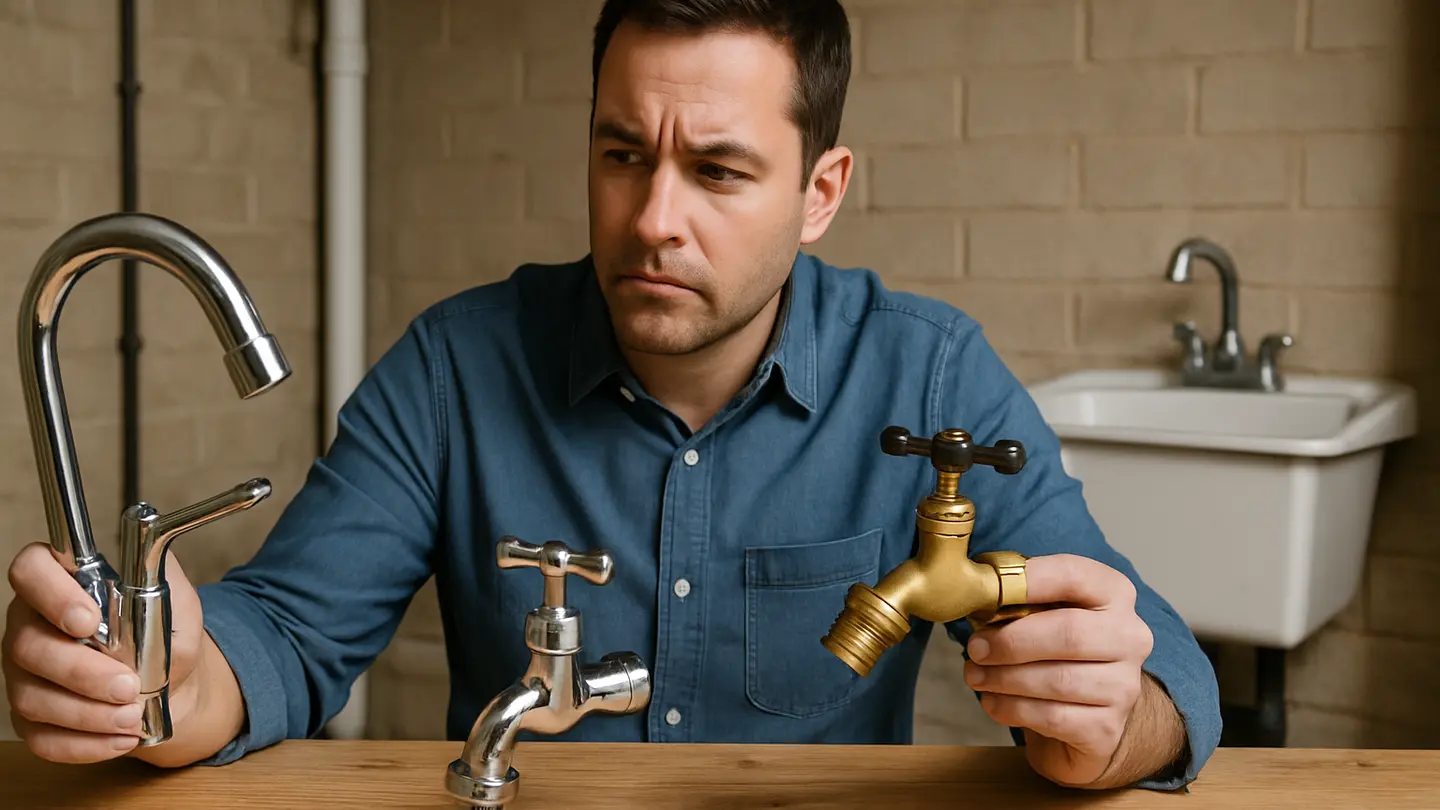
For plumbing fixture buyers, faucet vs tap vs spigot is more than a language question. The term used in an RFQ, catalog search, specification, or installation note can affect which products appear and how suppliers interpret the requirement.
All three words describe devices that control or dispense water, but they are not always interchangeable. In many conversations, “faucet” and “tap” refer to the same indoor fixture. “Spigot” is more often associated with outdoor water access, hose connections, tanks, or utility use.
For B2B buyers, contractors, distributors, and project specifiers, the practical distinction is simple: faucet is common in American English for indoor kitchen and bathroom fixtures, tap is common in British and international English for similar fixtures, and spigot usually means a simpler outdoor or utility valve.
Basic Definitions: Faucet, Tap, and Spigot
A faucet is typically an indoor plumbing fixture that controls water flow at a sink, basin, bathtub, shower, or utility sink. In North American catalogs, “kitchen faucet,” “bathroom faucet,” and “shower faucet” are standard terms. Faucets may include one or two handles, cartridges, aerators, pull-down sprayers, diverters, or mixing valves for water flow and temperature.
A tap often means the same thing, especially in British English and many Commonwealth or international markets. Buyers may search for “basin tap,” “kitchen mixer tap,” or “bath taps” where a North American buyer would search for “bathroom faucet” or “kitchen faucet.” In technical usage, “tap” can also mean a controlled outlet for water or another liquid.
A spigot is usually a simpler valve or outlet used outdoors or in utility settings. In American English, it often describes the exterior wall outlet used with a garden hose. Spigots may also be installed on tanks, rain barrels, containers, irrigation lines, or other water supply points. Compared with indoor faucets, they usually provide cold water only, use simple on-off operation, and prioritize durability over decorative design.
The buying implications are different. A hotel bathroom project usually requires faucets or taps with finish consistency, flow control, and temperature mixing. A landscaping or maintenance project may need spigots with hose threads, weather resistance, and freeze protection.
How the Three Terms Differ in Practice
The most useful comparison is by regional language, water-control function, and installation location. None of the terms is universally “better.” The right word depends on market context and product use.
| Term | Common usage | Typical location | Common function |
|---|---|---|---|
| Faucet | American English, especially indoor plumbing | Kitchens, bathrooms, laundry rooms, utility sinks | Controls flow and often mixes hot and cold water |
| Tap | British and international English for similar fixtures | Kitchens, bathrooms, washrooms, public facilities | Controls flow; often equivalent to faucet |
| Spigot | American English, usually outdoor or utility use | Exterior walls, gardens, tanks, irrigation points | Simple on-off water outlet, often hose-compatible |
For procurement teams, the safest approach is to pair the regional term with the technical requirement. “Single-hole bathroom faucet with chrome finish” and “single-hole basin mixer tap with chrome finish” may describe similar products, but each phrase suits a different market.
Regional and Language Usage
In American English, faucet is the preferred term for most indoor water fixtures. A U.S. plumbing schedule is likely to list kitchen faucets, lavatory faucets, tub faucets, and shower faucets.
In British English and many Commonwealth English varieties, tap is preferred. A buyer may specify mixer taps, basin taps, bath taps, or kitchen taps. The product may perform the same function as a faucet, but the catalog language changes.
Spigot is more specific in American English. It is most often used for outdoor water outlets, hose bibbs, sillcocks, or simple valves connected to tanks or barrels. In some regions, people may casually call an outdoor spigot a tap, but “spigot” usually signals a rugged utility fixture rather than a finished indoor fitting.
These differences matter in B2B communication. A global buyer searching only for “faucet” may miss relevant “tap” suppliers. A distributor requesting “spigots” when it needs bathroom mixer faucets may receive quotes for outdoor valves instead of sanitaryware.
Main Functions and Water-Control Roles
Faucets and taps control water at the point of use. In indoor applications, they often do more than open and close a valve. Many fixtures mix hot and cold water, regulate temperature, reduce splash with aerators, or redirect water through sprayers, hand showers, or tub spouts.
Indoor faucets and taps are also part of the user experience. In commercial washrooms, hospitality projects, healthcare facilities, and residential developments, buyers may evaluate handle ergonomics, finish durability, flow rate, cartridge quality, maintenance access, and visual consistency.
Spigots usually have a narrower role. They provide water for a hose, watering can, tank drain, outdoor cleaning task, or utility process. They are often cold-water outlets with threaded connections. The priority is reliable on-off control in a less protected environment.
A poorly specified outdoor spigot can still cause leaks, hose connection problems, freeze damage, or maintenance complaints. The selection criteria are simply different from those used for decorative indoor faucets or taps.
Typical Installation Locations
Faucets are commonly installed in kitchens, bathrooms, laundry rooms, utility rooms, and commercial wash areas. They may require compatibility with sink holes, countertops, wall rough-ins, supply lines, drains, and local plumbing codes.
Taps occupy the same locations in markets where that term is preferred. A “deck-mounted kitchen mixer tap” and a “deck-mounted kitchen faucet” may describe comparable products.
Spigots are commonly mounted on exterior walls, garden areas, garages, maintenance yards, tanks, rain barrels, and irrigation systems. Because they may face sunlight, temperature changes, rain, dirt, and frequent hose attachment, outdoor spigots are often designed for rougher handling. In cold climates, frost-proof or freeze-resistant configurations may be needed.
Where Each Fixture Type Is Commonly Used
Faucets, taps, and spigots all provide water access, but their common applications differ. Buyers should connect the term with the installation environment, expected user behavior, and required product features.
Indoor applications are usually described as faucets or taps. Outdoor and utility applications are usually associated with spigots, especially in North American sourcing contexts.
Kitchen and Bathroom Fixture Applications
In North America, kitchen and bathroom fixtures are usually called faucets. A kitchen faucet typically supplies hot and cold water at a sink and may include a swivel spout, pull-out sprayer, pull-down sprayer, side spray, touchless operation, or aerator. For commercial or multi-unit projects, buyers may also compare cartridge design, finish options, flow rate, lead-content compliance, and spare-part availability.
Bathroom faucets serve vanity sinks, basins, bathtubs, and showers. Sink faucets may be single-hole, centerset, wall-mounted, vessel, or widespread configurations. Bathtub and shower fixtures may include mixers, thermostatic valves, pressure-balancing valves, diverters, hand showers, and tub spouts.
In markets where “tap” is standard, these applications may be described as basin taps, bath taps, shower mixers, or kitchen mixer taps. The function is similar; the language changes.
Indoor fixture buyers usually focus on usability, durability, water efficiency, cleaning requirements, and appearance. Materials and finishes may include brass bodies, stainless steel components, chrome plating, brushed nickel, matte black, and other decorative coatings.
Outdoor, Garden, and Utility Use
Spigots are commonly used for garden hoses, outdoor watering, vehicle washing, equipment cleaning, and general maintenance access. They are often installed on exterior walls, near landscaping zones, in service yards, or at outdoor water supply points.
Most outdoor spigots use simple on-off valve operation and do not mix hot and cold water. Hose-compatible threading is often essential. Buyers should confirm thread type, connection size, handle style, material, and whether backflow prevention or vacuum breaker requirements apply in the target market.
In cold climates, frost-proof spigots can be important. These designs place the shutoff valve farther inside the building envelope so water is less likely to remain near the exterior wall where it can freeze. They still require proper installation and seasonal handling.
For rain barrels, tanks, and containers, spigots may have different mounting requirements than wall-mounted hose bibbs. Container spigots often use shorter threaded sections and sealing washers designed for thin tank walls.
How Buyers Should Choose the Right Term and Fixture
The best term depends on three questions: where the fixture will be installed, which regional language the supplier or contractor uses, and what function the product must perform.
For international sourcing, buyers may need to search both “faucet” and “tap” to build a complete supplier list. For outdoor utility fixtures, “spigot,” “hose bibb,” “sillcock,” or “outdoor tap” may be relevant depending on the market.
Precise wording is especially important in RFQs and specifications. A request for “bathroom taps” should indicate whether the buyer needs basin mixers, bath fillers, shower mixers, or complete sets. A request for “spigots” should specify whether the application is wall-mounted, hose-connected, frost-proof, tank-mounted, or irrigation-related.
Start with Indoor or Outdoor Installation
The first decision is location. If the product will be installed indoors at a kitchen sink, restroom basin, bathroom vanity, bathtub, shower, or laundry sink, the fixture will usually be called a faucet in American English or a tap in British and international English.
If the product will be installed outdoors on a wall, garden line, yard supply, tank, or rain barrel, spigot is often the clearer term in American English. These fixtures are commonly used for hoses, watering, cleaning, and exterior maintenance.
This distinction helps avoid a common sourcing error: using an indoor fixture term for an outdoor application, or using “spigot” when the project actually requires finished bathroom or kitchen fixtures.
Match Indoor Features to the Use Case
For indoor faucets and taps, start with the use case. A residential kitchen may need a pull-down sprayer. A commercial pantry may prioritize vandal resistance, easy cartridge replacement, and consistent flow. A hospitality bathroom may require coordinated finishes across faucets, shower sets, and accessories.
Aerators are common on kitchen and bathroom faucets or taps. They help reduce splash, shape the water stream, and support efficient water use. Buyers should check whether the aerator is replaceable, whether flow rates match project requirements, and whether local standards apply.
Bathroom vanity faucets should match the sink or countertop layout. Common configurations include single-hole, centerset, widespread, wall-mounted, and vessel-style fixtures. A mismatch between fixture configuration and basin drilling can delay installation or require rework.
For bathtubs and showers, the buyer is usually selecting more than a visible spout. Mixing valves, thermostatic controls, pressure-balancing valves, diverters, and rough-in bodies may be part of the specification. In these cases, “faucet” or “tap” alone is too broad.
Specify Spigots for Outdoor Water Access
For basic garden use, a wall-mounted spigot with hose-compatible threading is usually sufficient. Buyers should confirm inlet connection type, outlet thread, body material, handle design, and whether the product will be exposed to heavy use or weather.
In cold climates, frost-proof spigots may be necessary to reduce freeze damage risk. The required stem length and installation depth should be coordinated with wall construction.
For tanks, rain barrels, and other containers, specify a container-compatible spigot rather than assuming a standard wall spigot will fit. Container spigots may use shorter threads, sealing gaskets, and nut assemblies designed for thin walls. Flow rate, material compatibility, and ease of operation are also relevant.
Key Takeaways for Fixture Terminology
Use faucet when specifying indoor plumbing fixtures in American English contexts, especially for kitchens, bathrooms, laundry rooms, and commercial wash areas.
Use tap when working in British, Commonwealth, or many international English contexts for similar indoor fixtures. It often describes the same product type as a faucet but aligns better with regional catalog language.
Use spigot for outdoor utility outlets, hose connections, tanks, rain barrels, garden water access, and similar simple valve applications. Spigots are generally more rugged and less feature-rich than indoor faucets or taps.
Correct terminology improves product searches, RFQs, project instructions, and supplier communication. The more specific the application, the more specific the wording should be.
Another Way to Build a China Supplier Shortlist
For buyers sourcing plumbing fixtures, terminology is only one part of supplier selection. A clear RFQ should still be paired with a structured supplier discovery process.
Made-in-China.com is a B2B sourcing platform buyers can use to find and narrow supplier options. Its Supplier Discovery tools provide additional ways to identify suppliers, including Audited Suppliers and regional supplier channels.
For early-stage comparison, Audited Supplier information and Audit Reports can help buyers review structured supplier details before deeper due diligence, sampling, or negotiation. According to the platform’s buyer information, Audited Suppliers are subject to third-party verification and on-site audit, and Audit Reports may cover areas such as general information, export trade, manufacturing capacity, quality control, and R&D capability.
Buyers who want to reduce manual outreach can also use Easy Sourcing. The service allows buyers to submit one sourcing request, receive multiple quotations from matched suppliers, compare quotes, and request samples.
FAQ
What is the difference between faucets, taps, and spigots in the kitchen?
In North American kitchens, faucet is the most common term. Kitchen faucets usually mix hot and cold water and may include aerators, swivel spouts, or pull-down sprayers. Tap usually refers to the same kind of kitchen fixture in British and international English. Spigot is uncommon for indoor kitchens, except when describing a very simple valve.
Are there any distinct uses for faucets, taps, and spigots in the bathroom setting?
Bathrooms usually use faucets or taps for sinks, tubs, and showers. These fixtures often control both water flow and temperature, and many bathroom sink fixtures include aerators. Tap may be the preferred regional term for the same fixture type. Spigot is rarely used for indoor bathroom fixtures because it usually refers to outdoor or utility water outlets.
Why do some regions use the term ‘faucet’ while others prefer ‘tap’?
The difference reflects regional language development and market convention. Faucet is common in American English for indoor plumbing fixtures. Tap is common in the UK and many British-influenced English varieties. For international buying, use the term preferred in the target market.
Can I interchange the terms faucet, tap, and spigot when shopping for bathroom fixtures?
The terms can overlap in casual speech, but they are not always interchangeable in product selection. For bathroom fixtures, use faucet in American English contexts and tap in British or international contexts. Avoid spigot unless the product is a simple utility outlet.
Related Reading and Next Steps
For buyers building a plumbing fixture specification, useful next topics include bathroom faucet configurations, shower valve types, kitchen faucet materials, aerator selection, finish durability, and outdoor hose bibb requirements.
Before issuing an RFQ, confirm the regional terminology, installation location, connection standard, required features, and expected operating environment. This clarification can prevent mismatched quotes and reduce project delays.