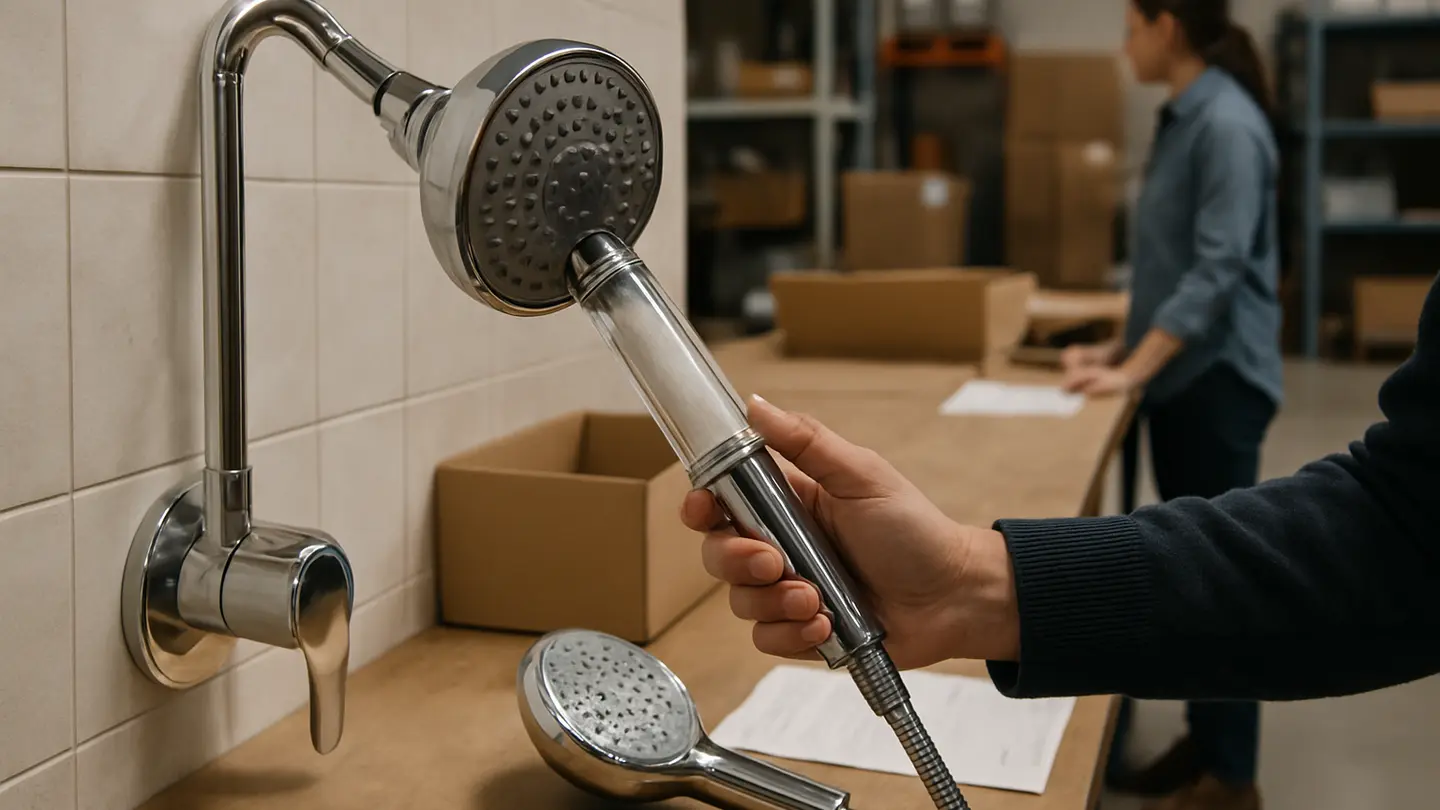
For hotels, resorts, serviced apartments, gyms, and spas, the shower is one of the few amenities guests use directly on skin and hair. If water smells strongly of chlorine, leaves hair rough, or creates visible scale, guests notice. Filtered Shower Heads for Hotels can improve the perceived shower experience while supporting bathroom maintenance, wellness positioning, and long-term asset protection.
They are not a substitute for proper building water management, code compliance, or whole-property treatment where required. Used correctly, however, they can reduce specific irritants at the point of use and create a cleaner, softer-feeling shower experience.
Why Shower Water Quality Matters in Hospitality
Water quality affects how clean, comfortable, and well-managed a property feels. Guests may not know the cause of unpleasant shower water, but they recognize symptoms: chemical odor, poor soap lather, itchy skin, dull hair, or stained fixtures.
Bathrooms are closely tied to perceived hygiene and care. An uncomfortable shower can affect the whole stay, while repeated complaints about hard water, odors, or stained fixtures can weaken online reviews.
Water quality also has an operational side. Unmanaged issues can increase maintenance, damage finishes, create complaint risks, and sometimes raise compliance or liability concerns. Filtered shower heads should be viewed as one layer in a broader water-quality strategy, especially in properties with older plumbing, hard water, or wellness positioning.
Protecting Guest Skin, Hair, and Shower Comfort
Guests judge shower comfort through touch, smell, and results. High chlorine levels may create a chemical odor. Hard water can reduce lather and leave film on skin or hair. Sediment and rust can make water look or feel less clean. Metals, bacteria, and minerals may also contribute to discomfort depending on the local system and building conditions.
Sensitive-skin guests, spa visitors, and long-stay guests may notice these issues more because they shower repeatedly during a visit.
Common complaints connected with poor shower-water feel include:
- Dry or itchy skin after bathing
- Brittle, frizzy, or rough-feeling hair
- Strong chlorine or metallic odors
- Poor shampoo and soap lather
- A “hard” or uncomfortable water feel
- Visible residue on glass, tile, and fixtures
Filtered shower heads can reduce selected substances before water reaches the guest. Depending on the media, they may reduce chlorine, particles, certain metals, and odors, creating a shower that feels cleaner and more comfortable.
How Water Issues Affect Reviews, Repairs, and Risk
Guests often describe water problems in simple terms: “the water smelled bad,” “the shower left my skin dry,” “the bathroom looked stained,” or “the shower pressure was poor.” These comments can influence bookings because bathroom quality is a major trust signal.
Water issues also increase workload. Mineral buildup can restrict nozzles, reduce spray performance, and create pressure complaints. Scale and soap scum can build up on glass, tile, and metal finishes, requiring more cleaning time or stronger chemicals. Corrosion and staining may shorten fixture life.
For hotels, builders, and multi-unit projects, small specification decisions can become expensive after installation. A leak, finish mismatch, premature clogging issue, or inconsistent cartridge fit across many rooms can cost far more than the original unit-price difference. Filtered shower heads should be evaluated by material quality, pressure performance, installation consistency, cartridge availability, and maintenance requirements—not purchase price alone.
Common Shower-Water Contaminants in Hotels and Spas
Hotel water may come from municipal systems, wells, or mixed supply arrangements, then travel through the property’s own plumbing. Along that path, several concerns may appear:
- Disinfectants: Chlorine or chloramine help maintain microbial control but can affect odor and water feel.
- Metals: Older plumbing or water chemistry may introduce lead, copper, iron, or other metals. Iron and rust can stain surfaces and create particles.
- Sediment and rust: Particles may come from pipes, maintenance activity, or water-system disturbances.
- Hardness minerals: Calcium and magnesium contribute to scale, reduced lather, and residue.
- VOCs: Some volatile organic compounds may be present depending on source water and treatment context.
- Microbial concerns: Large buildings with complex hot-water systems and low-use areas require careful water management to reduce stagnation risks.
Low-use wings, seasonal rooms, spa treatment areas, and long pipe runs create additional challenges. In these environments, shower filtration can support the guest-facing experience, but it should work alongside flushing, temperature control, cleaning, testing, and any required water safety plan.
Business Benefits of Adding Filtered Shower Heads
Filtered shower heads are best understood as a guest-experience upgrade, not just a plumbing accessory. They improve a direct point of contact between the guest and the property: bathing water.
The business case may include better comfort, improved hygiene perception, reduced sediment and scale, more stable shower performance, and stronger wellness positioning for resorts, spas, fitness centers, and premium serviced apartments.
The benefit depends on correct selection. A filter designed mainly for chlorine reduction will not perform like one designed for sediment, scale, or selected metals. B2B buyers should define the main water-quality problems first, then match the product to those conditions.
Creating a Better In-Room Shower Experience
Replacing a standard shower head with a filtered model can create a noticeable difference, especially in markets with hard water or strong disinfectant odors. Guests may notice less chemical smell, better lather, and skin or hair that feels less dry after showering.
Hard water is often associated with dry skin, frizzy hair, limescale buildup, and reduced soap performance. Guests may not know the hardness level, but they recognize the results. A filtered shower head with appropriate media can help reduce some substances that contribute to these complaints, depending on design.
For spa resorts, boutique hotels, and premium serviced apartments, filtered showers reinforce care without requiring guests to learn or operate anything. The amenity works in the background.
Limiting Dry Skin and Hair Discomfort
Dry skin and rough-feeling hair are common perceptions linked to poor shower-water quality. Chlorine and some metals may contribute to stripping natural oils from skin and hair. Hardness minerals can leave residue that makes hair feel less smooth and skin less comfortable.
Filtered water can help by reducing targeted substances before water contacts the guest. Guests with sensitive skin, color-treated hair, curly hair, or scalp sensitivity may notice the greatest difference. A shower filter should not be marketed as a medical treatment, but it can be positioned as a comfort-focused amenity that supports a gentler bathing experience.
This is especially relevant during longer stays. A guest staying several nights may become more aware of dryness, itching, or hair texture changes. Reducing chlorine odor, particles, and certain metals can improve the perceived feel of the shower.
Cleaner Bathrooms, Easier Housekeeping, and Better Flow
Filtered shower heads can support housekeeping and engineering teams. By reducing sediment, rust, and some particulate matter before water exits the shower head, filters may help limit visible buildup on fixtures, glass, tile, and shower walls. Where media is designed for scale reduction, it may also help reduce limescale accumulation.
Cleaner water does not eliminate normal cleaning, but it may make routine bathroom maintenance easier and reduce the need for aggressive cleaning methods.
Filtration may also help maintain spray performance. Sediment and scale can clog nozzles, distort spray patterns, and lead to pressure complaints. Maintenance teams still need to descale, inspect, and replace cartridges on schedule, but filtration can reduce some common causes of shower performance decline.
What Happens Inside a Filtered Shower Head
A filtered shower head passes water through internal media before the spray reaches the guest. The filter may be built into the shower head body, placed in the handle, or installed as an inline cartridge between the shower arm and head.
Different technologies target different problems. Some filters focus on chlorine and odor. Others target sediment, metals, scale, or broader multi-stage treatment. Multi-stage products combine several media types in a compact format.
For B2B buyers, the number of stages alone is not enough. A “multi-stage” claim is meaningful only if the media, capacity, flow performance, replacement interval, and test method are clearly stated.
Filtration Media Options and What They Target
Common media types include:
- Activated carbon: Often used to reduce chlorine, odors, and certain organic compounds. Performance can vary with water temperature, contact time, and media quality.
- KDF media: A copper-zinc media that works through redox reactions. It is commonly used to address chlorine, certain metals, and some microbial concerns under suitable conditions.
- Ceramic filters: Physical barriers that reduce sediment and larger particles. Pore size and design determine what they can block.
- Vitamin C filters: Use ascorbic acid to neutralize chlorine, often where chlorine odor is the main concern.
- Sediment media: Capture rust, sand, and other visible particles.
- Scale-control media: Reduce scale formation or its effects, depending on formulation and water chemistry.
Some commercial shower filters combine sediment filtration, activated carbon, KDF, ceramic media, vitamin C, or other materials in one cartridge. Housings may use ABS, stainless steel, or metal-plated components. Buyers should verify full specifications rather than relying on terms such as “7-stage” or “hotel-grade.”
Reducing Chlorine, Metals, VOCs, Scale, and Particles
Chlorine reduction is one of the most common reasons hotels choose filtered shower heads. Reducing chlorine odor can make hot showers feel fresher and less harsh.
KDF media may reduce certain metals such as lead and copper depending on design, contact time, and operating conditions. Activated carbon may help with chlorine, odor, and some volatile organic compounds where rated for those targets. Ceramic or sediment filters can capture rust and debris that might otherwise reach the spray nozzles or guest.
Some designs may help reduce microbial exposure, but this must be treated carefully. A shower filter is not a replacement for building water safety management. If microbial control is a concern, hotels should follow applicable regulations, conduct proper testing, and use professional water-management practices.
Scale reduction is also important. Specialized media may help reduce mineral buildup and protect shower performance, especially in hard-water markets where limescale affects guest perception and fixture life.
Installation, Cartridge Replacement, and Downtime Control
Many filtered shower heads attach to standard shower arms, making installation relatively simple. In many cases, replacement requires minimal tools and little or no plumbing modification, which makes them attractive for retrofit projects.
Still, buyers should confirm thread compatibility, sealing requirements, flow rate, pressure range, hose or bracket compatibility, finish match, and clearance. Mock-up installation in sample rooms is useful before a full rollout.
Cartridge replacement frequency depends on local water quality, occupancy, flow rate, filter capacity, and usage volume. A high-occupancy resort room may require more frequent replacement than a low-use business hotel room. Date labels, replacement indicators, timers, QR-coded maintenance logs, or property management records can help teams avoid overdue cartridges.
For B2B purchasing, specifications should document test methods, pressure requirements, test duration, sampling level, and pass/fail criteria. Quick cartridge access also matters because guest-room downtime affects revenue and operations.
Sustainability and Lifetime Value for Hospitality Properties
Filtered shower heads can contribute to long-term value when selected as part of a planned maintenance and guest-experience strategy. The goal is cleaner-feeling water, fewer complaints, less buildup, better finish protection, and a wellness amenity that supports positioning.
The sustainability case should be accurate. Shower filters do not automatically make a hotel sustainable, and they do not replace responsible water management. But they can support environmental and operational goals when paired with durable materials, sensible cartridge programs, water-efficient flow rates where appropriate, and honest guest communication.
Environmental Advantages of Cleaner Shower Water
Cleaner-feeling shower water may reduce reliance on some guest-facing interventions, stronger cleaning chemicals, or repeated maintenance treatments in areas affected by scale and residue. The impact varies by property policy, local water quality, and housekeeping procedures.
By reducing chlorine odor, selected metals, sediment, and visible particles at the shower point, filtered shower heads can support a broader environmental and wellness message. A hotel may position the upgrade as part of a cleaner bathroom experience, a spa-focused amenity, or a comfort improvement for sensitive-skin guests.
Claims should remain specific and supportable. Instead of saying a shower head “purifies all water” or “removes every contaminant,” a property should communicate what the filter is designed to reduce and maintain cartridges accordingly.
Lowering Fixture Wear and Maintenance Spend
Filtered shower heads may reduce mineral buildup, sediment abrasion, and chemical stress on shower components. Over time, this can help protect spray nozzles, finishes, hoses, brackets, and surrounding bathroom surfaces. Potential savings may come from fewer clogging complaints, fewer early replacements, lower chemical use, and reduced maintenance or housekeeping labor.
Predictable cartridge replacement is central to the value case. If filters are not replaced on schedule, performance can decline and guest confidence can suffer. Maintenance teams should plan inventory, service intervals, and room access procedures before installation.
Material and finish choices also affect lifetime value. ABS, brass, 304 stainless steel, and 316L stainless steel can all be valid depending on environment, product position, and target cost. Chrome, brushed nickel, matte black, brushed gold, polished stainless, brushed stainless, gunmetal, and PVD finishes should be treated as controlled specifications, not just color names. Substrate, coating system, gloss, texture, and production lot consistency affect appearance and durability.
For hospitality buyers, the lowest unit price is not always the lowest total cost. A slightly more expensive product with better finish consistency, reliable sealing, easier cartridge replacement, and stable spray performance may offer better lifetime value across many rooms.
Using Filtered Showers to Strengthen Wellness Positioning
Wellness-focused travelers increasingly value amenities that improve comfort without adding complexity. A filtered shower is a low-friction wellness feature: guests do not need to request it, adjust settings, or change behavior. They simply experience water that may smell cleaner, feel softer, and leave skin and hair more comfortable.
For spas, filtered showers fit naturally into the treatment environment. For hotels, the amenity can support room descriptions, wellness packages, loyalty messaging, and premium bathroom positioning when claims are accurate.
Filtered shower heads can serve hotels, real estate developments, eCommerce brands, retailers, gyms, wellness centers, and spas. The right specification differs by application. A boutique hotel may prioritize finish quality and guest communication. A fitness center may focus on durability and quick cartridge changes. A real estate project may need finish consistency and installation efficiency across many units.
For hospitality properties, the strongest value comes from matching the product to the water problem, documenting specifications, maintaining cartridges, and communicating benefits responsibly. When those elements are in place, Filtered Shower Heads for Hotels can improve guest comfort, support wellness perception, and reduce maintenance friction over the life of the property.