For buyers trying to find reliable suppliers in China, reliability is proven through evidence: legal identity, factory traceability, production capability, quality controls, payment security, and performance under real order conditions.
A low-risk sourcing process cannot remove every commercial risk, but it can prevent avoidable mistakes before deposits or high-value orders are placed.
Prepare the procurement kickoff pack before contacting suppliers
Supplier screening is easier when buyers approach the market with a complete procurement kickoff pack. Without it, quotations are rarely comparable and critical assumptions may surface only after production begins.
A practical kickoff pack should include:
- A formal RFQ with product name, intended use, target market, and requested quote format
- Product specifications with dimensions, materials, tolerances, finishes, colors, and performance requirements
- Product drawings, photos, reference samples, or approved benchmark products where available
- Bill of materials notes, including mandatory components or prohibited substitutions
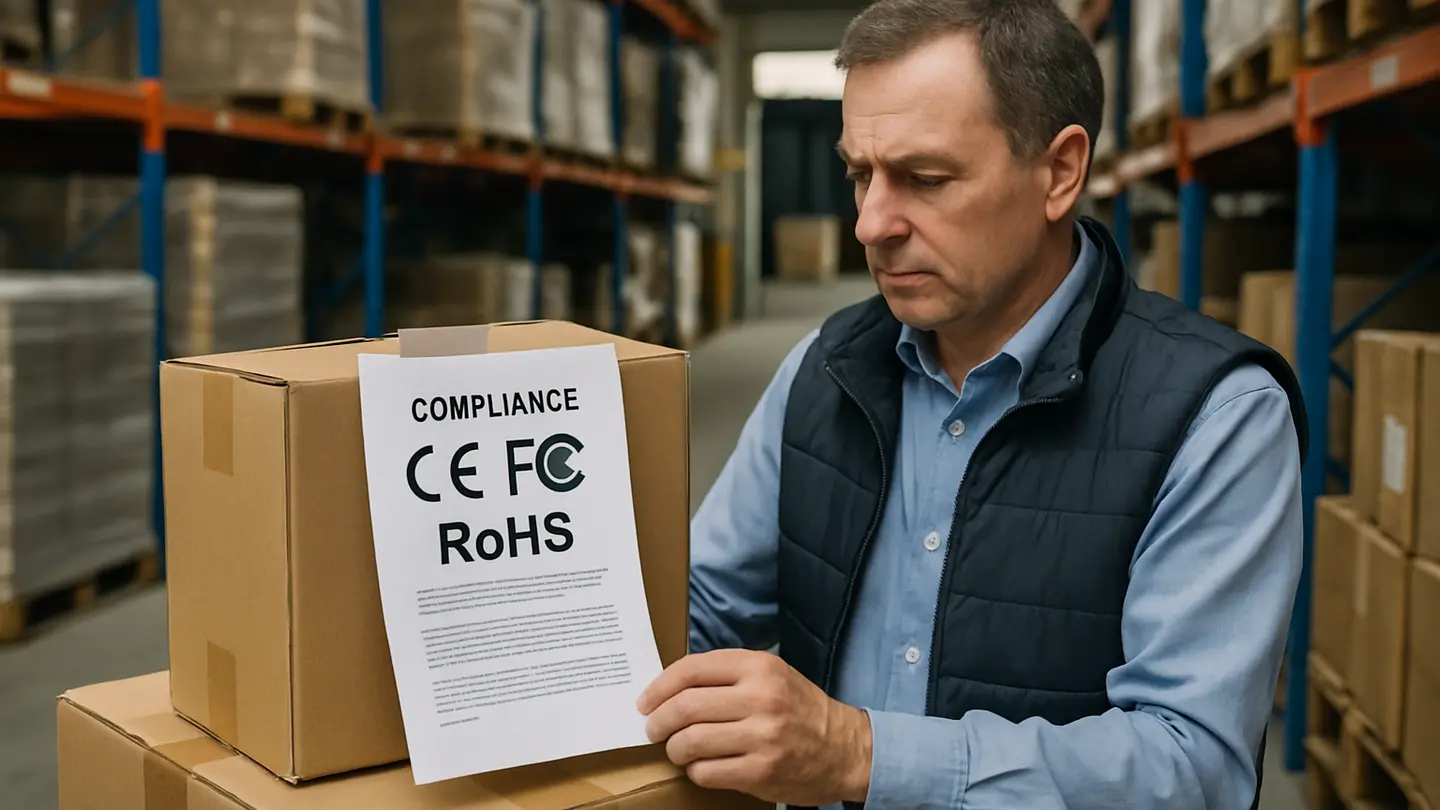
- Compliance requirements for the destination market
- Target pricing or expected cost range, if appropriate
- Estimated annual volume, first-order quantity, and forecasted reorder pattern
- MOQ tolerance and flexibility around split shipments or phased orders
- Packaging, carton, labeling, and barcode requirements
- Acceptable quality limits, defect definitions, and inspection criteria
- Required Incoterms, destination port or warehouse, and freight responsibility
- A comparison sheet for quotes, lead times, payment terms, and supplier claims
Replace vague quality language with measurable requirements. “High quality,” “strong packaging,” or “premium finish” means little in production. Define tolerances, material grades, surface standards, color references, test methods, and packaging expectations where relevant.
Use corporate email domains and traceable business messaging channels. Keep records of calls, sample approvals, revised drawings, supplier commitments, and quality decisions. Before payment, verify the official Chinese legal entity rather than relying only on an English trading name, marketplace profile, or sales representative’s signature.
A seven-step workflow for reducing China sourcing risk
A sound sourcing workflow reduces four common risks: supplier fraud, production defects, payment exposure, and logistics surprises. The process should move in stages: define the supplier profile, identify candidates, verify legal and financial details, test technical credibility, compare commercial terms, validate samples through a pilot order, and lock the purchase order with quality and logistics controls.
A supplier should not receive a deposit merely because it replied quickly, quoted the lowest price, or produced an attractive sample. Each stage should create evidence that supports moving to the next stage.
Step 1: Build a clear profile of the supplier you need
Before contacting the market, define the type of supplier that fits the product and order model. Consider factory type, manufacturing process, production region, order size, export experience, compliance requirements, and the level of engineering or customization involved.
For simple standardized products, a direct manufacturer may be efficient if the buyer can manage communication, verification, inspections, and logistics. For complex assemblies, tight timelines, or buyers without Mandarin-speaking support, a sourcing agent or local procurement partner may add value.
A precise supplier profile should answer these questions:
- Does the product require a specialized manufacturing process or common assembly capability?
- Are specific materials, certifications, or market compliance documents required?
- Is the first order small, medium, or large relative to typical factory economics?
- Does the supplier need export experience to the buyer’s target market?
- Is engineering support, tooling, private labeling, or packaging design required?
- Can the supplier support future volume without subcontracting critical processes?
This profile helps buyers reject unsuitable suppliers early. If a supplier cannot handle the process, MOQ, compliance requirement, or documentation level, a low price should not keep it in consideration.
Step 2: Find candidates and turn them into a comparable shortlist
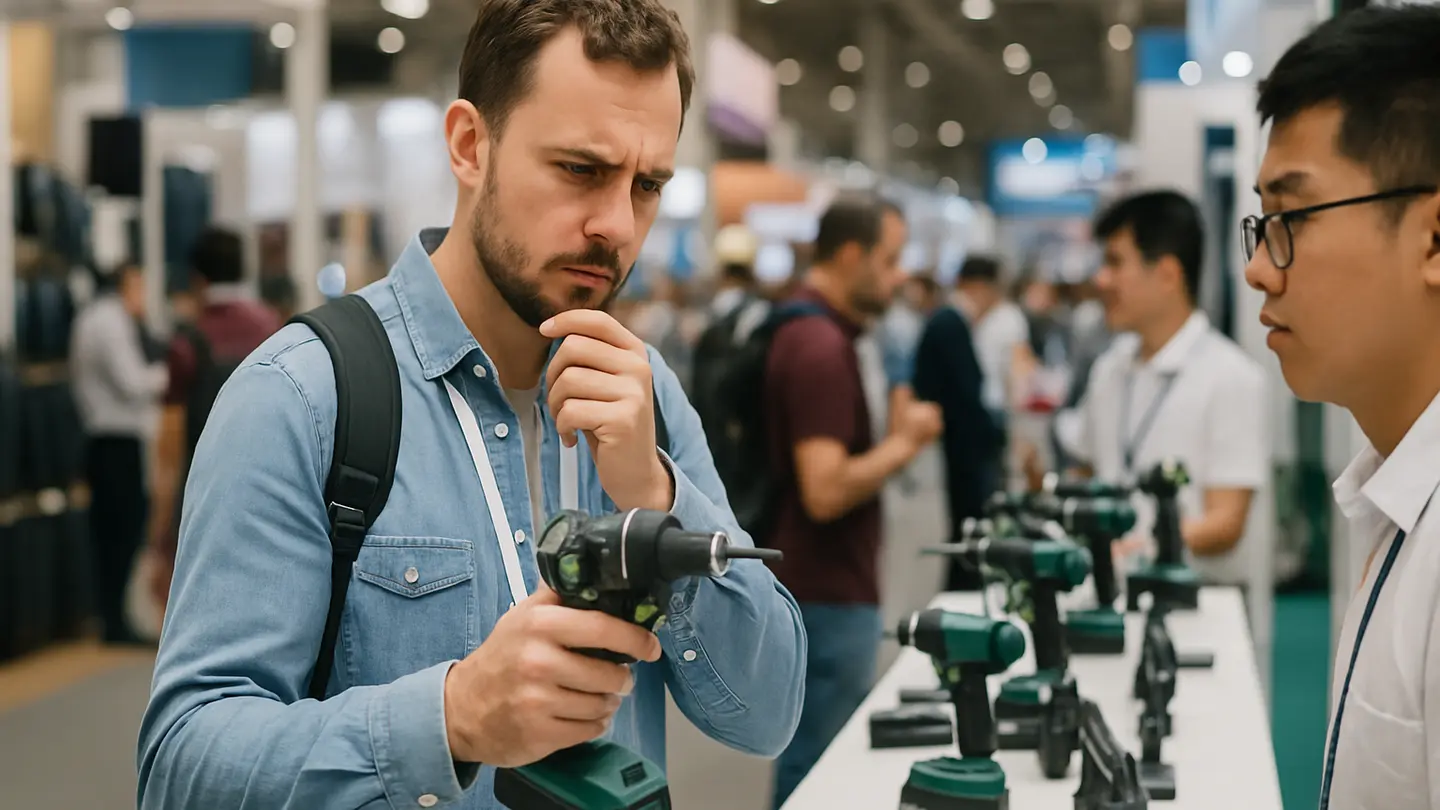
Supplier discovery can start through industry referrals, trade fairs, logistics or inspection partners, sourcing agents, B2B marketplaces, and search engines. Each channel has limits. Referrals may be narrow. Trade fairs require follow-up. Marketplaces can map supplier categories quickly but still require verification.
A B2B marketplace such as Made-in-China.com can help buyers identify product categories, common supplier claims, approximate MOQ ranges, and recurring manufacturing regions. However, marketplace presence should be treated as discovery, not proof of reliability.
Narrow a broad list into three to five serious candidates. Screen each candidate against the same criteria:
- Product fit and experience with similar items
- Export history and familiarity with destination-market requirements
- MOQ and pricing structure
- Communication quality and willingness to answer technical questions
- Availability of legal documents and business license details
- Named commercial and technical contacts
- Production photos, process videos, factory address, and sampling capability
- Willingness to support inspection, audit, and traceability requirements
A comparable shortlist prevents deep negotiation with one supplier too early. It also creates leverage if one supplier becomes evasive, changes terms, or fails sample testing.
Step 3: Run legal and payment anti-fraud checks
Legal and financial verification should occur before deposits, tooling payments, or confidential product disclosure. Request the supplier’s Chinese business license and confirm the Chinese legal name, unified social credit code, registered address, legal representative, business scope, and official bank account details.
English trade names are not enough. The contract party, invoice issuer, bank beneficiary, and verified Chinese legal entity should align. If they do not, the buyer must understand why.
Key checks include:
- Does the business scope match the product category or manufacturing activity?
- Is the registered address consistent with the claimed factory or office location?
- Does the bank account beneficiary match the verified company name?
- Are invoices issued by the same entity that signs the contract?
- Is the supplier asking for payment into a personal account?
- Has the beneficiary changed without a documented and verified reason?
Personal bank accounts, unexplained beneficiary changes, mismatched invoice entities, and last-minute payment instructions are serious warnings. Freeze payment until the discrepancy is verified through a separate trusted channel, not only through the sales contact who sent the new instructions.
Step 4: Test each supplier with structured technical outreach
Technical outreach should happen before final quotes or sample approval. A real manufacturer should be able to explain how the product is made, what is performed in-house, which steps are subcontracted, what machinery is used, and where bottlenecks may occur.
Ask targeted questions such as:
- Which production steps are completed in your own facility?
- Which steps, if any, are outsourced?
- What machines or production lines are used for this product?
- What is your realistic monthly capacity for this item?
- What are the main defect risks during production?
- How do you inspect incoming materials and finished goods?
- Can you provide live video from the production floor showing relevant processes?
Credible manufacturers usually answer with practical detail. Generic answers, unusually broad catalogs, vague office addresses, and reluctance to show production evidence can indicate trader risk or hidden subcontracting.
For higher-value or higher-risk orders, an onsite audit is appropriate. It should verify whether the legal entity matches the operating site, whether machinery and staff support claimed capacity, whether QC systems are documented, and whether subcontracting is controlled.
Step 5: Compare commercial terms and quality-control commitments
Once candidates pass initial verification, compare commercial offers in a structured way. Price should not be separated from lead time, payment terms, material assumptions, setup costs, inspection access, capacity claims, and quality commitments.
A low quote may reflect efficient production, but it can also result from weaker materials, excluded packaging costs, unrealistic lead times, limited inspection access, or assumptions that differ from the RFQ. Ask suppliers to itemize major cost drivers where possible, especially tooling, molds, testing, certification, and custom components.
Compare each supplier on:
- Unit price and what it includes
- Tooling, setup, and sample charges
- MOQ and price breaks by quantity
- Production lead time and peak-season risk
- Payment terms and deposit requirements
- Material grade and component assumptions
- Packaging and labeling costs
- Inspection access and defect-handling process
- Capacity for rework or corrective action during production
- Reporting frequency and responsible contacts
Quality control should be built into the commercial agreement. Pre-production checks confirm materials, tooling, setup, and approved samples. During-production inspections identify defects while corrective action is still possible. Pre-shipment inspections assess finished goods before balance payment and shipment release.
The right inspection plan depends on order value, product risk, compliance exposure, and supplier history. New suppliers, custom products, tight tolerances, and regulated goods justify more oversight than repeat orders of low-risk items from proven factories.
Step 6: Approve samples and prove performance with a pilot order
Samples are necessary, but they are not enough. Buyers should order pre-production samples from multiple shortlisted suppliers where budget allows to compare workmanship, communication, speed, packaging understanding, and willingness to revise.
Once a supplier produces an acceptable sample, define it as the golden sample. Record the approval date, version number, materials, dimensions, color references, finish standard, packaging, and any accepted deviations. Both buyer and supplier should understand that the golden sample is the production benchmark.
Sample inspection should cover:
- Material type and grade
- Dimensions and tolerances
- Finish, color, texture, and alignment
- Assembly fit and functional performance
- Odor, cleanliness, and surface defects
- Packaging strength and labeling
- Compliance markings or documentation where applicable
The next step is a pilot order. A pilot order tests whether the supplier can reproduce the approved sample under real production conditions. Inspect pilot units against the golden sample and earlier audit claims. If the product uses batch tags, lot numbers, or material records, check whether they trace back to incoming material documentation.
Differences between sample quality and pilot production may reveal material substitution, uncontrolled subcontracting, rushed production, weak in-process inspection, or misunderstanding of specifications.
Step 7: Lock the pre-order file, payments, and logistics controls
Sample approval alone is not a reason to send a deposit. Before production scales, create a pre-order file that links the purchase order, specifications, approved sample records, inspection gates, payment milestones, acceptance criteria, packaging instructions, and logistics terms.
A strong purchase order should state:
- The exact product specification and revision version
- The approved golden sample reference
- Quantity, unit price, and total order value
- Packaging, carton, labeling, and pallet requirements
- Inspection standards and timing
- Defect definitions and acceptable limits
- Corrective-action obligations
- Payment schedule and payment triggers
- Incoterms and freight responsibilities
- Required documents before shipment
Where commercially possible, limit upfront deposits and hold final payment until pre-shipment inspection passes. For higher-risk orders, include pre-production and during-production checks rather than relying only on a final inspection after all goods are completed.
Confirm logistics details before production. Carton size, gross weight, labeling, warehouse delivery rules, palletization, loading requirements, Incoterms, and document responsibilities can create avoidable costs if left until shipment week.
Three China sourcing red flags to resolve before sending money
Supplier risk often becomes visible before payment, but buyers may overlook warning signs under timeline pressure. Three red flags deserve immediate attention: sudden bank changes, quality drops after sample approval, and unclear factory identity.
The beneficiary name or bank account suddenly changes
An unexpected change in bank beneficiary, account number, or payment destination should be treated as a major payment-risk warning. Do not rely on a single email or message explaining the change.
Freeze payment and verify through a separate trusted channel, such as a previously confirmed phone number, a live video call with known contacts, or direct confirmation from an authorized finance representative. Re-check the new beneficiary against the verified Chinese legal entity and contract party.
If the supplier cannot provide a clear, documented, and verifiable explanation, do not send funds. Payment recovery after a misdirected international transfer can be difficult and uncertain.
The pilot batch no longer matches the approved sample
A golden sample does not guarantee mass-production quality. If the pilot batch no longer matches the approved sample, stop and investigate before approving full production.
Quality drops may indicate material substitution, subcontracting, rushed manufacturing, operator error, or weak process control. Compare pilot units directly against the golden sample. Review in-process QC records, incoming material records, and production-line conditions. If the issue is correctable, require documented corrective action and add during-production inspections.
Do not accept verbal assurances that “bulk production will be better” unless the supplier can show what caused the deviation and how it will be prevented.
The factory identity remains unclear after repeated checks
If the supplier gives vague technical answers, avoids live production evidence, provides inconsistent addresses, or cannot explain who will actually manufacture the goods, the buyer may be dealing with a trader, broker, or uncontrolled subcontracting arrangement.
This is not always unacceptable. Some trading companies and agents provide value when their role is transparent and well managed. The risk arises when the buyer believes it is working directly with a factory but production is handled elsewhere without disclosure.
Ask for live factory evidence, process details, ownership clarification, production records, and audit access. If using an agent, define the agent’s role, verification scope, reporting duties, and accountability in writing.
FAQ
To verify whether a supplier is a real factory, check the Chinese business license, business scope, registered address, and production evidence. A genuine manufacturer should be able to show relevant processes, machinery, production records, QC procedures, and traceability documents. For important orders, an onsite audit provides stronger evidence than photos or sales claims.
Use traceable corporate payment channels and avoid personal accounts. The bank beneficiary should match the verified supplier entity, contract party, and invoice issuer. If payment details change, verify through a separate trusted channel before releasing funds.
Payment milestones should be tied to inspection outcomes where commercially possible. A deposit may start production, but balance payment should ideally depend on a passed pre-shipment inspection. For higher-risk goods, pre-production and during-production inspections reduce the chance of discovering defects only after completion.
Marketplaces such as Alibaba can be useful for discovering suppliers and comparing categories, but buyers should still verify the legal entity, production capability, sample quality, payment details, and inspection access independently. Marketplace visibility is not the same as supplier reliability.
Before sharing sensitive product information, consider localized NNN agreements designed for China. These address non-use, non-disclosure, and non-circumvention concerns. They should be prepared with appropriate legal support and signed before detailed drawings, formulas, tooling concepts, or proprietary supplier lists are disclosed.
MOQ negotiation is most effective when buyers understand factory economics. Suppliers may reduce MOQ if the buyer accepts higher unit costs, pays setup charges, chooses standard materials, orders during slower production periods, or commits to staged reorders. Unrealistic MOQ pressure can push suppliers toward cost-cutting or reduced attention to quality.
Conclusion: Choose suppliers that can prove reliability under pressure
A structured supplier-vetting SOP turns China sourcing from guesswork into an evidence-based process. The buyer defines requirements, builds a comparable shortlist, verifies legal and payment details, tests technical credibility, approves samples, runs a pilot order, and links payment to documented quality and logistics controls.
The most reliable supplier is not always the cheapest or fastest to reply. It is the supplier that can prove legal legitimacy, production control, traceability, quality capability, and commercial discipline under real order pressure. For major purchase orders, audits and staged inspections are safeguards against preventable sourcing risk.