How to Plan Your First Product Order from China
Placing a first product order from China should be treated as a controlled learning exercise, not a one-time attempt to achieve the highest possible margin. The objective is to learn how a supplier performs, how the product travels, how customers respond, and how much working capital the process requires.
For shower manufacturers, distributors, and buyers of bathroom-related products, this is especially important. A simple shower accessory, fitting, hose, shelf, or drain component may appear straightforward, but problems with finishes, dimensions, thread compatibility, packaging, corrosion resistance, or missing parts can create costly returns once products reach the market.
Start by evaluating products against the constraints your business can survive if the order does not perform as expected:
- Available purchasing budget
- Supplier minimum order quantity (MOQ)
- Suitable test quantity
- Production and delivery lead time
- Product complexity and number of components
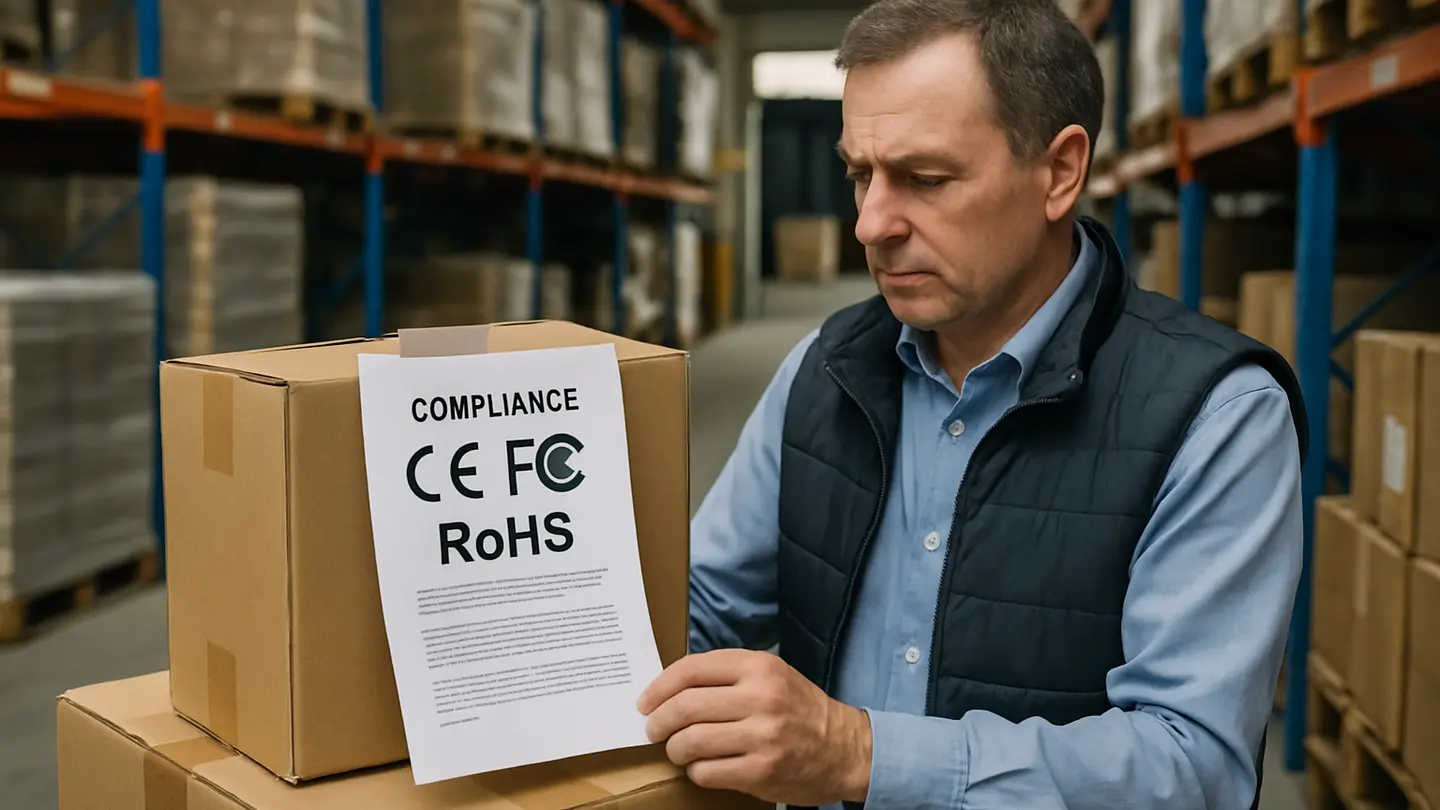
- Compliance requirements in the destination market
- Cost of defects, returns, rework, and unsellable stock
A first order is usually safer when the product has straightforward production requirements, widely available materials, limited customization, and manageable quality checks. For example, standard shower accessories with conventional finishes and simple packaging may be easier to trial than a custom shower system with multiple valves, electronic controls, specialized glass, or proprietary installation components.
The best initial product is not always the one with the highest estimated gross margin. It is the product that allows the buyer to learn without tying up too much capital or creating a difficult recovery path if demand is weaker than expected.
Let Your Available Budget Determine the Product
A supplier quotation is only one part of the financial picture. The quoted product price does not necessarily represent the full landed cost of an imported order.
Before choosing a product, build a budget that includes the costs likely to occur before the goods can be sold:
- Product and packaging cost
- Sample costs and sample freight
- Tooling, artwork, labels, or packaging setup where applicable
- Inspection or quality-control costs
- International freight
- Cargo insurance, if used
- Duties, taxes, customs charges, and clearance fees
- Domestic delivery from the port or warehouse
- Payment processing, bank, or currency conversion charges
- Replacement units, damaged cartons, or unsellable inventory
- Product photography, listing preparation, and fulfillment costs
For bathroom products, freight can have a major impact. Large shower enclosures, glass panels, bulky rain shower sets, and heavy metal fittings may consume significant shipping space or add handling complexity. A low factory price can become less attractive once freight, duty, breakage risk, and warehousing are considered.
Use only capital that the business can realistically risk. This does not mean expecting the order to fail. It means preserving enough cash to deal with normal first-order uncertainty, such as a delayed shipment, higher-than-expected clearance charges, replacement parts, or a slower sales cycle.
When funds are limited, narrow the product shortlist to items that fit the actual budget after all foreseeable costs are included. Look for suppliers willing to work with starter-sized orders, especially when the product is standard and does not require custom tooling or extensive packaging changes.
Why MOQ Can Matter More Than Unit Price
MOQ often creates more risk than unit price. A supplier may offer an attractive quote, but that price has limited value if the required quantity exceeds your available cash or leaves too little working capital for freight, customs, marketing, and replacement stock.
For example, a lower-priced shower fitting may seem commercially appealing until the MOQ requires an order quantity that would take many months to sell. A slightly higher unit price from a supplier willing to accept a smaller test order may be the safer commercial decision.
MOQ is usually influenced by several factors:
- Whether the supplier has stock materials or must buy materials specifically for the order
- Product complexity and assembly requirements
- Finish, color, or coating requirements
- Custom molds or tooling
- Printed retail packaging
- Private-label logos or custom inserts
- Batch requirements for plating, painting, glass processing, or other production stages
Standard, unbranded products generally provide greater flexibility. Using existing product designs, standard colors, ordinary carton packaging, and available components can reduce the supplier’s setup burden. This may make a lower MOQ more achievable.
Avoid adding custom molds, special surface finishes, unusual colors, or fully printed packaging to a first product order unless the business has already validated demand. These requirements can raise MOQs, increase lead times, and make unsold inventory harder to repurpose.
The goal is not simply to negotiate the smallest possible MOQ. It is to secure a quantity that is commercially useful while remaining within a manageable level of inventory exposure.
Set a Test Order Quantity That Produces Useful Evidence
A first order should produce evidence, not just inventory. The order should help you understand whether customers want the product, whether the specification is correct, whether defects occur at an acceptable level, and whether fulfillment works as planned.
Ordering too little can create weak evidence. If only a small number of units are sold, it may be difficult to distinguish genuine demand from chance sales. At the same time, ordering too much can trap cash in products that need discounting, repackaging, repair, or extended storage.
Set the test quantity using practical questions:
- How many units can the business realistically sell during the expected replenishment period?
- How long will production, inspection, transit, customs clearance, and domestic delivery take?
- How much inventory can be stored and fulfilled efficiently?
- How much cash must remain available for a follow-up order?
- What level of defects or returns could the business absorb without disrupting operations?
For shower-related products, the test order should also account for product-specific handling. Glass, bulky enclosures, fragile plated surfaces, and multi-component installation kits may require more careful storage and fulfillment than small accessories. Products that require installers or technical support can also generate customer-service costs that are not obvious during supplier selection.
Do not increase order quantity solely to receive a slightly lower unit price. A lower price does not compensate for slow-moving stock if the savings are smaller than the cost of tied-up capital, storage, discounting, or write-offs.
A useful test order is large enough to reveal recurring product and sales issues, but small enough that the business can recover cash within a reasonable period.
Treat Lead Time as a Cash-Flow Risk
Lead time is not merely a logistics detail. It is a cash-flow risk because capital may be committed long before the product is available to sell.
The planning timeline should include more than the supplier’s stated production period. Consider:
- Sample approval and specification confirmation
- Deposit payment and material purchasing
- Production time
- Factory scheduling changes
- Chinese public holidays and seasonal production pressure
- Pre-shipment inspection or quality checks
- Booking and loading time
- International transit
- Customs clearance
- Port congestion or domestic delivery delays
- Receiving, product checks, labeling, and warehouse preparation
A shower product with custom finishes, multiple components, or glass elements may require longer coordination than a standard plastic accessory. Products made from readily available materials and standard parts can sometimes be easier to schedule, although buyers should still confirm the actual production plan with the supplier.
Long lead times affect more than delivery dates. They delay market feedback and keep cash unavailable for other uses. If the product does not sell as expected, the buyer may only discover the problem after significant time and capital have already been committed.
Shipping method should therefore be selected based on the business’s cash cycle and need for market feedback, not freight cost alone. Slower freight may reduce cost per unit, but faster transport can sometimes help a buyer validate demand earlier, replenish a successful line sooner, or avoid missing a selling period.
For a first product order from China, a clear timeline is more valuable than an optimistic estimate. Build in time for disruptions rather than assuming every stage will proceed exactly as planned.
Product Characteristics That Reduce First-Order Risk
Some products are more suitable for a first import order because they are easier to inspect, ship, store, and sell. Beginner-friendly products tend to be simple, relatively low-cost, lightweight, and made with few components.
Useful lower-risk characteristics include:
- Simple construction with limited assembly
- Standard dimensions and common materials
- Lower weight and manageable carton sizes
- Few moving parts
- Clear functional requirements
- Low breakage risk
- Straightforward packaging
- Limited need for technical after-sales support
Products without batteries can also reduce transport restrictions and regulatory complexity. This does not mean every non-electrical product is automatically low risk. Bathroom and shower products may still need careful review of local requirements related to product safety, material restrictions, plumbing compatibility, labeling, and other category-specific obligations.
Before ordering, verify the requirements that apply in the destination market. The relevant rules can vary by country, sales channel, end use, and product category. A product that is suitable for one market may need different documentation, marking, or testing in another.
Higher-risk first-order categories often include:
- Children’s products
- Branded or logo-bearing merchandise
- Wireless electronics
- Products with batteries
- Safety-critical fittings or components
- Products requiring specialist installation
- Complex multi-part shower systems
- Products with significant intellectual-property or design risks
Branded merchandise can create legal problems if the buyer does not have authorization. Complex technical products can create higher return rates and after-sales obligations. For a first order, selecting a standard product with clear specifications usually makes quality control and commercial evaluation more manageable.
Validate the Product and Supplier Before Paying the Final Balance
Do not rely on listing images, quotations, or verbal assurances alone. Request samples from more than one supplier when possible, then compare them using the same checklist.
For shower products and bathroom accessories, a sample review checklist may include:
| Review area | Questions to assess |
|---|---|
| Materials | Are the stated materials consistent with the sample? |
| Dimensions | Do measurements match the agreed drawing or specification? |
| Finish | Is the surface consistent, free from visible scratches, marks, or color variation? |
| Function | Do moving, sealing, fastening, or water-related components operate as expected? |
| Components | Are all screws, fittings, seals, instructions, and accessories included? |
| Packaging | Does the packaging protect the product during handling and transit? |
| Assembly | Can the product be installed or assembled as intended? |
| Consistency | Do multiple samples show similar quality levels? |
Samples do not guarantee that every production unit will match perfectly. However, they give the buyer a reference point for production expectations and help identify unclear specifications before bulk production begins.
Supplier communication during sampling is also informative. Consider how quickly and clearly the supplier answers questions, whether they confirm dimensions and materials in writing, and how they respond when a sample issue is identified. A supplier’s communication quality during a small sample order can indicate how responsive they may be when production questions arise later.
Product validation should include demand validation as well. Customer interest, trial sales, distributor feedback, pre-orders where appropriate, or documented buyer inquiries are stronger evidence than assumptions about what should sell.
Before paying the final production balance, make sure the product, packaging, quantity, and quality requirements are confirmed. Where suitable, arrange a pre-shipment inspection or use a clear inspection process. The buyer should not discover major specification issues only after the goods arrive.
FAQ
Q1: Do I need a registered company to import from China?
Requirements vary by destination country, product type, shipment value, and whether the goods are imported for commercial resale. Some buyers may be able to import under a personal or small-business structure, while others may need business registration, tax registration, customs documentation, or product-specific compliance records.
Before placing an order, check the customs, tax, labeling, and commercial-import requirements that apply in the destination market. This is particularly important for products that may be subject to technical, safety, or material-related rules.
Q2: How much buffer should a first-order budget carry?
Do not commit the entire available budget to inventory. Keep reserve cash for changes, delays, damaged units, inspection costs, freight adjustments, customs charges, returns, and other expenses that may not be visible in the initial quote.
The appropriate buffer depends on the product and shipment method, but the practical principle is consistent: the business should still be able to operate if the first order costs more or takes longer than expected.
Q3: Can I get a supplier to go below their stated MOQ?
It may be possible, particularly for stocked products and standard specifications. Suppliers may be more open to lower quantities when buyers choose existing designs, standard colors, standard packaging, and readily available materials.
A below-MOQ order may have a higher unit price because the supplier cannot spread setup, labor, or material costs across a larger production run. When requesting MOQ flexibility, explain that the order is a test and provide a credible indication that repeat orders may follow if the product performs well.
Q4: Does it matter whether my first order comes from a factory or a trading company?
Yes, but neither supplier type is automatically better for every first order. A factory may offer closer access to production and may be better suited to buyers who need direct control over specifications, customization, or manufacturing discussions. However, factories may be less flexible on very small orders.
A trading company may offer a broader product range, communication support, or more willingness to combine products from different producers. Its pricing may include a markup, but that can be acceptable if it helps the buyer source an appropriate starter quantity.
Confirm whether the supplier is a manufacturer or intermediary, and understand who will manage production, inspection, technical questions, and problem resolution.
Start Small, Learn Quickly, and Preserve Capital for the Next Order
The first product order from China should be designed to reduce uncertainty, not maximize the size of the initial purchase. A successful first order is one that gives the buyer reliable information about product quality, supplier performance, demand, delivery timing, and true landed cost.
Choose products with simple specifications, manageable compliance requirements, and practical shipping characteristics. Keep customization limited unless demand has already been proven. Use samples to confirm materials, dimensions, finishes, packaging, and function before bulk production begins.
Most importantly, retain enough working capital to respond to what the first order teaches you. If demand is strong, you will need funds for a better-planned replenishment order. If problems emerge, you will need cash to correct the specification, change suppliers, improve packaging, or manage returns.
Starting small is not a lack of ambition. It is a disciplined sourcing method that allows buyers to improve each order using real commercial evidence.
About the Author
The author writes B2B guidance on procurement, supplier evaluation, import planning, product quality control, and international supply-chain risk. The focus is on practical decision-making for buyers managing product specifications, production lead times, landed costs, and supplier relationships.