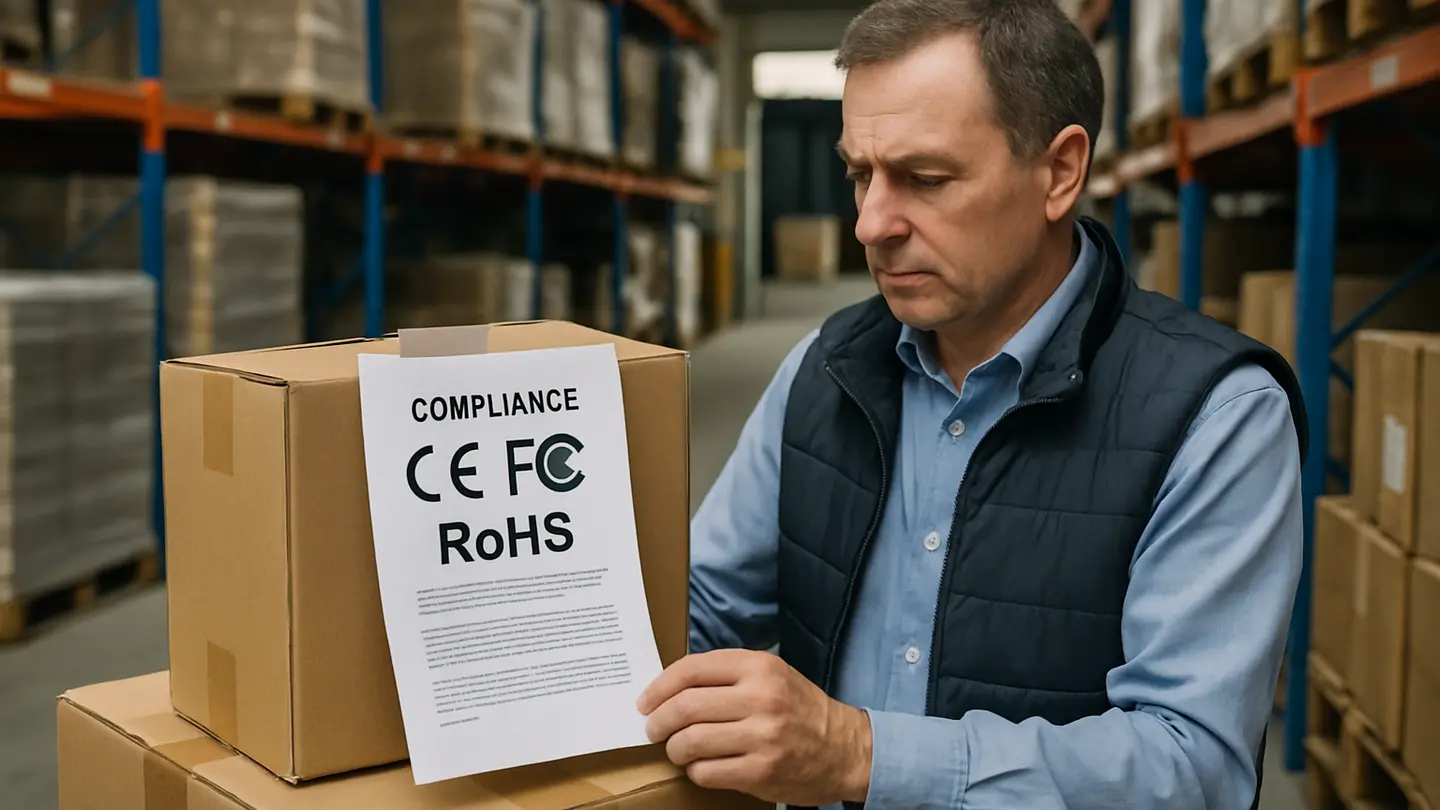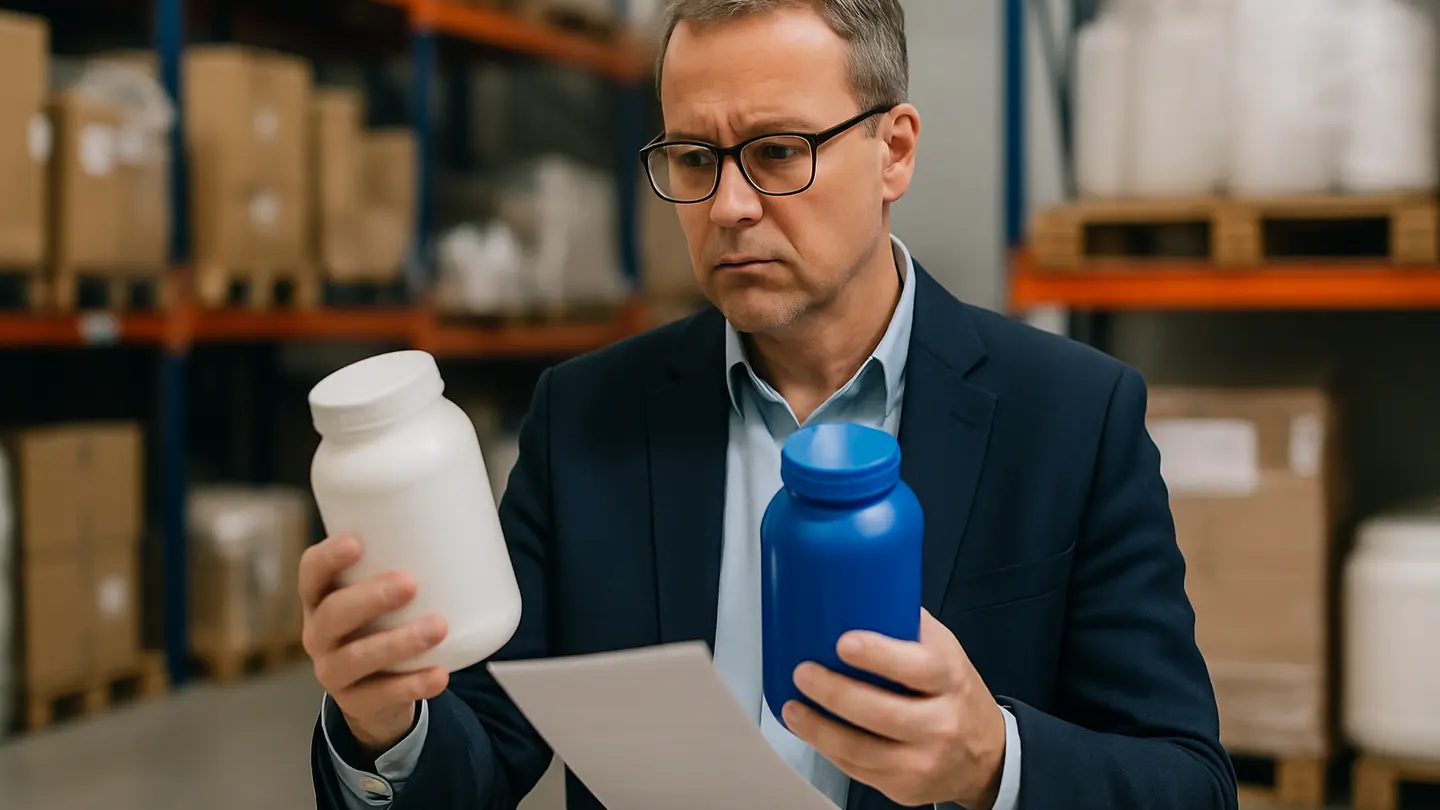
For importers, food grade vs FDA approved often appears in supplier quotations, product listings, and pre-shipment conversations. Both phrases sound reassuring. Neither is enough by itself.
“Food grade” generally means a material is represented as suitable for food contact under certain conditions. “FDA approved” is often used loosely to suggest that a substance, resin, additive, or process has some basis under U.S. FDA food-contact rules. In many cases, the FDA has not approved the finished cup, container, gasket, valve, coating, or utensil as a finished product. The real question is whether the substances used are permitted for the intended food-contact application and whether the finished article is supported by appropriate documentation.
That distinction matters before an importer places an order. A product used with dry snacks at room temperature is not the same compliance case as one used with hot soup, acidic beverages, oily foods, alcohol, or repeated dishwasher cycles. Documentation should name the material, food type, contact temperature, contact time, and intended use conditions.
Repeat orders also deserve attention. “Same as last order” is not compliance evidence unless the factory confirms that the resin, alloy, supplier, additives, colorants, coatings, mold-release agents, production site, and processing conditions have not changed.
How to Respond When a Factory Claims “FDA Approved”
When a factory says a product is “FDA approved,” do not reject the supplier immediately. Ask what the phrase actually means.
Importers should ask four practical questions:
What exactly was cleared or tested? Was it the finished article, base resin, masterbatch, coating, silicone compound, or supplier’s raw material?
For which company or supply chain was the evidence issued? A letter addressed to a resin manufacturer may not cover a molded product made by another factory using additional colorants and additives.
Under which regulation, food-contact notification, opinion letter, or compliance basis? A credible file should identify the relevant basis or testing standard, not just say “FDA certified.”
For which intended use? The evidence should indicate whether the material is suitable for the expected food type, temperature, contact time, and single-use or repeated-use conditions.
Many finished-product claims trace back to resin supplier letters. Those letters can be useful when they identify the polymer grade and conditions of use. But they may not cover pigments, impact modifiers, fillers, printing inks, adhesives, coatings, mold-release agents, or the final manufacturing process.
The buyer’s goal is to convert sales language into reviewable evidence: what material is used, why it is permitted for food contact, which conditions it covers, and whether the ordered product matches that evidence.
The Three Verification Points: Material, Use, and Documentation
The most reliable way to compare “food grade” and “FDA approved” claims is to evaluate three points together: material identity, intended use, and supporting paperwork. If one point is missing, the claim is incomplete.
| Verification point | What importers should check | Why it matters |
|---|---|---|
| Material | Resin or alloy grade, supplier, additives, colorants, coatings, processing aids, and food-contact components | Compliance depends on the substances actually present in the article, not only the generic material family |
| Use | Food type, contact time, temperature, repeated use, cleaning method, and whether contact is direct or indirect | Migration risk changes with heat, fat, acidity, alcohol, and duration of contact |
| Documentation | Test reports, supplier declarations, regulatory references, product photos, model descriptions, and production source | Evidence must match the ordered product and its real use conditions |
Material identity must be specific. “PP,” “stainless steel,” or “silicone” is not enough. A polypropylene lunch box may include base resin, color masterbatch, clarifier, slip agent, label adhesive, and printed decoration. A stainless component may include a coating or surface treatment. A silicone gasket may use a specific compound from a named supplier.
Use conditions are equally important. Food-contact compliance is not a single universal status. A material suitable for dry, room-temperature foods may not be suitable for hot, oily, acidic, or alcoholic foods. A cold-water bottle is not the same as a microwave container, and a disposable sample cup is not the same as a reusable article washed repeatedly with detergent and hot water.
Evidence based on harsher conditions may support gentler uses if the material and product match. For example, documentation covering high-temperature contact with fatty foods may be relevant to lower-temperature contact with dry foods. The reverse is usually not true.
A finished-product test report can help, but importers should not assume it proves every substance in the article is permitted. Some tests measure migration or extractives under specified conditions. Higher-risk products often need both material-level evidence and finished-article testing.
Why Metals, Silicone Parts, and Coatings Need the Same Scrutiny
Food-contact verification is often discussed in relation to plastics, but the same evidence-based approach applies to metals, silicone parts, coatings, and decorated surfaces.
For metals, a grade such as stainless steel 304 or 316 can be relevant, but it may not tell the whole story. Importers should check whether the food-contact area includes any coating, lining, plating, passivation treatment, weld area, solder, lubricant residue, or polishing compound. A metal body may be acceptable while an internal coating needs separate review.
Silicone seals, gaskets, valves, nipples, plugs, and inserts also need documentation. A product may be marketed as stainless steel or glass, while the actual food-contact risk sits in a small silicone or rubber component. If that component touches liquid, steam, oil, or food residue, it should be covered by material evidence and intended-use conditions.
Coatings and surface treatments are another common weak point. A bottle, tray, cap, or kitchen tool may look acceptable at the base material level while the coating, ink, adhesive, or decorative layer remains undocumented. If the coating is on a direct food-contact surface, it clearly matters. If it is on the outside, it may still matter in certain cases.
Stacking is one example. Printed or coated outer surfaces can transfer substances to inner food-contact surfaces when cups, bowls, lids, or trays are stacked during production, packing, shipping, or storage. The same issue can arise with bags, films, liners, and nested containers.
Indirect contact should not be ignored. A component that does not intentionally touch food may still contact condensation, steam, oils, or adjacent surfaces. If the supplier’s file covers only the main material and ignores smaller components, treat it as incomplete.
How to Read Compliance Papers Before Trusting the Result
A test report or supplier declaration is useful only when its scope matches the order. Importers should read the details before relying on the conclusion.
First, compare the product identity. The report should show tested photos, model numbers, part names, material descriptions, and colors that match the purchase order. If the report covers a clear container but the order is for a black container with recycled content, it may not be relevant. If it covers a lid but not the gasket, the gasket still needs evidence.
Second, check the issuer and document type. A third-party laboratory report, resin supplier declaration, and factory self-declaration have different roles. A lab report shows results under specified conditions. A supplier letter may identify the regulatory status of a raw material. A factory declaration summarizes the manufacturer’s claim. None should be treated as automatically complete.
Third, review the test conditions. The report should state the food simulants or extraction media, temperature, duration, and repeated-use assumptions where applicable. These conditions should be equal to or more severe than the intended use. If a product will contact hot acidic beverages, a report limited to room-temperature water contact is not enough.
Fourth, confirm the production source. A factory-level certificate or business license does not prove that a specific product complies. Likewise, a general “FDA certificate” may not identify the actual material, product, or intended use. Compliance documents should be traceable to the goods being ordered.
Resin supplier letters can be valuable, but they may cover only the neat resin as supplied, not the finished molded article. They may exclude pigments, fillers, regrind, recycled content, later-added additives, or coatings applied after molding. If the factory uses a masterbatch or processing aid from another source, ask for support for those substances too.
Approval should be delayed when documents are vague, mismatched, expired, incomplete, or based only on broad wording such as “FDA certified,” “food safe,” or “export standard.” A credible supplier should explain how the document set relates to the exact order.
When Importers Should Hold the Deposit or Final Payment
Payment milestones should be linked to evidence, not verbal assurance. If food-contact compliance is commercially important, make documentation part of the purchase process before production starts.
For a new product, the buyer can require a preliminary materials list and available compliance documents before paying the deposit. The list should identify the main material, supplier, grade, colorants, coatings, additives, and food-contact components. If the supplier cannot provide this information, the buyer may be funding a product that cannot later be supported.
For final payment, the supplier should confirm that production used the approved materials and that no substitutions were made. If materials changed, updated evidence should be provided before shipment.
Common red flags include:
- A report tested under gentler conditions than the intended use
- A resin supplier different from the one named in the original documents
- Missing information on colorants, additives, coatings, or gaskets
- A finished-product report that does not match the model, color, or material ordered
- A claim that a new version is “the same” despite recycled content, a new coating, or a different component supplier
- Documents issued to another product line or another factory with no clear link to the order
- Unexplained substitutions during production due to cost, lead time, or material shortage
Payment terms can state that release of deposit, balance, or shipment authorization depends on receiving matching compliance evidence and an unchanged materials list. This is both a legal safeguard and a practical sourcing control. Once goods are produced and loaded, the buyer has less leverage.
Material changes after approval may require new supplier evidence, new finished-product testing, or both. A minor packaging change may not affect food contact. A new pigment, recycled resin stream, coating, adhesive, gasket compound, or resin supplier can materially change the compliance picture.
FAQ
Q1: Do food-contact articles have to be registered with the FDA before I import them?
Finished food-contact articles such as cups, bowls, containers, utensils, trays, or lids generally do not need product registration with the FDA before import in the way that some regulated facilities or food products may involve registration requirements.
That does not mean shipments are immune from review. Imported goods can still be examined, held, sampled, or refused if there is a compliance concern. Import teams should be ready to provide records showing why the product is suitable for the intended food-contact use.
The practical rule is simple: have the evidence before the goods ship. Waiting until a port hold or customer inquiry is usually more expensive and difficult.
Q2: Does “BPA free” mean the product complies?
No. “BPA free” addresses one substance only. It does not prove that the base material, colorants, additives, coatings, inks, adhesives, or other components are suitable for the intended food-contact use.
A BPA-free claim may be useful, especially in categories where customers ask about bisphenol A. But it should be treated as the beginning of a documentation review, not the conclusion. Importers should still ask what material is used, what substances are added, what conditions the product is intended for, and what evidence supports those conditions.
Q3: Is there a safest food-grade plastic I should just choose?
There is no single safest plastic for every food-contact application. Polypropylene, polyethylene, and PET are common choices for many food-contact products when properly documented, but each has limits depending on temperature, food type, contact time, and product design.
A material that works for cold dry foods may not be suitable for hot oily foods. A resin acceptable in natural color may need more review when heavily pigmented. A plastic appropriate for single use may not suit repeated heating, washing, or long-term storage.
The better approach is to select the material according to actual conditions of use, then verify that the documentation covers those conditions.
Q4: Does a recycled-plastic version need separate proof?
Yes. Recycled-plastic food-contact products need separate supporting evidence. A document for virgin resin does not automatically support recycled resin, and a finished-item test may not fully address contamination risks from the recycled material stream.
Importers should ask about the resin source, sorting controls, decontamination process, process validation, and whether there is process-specific support for food-contact use. In some cases, an FDA opinion letter may support a recycling process. Even then, buyers still need evidence that fits the actual product, resin source, manufacturing process, and intended use.
A recycled-content claim can be commercially valuable, but it should not replace food-contact verification.
Conclusion: Match the Claim, the Material, and the Actual Use
The difference between “food grade” and “FDA approved” is not just wording. It affects how importers evaluate risk before ordering.
A reliable compliance file should align three things: material identity, authorization or compliance basis, and actual use conditions. The evidence should match the goods being purchased, including color, components, coatings, supplier sources, and production location.
If existing documents do not cover the intended use, additional testing or updated supplier evidence may be needed before production or shipment. Buyers should also use factory-level checks to confirm that production materials match the approved documents.
The safest commercial position is to verify before payment is released, not after goods are finished. In food-contact sourcing, a clear document trail proves that the claim, the product, and the real use belong together.