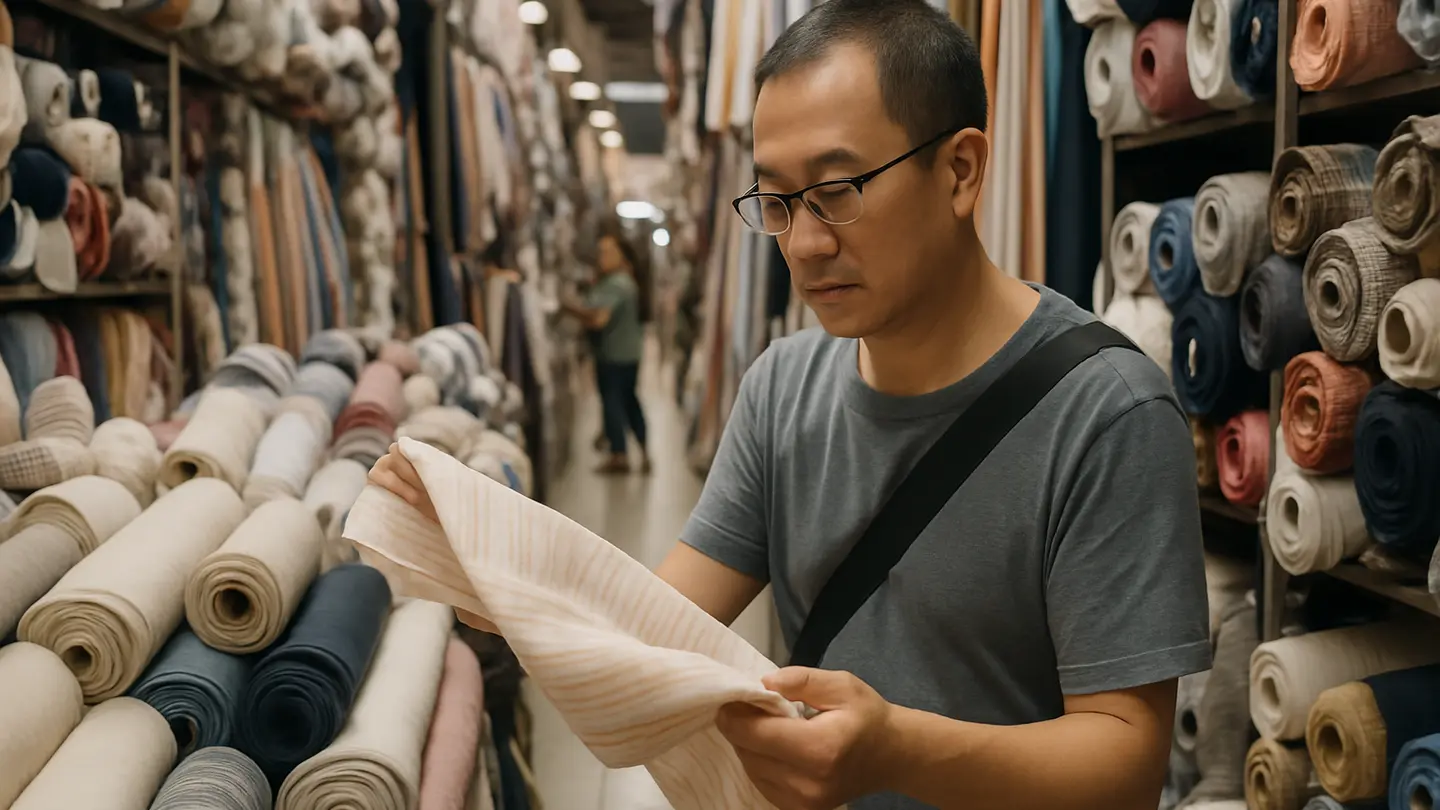
Zhongda is commonly described as the Guangzhou fabric market, but it is better understood as a large textile trading district rather than one building. For garment brands, importers, sourcing teams, and manufacturers, its value is the concentration of fabric, trim, and service suppliers within a walkable commercial area.
Before arriving, define the categories you need—such as cotton shirting, stretch knit, denim, lace, lining, upholstery fabric, or synthetic leather—and prepare a specification sheet for each. Include target composition, weight, width, color, finish, performance requirements, estimated quantity, and end use.
When a suitable material is found, record the supplier name, building and stall number, fabric code, quoted price, unit of sale, stock status, MOQ, lead time, and contact details. Photograph the fabric label and sample with your notes. In a district with many similar fabrics, this prevents costly confusion later.
Understanding Zhongda Textile District
Zhongda sits in Guangzhou’s Haizhu area and serves garment makers, textile traders, designers, exporters, and purchasing agents. The district contains multiple textile centers, wholesale buildings, streets, warehouses, and associated services rather than a single managed market.
Apparel fabrics are the main draw, including woven cotton, polyester, rayon, wool blends, denim, knitwear fabrics, coated materials, printed fabrics, and technical textiles. Buyers can also source home-textile materials, lace, embroidery, buttons, elastics, labels, zippers, synthetic leather, lining, and other accessories.
Guangzhou International Textile City is often a practical starting point because it offers a broad introduction to fabric categories and supplier types. From there, buyers can move into more specialized buildings or surrounding areas.
A showroom sample is not evidence that the bulk order will perform identically. Vendors may display a prior dye lot, development sample, or fabric that is no longer available. Treat every selection as provisional until the supplier confirms stock, production conditions, and a bulk approval standard. For time-sensitive orders, inspect actual rolls or request a production cut before payment or shipment.
How to Navigate Zhongda’s Buildings and Product Areas
The district has broad patterns of specialization, but they are not fixed rules. One building may contain trims at lower levels, fabric showrooms above, and trading offices or service businesses elsewhere. Another may focus on one category while still containing unrelated stalls.
Follow each building directory rather than assuming floor layouts. Ask vendors whether they operate a showroom, warehouse, mill relationship, or separate office. A stall may carry samples while stock is held elsewhere, affecting the time needed to inspect inventory.
Specialist areas can help narrow a search:
| Product need | What to look for in specialist areas |
|---|---|
| Suiting and formalwear | Wool blends, polyester-viscose, lining, fusible interlining, structured woven fabrics |
| Denim and casualwear | Indigo denim, colored denim, stretch denim, twill, canvas, washing-compatible trims |
| Home textiles | Upholstery, curtains, bedding fabrics, blackout materials, wider widths, abrasion information |
| Lace and embroidery | Lace bases, embroidery density, appliqué, sequins, beading, edging, matching trims |
| Sportswear or outerwear | Knits, laminated fabrics, coatings, moisture-management claims, water resistance, stretch recovery |
Lower-priced stock-fabric markets can suit small runs, sampling, spot buying, or products with limited repeat requirements. They may offer surplus, cancelled orders, off-season goods, or end-of-line inventory. Prices can be favorable, but the same fabric may not be available again.
For repeat orders, approved color continuity, or multi-season production, do not build a core collection around surplus fabric unless the supplier can document a reliable replenishment route.
Fabric Specifications to Check by Material Category
Visual appeal is only the start of fabric evaluation. Communicate measurable requirements so suppliers can identify comparable constructions and later disputes are not reduced to subjective discussions about quality.
For cotton and cotton blends, ask about fiber content, yarn count where relevant, construction or thread density, finished width, GSM, shrinkage expectations, color fastness, and finish. Certifications may matter for some markets or claims, but confirm the certificate scope, validity, and product coverage.
For silk, establish declared fiber composition and momme weight. A fabric described as silk may be a blend, silk-like polyester, or a different construction from the reviewed sample. Confirm whether the surface is charmeuse, crepe, georgette, organza, habotai, or another construction because drape and garment behavior differ.
Performance fabrics need batch-specific assessment. If a supplier claims water repellency, breathability, UV resistance, flame retardancy, anti-static properties, or moisture wicking, ask which test method and performance level apply to the quoted material. Claims should be tied to the actual batch supplied.
Category-specific checks include:
- Denim: composition, GSM or ounces per square yard, stretch percentage, recovery, indigo behavior, skew, shrinkage, and compatibility with planned washing.
- Lace and embroidery: base-fabric composition, embroidery thread type, usable width, pattern repeat, placement consistency, edge finish, and embellishment security.
- Knits: composition, weight, width, stretch in both directions, recovery, pilling resistance, spirality, and shrinkage.
- Trims: dimensions, color match, tensile strength where relevant, plating or coating durability, and compatibility with washing, dry cleaning, or heat application.
Bring a written request sheet and retain a cut from every candidate fabric so offers can be compared against the same criteria.
Confirming Minimums and Identifying Mills or Traders
Confirm MOQ before investing heavily in fabric development. A vendor may sell a few meters from stock but require a full roll, several rolls, or a much larger quantity for repeat production. Pricing can change sharply between samples, ready stock, and mill orders.
Purchases may be quoted by meter, roll, kilogram, or specified minimum length. Ask how many meters are expected in each roll, whether roll lengths vary, and whether short-roll allowances apply.
Custom dyeing, printing, knitting, weaving, or finishing usually requires larger commitments. MOQ may apply separately to each color, print, or construction. An achievable total quantity may still conceal a higher minimum per colorway.
| Supplier type | Typical advantages | Typical limitations |
|---|---|---|
| Mill or direct production source | Potentially lower unit pricing, more control over construction and repeat production | Higher MOQs, longer development cycles, less flexibility for small orders |
| Trader or fabric distributor | Broader selection, lower stock-order quantities, easier comparison across mills | May have less control over production, price can include a trading margin |
| Stock-lot seller | Fast access and potentially low cost | Limited continuity, uncertain replenishment, variable lot history |
Not every stall will clearly identify itself as a trader or mill representative. Ask who makes the fabric, whether it is in stock, whether the construction can be reordered, what can be customized, and whether the supplier can provide a mill name, test report, or production schedule.
Buyers with credible repeat potential may be able to negotiate more flexible minimums by presenting a realistic forecast and defined product program.
Why Sampling and Production Approval Matter
A swatch helps judge color, surface appearance, and initial hand feel, but it cannot predict shrinkage, skew, pilling, color bleeding, coating inconsistency, or sewing and laundering behavior.
Wash and dry tests should reflect the intended consumer care method. Evaluate dimensional change, color variation, hand feel, surface distortion, print durability, and trim interaction. For garments, produce a sample garment or test panel where possible. Sewing can reveal seam slippage, needle damage, curling, stretch instability, or pressing sensitivity.
Before bulk production, approve a production cut against a documented buyer reference standard. This may include a sealed swatch, color standard, approved garment sample, written specification, and signed comments. The supplier should know which reference governs the shipment.
Variation can occur between dye lots because of raw-material changes, finishing conditions, or substitutions. Agree allowable tolerances in advance and record lot numbers where possible, especially for staged production or shipments.
During a market visit, photograph each fabric, stall signage, label, and sample card. Link photos to the fabric code and price so a loose swatch can be traced back to the original supplier.
Pre-Shipment Fabric Checks and Packing Requirements
Inspect fabric before goods leave the supplier or before final payment, depending on the transaction structure. At minimum, check for short rolls, inconsistent roll lengths, mixed dye lots, missing labels, visible defects, moisture damage, stains, edge damage, and incorrect color or construction.
The purchase order should state quality rules before production begins:
- Acceptable defect tolerance and inspection method
- Permitted shrinkage after the specified care process
- Required color-fastness performance
- Color tolerance against the approved standard
- Roll-fault allowance and short-roll policy
- Accepted width and GSM tolerances
- Required roll labels, lot numbers, and fabric codes
A points-based inspection system can provide a consistent way to assess defects. Defects are assigned points based on size or severity, then evaluated against an agreed maximum per defined area. Specify the inspection standard with the supplier or inspection provider.
Confirm whether rolls will be wrapped in plastic, packed in woven bags, placed on pallets, or protected with cartons. For sea freight or humid conditions, moisture protection matters. Labels should identify the supplier, purchase-order number, fabric code, color, lot, roll length, and gross or net weight as needed.
For consolidated cargo, confirm responsibility for delivery to the forwarder, warehouse receiving appointments, packing-list accuracy, and handover documentation.
Planning Zhongda Within a Guangzhou Sourcing Trip
Zhongda can require more than one day when evaluating multiple fabric categories, comparing suppliers, or arranging sample collection. Plan around decision points rather than trying to cover every building.
A first day may focus on discovery and samples. The next can cover supplier follow-up, negotiation, stock verification, and warehouse or office visits. Leave time to revisit promising vendors after reviewing samples side by side.
Guangzhou sourcing is geographically segmented. Buyers looking for ready-made garments, leather materials, footwear components, beauty products, jewelry, packaging, or other categories may need separate visits outside Zhongda.
Sequence the trip according to product dependencies. If fabric selection determines garment development, visit Zhongda early. Schedule trim, label, packaging, or finished-product meetings after fabrics are selected.
FAQ
Q1: Can vendors send swatches before I travel?
Some suppliers can send swatches in advance when the buyer provides a clear requirement and estimated quantity. Include composition, weight, width, color direction, end use, performance needs, and anticipated order volume.
Advance swatches help narrow the supplier list but do not replace in-person review for significant orders. A visit allows buyers to compare related constructions, inspect stock, and assess supplier communication.
Q2: Is the fabric in stock, or made after I order?
Displayed fabric may be ready stock, a standard mill item that can be reordered, or a development sample shown for reference. These options have different lead times, pricing, and continuity risks.
Ask whether the exact color and construction are available, how much is in the current lot, and whether additional fabric can be produced. If production is required, confirm lead time for greige fabric, dyeing, finishing, and inspection. Do not assume a displayed roll represents available bulk inventory.
Q3: One vendor quotes per meter and another per kilo. How do I compare?
Convert both offers to the same unit using fabric width and GSM. For fabric sold by weight, these figures estimate how many meters are represented by one kilogram. Without them, a lower per-kilogram price may conceal a shorter usable length.
For a rough conversion, calculate weight per linear meter:
weight per meter (kg) = GSM × width (m) ÷ 1,000
Then divide the per-kilogram price by the kilograms per meter. Confirm whether stated GSM and width are finished measurements.
Q4: How do I combine several fabrics into one shipment?
Each supplier’s MOQ generally still applies even when a shipment contains goods from multiple stalls. Combining cargo does not normally bypass individual fabric minimums.
A freight forwarder or sourcing agent can collect goods, check receiving quantities, combine cartons or rolls, and arrange one export shipment. Give every supplier the same warehouse address, receiving reference, and labeling instructions. Maintain a consolidated packing list linking each roll to its supplier, fabric code, color, and purchase order.
Tools for Building and Checking a China Supplier Shortlist
A market visit is valuable, but supplier discovery can begin before travel. Made-in-China.com is a B2B sourcing platform that can help buyers build a broader shortlist of textile, trim, packaging, and related suppliers alongside market research.
For initial screening, buyers can review Audited Suppliers. These suppliers are subject to third-party verification and on-site audit, with Audit Reports available for review. Reports can include supplier background, manufacturing capacity, quality control, export trade, and R&D capability. This does not replace sample testing, commercial due diligence, or pre-shipment inspection, but it can help prioritize suppliers for deeper evaluation.
Made-in-China.com’s Easy Sourcing service can also support early quotation work. Buyers can submit one sourcing request, receive quotations from matched suppliers, compare offers, and request samples. This can help test a specification across potential sources before visiting a market, contacting mills directly, or developing fabric through a trader.
About the Author
This article was prepared by an independent B2B sourcing writer covering supplier evaluation, material procurement, quality control, and practical buying processes in China. The guidance is intended to help professional buyers structure market visits, compare supplier offers, and reduce avoidable fabric sourcing risk.