Is a Guangzhou Sourcing Agent the Right Choice for Your Category?
Selecting a sourcing agent is not only a question of service fees, language ability, or office location. The more important question is whether the agent operates close to the manufacturing cluster that serves your product category.
A Guangzhou sourcing agent can be a practical choice for buyers of apparel, fashion accessories, handbags, leather goods, beauty products, and certain household or daily-use goods. The wider Guangzhou area has dense supplier networks for these categories, including material vendors, component suppliers, product developers, sample rooms, trading companies, and export-oriented factories.
This local concentration can make supplier comparisons and product development more efficient. An agent who regularly works within the relevant cluster may be able to arrange factory visits, compare materials, monitor samples, and follow up on production issues with less travel and fewer handovers.
However, Guangzhou is not the best sourcing base for every product. Shenzhen is generally more closely associated with electronics, while Foshan is a major furniture-production center. Choosing an agent solely because they are located in Guangzhou can create avoidable coordination costs if your factories, suppliers, and quality-control needs are concentrated elsewhere.
For products such as shower enclosures, shower hardware, bathroom furniture, ceramic sanitaryware, lighting, or other construction-related goods, buyers should identify the actual production cluster before deciding whether a Guangzhou-based representative is the right fit. The agent’s proximity to capable factories and component suppliers matters more than the name of the city on their business card.
Product Categories Guangzhou Sources Well
Guangzhou is particularly well positioned for categories that depend on fast-moving design cycles, broad material selection, and coordination between several specialized suppliers.
Apparel and fashion accessories
The region’s apparel ecosystem includes fabric markets, trim suppliers, pattern makers, sample rooms, garment factories, packaging vendors, and accessory manufacturers. For a buyer developing private-label clothing, this concentration can simplify the process of comparing materials and production options.
An agent with real apparel experience may help coordinate tasks such as:
- Reviewing fabric weight, texture, color, and availability
- Comparing standard factory materials with locally available alternatives
- Finding trims such as zippers, buttons, labels, elastic, embroidery, or decorative hardware
- Checking whether a factory can follow a tech pack or physical reference sample
- Managing sample changes before bulk production begins
- Confirming sizing, construction details, labeling, and packaging requirements
Local material access can be especially useful when a factory’s standard fabric or trim offering does not match the buyer’s target product. Instead of accepting a near-match, the development team may be able to source alternative components nearby and test them during sampling.
Handbags and leather goods
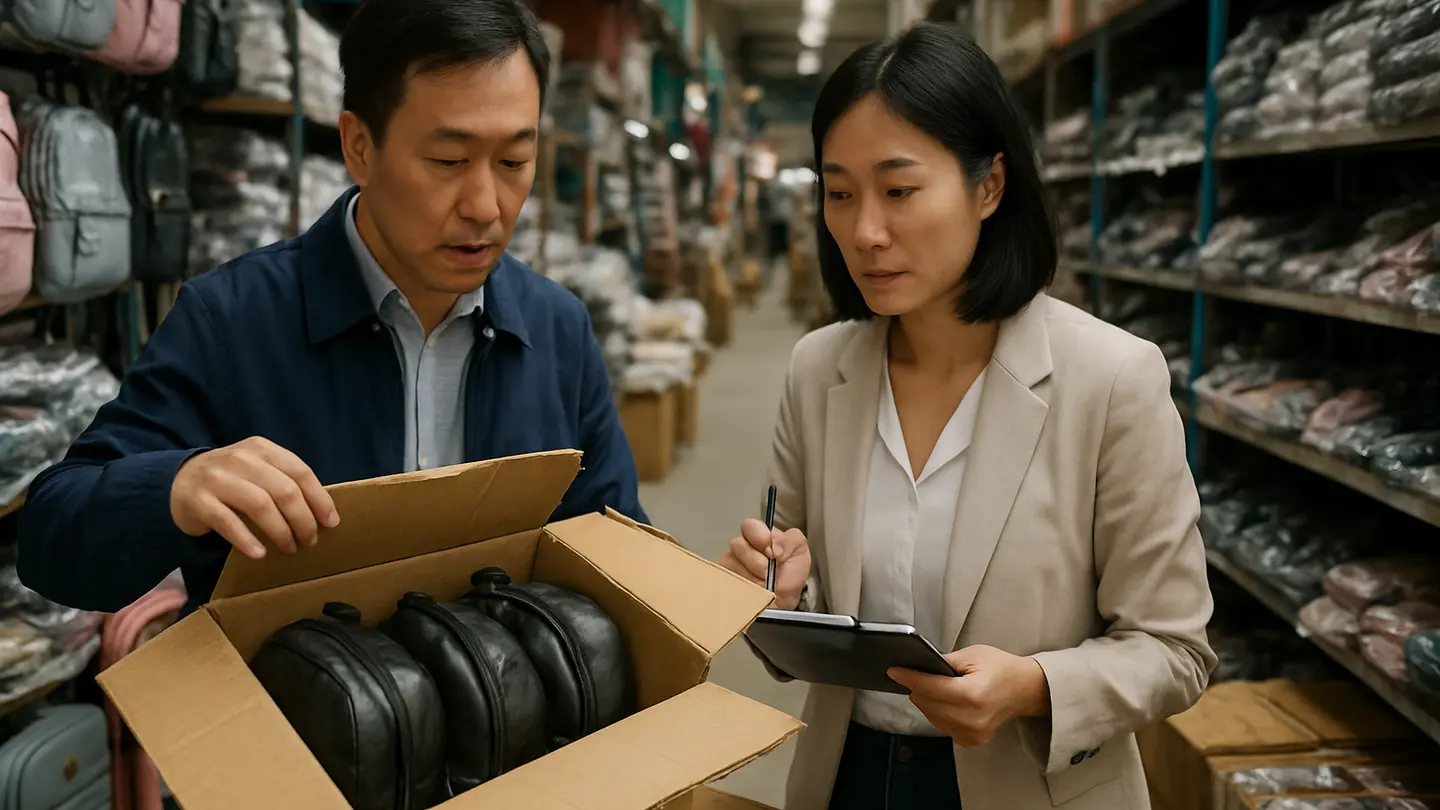
Guangzhou is also widely used for handbags, wallets, belts, small leather goods, and fashion-focused accessories. These items often require coordination beyond the main assembly factory. Materials may include genuine leather, synthetic leather, fabrics, linings, foam, reinforcement boards, metal hardware, zippers, straps, buckles, and branded packaging.
A capable agent should understand that supplier capability is not determined by appearance alone. A factory may produce attractive display samples but lack consistency in stitching, edge finishing, hardware installation, lining alignment, or final packing. For leather goods, buyers should ask how the agent evaluates material quality, workmanship, production capacity, and the factory’s ability to maintain consistency across a bulk order.
The density of material and hardware suppliers can support product development, but it also creates risk. Similar-looking materials can vary substantially in thickness, coating, smell, color stability, and durability. A sourcing process should therefore include approved material samples and clearly documented requirements before production starts.
Private-label beauty products
Guangzhou can also be relevant for buyers developing private-label beauty and personal-care products. The region includes suppliers that may support product selection, labeling, packaging, and sample development for export-oriented buyers.
Beauty sourcing requires careful category knowledge because the finished item is only one part of the procurement decision. Buyers need to consider the product formula, packaging compatibility, labeling information, batch consistency, shelf-life expectations, and destination-market requirements. The sourcing agent should be able to explain what the factory can provide, what must be verified independently, and where specialist compliance support may be needed.
Nearby suppliers can be valuable during early development. An agent may be able to compare packaging options, coordinate label revisions, obtain product samples, and clarify minimum-order expectations. Still, buyers should not assume that proximity replaces proper factory assessment or product verification.
Selected household and daily-use goods
Some household, lifestyle, and daily-use items can also be sourced through the Guangzhou region. These may include textiles, storage products, small accessories, gift items, personal-use goods, and other products with strong links to local trading markets or nearby factories.
The appropriate approach depends on the item. A simple commodity product may be readily available through several suppliers, while a custom-designed product may need specialized tooling, materials, or testing. Before appointing a Guangzhou sourcing agent, buyers should define whether they need off-the-shelf goods, private-label packaging, product modification, or full custom development.
When Another China Sourcing Region May Be a Better Fit
A Guangzhou sourcing agent may still coordinate suppliers in other parts of China, but this does not automatically mean Guangzhou is the best operational base for the project. Product clusters differ, and the right region often depends on the supply chain behind the finished product.
Shenzhen and Dongguan are frequently more suitable for electronics-related sourcing. Products involving electronic components, circuit boards, assembly, charging systems, sensors, displays, software integration, or functional testing may require close access to component suppliers and engineering teams. A sourcing agent in or near these clusters may be better positioned to communicate with factories, review technical changes, and follow up on production or testing issues.
Foshan is a major hub for furniture and related home products. Buyers sourcing cabinets, upholstered furniture, dining sets, bathroom furniture, large-format home goods, or furniture components may benefit from an agent with regular access to factories and markets in that area. This can be particularly relevant when product inspection involves dimensions, finishes, assembly, packing strength, or container loading.
Other categories may require a different regional strategy:
| Product area | Regional fit may require |
|---|---|
| Electronics and smart devices | Shenzhen or Dongguan access |
| Furniture and larger home furnishings | Foshan access |
| Ceramics and sanitaryware | A cluster with established ceramic and bathroom-product factories |
| Lighting | A specialized lighting-production region |
| Hardware and metal components | A region with relevant metalworking and component suppliers |
| Low-cost commodity goods | Yiwu may be useful for some high-volume items |
For shower manufacturers and bathroom-product buyers, the supply chain may involve glass processing, aluminum profiles, stainless-steel hardware, hinges, rollers, seals, trays, ceramic components, or plumbing-related parts. These inputs may not be concentrated in the same place as fashion or beauty suppliers. The agent should therefore demonstrate regular, practical access to the relevant bathroom-product factories rather than simply claiming nationwide coverage.
When considering a nonlocal agent, ask direct questions: How often do they visit the relevant production region? Do they have established supplier relationships there? Who performs in-process checks? How quickly can they respond if a sample, component, or production issue arises? The answers are more useful than a general statement that they can source “anything in China.”
How to Verify an Agent Has Experience in Your Category
Broad sourcing claims are common. A more reliable assessment comes from evidence of category-specific work and a clear explanation of the agent’s operating process.
Start by asking for relevant buyer references, where appropriate and subject to confidentiality. The goal is not to obtain sensitive commercial information, but to understand whether the agent has worked with comparable products, order structures, and quality expectations.
Useful questions include:
- Which product categories does the agent source directly and regularly?
- What similar products have they handled in the past?
- How are potential factories identified and shortlisted?
- What checks are completed before a supplier is recommended?
- Can the buyer visit shortlisted factories or arrange an independent visit?
- How does the agent assess production capability, not just sample quality?
- What quality-control steps are used before, during, and after production?
- Who is responsible if the primary contact is unavailable?
Supplier verification should go beyond checking whether a company can issue a quotation. A practical review may consider whether the factory can produce the required product consistently, meet the requested specifications, manage the expected order volume, and communicate effectively about changes.
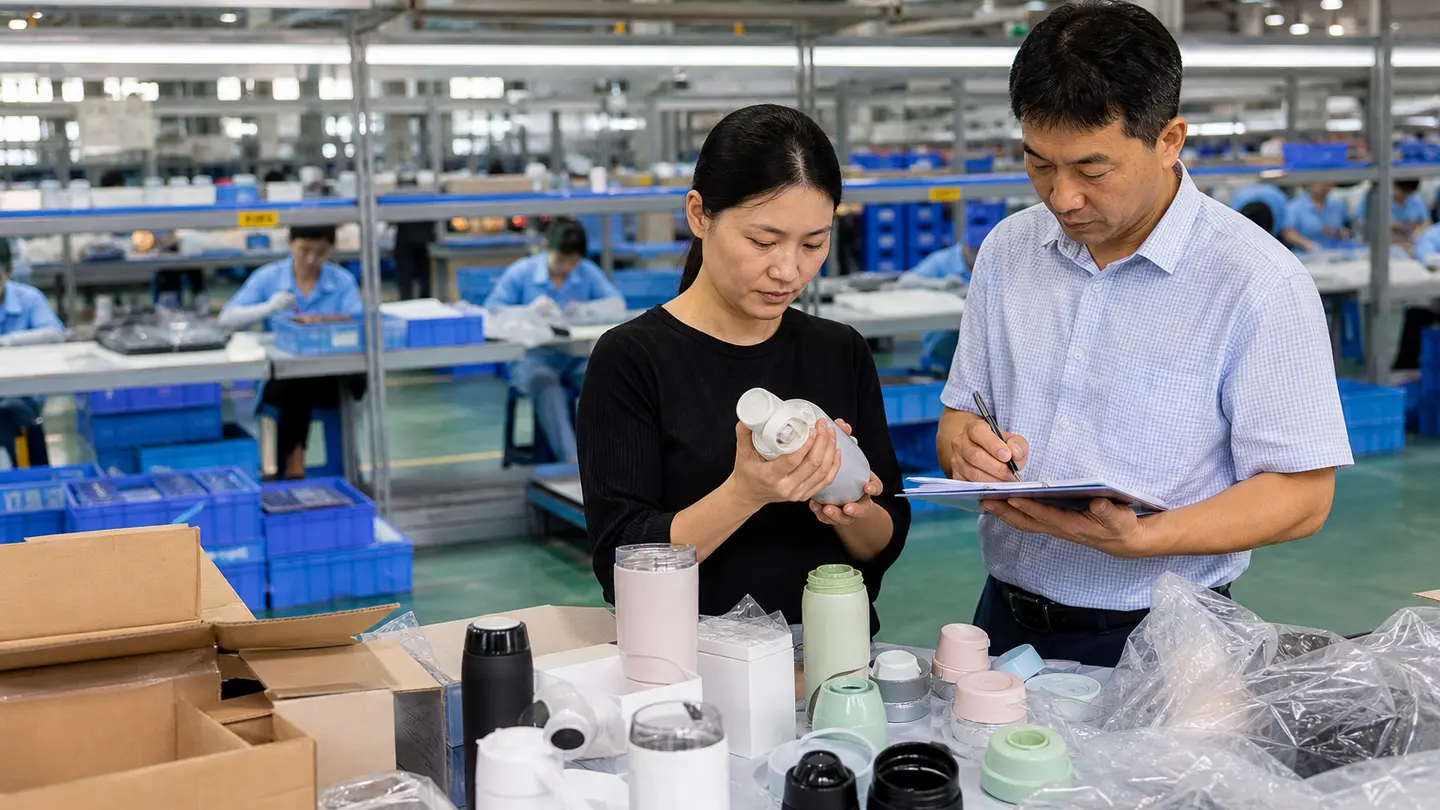
For shower and bathroom-product sourcing, capability questions may include whether the factory works with the required materials and finishes, whether it can control dimensional tolerances, how it manages glass or hardware defects, and whether its packaging process is suitable for fragile or heavy products. The agent does not need to be a factory engineer, but they should know which issues require clarification before an order is placed.
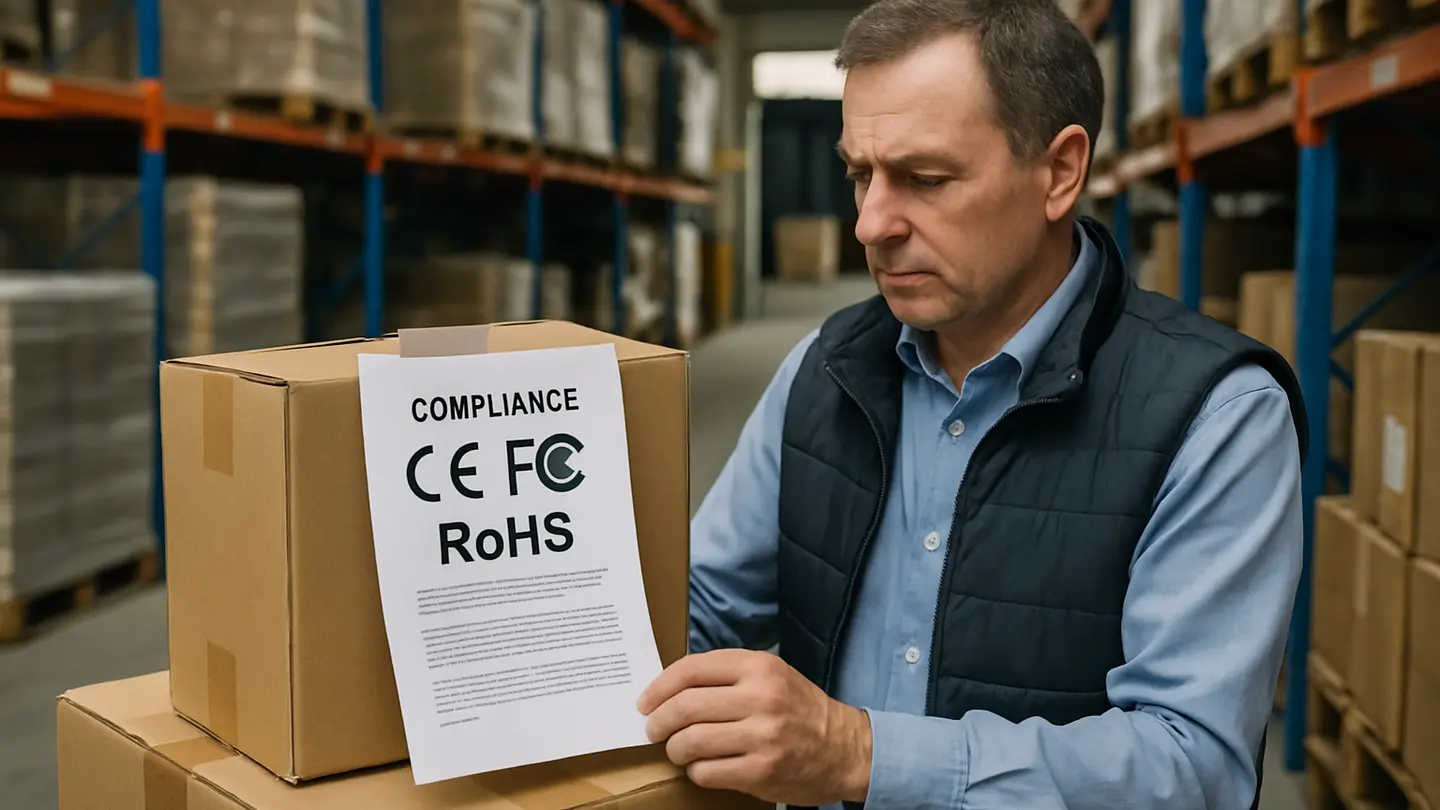
Quality control is equally important. Ask whether inspections are handled by the agent’s own team, a third party, factory staff, or some combination. Clarify the inspection timing, reporting format, defect escalation process, and whether rework is verified before shipment.
Finally, assess team capacity. A solo operator may provide attentive service but can present continuity risks during travel, illness, or periods of high workload. A larger team may offer backup coverage, though buyers should still identify the person responsible for their account and the person who will physically visit suppliers.
Keep Cluster Selection Separate From Fee Negotiations
The right sourcing region should be determined before comparing agent fees. A lower commission or service charge cannot compensate for weak supplier access, infrequent factory visits, or long-distance coordination.
For example, an agent may offer an attractive fee but need to travel extensively to reach the factories most suitable for your product. That travel can slow sampling, reduce visit frequency, complicate issue resolution, or generate additional charges. In contrast, a higher-cost provider with strong local access may create a more efficient process if they can visit suppliers quickly and manage problems before they become shipment delays.
Treat the decision in two stages:
- Validate the product cluster and the agent’s practical access to it.
- Compare commercial terms among agents that meet the category and location requirements.
Once the sourcing location and agent capability are validated, document responsibilities in a formal agreement. This should clearly state the expected deliverables, including supplier identification, sample coordination, factory visits, quality-control activities, communication routines, payment arrangements, confidentiality expectations, and any fees or commissions.
Clear commercial terms reduce misunderstandings. They also help separate the agent’s role from the factory’s responsibility for manufacturing quality, specifications, delivery, and corrective actions.
FAQ
Q1: Should the agent be based in central Guangzhou or near my specific factories?
Fast access to relevant factories matters more than a central Guangzhou office address. Manufacturing sites may be located in surrounding districts, towns, or neighboring Pearl River Delta cities rather than in the city center.
Ask the agent about typical travel time to likely factories, how often they conduct visits, and whether their staff can attend sample reviews or production checks in person. An agent located outside central Guangzhou may be a better choice if they can reach your supplier base more reliably.
Q2: Does the Canton Fair matter when choosing an agent?
The Canton Fair can be useful for meeting suppliers, comparing product samples, and identifying potential manufacturing options. It may also help buyers understand the range of suppliers active in a category.
However, trade-fair attendance does not prove that an agent can manage supplier screening, factory verification, sample development, or production quality. Ask what happens after a supplier is identified at the fair. A capable agent should explain how they evaluate the supplier, verify factory capability, and follow up beyond the initial meeting.
Q3: Can one agent handle a mixed order across apparel, bags, and beauty?
One agent may be able to coordinate related categories within the Pearl River Delta, particularly when the order includes apparel, bags, accessories, and beauty packaging or products. These categories can have overlapping supplier networks and logistics arrangements.
Still, expertise may not be equal across every category. Confirm which product types the agent sources regularly and directly. For each category, ask who selects factories, who reviews samples, and who performs quality checks. This is especially important if the order combines products with different quality, material, or regulatory requirements.
Q4: Do Guangzhou’s fabric and trim markets help with custom apparel?
Yes, nearby fabric and trim suppliers can support custom-apparel development by providing alternatives beyond a factory’s standard material range. Buyers may be able to compare fabrics, labels, buttons, zippers, embroidery options, and decorative hardware during the sampling stage.
This local access can broaden design options and speed up sample revisions. However, every selected material should be approved and documented clearly. The bulk-production material should match the approved sample in color, construction, and intended use rather than being treated as a loosely similar substitute.
Choose the Manufacturing Cluster Before Requesting Quotations
A Guangzhou sourcing agent may be an effective choice when your product belongs to the region’s strongest categories, especially apparel, accessories, handbags, leather goods, beauty products, and selected daily-use goods. In these cases, local access to materials, factories, sample development resources, and export suppliers can be a meaningful operational advantage.
For electronics, furniture, bathroom products, ceramics, lighting, hardware, or commodity goods, buyers should first identify the most relevant manufacturing cluster. The best agent may be located in Guangzhou, but only if they have demonstrated, frequent access to the factories and suppliers that serve your category.
Choosing the right region early can reduce unnecessary travel, repeated sampling, supplier mismatches, and delayed problem-solving. It is usually more efficient to establish where the product should be made before requesting detailed quotations or negotiating an agent’s fee.
About the Author
The author writes about China sourcing, supplier evaluation, product development, and B2B procurement practices. Their work focuses on practical considerations that help buyers assess manufacturing regions, compare supplier capability, and manage quality and coordination risks across international supply chains.