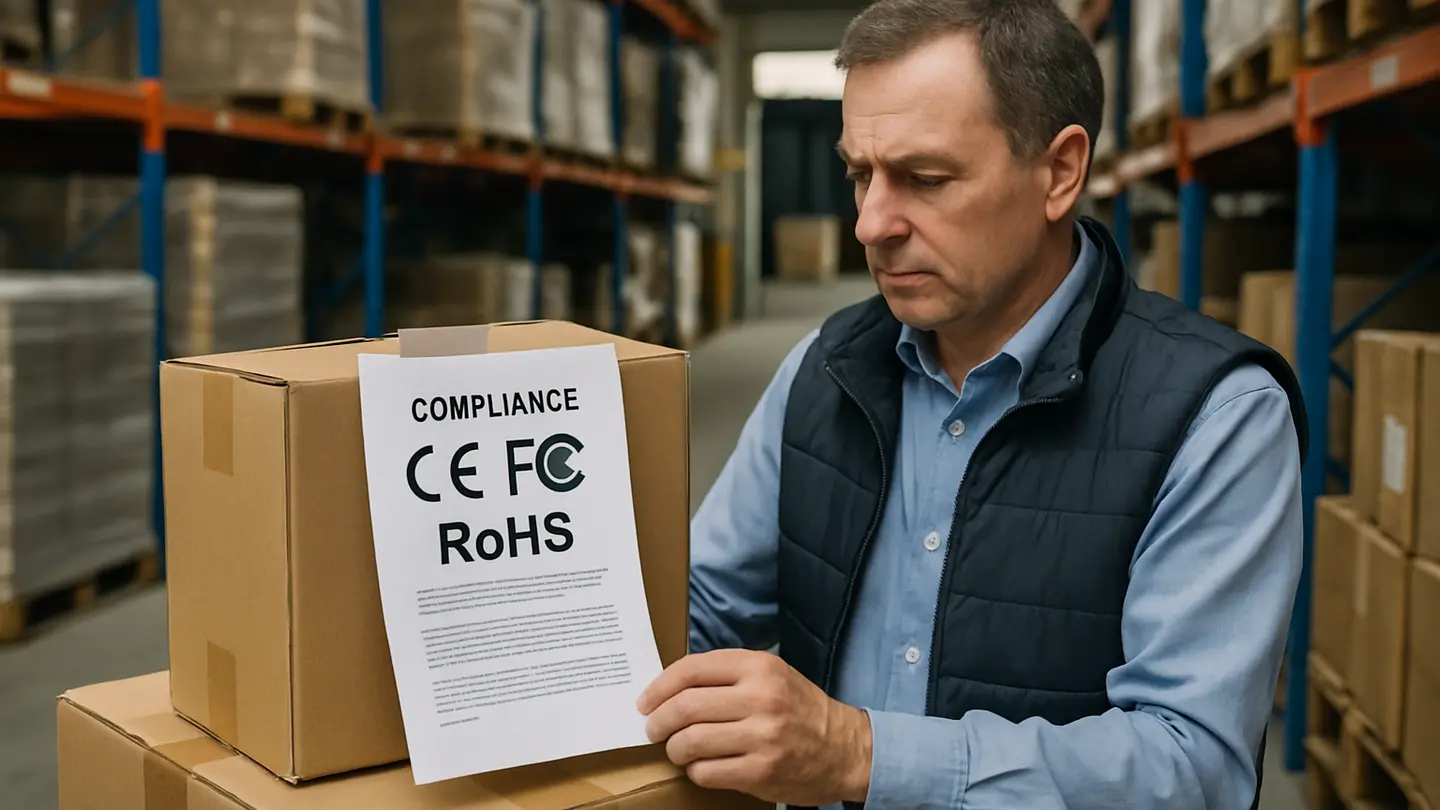
When a buyer asks a Chinese factory for an “HS code from China,” the factory will often provide one quickly. It may appear on a quotation, proforma invoice, packing list, or draft customs document. The problem is that this code was usually selected for China-side export purposes. It is not automatically the correct import classification for the buyer’s country.
That distinction matters. HS classification affects import duties, trade remedy tariffs, customs clearance, documentation checks, licensing questions, and landed-cost calculations. A wrong code can turn a profitable sourcing project into a shipment hold, a duty bill, or a post-entry audit issue months after the goods have been sold.
For importers, the practical rule is simple: use the supplier’s code as a clue, not as the final answer. The importer of record generally carries responsibility for the classification declared to customs, even when the supplier supplied the code or a broker filed the entry. Classification should be resolved during sourcing, quotation, and product development—not during the final shipping week.
Why the Factory’s Export Code Was Not Chosen for Your Import Entry
A Chinese supplier’s HS or customs code is usually selected for the export declaration leaving China. That decision may be influenced by China’s customs rules, export statistics, VAT rebate treatment, export controls, local declaration practices, or the factory’s historical paperwork.
Those China-side considerations do not answer the buyer’s import question. A code can be acceptable for export from China and still be unsuitable for import into the United States, European Union, United Kingdom, Canada, Australia, or another destination market.
For example, a factory may classify a bathroom accessory under a broad export category because that is how its forwarder has handled similar shipments. The destination country may require a more specific national subheading based on material, function, set presentation, or electrical components. The factory’s paperwork may move the goods out of China, but it does not settle the importer’s declaration at destination.
Buyers should therefore ask suppliers for product facts rather than relying on the factory’s code. During quotation, collect:
- Full product description and intended use
- Material composition by percentage, where relevant
- Drawings, technical specifications, and datasheets
- Photos of the product and packaging
- Details of accessories, spare parts, batteries, tools, or bundled items
- Whether the product is shipped loose, in bulk, or in retail packaging
Those facts allow the buyer, broker, or trade advisor to classify the product independently in the destination country’s tariff schedule.
Only the First Six Digits Are Generally Shared Internationally
The Harmonized System is an international product nomenclature, but the shared portion generally stops at six digits. Those first six digits identify the international HS heading and subheading. After that, countries add their own national digits for tariff rates, statistical reporting, trade measures, and local customs administration.
That is why a full China export code should not be copied directly into another country’s import entry. The extra digits may not exist in the destination tariff schedule, or they may mean something different.
A simplified structure looks like this:
| Code level | What it usually represents | Buyer takeaway |
|---|---|---|
| First 2 digits | HS chapter | Broad product family |
| First 4 digits | HS heading | More specific product group |
| First 6 digits | HS subheading | Internationally harmonized level in most cases |
| Digits after 6 | National tariff or statistical detail | Country-specific; must be checked in the import market |
Even the first six digits should not be accepted blindly. Classification depends on the actual goods as imported. A change in material, construction, function, or presentation can move a product into a different heading or subheading. The supplier’s HS code from China may point toward a possible chapter or heading, but the importer still needs to verify it against the product and destination rules.
The Import Code Is Your Declaration, Not the Supplier’s
In most import regimes, the importer of record is responsible for the accuracy of the customs entry. That includes product classification, declared value, origin, and eligibility for any preferential or special tariff treatment.
A customs broker can prepare and transmit the entry, but the broker relies on information provided by the importer. If the importer gives only a vague invoice description such as “bathroom parts,” “plastic accessory,” “hardware,” or “sanitary product,” the broker may not have enough information to classify accurately. The entry may clear, but clearance is not the same as approval. Customs authorities can question classifications at the border or review them later.
Incorrect classification can lead to:
- Additional duty and tax assessments
- Penalties or interest
- Shipment holds or customs examinations
- Requests for technical documents
- Delays to customer delivery schedules
- Corrections to previous entries
- Post-entry audits or compliance reviews
Incoterms and shipping terms do not automatically shift legal responsibility for import-entry accuracy. A supplier may sell DDP, a forwarder may arrange clearance, or a broker may file the entry, but the buyer should still understand who is importer of record and what code is being declared.
For B2B buyers, this is especially important for repeat orders. A mistake on one shipment may become a repeated mistake across many entries, increasing the potential liability.
Why the Lowest-Duty Code Can Become the Costliest Choice
A lower-duty classification is attractive, especially when buyers are comparing suppliers and protecting margin. But if a supplier, sourcing agent, or forwarder suggests a lower-duty code without a clear technical basis, treat it as a risk signal.
The correct question is not “Which code has the lowest duty?” The correct question is “Which code is defensible for this product as imported?”
Customs authorities may review entries after goods have cleared and after the products have been sold. If the declared classification cannot be supported, the importer may face additional duties and penalties long after the original landed-cost calculation was made.
A lower-duty code must be supported by actual product facts. For example:
- The material composition is genuinely different.
- The product’s principal function is different from a similar item.
- The goods are imported separately rather than as a retail set.
- A component is an accessory rather than the main article.
- The construction or design places the product in a different heading.
Paperwork alone does not create a classification. Renaming a shower component as a “plastic part” will not make it one if the product is more specifically described elsewhere in the tariff schedule. Splitting an invoice line for convenience also does not necessarily change how a packaged set is classified.
Classification disputes often turn on small facts: what the item is made of, what it does, how it is used, and how it is presented to customs at import.
Three Product Facts That Drive Most Classification Decisions
Importers do not need to become tariff lawyers, but they should know which product facts usually drive the discussion. Three areas do most of the work: material, principal function, and presentation.
Material matters because many tariff headings distinguish goods by what they are made from. Plastic, stainless steel, brass, aluminum, glass, ceramic, rubber, and composite materials may lead to different classifications. If a product includes multiple materials, the percentage, role, and essential character of each material may be relevant.
Principal function matters when a product performs more than one role. A multifunction bathroom device might include mechanical, electronic, filtration, lighting, or control functions. The classification may depend on which function gives the product its essential character or principal use.
Presentation matters because customs classifies goods as imported. A product shipped alone may be treated differently from the same product shipped with accessories, batteries, tools, spare parts, manuals, mounting hardware, or retail packaging. Sets and kits can raise different questions than individual components.
For sourcing teams, the practical documentation can be simple:
| Product fact | Questions to ask the factory | Why it matters |
|---|---|---|
| Material | What is each main component made of? Are percentages available? | Material can change the heading or subheading. |
| Principal function | What is the main use of the product? Are there secondary functions? | Multifunction goods may be classified by essential function. |
| Presentation | What exactly is inside the export carton and retail box? | Sets, accessories, and packaging can affect classification. |
Catalog names are not enough. “Luxury shower system,” “bathroom hardware,” or “installation kit” may be commercially useful but technically incomplete. Brokers and advisors need specifications, not marketing descriptions.
Ask the Factory for Product Evidence, Not the Final Code
The factory is still important in the classification process, but its role should be to provide evidence. It knows the bill of materials, production process, component structure, packaging plan, and product variants. Those facts are more valuable than an unsupported final code.
Before production begins, ask the supplier to provide written answers to classification-related questions. For example:
- What are the materials of the body, handle, hose, bracket, cartridge, seals, screws, and decorative parts?
- What is the product’s main function?
- Does it include electrical or electronic components?
- Does it include batteries, chargers, sensors, LEDs, filters, or control modules?
- What accessories are included in the retail package?
- Are spare parts shipped together with the main product?
- Are different models made from different materials?
- Are samples identical to mass-production goods?
Request real photos, not only catalog renderings. Photos of the product, relevant internal components, labels, instruction manuals, retail packaging, and carton marks can help a broker or classification advisor understand the goods. For custom products, drawings and specifications are especially important because the supplier’s standard catalog code may not fit the modified version.
Gather this information during purchasing and product development. If the buyer waits until the vessel is booked, options are limited, documents are rushed, and any disagreement over classification may delay the shipment.
Settle the Classification Before You Place the Order
Import duty is part of landed cost. It belongs in the same conversation as unit price, tooling, packaging, inspection, freight, insurance, warehousing, and customer margin. Treating classification as a logistics detail at the end is a common sourcing mistake.
A difference in classification can materially change landed cost and affect:
- Whether the product is commercially viable
- Which supplier is truly competitive
- Whether a design change is worth making
- Whether to import a complete set or separate components
- Whether to adjust packaging or bundled accessories
- Whether to continue with a private-label variation
Classification should be checked during quotation, design review, and supplier selection. This is when the buyer can still ask for material changes, separate items that create set issues, adjust packaging, or choose a different configuration. Once tooling is complete and production has started, those options become more expensive.
Late classification leaves buyers with poor choices. They may have to accept a higher duty than expected, delay the shipment while the code is reviewed, dispute the broker’s classification under pressure, or redesign too late to protect margin.
A strong sourcing checklist should include HS-classification review before deposit payment or production commitment. That does not mean every buyer needs a formal ruling for every item, but the buyer should know the likely import classification, duty rate, and supporting reasoning before committing money.
Keep the Code Consistent and Record the Reasoning
Once an import classification has been approved, keep it consistent across the purchasing and shipping process. Inconsistent product descriptions create unnecessary customs risk.
The purchase order, commercial invoice, packing list, product specification, and broker instructions should describe the same goods in compatible language. The wording does not need to be identical, but it should not create confusion. If one document says “plastic showerhead,” another says “metal bathroom fitting,” and another says “sanitary accessory,” customs or the broker may ask what the product actually is.
Provide the broker with both the approved import classification and the facts supporting it. A short classification file for each product or SKU can be enough. It may include:
- Approved import code and destination country
- Decision date and person responsible
- Product description
- Material breakdown
- Technical specifications or drawings
- Product and packaging photos
- List of package contents and accessories
- Supplier’s China export code, if relevant, marked as supplier-provided
- Broker notes or trade advisor comments
- Customs rulings or binding decisions, if obtained
- Notes on variants covered by the same classification
Do not allow codes to be casually changed by a supplier, freight forwarder, warehouse employee, or internal purchasing assistant. Assign one authorized person or team to approve classification changes. If a supplier changes materials, adds accessories, revises packaging, or combines products into a new retail set, review the classification before the next shipment.
Consistency is especially important for repeat imports. A clear record helps new staff, new brokers, and new suppliers understand why a code was chosen. It also helps the importer respond if customs asks questions later.
FAQ
Q1: Which code is right when two suppliers give me different ones for the same product?
Neither code is automatically right. Conflicting supplier codes may mean the product sits near a classification boundary, or simply that each supplier is using China-side export logic. Compare the actual product facts—material, function, construction, and packaging—and resolve the import classification before ordering, especially if the duty difference affects margin.
Q2: Does country of origin change the code?
Usually, no. HS classification describes the goods themselves, not where they were made. Country of origin generally affects the duty rate, trade remedy measures, or preferential treatment applied to that classification. Classify the product first, then apply the relevant origin rules and duty measures.
Q3: Can I reclassify a product whose duty makes it unprofitable?
You can only use a different classification if the product facts support it. Genuine redesign may sometimes change the outcome, such as changing materials, separating bundled items, or altering the product’s principal function or presentation. Paperwork alone is not enough. Classification planning is safest before design, tooling, packaging, and production are finalized.
Q4: Can several versions of my product share one code?
Possibly, but verify before assuming. Color changes often do not affect classification, but changes in material, function, capacity, size, batteries, included accessories, or retail set contents can matter. If a new version changes the product’s essential character or presentation at import, review the classification again.
Conclusion: Treat HS Classification as Part of the Buying Process
A factory’s export code answers a different question from the importer’s customs declaration. It may be useful background, but it is not the final import classification for the buyer’s market.
The safest approach is to collect product facts before paying a deposit or locking in production. Confirm materials, principal function, package contents, accessories, and product variants while design and sourcing decisions can still change. Then provide the approved classification and supporting facts to the broker before shipment documents are prepared.
For every recurring product or SKU, keep a concise record explaining the chosen import code. That record protects landed-cost planning, supports customs compliance, and reduces confusion when suppliers, brokers, or internal staff change.
For B2B buyers sourcing from China, HS classification should be part of routine purchasing workflow—not a shipping-week emergency.